From December 15, 2025, people applying for H-1B visas and their H-4 dependent family members must set all their social media profiles to public so U.S. consular officers can review their online activity. The U.S. Department of State announced that this applies to both new applications and cases processed from that date forward as part of an expanded screening system.
According to the State Department’s December 2025 statement, this requirement is not limited to work visas. It also covers F, M, and J visa applicants, meaning international students and exchange visitors are now part of the same public social media review system. The announcement frames the move as part of wider national security checks rather than a narrow immigration change aimed only at H-1B workers.
“To facilitate this vetting, all applicants for H-1B and their dependents (H-4), F, M, and J nonimmigrant visas are instructed to adjust the privacy settings on all of their social media profiles to ‘public’.”
The full announcement is posted on the State Department’s visas news page under expanded screening for H-1B and H-4 applicants, and can be read at this official link.
Visa categories affected
The new social media rule applies to several widely used visa categories:
- H-1B: Specialty occupation workers
- H-4: Dependents (spouses and children) of H-1B workers
- F visas: Academic students
- M visas: Vocational or non-academic students
- J visas: Exchange visitors
For H-1B and H-4 applicants, this adds another step to an already complex visa process that often involves employer sponsorship, consular interviews, and strict documentary requirements. Students and exchange visitors under F, M, and J categories now face the same mandatory public exposure of their online presence.
The State Department notes that the policy builds on earlier vetting rules that already touched students and exchange visitors. The change now clearly extends that approach to H-1B professionals and their families, reflecting the government’s focus on visa types most used by foreign workers and students coming to the 🇺🇸 United States.
What “public” social media means in practice
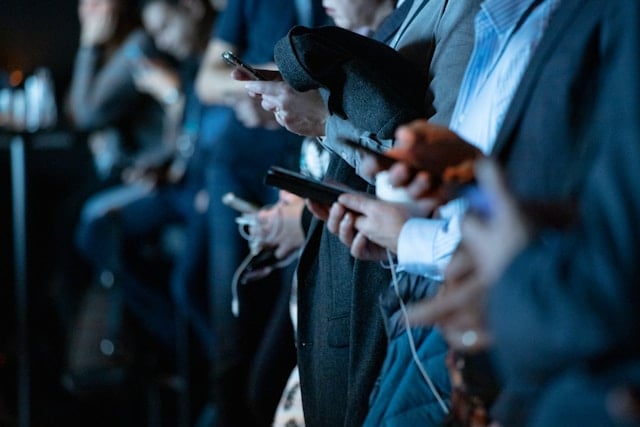
Under the new policy, applicants must ensure that all their social media accounts are set to public before their visa interview or review. The State Department does not limit this to any specific platforms, so the rule covers popular sites such as:
- Twitter/X
- Any other platform tied to the person’s online identity
Making accounts public means consular officers can see posts, likes, shares, comments, bios, job history, and connections that would otherwise be hidden behind privacy settings. The policy also states that the review is not limited to content posted by the applicant. Any publicly available information linked to their online identity may be considered in the screening process.
According to analysis by VisaVerge.com, this shift gives consular officers a much broader window into an applicant’s life than traditional documents alone, and places new pressure on foreign workers and students to pay close attention to years of past posts and interactions.
Stated purpose: national security and public safety
The U.S. Department of State presents this as part of broader national security vetting rather than as a change mainly aimed at labor markets or student numbers. The goal, according to the announcement, is to help identify applicants who may pose a threat to U.S. national security or public safety.
For H-1B applicants, the State Department highlights a heightened focus on employment history, including positions tied to:
- misinformation
- disinformation
- content moderation
- fact-checking
- compliance
- online safety
This indicates consular officers will not only review personal posts but may also scrutinize the type of work applicants do, especially if their jobs involve online information, content control, or digital safety. Officials may assess how these roles connect to potential risks around information flows and online influence.
Practical consequences for H-1B workers and families
The immediate practical impact for H-1B and H-4 applicants is the need to review every active account and switch all privacy settings from private or “friends only” to public before the consular interview or case review date.
Key practical points:
- Failure to comply may lead to delays or even visa denial.
- Anything on a public profile linked to an applicant’s identity can be reviewed and may influence the decision.
- Dormant or little-used accounts still matter if they are linked to the applicant’s name, email, or phone number.
For families, this can be especially stressful:
- A principal H-1B worker must worry about their own accounts and those of a spouse and possibly teenage children applying for H-4 visas.
- F, M, and J applicants, many of whom are young adults, must consider how old posts, jokes, or political comments might be read in a visa context.
Recommended actions for applicants
People planning to apply under H-1B, H-4, F, M, or J categories after December 15, 2025 should:
- Carefully confirm that every social media profile is set to public.
- Ensure profile facts—especially employment history for H-1B applicants—are accurate and consistent with visa application materials.
- Review and, if necessary, remove or reconcile any public posts or connections that could be problematic.
- Search for dormant accounts linked to their name, email, or phone number and make them public or handle them appropriately.
- Consult an immigration attorney if they are unsure how public online content may affect their case.
Broader policy context and next steps
This new requirement fits into a wider pattern of tighter immigration screening by the United States, especially for high-volume visa categories used by foreign professionals and students. The State Department frames the move as an expansion of existing tools, not a brand new idea, stressing that social media checks are now a standard part of the vetting toolkit.
For applicants and employers, the online world is now formally part of the visa file. Traditional documents—job offers, transcripts, and financial records—still matter, but consular officers now have explicit permission to match those materials against public online behavior and work history as presented on social media.
The State Department’s official announcement on expanded screening and vetting for H-1B and dependent H-4 visa applicants is available on the travel.state.gov visas news page. General information about U.S. visas is also available through the Department’s main U.S. visas information portal.
Important: As this policy is already in effect for cases processed on or after December 15, 2025, applicants in all covered categories should treat the public social media requirement as a standard part of their visa planning — on the same level as preparing forms, fees, and supporting documents.
The State Department requires H-1B, H-4, F, M and J applicants to set all social media profiles to public for consular review starting Dec. 15, 2025. The expanded screening covers posts, connections and employment history and aims to strengthen national security vetting. Applicants should verify account visibility, reconcile online employment details, review past content, find dormant accounts linked to their identity, and consult an immigration attorney to avoid delays or denials.