- Germany has suspended fast-track humanitarian visas for Belarusian dissidents, returning to pre-2022 restrictions.
- The new policy limits approvals to exceptional political cases with high public visibility.
- Standard Schengen and national visas remain available for Belarusians seeking study or work.
(GERMANY) — Germany has sharply reduced the issuance of humanitarian visas to Belarusians by suspending its fast-track procedure, limiting approvals to a few exceptional political cases per year.
The change, reported in October 2025, returns the program to the restrictions that applied before June 2022, when Germany had expanded access after Russia’s invasion of Ukraine. Activists from SaveHumVisa22 said the new approach means Germany will grant humanitarian visas only in cases that “resonate politically,” targeting “several unique cases a year.”
That marks a sharp narrowing of a route that had allowed Belarusian activists, politicians and journalists to relocate to Germany under §22 of the Residence Act. The provision is used to admit people at acute risk because of their political activities.
Since March 2021, 410 Belarusian activists, politicians, and journalists relocated under the §22 scheme. The current status of the program has been described as an “extremely limited” application.
The shift also fits a broader political line in Berlin. Germany’s conservative-led coalition has pursued anti-migration policies since May 2025, including an indefinite halt to programs under §§22 and 23 of the Residence Act.
Those wider restrictions provide the setting for the changes affecting Belarusians. What had been a broader fast-track procedure for humanitarian visas has now reverted to a far narrower path centered on a handful of exceptional political cases.
As of December 31, 2024, 37,103 people had benefited nationwide under these frameworks, mostly Afghans. Even before the latest tightening, authorities required heavy review processes for cases tied to political interest.
That review structure remains important in understanding the new approach. The humanitarian route still exists in law, but access for Belarusians has become much harder in practice.
Prior applicants must now reapply under the new rules. Activists from InTransit said the revised system favors only “very prominent people with high visibility.”
That leaves many Belarusians facing a different reality from the one that emerged after June 2022. Instead of a broader emergency channel, the system now appears geared toward people whose cases draw unusual political attention.
The humanitarian track under §22 has long been distinct from ordinary visa channels. It was designed for people facing acute risk because of political activity, not for tourism, study or routine travel.
Under the earlier expanded approach, that distinction gave some Belarusian opposition figures, journalists and activists a way out. With the fast-track procedure suspended, access now depends on meeting a much tighter threshold.
SaveHumVisa22 has framed the change as a move away from broader protection and toward selectivity. Its description of cases that “resonate politically” suggests a system in which visibility and public profile now matter more than before.
InTransit drew a similar picture. Its activists said the change favors “very prominent people with high visibility,” indicating that lesser-known applicants face steeper barriers.
The reduction in humanitarian visas does not appear to reflect a wider clampdown on all visa categories for Belarusians. Standard Schengen tourist visas remain in place, and there have been no reported policy changes or restrictions affecting those visas.
Belarusians still need a visa to enter Germany with Belarusian passports. Official sources confirm that requirement remains in force.
For short stays, Belarusians must still apply for standard Schengen visas in Category C, which allow stays of up to 90 days. Processing takes 15 business days after biometrics.
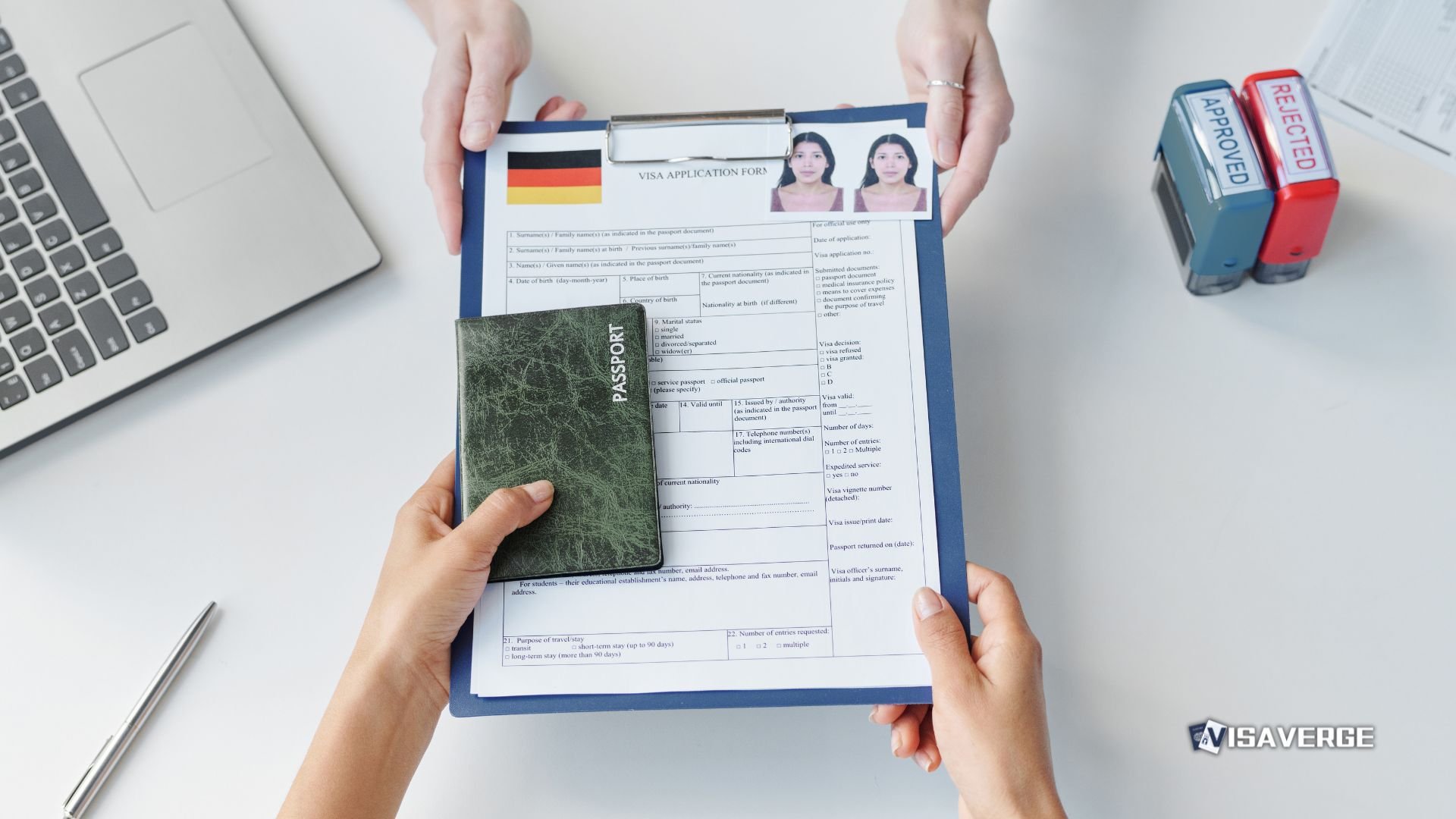
Applicants for those visas must provide passports, photos, travel insurance, proof of funds, and proof of occupation. A visa facilitation agreement with Belarus also reduces fees to €35 for certain categories, including family visits and students.
Longer stays remain possible through national D-visas for work or study. Those routes stand apart from the humanitarian procedures that Germany has now narrowed.
That distinction matters because the latest change affects a protection mechanism, not the broader visa framework. People seeking travel, study or employment in Germany still use the ordinary routes already available to Belarusian citizens.
The evidence presented so far points to a sharp decline in humanitarian visas rather than an overall reduction in visas for Belarusians. Outside the humanitarian category, no wider drop has been shown.
One separate case involved a denial of entry because of a mismatched Hungarian visa. That case did not point to a broader German policy change affecting all Belarusian travelers.
The present system therefore draws a clearer line between humanitarian protection and conventional migration channels. Germany has narrowed one while leaving the others in place.
For Belarusians at political risk, that difference is substantial. A tourist visa, even where available, serves a different legal purpose from a humanitarian visa granted under §22 of the Residence Act.
The earlier fast-track procedure had expanded the reach of that protection route after June 2022. By returning to the pre-June 2022 model, Germany has restored a more restrictive approach to admissions on humanitarian grounds.
That rollback comes amid the coalition’s broader anti-migration agenda since May 2025. The indefinite halt to programs under §§22 and 23 of the Residence Act places the Belarusian visa changes within a wider policy direction rather than an isolated administrative step.
The nationwide figures also show how selective these programs already were. Even with 37,103 beneficiaries as of December 31, 2024, most were Afghans, and political-interest cases faced heavy review.
For Belarusian applicants, the practical effect is now sharper because previous filings do not carry over automatically. People who had already sought entry must start again under the revised rules.
That requirement adds another barrier to a route that activists say has narrowed to a handful of exceptions. Reapplication means renewed scrutiny under a system that now appears focused on the most visible cases.
The language used by activist groups captures the scale of the shift. SaveHumVisa22 said visas will be granted only where cases “resonate politically,” and InTransit said the new setup favors “very prominent people with high visibility.”
Taken together, those descriptions point to a humanitarian channel that still exists but now reaches far fewer people. Germany has not ended all visa access for Belarusians, but it has sharply reduced one of the few routes tailored to people under acute political pressure.
That leaves a stark split in Germany’s visa policy toward Belarusian citizens. Standard visas for tourism, study and work remain available under existing rules, while humanitarian visas have become confined to what activists describe as “several unique cases a year.”