(NEWPORT, OREGON) — Federal immigration authorities have explored using Coast Guard facilities on the Oregon coast, including in Newport, as sites for an ICE detention center-style network of temporary holding and processing space, prompting legal action and a scramble by local leaders to assess public safety and community impacts.
The push has drawn attention because the Newport concept tied immigration operations to a Coast Guard air facility that local fishing groups say supports life-saving rescue coverage, while Oregon officials warn federal planners are trying to sidestep state limits on immigration detention.
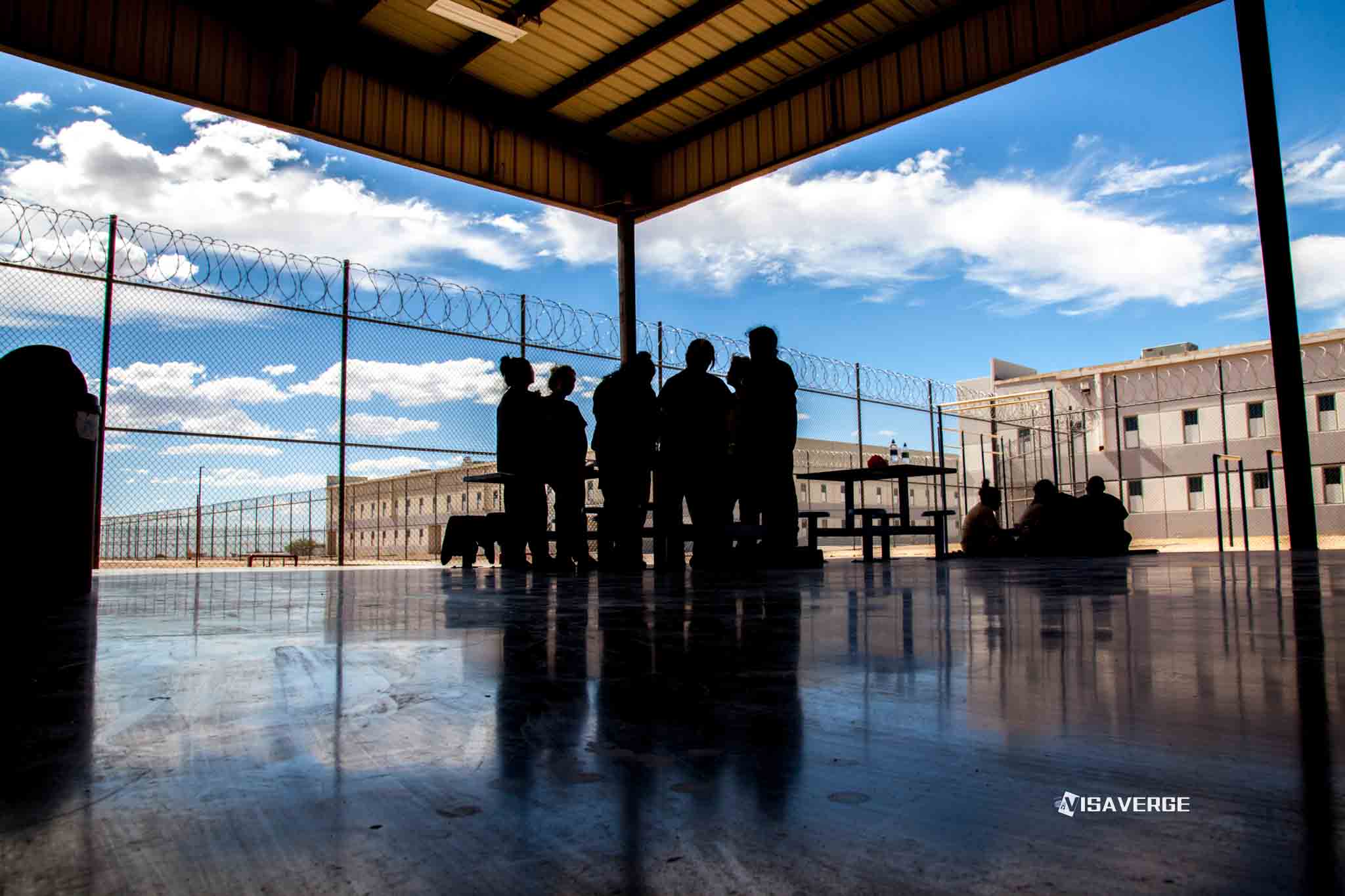
Ralph Ferguson, Assistant Director for ICE Enforcement and Removal Operations (ERO), described the federal work in a sworn declaration filed in federal court on January 28, 2026.
“ICE had begun environmental compliance activities necessary to allow the U.S. Coast Guard (USCG) Air Facility at Newport, Oregon, to be utilized by ICE-ERO as a proposed temporary holding/processing facility,” Ferguson said.
Ferguson told the court ICE paused the Newport project after the Coast Guard withdrew the site from availability on December 4, 2025, but he framed that pause as temporary. He also set a date that local officials have treated as a planning marker for what might come next.
“ICE has no plan or intention to begin construction or open an ICE facility in the City of Newport or at Newport Municipal between now and until May 1, 2026,” Ferguson said.
A separate Department of Homeland Security message on January 30, 2026, placed Oregon in a broader national effort to increase detention capacity. “DHS law enforcement is conducting law enforcement activities across the country to keep Americans safe. It should not come as news that ICE will be making arrests in states across the U.S. and is actively working to expand detention space. Thanks to the One Big Beautiful Bill, ICE has new funding to expand detention space to keep these criminals off American streets,” a DHS spokesperson said.
Federal interest has not centered solely on Newport. DHS has investigated other federally owned Coast Guard sites, including Air Station Astoria in Warrenton and Air Station North Bend, adding to concern in coastal communities about where immigration processing and detention functions could land next.
The scale under discussion became clearer on February 13, 2026, when a leaked internal ICE memorandum—later confirmed by officials in response to congressional inquiries—described a $38.3 billion nationwide expansion plan.
That memorandum described two facility concepts: “regional processing sites” with 1,000–1,500 beds and “mega-centers” with 7,000–10,000 beds. The memo linked the buildout to “mass deportations,” as DHS and ICE described a strategy built around increased detention space and faster movement of people through the system.
Congress also funded detention growth through a $45 billion allocation in the “One Big Beautiful Bill” (2025), which aims to increase nationwide bed capacity to 92,600. ICE documents cited in the Oregon dispute also acknowledged that stays at these processing centers may extend to 10 days, despite previous claims of a 72-hour limit.
Newport has remained the focal point because the Coast Guard air facility sits close to population centers and transportation links for the central Oregon coast, while still being far from the larger legal and advocacy hubs where immigrants often find counsel. Local sensitivity has also centered on where, and how quickly, infrastructure could appear.
One approach under consideration involves “soft-sided” structures, described as tent-based facilities meant to rapidly add capacity. Oregon Rep. Val Hoyle criticized that concept for the coast, citing what she called the “insane” risk of placing such structures in a high-wind tsunami zone.
Any rapid-build concept also raises questions about transportation, staffing, and access on a coast where winter conditions can complicate travel and where local public services have limited surge capacity. Residents and officials have argued that even a “temporary” site can quickly change local demands for law enforcement coordination, health services, and school support.
The dispute has also sharpened around what “temporary” means in practice when the operational concept includes multi-day detention and the possibility of transfers. Families and attorneys have argued that even short stays can disrupt access to legal documents, make it harder to track where someone is held, and complicate visits or communication.
Oregon’s political and legal backdrop has amplified those concerns. The state has long been described as a “sanctuary state,” and a 2021 law bans private immigration detention, placing Oregon among states that limit how detention space can be built or operated.
Opponents of the coastal plan have argued that using federal land—such as Coast Guard property—functions as a workaround to those restrictions. Supporters of the expansion, by contrast, have pointed to federal authority over federal property and DHS’s mandate to conduct immigration enforcement.
The Newport plan also intersected with Coast Guard operations in a direct way. The initial concept required relocation of a USCG rescue helicopter, a step local fishing fleets and the Newport Fishermen’s Wives group said would put lives at risk during the dangerous Dungeness crab season.
That dispute moved into federal court and produced an early ruling that changed the on-the-ground picture. U.S. District Judge Ann Aiken issued a temporary injunction in late 2025 ordering the Coast Guard to return the rescue helicopter to Newport, a decision that effectively stalled ICE’s immediate construction planning at that specific site.
The case is titled City of Newport v. U.S. Department of Homeland Security, filed in the U.S. District Court for the District of Oregon under Case No: 6:25-cv-02013-AA. Court filings and declarations have made Newport a test of how federal agencies pursue detention expansion amid local resistance and operational constraints tied to other federal missions.
Even with the injunction focused on the helicopter, the broader federal interest in coastal sites has kept communities on edge. Public meetings and local conversations have centered on whether other Coast Guard locations could be used in similar ways without triggering the same operational conflict.
Oregon’s congressional delegation has also highlighted who gets arrested in the state and what that might mean if detention space expands nearby. In a February 12, 2026, letter to Secretary Kristi Noem, lawmakers cited data showing less than 10% of those arrested by ICE in Oregon in 2025 had been convicted of a violent crime.
The letter, led by Rep. Andrea Salinas, added political pressure to the coastal planning debate and fed local arguments that the expansion could sweep in people without violent convictions. The delegation’s correspondence appeared on Salinas’s House website.
Community institutions have reported ripple effects as well. Reports described a spike in student withdrawals from coastal school districts, including Lincoln County, as families feared the proximity of a detention center and the increased enforcement presence that could accompany it.
Advocates have also focused on geography and legal access. The Innovation Law Lab argued that remote coastal locations act as “black sites,” contending the distance and logistics make it nearly impossible for detainees to access legal counsel or for families to visit.
Local officials have echoed worries that a processing model built around short stays and frequent transfers can still complicate due process logistics, especially when lawyers must coordinate rapidly for people moved between facilities. Residents have also raised concerns about what an influx of federal detention activity could mean for local policing resources and emergency response coverage.
DHS and ICE have continued to point to national policy direction and funding as they describe the need for more detention space, including on the coast. The agency’s public-facing updates on enforcement and detention issues appear through its ICE newsroom, which Oregon officials and advocates have monitored as the Newport case unfolded.
The Coast Guard’s own operational context for Newport has featured prominently in local filings and arguments about maritime safety. Public information about the air facility’s mission has circulated through Coast Guard Air Facility Newport operations, which local groups have cited as they argue the rescue helicopter must remain available for coastal emergencies.
For Newport residents, the fight has combined a familiar coastal concern—search-and-rescue coverage—with a newer one: whether federal plans for immigration holding and processing will re-emerge after May 1, 2026, and if the Oregon coast will become part of a larger national detention expansion strategy.
Feds Target Oregon Coast for New ICE Detention Center, Prompting Environmental Review
ICE is seeking to utilize Oregon Coast Guard facilities for temporary detention, prompting intense legal and local opposition in Newport. While operations are currently paused until May 2026 following a court order regarding rescue helicopters, federal documents reveal a massive national expansion strategy. Critics highlight risks to maritime safety, violations of Oregon’s sanctuary laws, and the logistical dangers of placing tent-based facilities in high-wind tsunami zones.