(TEXAS) — Families and legal advocates have accused federal contractors and immigration authorities of keeping children in conditions that included worm-infested food, unsafe water, poor medical care and 24-hour lighting inside Texas family detention sites, allegations that drew fresh attention in early 2026 as the federal detention system expanded.
Accounts from families held at the South Texas Family Residential Center in Dilley and other Texas facilities described meals with live worms, foul or “cloudy” drinking water and children who struggled to sleep under lights that remained on 24/7.
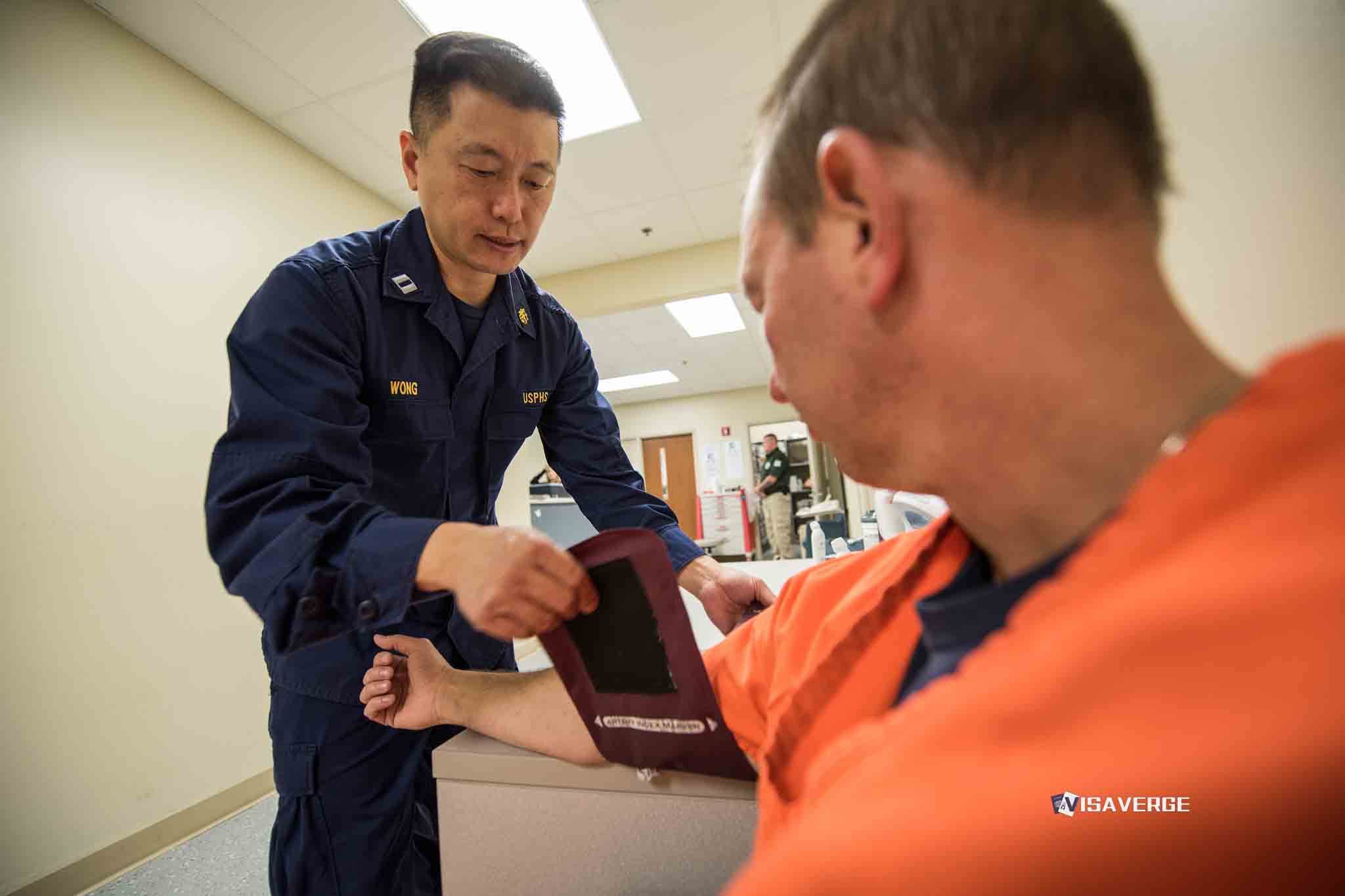
Department of Homeland Security and Immigration and Customs Enforcement officials denied the allegations and said detainees receive appropriate care and living conditions.
“The Dilley facility is a family residential center designed specifically to house family units in a safe, structured and appropriate environment. Services include comprehensive medical screenings, infant care packages, as well as classrooms and recreational spaces,” said ICE Director Todd M. Lyons in a statement dated February 24, 2026.
Tricia McLaughlin, a DHS spokesperson, rejected the broader claims in a statement dated February 19, 2026. “Any claim that there are ‘inhumane’ conditions at ICE detention centers are categorically false. Detainees are provided proper meals, medical treatment, and clean clothing,” she said.
An ICE official statement dated February 18, 2026 described health procedures and emergency access. “ICE is committed to ensuring that all those in custody reside in safe, secure and humane environments. Detainees receive medical, dental, and mental health screenings within 12 hours of arrival, and have access to 24-hour emergency care.”
CoreCivic, the private prison company that operates the Dilley facility, also pushed back. Brian Todd, a CoreCivic spokesperson, said allegations of poor medical care “do not reflect the hard work our staff does every day to help people in our facilities get the care they need.”
The allegations gained traction as family detention remained politically sensitive and Texas sites again played a central role after a policy shift reopened two facilities for holding parents and children.
The Dilley and Karnes County facilities reopened for family detention in March 2025 after a change in administration policy to increase detention capacity, placing renewed scrutiny on conditions, oversight and access to care.
A national spotlight turned to Dilley in January 2026 after the detention of 5-year-old Liam Conejo Ramos, who was taken from Minnesota to the facility, and a federal judge ordered his release on January 31, 2026.
In the court order, the judge described the government’s pursuit of “daily deportation quotas” as “ill-conceived,” language that advocates cited as emblematic of broader concerns about how detention policy affects children.
Families and attorneys described food and water as among the most immediate problems inside Texas sites. Parents and children reported finding live worms in broccoli and other meals, and some accounts described stomach illness after drinking water that was described as “cloudy” or foul-smelling.
Detainees and advocates also raised concerns about access to medication and the timeliness of care for children, including accounts in which prescriptions were allegedly withheld for weeks.
A measles outbreak was confirmed at the Dilley facility in early February 2026, raising anxiety among parents and prompting questions from advocates about infection control and the ability to isolate sick detainees while maintaining routine pediatric services.
Reports also documented a 2-month-old boy who was hospitalized after choking in custody. The accounts cited by advocates did not include additional details about what led up to the incident or what medical steps preceded the hospitalization.
Sleep disruption emerged as a recurring theme in families’ descriptions of daily life. Detainees described a “prison-like” environment where high-intensity lights remain on 24/7, and parents and lawyers linked the constant lighting to chronic sleep deprivation and psychological distress among children.
Advocates said the lighting compounded other stressors associated with confinement, including uncertainty over legal cases, separation from familiar routines and limited ability for parents to shield children from the sights and sounds of detention.
Concerns about conditions in Texas detention extended beyond Dilley. A Washington Post report in late 2025 said ICE’s own inspectors found at least 60 violations at the “Camp East Montana” facility shortly after its opening, including significant understaffing.
The wider system also faced scrutiny over deaths in custody. In 2025, at least 32 people died in ICE custody nationwide, the highest number in two decades, a toll that sharpened calls from advocates and some lawmakers for closer monitoring of medical staffing and emergency response.
That figure included the death of Geraldo Lunas Campos at the East Montana facility, which a medical examiner ruled a homicide caused by physical restraint, adding to public pressure on ICE and its contractors over training, use-of-force practices and accountability mechanisms.
Families and advocates described a range of psychological and developmental harms they said they observed after detention, including “developmental regression” in children, bedwetting and selective mutism.
Advocates also referenced allegations of physical and sexual abuse in other Texas detention settings. A December 2025 ACLU letter detailed 45 interviews alleging physical and sexual abuse at Fort Bliss, including an instance where a teenager was reportedly beaten by staff after they blocked security cameras.
The ACLU letter’s claims added to a broader debate over oversight and transparency across a detention network that relies heavily on private contractors and intergovernmental agreements, with conditions evaluated through inspections, complaint processes and, at times, litigation.
Government agencies and contractors have pointed to internal standards and health protocols, while advocates have argued that family detention makes it harder for children to recover from stress and for parents to obtain consistent pediatric care.
For families currently seeking to sort competing claims, public agency statements and facility information pages provide a starting point for understanding what ICE says it offers at specific sites, including the South Texas Family Residential Center and the Karnes County Immigration Processing Center.
ICE publishes updates and statements through its ICE Newsroom and Statements, which includes agency responses to allegations and announcements related to detention operations.
ICE also maintains facility pages that describe each site, including the Dilley (South Texas) Family Residential Center Information and Karnes County Immigration Processing Center Information.
A separate stream of information comes from oversight and inspection reporting, including audits and reviews that can be compared against on-the-ground allegations and agency responses over the same period. The DHS inspector general posts findings through the DHS Office of Inspector General (OIG) Reports.
Advocates and attorneys often compare timelines when weighing competing accounts, including when a reported incident occurred, when a statement was issued and what steps a facility says it took. That approach can be used to evaluate claims about food service, water quality, medical access and the effects of constant lighting, including allegations tied to 24-hour lighting and sleep loss.
For families and lawyers describing conditions inside Dilley, the dispute has centered on a basic question of daily living: whether a site built to hold families can consistently provide safe food, clean water, timely pediatric care and an environment where children can sleep.
Families Describe Worm-Infested Food and 24-Hour Lighting at South Texas Center
Legal advocates and families allege that Texas detention facilities provide substandard care, including contaminated food and water, inadequate medical attention, and sleep-disrupting 24-hour lighting. Government officials and private contractors deny these claims, asserting that facilities meet safety and health standards. The debate highlights broader concerns regarding the psychological impact on children and the record-high number of deaths in federal immigration custody during 2025.