- The FAA proposed capping daily operations at Chicago O’Hare to 2,800 to prevent summer congestion.
- Airlines currently project over 3,080 daily flights, significantly exceeding the airport’s manageable capacity.
- The plan includes strict hourly limits and monitoring to reduce taxiway queues and terminal saturation.
(CHICAGO, ILLINOIS) — The FAA proposed capping daily takeoffs and landings at Chicago O’Hare International Airport during the 2026 summer scheduling season, saying it wants to prevent congestion from exceeding the airport’s safe capacity.
Under the proposal, the FAA would limit daily operations at O’Hare to approximately 2,800 from late March through late October, the period when airlines lock in and fly their busiest summer scheduling season plans.
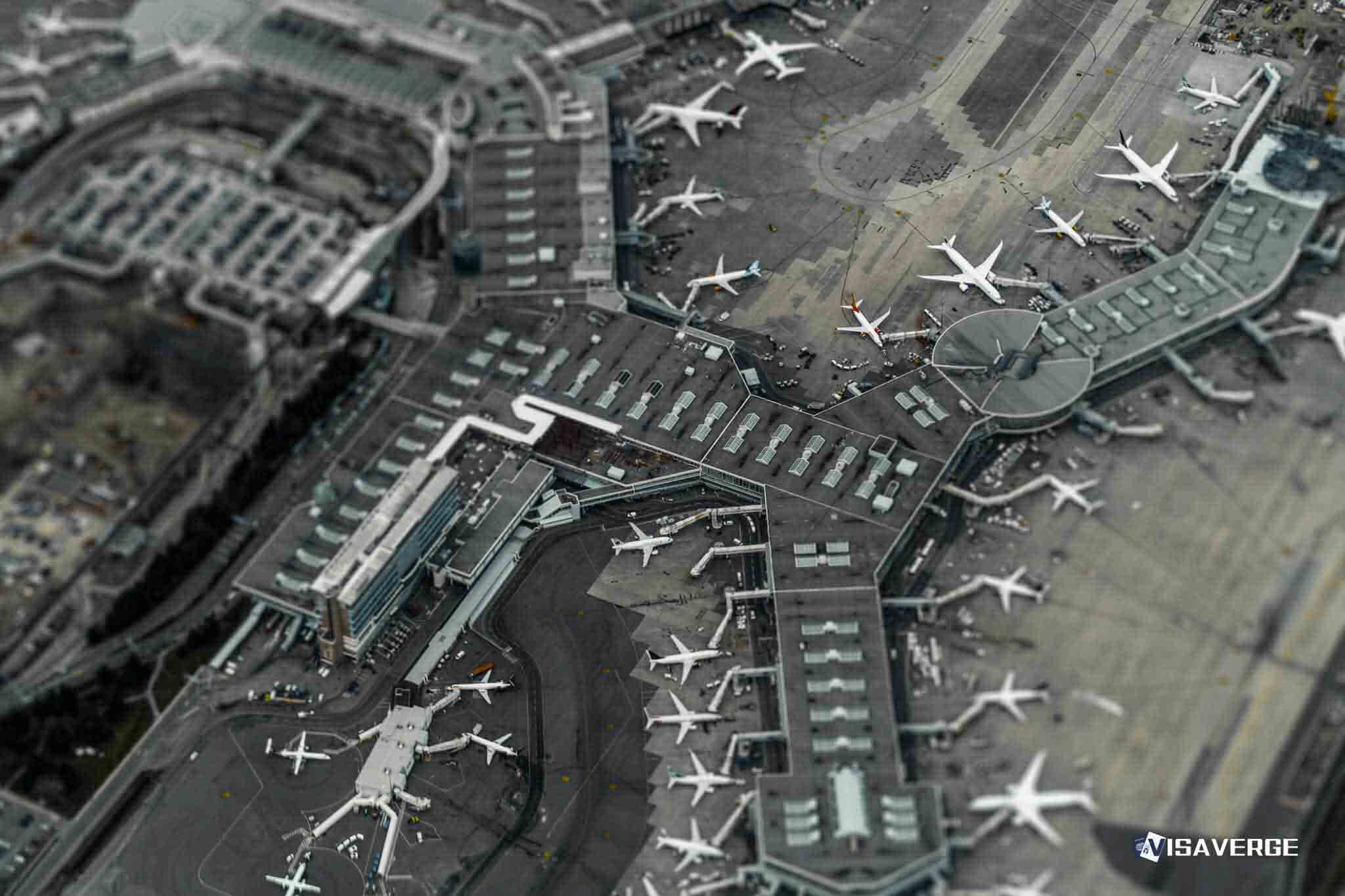
Airline schedules now project over 3,080 peak-day operations at O’Hare, the FAA said, compared with last summer’s peak of about 2,680.
The agency framed the cap as a way to keep traffic at “demonstrated manageable capacity” while O’Hare faces constraints tied to construction, gates and staffing that can narrow the practical room for growth even at a large hub.
United Airlines and American Airlines have scheduled aggressive increases at O’Hare, the FAA said, as carriers compete for passengers and for gates allocated by the Chicago Department of Aviation based on flight activity.
With more flights packed into the same hours, the FAA said it sees risks building across the runway and terminal system, and in the air traffic control staffing needed to keep traffic moving safely.
The FAA’s proposal pairs a daily cap with a pacing approach that also limits the number of combined arrivals and departures by hour.
It set out hourly limits of about 100 combined arrivals and departures, with reviews of every 30-minute interval from 06:00 to 21:59 local time.
Those half-hour checks matter because the sharpest delays often cascade from short bursts of over-scheduling, when airlines concentrate flights into the same peaks to maximize connections and aircraft use.
By keeping traffic closer to what it calls manageable levels, the FAA is trying to reduce the odds that queues on taxiways, congestion at gates, or saturation in the surrounding airspace turn into broader disruption.
The proposal also lands amid ongoing O’Hare expansion projects, a factor the FAA cited as part of the reason it wants schedules to stay within limits it views as workable.
Construction does not just affect runways, the agency warned, but can also constrain terminals and the timing flexibility that controllers and airport operators normally rely on during irregular operations.
Air traffic control staffing also sits at the center of the proposal, with the FAA pointing to the need to align airline schedules with the system’s ability to handle demand safely.
The FAA laid out a near-term timeline for discussions that could determine whether carriers cut schedules voluntarily or face an enforceable cap.
The agency scheduled a meeting on March 4, 2026, with airlines and the Chicago Department of Aviation to discuss congestion and voluntary reductions.
Ahead of that session, the FAA planned to publish a document in the Federal Register in the week of March 2, 2026, outlining the proposal.
After those consultations, the FAA said it plans a formal order to enforce the temporary cap if voluntary steps do not bring peak traffic down.
Airlines face a difficult balancing act because O’Hare is a competitive market, and a carrier that pulls back flights can risk losing activity used in gate allocation decisions.
At the same time, the FAA’s plan makes clear that if schedules remain above what it considers manageable, it is prepared to impose constraints to reduce peak-day traffic.
United Airlines signaled it would engage with the FAA’s process and emphasized its focus on operational stability at O’Hare.
“We appreciate Secretary Duffy and FAA Administrator Bedford’s leadership in convening this meeting. We share their commitment to running a safe and reliable operation out of ORD and look forward to a collaborative discussion,” United Airlines said.
The Chicago Department of Aviation pointed to recent and ongoing investments at O’Hare while supporting a collaborative approach that accounts for several bottlenecks beyond runway geometry.
The department emphasized $6 billion invested in an eight-runway system and its ongoing ORDNext program, including new satellite concourses and a Global Terminal.
Chicago aviation officials also said they support collaboration for a “temporary adjustment” that considers gates, air traffic control staffing, and construction.
Transportation analyst Schwieterman described a tense dynamic for carriers deciding whether to trim schedules without being forced.
He said airlines face pressure for voluntary cuts to avoid federal mandates, calling it a “stressful moment.”
The proposed cap would require trimming nearly 400 flights on peak days, a sizable change that could ripple through airline schedules built around morning and late-afternoon banks.
For travelers, the FAA’s plan raises the possibility that some existing itineraries could be affected, since the busiest days would require the most reductions.
Even so, the FAA and airlines have time to work through schedule changes before the late-March start of the summer scheduling season window described in the proposal.
The FAA positioned the cap as congestion management rather than a long-term limit on growth at O’Hare, emphasizing the temporary nature of the approach.
That framing reflects the broader reality that O’Hare is in the middle of capacity modernization efforts, but the timing of construction and staffing can restrict what the system can handle day to day.
O’Hare’s expansion work, including satellite concourses and a Global Terminal concept under ORDNext, forms part of the context for why the FAA wants schedules to match what it calls demonstrated capability.
Airport projects can create shifting constraints, as work zones change where aircraft can taxi, how gates turn aircraft, and how quickly disruptions can be absorbed.
Staffing levels at air traffic control can also shape effective capacity, particularly when schedules push demand into concentrated peaks that leave less margin for delays.
The FAA’s hourly and half-hour monitoring approach underscores that its concern is not simply the raw number of flights in a day, but when those flights arrive and depart.
By proposing hourly limits of about 100 combined arrivals and departures, and measuring every 30 minutes from 06:00 to 21:59 local time, the FAA is aiming to keep rush periods from outstripping what the airport and airspace can handle.
The next markers come quickly: the Federal Register publication in the week of March 2, 2026, and the March 4, 2026 meeting with airlines and the Chicago Department of Aviation.
Whether carriers can agree on voluntary reductions could determine if the FAA turns to a formal order, and how O’Hare’s summer scheduling season unfolds for airlines and passengers alike.