(UNITED STATES) — U.S. Immigration and Customs Enforcement warned its own supervisors that the agency is struggling to keep pace with vetting recruits as it races to expand staffing for a stepped-up immigration enforcement agenda, according to an internal email reported in a Reuters exclusive on Thursday.
ICE’s message to managers in its Enforcement and Removal Operations division pointed to stalled background checks during what officials described as the largest recruitment drive in the agency’s history, a push that has collided with questions about whether screening can match the pace of hiring.
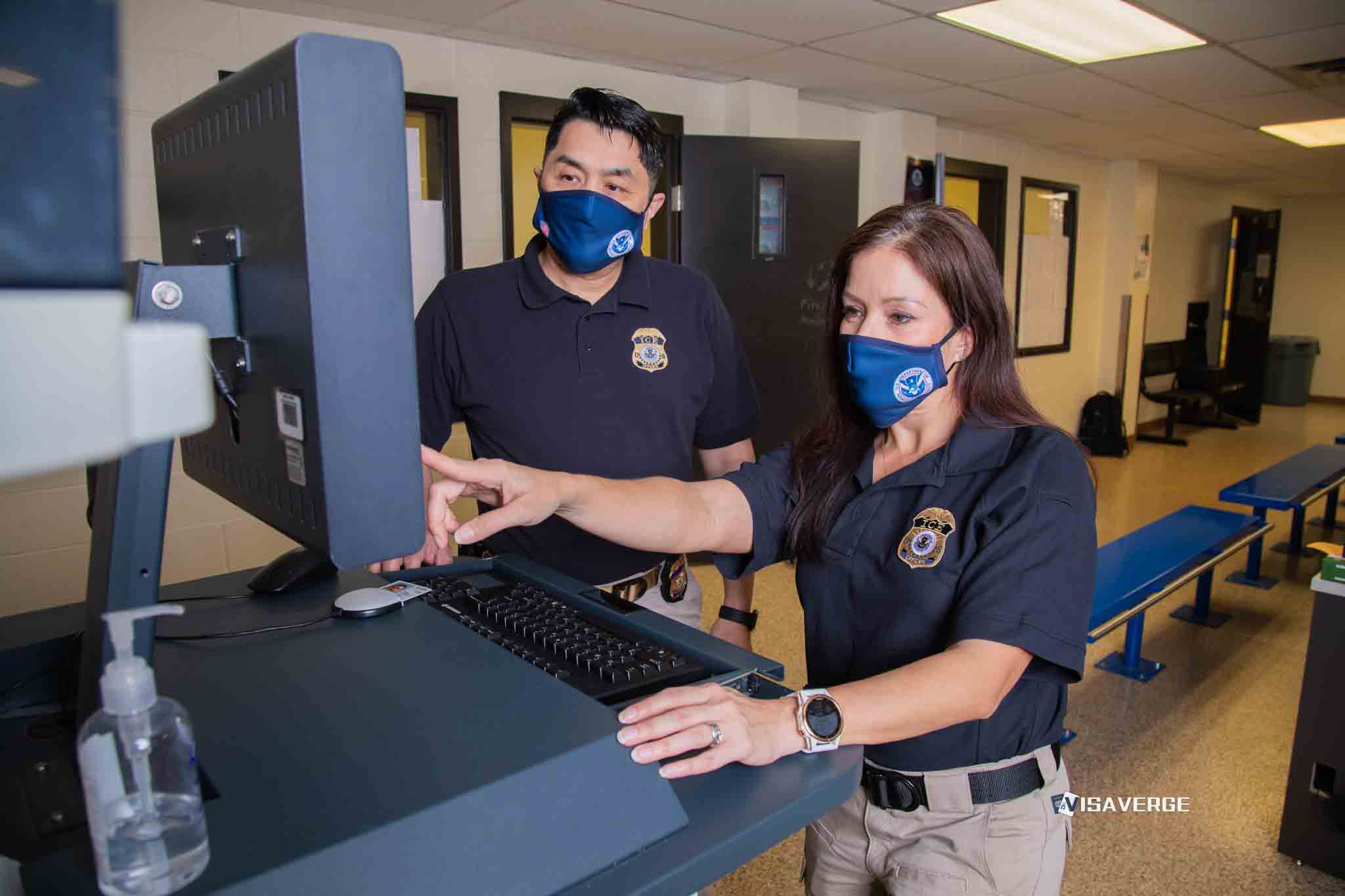
At issue is how quickly ICE can bring new personnel into sensitive law enforcement roles while maintaining reliable background checks, a process central to public trust, officer safety and the lawful conduct of arrests and removals.
The internal email, sent to supervisors in Enforcement and Removal Operations (ERO), acknowledged a “high volume of new hires” and “stalled background checks,” the Reuters report said.
Guidance in the email told field offices to refer potentially disqualifying information to the Internal Integrity Investigations Unit when supervisors learn of “derogatory information about a newly hired employee’s conduct prior to ERO employment.”
That category, the email said, can include an officer who resigned from another law enforcement agency due to misconduct.
The memo’s practical impact is operational: it signals that ERO supervisors may confront allegations about prior conduct after an employee has already entered the pipeline, leaving managers uncertain about what steps to take if issues surface late or after hiring.
In the email’s framing, the uncertainty grows when a past concern emerges after a recruit has already started training or been deployed, a scenario that can complicate supervision and discipline in the field.
Department of Homeland Security officials rejected the idea that the internal guidance reflected a systemic breakdown, describing it instead as a reminder to supervisors of the tools available when questions arise.
“This was not highlighting any vetting problems, but rather a reminder of the services and resources ICE provides supervisors. All new hires go through extensive background checks and continuous vetting when they are hired including criminal and financial checks,” said Lauren Bis, a DHS spokesperson, on February 26, 2026.
DHS and ICE have tied the hiring surge to an enforcement push backed by new funding and policy priorities, with ERO at the center of arrest operations and removals.
Acting ICE Director Todd Lyons, addressing concerns that accelerated hiring has been paired with shortened training, defended the intensity of instruction for recruits.
Lyons said recruits are training “six days a week, 12 hours a day” and that “the meat of the training was never removed.”
Tricia McLaughlin, DHS assistant secretary, has also defended the drive in repeated public comments in late 2025 and early 2026, calling claims of widespread vetting failure “unfounded” while emphasizing that many recruits arrive with prior law enforcement experience.
The dispute is not simply rhetorical. Rapid staffing increases can widen the gap between hiring decisions and the completion of screening steps, and the internal email’s reference to stalled background checks suggests supervisors could face real-time decisions about personnel whose files may still be incomplete.
Even if agencies rely on continuous vetting, supervisors must still respond to allegations of prior misconduct that emerge at inconvenient moments—during academy training, in pre-deployment briefings or after assignment to field work.
DHS and ICE maintain that continuous vetting and rigorous training protect standards, while critics and some lawmakers have questioned whether internal controls can scale fast enough when hiring accelerates.
The hiring push followed major immigration legislation that DHS said funded a significant expansion of the workforce, with ICE framing the effort as essential to meeting enforcement targets.
Internal data cited in the Reuters report showed dismissals during training, with most separations tied to fitness or academic performance, while a smaller number were connected to disqualifying criminal records or failed drug tests that should have been flagged earlier.
ICE and DHS also changed some eligibility and training requirements during the hiring drive, including adjustments to age rules and other standards, moves supporters cast as necessary to fill ranks and critics describe as added risk.
Those policy changes have sharpened the focus on vetting capacity. When screening is delayed, managers can face difficult questions about what to do if derogatory information arrives late, and whether the system has clear stopgaps before recruits move from classrooms into field activity.
In its response, DHS emphasized that checks include criminal and financial screening and that new hires remain under continued review after they enter the agency.
The broader enforcement effort has also intersected with a separate DHS initiative over legal refugees who have not yet adjusted their status, a process that blends immigration paperwork with arrest authority and re-screening requirements.
USCIS Director Joseph Edlow signed a joint memo with Lyons regarding Operation PARRIS, which directs the arrest and “re-vetting” of legal refugees who have not yet adjusted their status.
A USCIS spokesperson defended the policy in blunt terms: “This is not novel or discretionary; it is a clear requirement in law. The alternative would be to allow fugitive aliens to run rampant through our country with zero oversight.”
That language has become part of the political fight over how DHS uses arrest authority, and it has heightened scrutiny of the standards applied to personnel expected to carry out arrests, handle detainees and operate in communities where fear of enforcement can be high.
Reports cited by Reuters described allegations that recruits were identified with MS-13 tattoos or active warrants while at the training academy and then escorted from facilities.
DHS did not concede those reports as evidence of systemic failure in its public statements, but the episode underscores why background checks—and the timing of their completion—have become central to the debate.
Supervisors in ERO manage frontline enforcement activity, and the internal email’s instruction to route derogatory pre-employment conduct to an internal investigative unit suggests managers need a defined path when they learn something new after a recruit is already in the system.
In that scenario, field leaders can face questions about whether a trainee should continue, whether the employee can carry a badge and weapon, and how to preserve chain-of-command accountability while the agency evaluates new information.
The tensions have played out against a backdrop of misconduct reporting and rising oversight demands, with lawmakers pressing DHS to explain how it will ensure accountability during an expansion.
Reuters cited two U.S. citizens reportedly killed by federal agents in Minneapolis in early 2026, an episode that fueled congressional demands for body cameras and stricter use-of-force protocols.
DHS has not detailed in public statements, as cited by Reuters, how any particular incident connects to hiring changes, but the reported deaths intensified scrutiny of training, supervision and the practical consequences of rapid growth.
Immigrant communities, advocates and local officials have also focused on the visibility of enforcement, describing increased fear tied to “roving patrols” and masked agents as the agency expands.
In that climate, uncertainty over whether all screening steps have been completed before deployment can amplify public mistrust, even as DHS insists continuous vetting and rigorous training provide safeguards.
The enforcement buildup has also generated legal challenges. Reuters cited several lawsuits, including one in Minnesota where a judge temporarily blocked the detention of refugees under the new re-vetting policy tied to Operation PARRIS.
The legal fights have placed additional attention on how DHS and its components coordinate, including where USCIS policy intersects with ICE arrest authority and how agencies interpret legal requirements around re-vetting.
On Capitol Hill, the Reuters report said lawmakers introduced the “Freeze ICE Act” in February 2026, a proposal to pause hiring until ICE provides more transparency about vetting and training.
Supporters of the proposal have argued that a hiring pause would give oversight bodies time to assess whether safeguards match the scale and speed of recruitment, while DHS leaders have pressed forward, portraying hiring as essential to carrying out enforcement priorities.
The internal email sits at the center of that clash: DHS portrays it as routine supervisory guidance, while critics see it as evidence of bottlenecks and risk points in background checks during a period of accelerated onboarding.
For ICE managers, the stakes are practical. ERO supervisors must staff operations, assign duties and respond to allegations quickly, and the email’s emphasis on referring derogatory information to the Internal Integrity Investigations Unit reflects the need for a clear process when concerns surface late.
The question of timing—whether a recruit can begin training or deploy before screening steps are complete—has become a focal point because it affects not only public confidence, but also workplace safety and internal discipline.
DHS has pointed to continuous vetting as an answer to that concern, arguing that screening does not end on the first day of employment and that supervisors have tools to respond when new information emerges.
Lyons has also framed the training regimen as demanding even under changes to timelines, telling critics that recruits are working long days and that essential curriculum remains intact.
Verification of the competing claims will likely come through agency statements and court records as the hiring drive continues and legal challenges move forward.
DHS posts official statements and press releases through the DHS Newsroom, while ICE publishes agency updates through its News and Press Releases.
USCIS, whose leadership signed the Operation PARRIS memo with ICE, publishes announcements through the USCIS Newsroom, and litigation over detention and re-vetting can be tracked through official court filings and orders.
For now, the administration’s public message is that the expansion remains compatible with strict screening and ongoing review, even as the internal email told supervisors to prepare for the reality of delayed background checks and to route “derogatory information about a newly hired employee’s conduct prior to ERO employment” to internal investigators.
Exclusive-ICE Faces Background Check Hurdles as Enforcement Push Intensifies
ICE is facing internal pressure as a massive recruitment drive outpaces its ability to complete background checks. Leaked emails show supervisors were warned about stalled vetting and instructed on reporting prior misconduct found after hiring. While DHS defends the integrity of its training and screening, lawmakers have proposed the ‘Freeze ICE Act’ to halt hiring until transparency is provided regarding the agency’s internal safety controls.