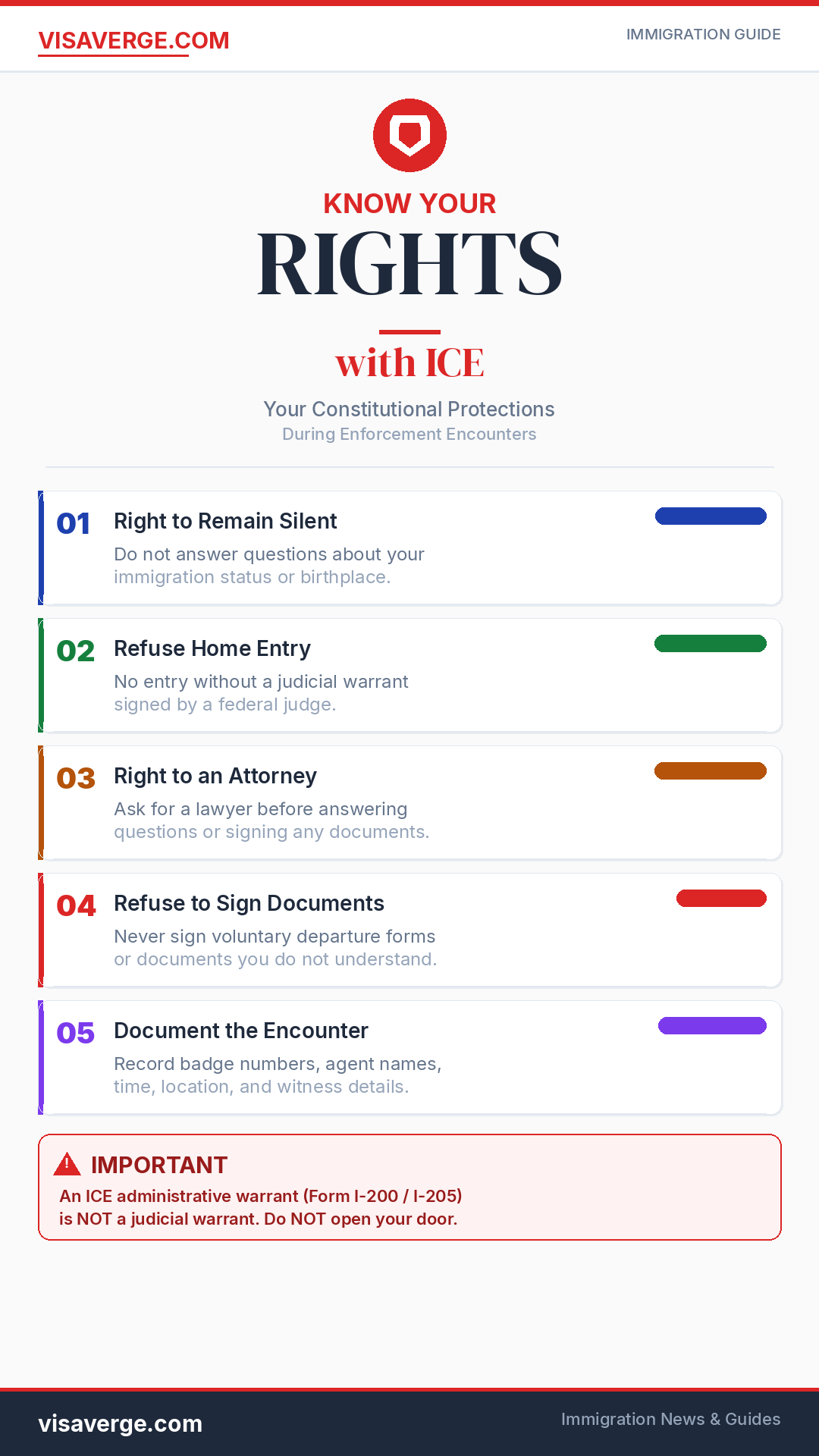
(EAST AURORA) — East Aurora School District 131 tightened access rules for federal agents after immigration enforcement activity on the grounds of Allen Elementary School in the fall of 2025, adopting a policy that bars agents from district property unless they present a judicial warrant signed by a federal judge.
October incident and board response

Three days before the board acted, federal agents in plainclothes and unmarked vehicles were stationed in the school’s staff parking lot, prompting community members to document the activity. That presence on Saturday, October 25, 2025 led to a confrontation that resulted in two detentions.
- Ruben Morales and Jesse Olazaba, both U.S. citizens, were detained during the incident.
- Morales was later released from FBI headquarters in Chicago without charges.
- Olazaba received a citation for allegedly obstructing an arrest.
On October 28, 2025, the district’s Board of Education passed a resolution requiring federal agents to show a judicial warrant signed by a federal judge before being allowed on district property. The board framed this as a way to give principals and school staff a consistent standard to follow when approached by federal law enforcement.
The board’s action was aimed at setting a consistent standard for principals and other school officials who might face requests from federal law enforcement.
Federal policy changes in 2025
The Allen Elementary episode occurred amid broader federal changes earlier in 2025:
- On January 21, 2025, Acting DHS Secretary Benjamine Huffman rescinded the 2021 “Protected Areas” memorandum, removing longstanding limits on immigration enforcement near places such as schools, churches, and hospitals.
- DHS posted a statement at https://www.dhs.gov/news/2025/01/21/statement-dhs-sperson-directives-expanding-law-enforcement.
- DHS said: “Criminals will no longer be able to hide in America’s schools and churches to avoid arrest. The Trump Administration will not tie the hands of our brave law enforcement, and instead trusts them to use common sense.”
-
On September 4, 2025, DHS and USCIS announced a final rule expanding the role of USCIS “Special Agents” (1811 officers), empowering them with full law enforcement authority to investigate and arrest.
- DHS posted a statement at https://www.dhs.gov/news/2025/09/04/new-era-dawns-uscis-special-agents-now-meet-authority-support-immigration.
-
DHS said: “USCIS law enforcement authorities and newly minted USCIS 1811 classified officers. are now empowered to investigate, arrest, and present for prosecution those who violate America’s immigration laws.”
-
DHS has tied enforcement activity to national crime initiatives. As of December 24, 2025, DHS reported over 17,500 arrests under the “Laken Riley Act” crimes initiative.
-
DHS posted this information at https://www.dhs.gov/news/2025/12/24/making-america-safe-again-dhs-arrests-17500-criminal-illegal-aliens.
-
DHS and ICE materials emphasize targeting “the worst of the worst,” including “criminal illegal aliens” and those involved in “immigration fraud.”
- ICE newsroom materials are available at https://www.ice.gov/newsroom.
Local and state responses
East Aurora’s response combined policy restrictions and practical school preparations:
- District 131 increased “safe space” resources and asked families to update emergency contact information to prepare for potential separations.
- The district required federal agents to present a judicial warrant as a condition for access to district property.
- Officials said the measures were meant to help schools follow state limits while operating under federal rules that no longer treated schools as protected areas.
At the state level:
- Illinois House Bill 3247, effective January 1, 2026, barred schools from collecting citizenship information and restricted sharing student data with federal agencies without a court order.
- The law added another layer that limits what schools collect and how they share information.
Broader pattern in Illinois and operational changes
The East Aurora incident was part of a wider pattern of enforcement activity in Illinois in late October 2025:
- Similar actions were reported in Evanston and Skokie on October 31, 2025, which led to “soft lockdowns” in those districts.
- USCIS field offices experienced operational changes; as of October 2025, USCIS field offices may have armed special agents present during standard interviews to handle immediate fraud investigations and arrests.
How the Allen Elementary confrontation unfolded
- Community members approached vehicles positioned in the staff parking lot; agents were in plainclothes and used unmarked vehicles.
- The activity occurred on a Saturday when school was not in session, yet the presence and subsequent detentions became a focal point for residents and officials.
- The detention of bystanders (two U.S. citizens), Morales’ release without charges, and Olazaba’s citation prompted renewed calls for clear rules for school administrators and security staff.
District protocols and practical steps
Under the October 28 resolution, district staff are expected to:
- Require federal agents to show a judicial warrant signed by a federal judge before allowing access to district property.
- Use the resolution as a consistent standard for principals and school officials when confronted by federal law enforcement.
- Maintain and expand safe space resources for students.
- Request families update emergency contact information to prepare for the possibility that parents or guardians become unavailable.
Tension between federal and state directives
The combination of federal and state moves has left school districts balancing overlapping demands:
- Federal: Enforcement no longer limited by the 2021 “Protected Areas” memo; expanded authority for DHS/USCIS personnel.
- State/local: Limits on data collection and sharing (House Bill 3247) and local warrant requirements like District 131’s resolution.
East Aurora’s warrant requirement is one local measure; House Bill 3247 created statewide limits effective January 1, 2026.
Continuing impact and information sources
For District 131, the Allen Elementary School episode remains the central reference point for planning and protocols. The district’s current focus:
- Restricting access without a judicial warrant.
- Implementing internal steps to support students and families.
- Preparing staff and administrators to respond consistently when approached by federal agents.
More information from federal agencies:
– DHS Press Room: https://www.dhs.gov/newsroom
– USCIS Newsroom: https://www.uscis.gov/newsroom
More information from the district:
– East Aurora School District 131: https://www.d131.org
Following a confrontation at Allen Elementary involving federal agents, East Aurora District 131 established a policy requiring a signed judicial warrant for campus access. This local mandate responds to the 2025 federal removal of ‘protected status’ for schools. While the district focuses on student safety and privacy, Illinois state law now bars schools from collecting citizenship data, creating a significant legal tug-of-war between state protections and federal enforcement.