- Senate negotiators have deadlocked over DHS funding, impacting airport operations and border enforcement resources.
- Most USCIS operations remain funded by filing fees, potentially insulating visa processing from a government shutdown.
- Travelers may face longer airport wait times and screening delays as TSA and CBP staffing levels fluctuate.
Senate negotiators have deadlocked over Department of Homeland Security funding, setting up a fight that could reach travelers and frontline operations before it slows many USCIS case decisions.
The dispute reaches far beyond one budget line. DHS oversees USCIS, ICE, CBP and TSA, the agencies that handle airport screening, entry at ports of arrival, immigration enforcement and many day-to-day contacts with the U.S. immigration system.
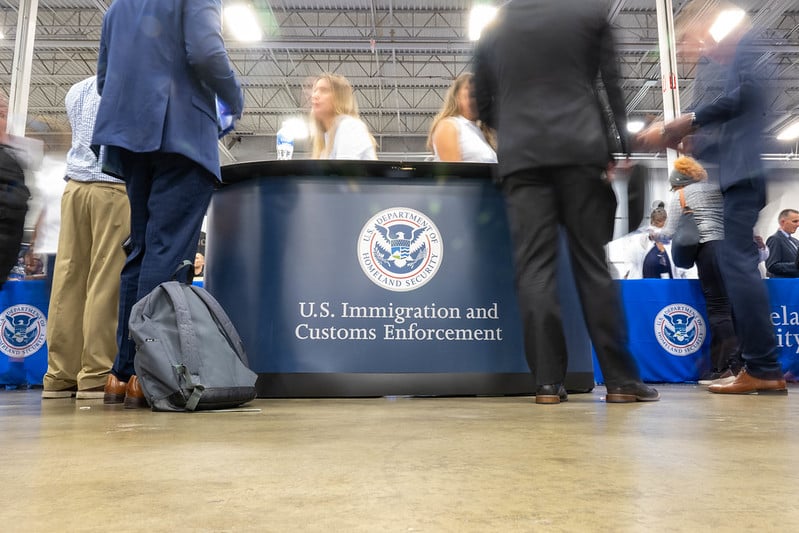
That structure matters because different DHS functions rely on different funding models. A funding lapse can strain airport operations and enforcement pressure faster than it affects much of USCIS adjudications, a distinction with direct consequences for F-1 students, H-1B workers, green card applicants, employers and families planning travel.
USCIS sits in a different position from many other DHS components. The agency says about 96% of its funding comes from filing fees and only about 4% from congressional appropriations.
In a prior federal funding lapse notice that USCIS still keeps in its archive, the agency said a lapse in annual appropriations did not affect most USCIS operations because those activities were fee-funded and offices would remain open. A current FY 2026 USCIS budget document also points to continued reliance on fee-backed operations.
| India | China | ROW | |
|---|---|---|---|
| EB-1 | Apr 01, 2023 ▲31d | Apr 01, 2023 ▲31d | Current |
| EB-2 | Jul 15, 2014 ▲303d | Sep 01, 2021 | Current |
| EB-3 | Nov 15, 2013 | Jun 15, 2021 ▲45d | Jun 01, 2024 ▲244d |
| F-1 | May 01, 2017 ▲174d | May 01, 2017 ▲174d | May 01, 2017 ▲174d |
| F-2A | Feb 01, 2024 | Feb 01, 2024 | Feb 01, 2024 |
That helps explain why shutdown warnings around immigration are often uneven. Pending H-1B petitions, F-1 benefit requests, green card applications and naturalization cases may continue moving in many instances even as other parts of DHS face tighter pressure.
Still, USCIS has never suggested every function is insulated. Its own archived notice used the word “most,” leaving room for case-specific programs, support functions and interagency dependencies to create friction even when core adjudications continue.
That distinction is likely to matter less to travelers standing in airport lines. TSA told Congress in February 2026 that employee absences can rise as a shutdown continues, and that higher call-outs can produce longer checkpoint wait times, with missed or delayed flights as a downstream effect.
The passenger volume alone shows how quickly small staffing problems can spread. TSA’s passenger-volume page shows it screened 2,817,785 travelers on March 19, 2026.
For students returning to campus, H-1B workers taking international trips, NRIs visiting the United States and families moving through large hubs, that is where the impact may appear first. A modest staffing strain can turn into longer waits across checkpoints and ripple into missed connections and delayed arrivals.
DHS has also said that, one week into the shutdown, it began imposing emergency measures to conserve resources. Those steps included tighter limits on travel, deployments and operational support, while TSA suspended certain escort services at airports to preserve staffing and resources.
That makes the travel system a first test of any prolonged standoff. Immigration journeys do not end with an approval notice or visa stamp; they depend on screening lines, inspection booths and enough operational capacity to handle heavy passenger loads.
For travelers abroad, another split matters. A visa and admission to the United States are not the same thing.
Consular processing may happen outside DHS, but inspection and admission at the airport or land border fall to CBP. DHS identifies CBP as one of its operational components and “the United States’ first unified border entity.”
That leaves valid visa holders dependent on DHS staffing and border operations when they arrive. Even if paperwork remains stable, entry logistics can become less predictable when frontline staffing comes under pressure.
The Senate fight also extends beyond whether DHS gets funded at all. The argument has turned on funding levels and on how much room the department has to set its operational posture.
Senate Democratic appropriators said in January that the conference bill flat-funded ICE, cut detention funding and detention capacity, cut CBP by more than $1 billion, and added new constraints on DHS. The Senate Appropriations Committee’s FY 2026 homeland security report put the department’s total recommended appropriation at $92.323 billion.
Those figures frame a broader policy struggle. Lawmakers are not only arguing over replenishing funds, but also over detention space, border resources and the guardrails attached to how DHS components use money.
That could shape enforcement choices more than a single top-line number suggests. ICE detention levels, CBP resources and the constraints attached to department funding can influence detention capacity, border operations and the intensity of enforcement activity.
For colleges and universities, the effect is not limited to campus paperwork. Student exposure can emerge during travel, inspection at the port of entry and the broader enforcement climate, even when USCIS service centers keep processing many requests.
DHS’s own component list shows why. The same department houses the agencies that affect student arrivals, inspections and immigration benefits, meaning F-1 and J-1 populations can feel pressure through several channels at once.
A student may hold valid documents and still face a trip shaped by airport screening conditions, arrival inspections and departmental operating limits. That makes travel windows and reentry plans as important as the status of a pending benefit request.
Employers face a similar split. Companies filing H-1B, L-1 or employment-based green card cases may find that petition adjudications remain steadier than they first expected because of USCIS’s fee-funded structure.
The less protected area is employee mobility. Business travel, inspections on arrival and frontline border management depend on DHS staffing in real time, making reentry and trip planning more vulnerable than case processing itself.
That matters for firms moving workers in and out of the country on short notice. An employer can see paperwork continue while the travel system becomes more uncertain for foreign national staff returning from meetings, family visits or overseas assignments.
Families in mixed-status households and community groups tracking enforcement may be watching a different part of the debate. The appropriations battle has moved past raw totals and into the operating terms that can influence detention and enforcement on the ground.
Senate materials from both sides point to a fight over ICE detention levels, CBP resources and DHS guardrails, not only over whether the department should reopen. A compromise, if one emerges, could therefore affect home encounters, detention space and enforcement intensity through the terms attached to funding.
That makes operational discretion a central issue. Limits or flexibilities built into a final deal could shape how aggressively DHS components act, how much detention space ICE can use and how border resources are deployed.
For readers following USCIS matters, that wider context is easy to miss because case processing often dominates immigration coverage. Yet the immediate effect of a DHS funding clash may show up first in airport wait times, travel friction and inspection delays rather than in a sudden halt to many applications and petitions.
USCIS remains part of the same department, even with its distinct funding mix. Some support functions and interagency links can still create pressure points, and applicants with pending cases have reason to watch official case-status channels rather than assume either a total freeze or complete immunity.
Travelers have a different early-warning system. Airport wait times, checkpoint slowdowns and signs of disruption in screening or inspection are likely to offer the quickest real-world read on whether the standoff is tightening.
That is especially true for people whose plans depend on smooth entry and onward travel. Students heading back to school, workers returning to U.S. jobs, families arriving on immigrant visas and NRIs connecting through major airports all depend on DHS functions that operate in real time.
The Senate’s next moves will matter because the fight now covers both money and operating limits. Whether lawmakers settle on flat funding, cuts, detention changes or new constraints for DHS components will affect how the department functions at the border, in detention settings and at airports.
For now, the clearest pattern is an uneven one. USCIS casework may keep moving in many categories, while the travel system and frontline enforcement show strain sooner.
Readers watching the debate unfold will likely learn more from the details of any final deal than from a simple headline announcing that Congress funded DHS. The terms attached to that money could shape visa processing conditions, inspections at arrival and the reliability of travel long after the Senate breaks its stalemate.