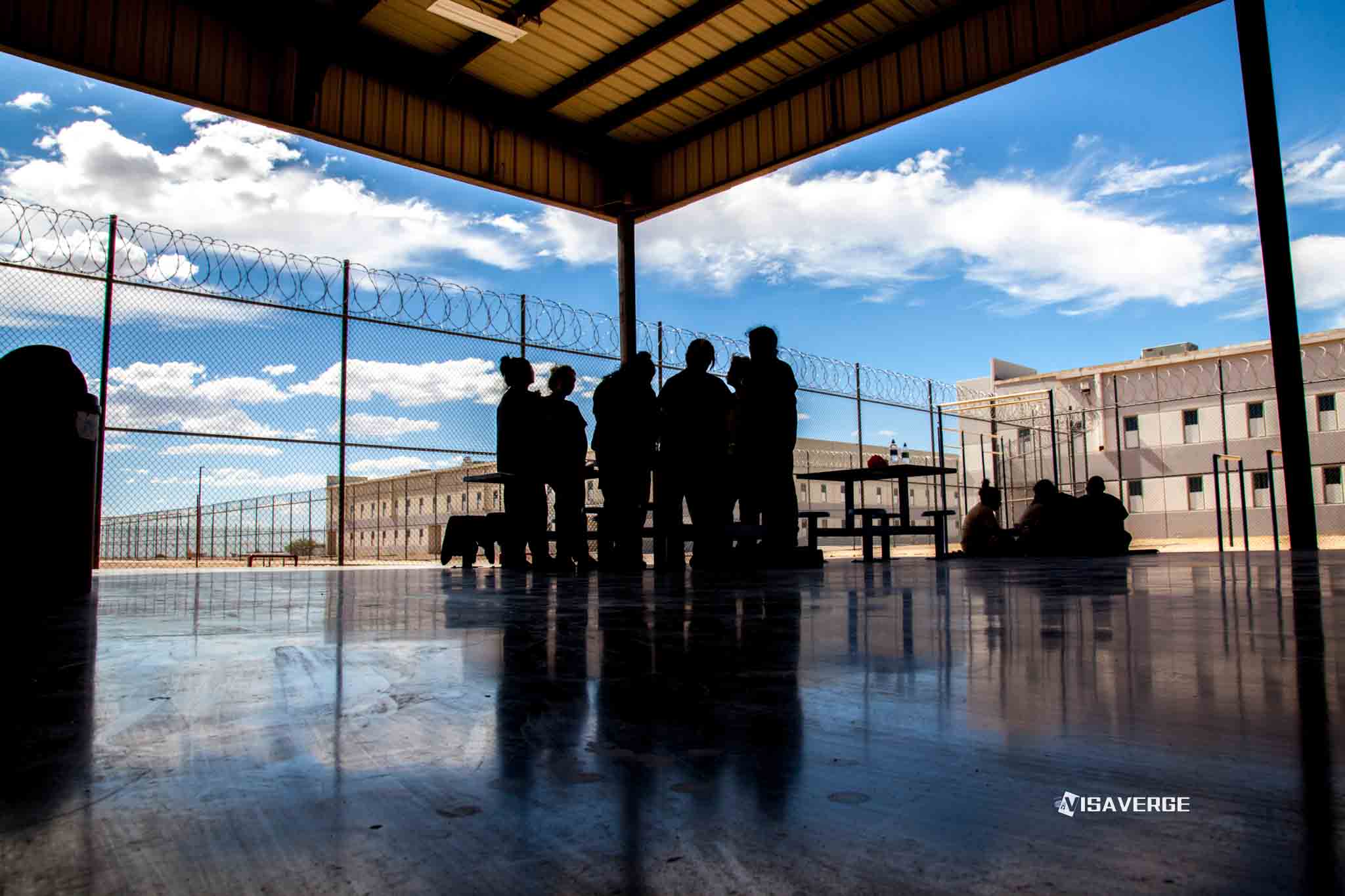
(WASHINGTON, D.C.) A federal appeals court on November 23, 2025, largely kept in place an order blocking the Trump administration from expanding fast-track (expedited) deportations across the United States 🇺🇸, saying the plan posed “serious risks of erroneous summary removal” and likely violated migrants’ Fifth Amendment due process rights.
In a 2-1 ruling, the U.S. Court of Appeals for the D.C. Circuit refused to pause a nationwide injunction issued August 29 by U.S. District Judge Jia Cobb, who found the policy could send people out of the country within hours or days without a fair chance to contest mistakes. The decision leaves thousands of recent arrivals and longtime residents facing very different enforcement rules depending on where they are stopped until the full appeal is heard.

Court ruling and immediate effects
Two judges in the majority, Circuit Judges Patricia Millett and J. Michelle Childs, concluded the administration had not shown it was likely to win on the merits, so the court would not freeze Cobb’s order while the appeal proceeds.
At the same time, the panel partly lifted the district judge’s injunction by allowing the government to keep using unchanged “credible fear” assessments during initial screenings. Credible fear interviews, conducted soon after arrest, are meant to identify people who may face persecution or torture if returned.
- The government argued that restricting those screenings would slow removals and strain detention capacity.
- The split outcome gave the administration a narrow win but did not revive the broader plan to apply expedited removal far from the border nationwide.
The court set a full appeal hearing for December 9, 2025. Homeland Security declined comment immediately.
Key takeaway: The D.C. Circuit blocked the nationwide expansion for now but allowed the government to keep using existing credible fear screenings during initial detention interviews.
Background: What the expanded policy would do
The dispute centers on a Department of Homeland Security move in January 2025 that expanded expedited removal — a process used for about 30 years, mainly near border areas — to anywhere in the country.
Under the expansion:
- Immigration officers could place certain non-citizens into fast-track (expedited) deportations if they could not prove continuous presence for more than two years.
- The policy revived a 2019 Trump-era approach that President Biden later rescinded.
- Officials pitched it as a way to speed enforcement against people with no legal right to stay.
Critics — migrants and advocates — argued the expansion increased the odds that U.S. citizens, lawful residents, or asylum seekers could be swept up through paperwork errors. They said the risk is highest during stops and raids, where people often lack access to documents or lawyers.
Judge Cobb’s reasoning and the majority’s concerns
Judge Jia Cobb’s August 29 ruling said the nationwide expansion stripped people of basic procedural protections at the moment they most need them: when they are in custody, far from family, and often without a lawyer.
Her order blocked DHS from using the expanded authority beyond border-related limits that had been the norm, pending litigation.
Millett and Childs agreed the government’s approach, if allowed while the case is pending, could cause harm that cannot be undone after someone is removed. They wrote that extending expedited removal beyond traditional border settings created “serious risks of erroneous summary removal” anywhere in the country.
Dissent and its implications
Judge Neomi Rao, a Trump appointee, dissented, calling the injunction “impermissible judicial interference” with immigration enforcement.
- She would have granted the administration’s request to pause Cobb’s order while the appeal moves forward.
- Rao warned that courts should not micromanage how the executive branch handles removals.
Her dissent highlights a sharp divide over how far judges can go when they think a policy may violate the Constitution, while officials argue they need flexibility to carry out the law.
Why due process concerns matter in expedited removal
Expedited removal allows deportation without a hearing before an immigration judge, so the stakes rest on brief interviews and whatever documents people have on them.
- Lawyers challenging the policy say arrests away from the border — at workplaces, homes, or during routine stops — often occur without time to contact family members who might bring passports, leases, or school records showing more than two years’ presence.
- One mistaken date or a missing document can determine a person’s fate.
The D.C. Circuit did not decide the final merits, but its order means the broader expansion remains blocked for now — a pause that affects people picked up by ICE in the country’s interior.
For readers seeking official background on the credible fear process, U.S. Citizenship and Immigration Services explains it here: Credible Fear Screening.
Clarifying common misunderstandings
Some online summaries suggested the court “blocked release of hundreds.” The record before the D.C. Circuit was not about a mass release order. Instead, the issue was whether the government could widen fast-track (expedited) deportations nationwide while the lawsuit proceeds.
VisaVerge.com reports that expedited removal has long been used close to the border; the legal fight is over taking that tool into the interior, where people may have deeper ties and more supporting documents.
The appeals court’s refusal to stay Cobb’s injunction means DHS cannot, for now, treat lack of instant proof of two years’ presence as enough to trigger summary removal in every state during the appeal.
What to expect at the December 9 hearing
At the December 9 hearing:
- The administration is expected to argue:
- Congress authorized expedited removal.
- The executive branch needs flexible tools to enforce immigration law beyond the border.
- Plaintiffs are likely to stress:
- Fifth Amendment due process rights do not depend on geography.
- Quick decisions made in detention centers can lead to wrongful deportations that are hard to reverse.
The panel’s partial lift on credible fear assessments suggests judges may be open to narrower adjustments even as they keep the main block in place.
For now, for communities far from border crossings, the decision keeps the pre‑January 2025 rules as the default while the courts determine how much speed the Constitution allows.
The D.C. Circuit on Nov. 23, 2025 largely kept blocked the nationwide expansion of expedited deportations, finding serious risks of erroneous summary removals and likely Fifth Amendment due process violations. In a 2-1 ruling, the court denied a stay of Judge Jia Cobb’s August injunction but allowed continued use of credible fear screenings during initial detention interviews. The panel set a full appeal hearing for December 9, 2025, keeping the expansion paused while litigation continues.