

GREENLAND — Donald Trump said he would “like to make a deal with denmark” to acquire Greenland and warned that “if we don’t do it the easy way, we’re going to do it the hard way.”
“I would like to make a deal with Denmark” “if we don’t do it the easy way, we’re going to do it the hard way.”
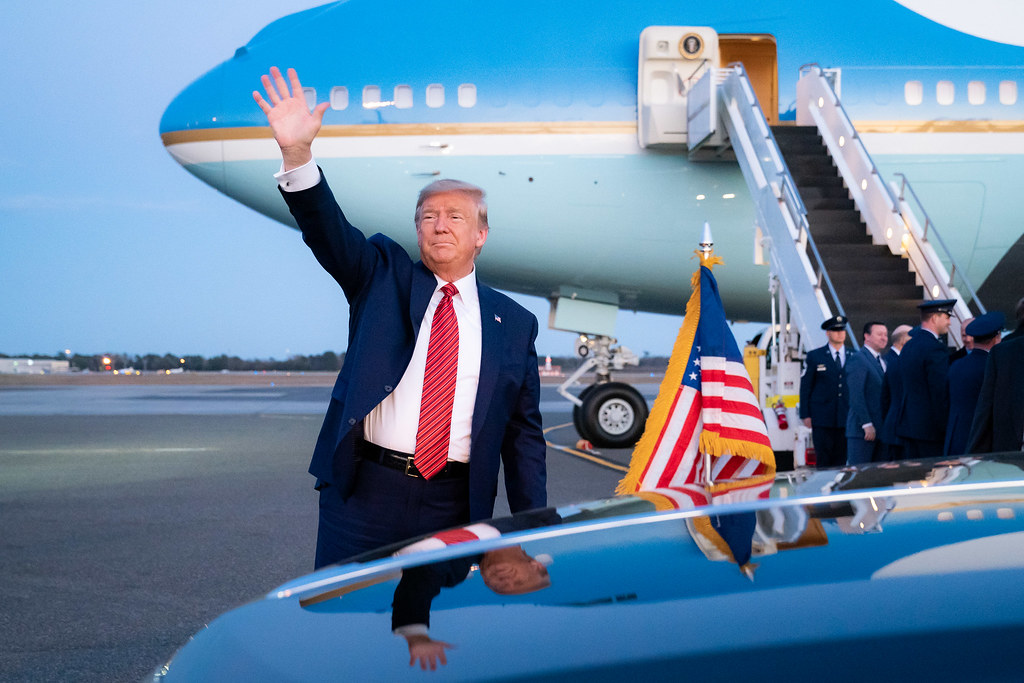
White House Press Secretary Karoline Leavitt reinforced that stance by stating that “utilizing the U.S. military is always an option” to acquire Greenland.
“utilizing the U.S. military is always an option”
Denmark’s Prime Minister Mette Frederiksen has rejected any sale and warned that a U.S. attack on Greenland “would mean ‘the end of NATO’,” adding: “If the United States chooses to attack another NATO country militarily, then everything stops.”
“If the United States chooses to attack another NATO country militarily, then everything stops.”
Any lawful change in Greenland’s status would require Greenland’s consent and formal action by Denmark and the United States, including a treaty process on both sides.
One route would be a classic sovereignty transfer through a treaty between the U.S. and the Kingdom of Denmark transferring sovereignty over Greenland, alongside consent from Greenland, a self-governing territory within the Kingdom of Denmark with its own elected government and parliament.
Ratification would be required in both countries’ constitutional systems, including the Danish Folketing and the U.S. Senate.
Frederiksen has repeatedly rejected any sale; in 2019 she called the idea “absurd” and said “Greenland is not for sale.”
Greenland’s current Prime Minister Jens-Frederik Nielsen has called the U.S. position “completely unacceptable” and demanded respect for international law.
A joint statement by leaders of the U.K., France, Germany, Italy, Poland, Spain and Denmark declared that Greenland “belongs to its people” and that only Denmark and Greenland can decide its future.
A second lawful route would begin with Greenland becoming independent from Denmark through Danish constitutional processes, and then the new state of Greenland freely agreeing to some form of U.S. free association or a defense treaty, or even a formal accession to the United States.
That independence-and-association pathway is often discussed academically, but it still faces hurdles tied to Greenlandic views of self-determination and control over resources, and to how Europe would view any move toward annexation.
Trump has framed Greenland as a national security priority, saying: “We need Greenland from a national security situation. It’s so strategic.”
He has also claimed that “right now, Greenland is covered with Russian and Chinese ships all over the place,” and said, “we’re not going to have Russia or China occupy Greenland… So, we’re going to be doing something with Greenland either the nice way or the more difficult way.”
Trump also said, “When we own it, we defend it.”
Lin Mortensgaard of the Danish Institute for International Studies said Trump’s claims about Russian and Chinese ships “all over the place” are “not true,” calling them an exaggeration used to justify a takeover narrative.
The harder scenario implied by Trump’s warnings would be the use of force or coercion, a path that would collide with international law and the NATO treaty obligations binding Washington and Copenhagen.
In practical terms, a direct military seizure could involve U.S. forces attempting to expand from the existing Thule Air Base, now a U.S. Space Force installation, or landing additional forces while asserting control over key ports, airfields and government centers.
Under international law, such an invasion would be treated as an armed attack on the Kingdom of Denmark, a NATO member since 1949, and a violation of the U.N. Charter’s rule against the use of force.
Under Article 5 of the North Atlantic Treaty, an armed attack on one Ally is considered an attack on all.
Senator Chris Murphy said NATO countries would be obligated to defend Greenland under Article 5 if the United States attacked, warning “this is not actually something to laugh about” because Trump appears increasingly serious.
“this is not actually something to laugh about”
Analysts have noted there is no precedent for one NATO member attacking another, a scenario that would test NATO cohesion and credibility in ways the alliance has not faced.
European leaders have already rallied rhetorically behind Denmark, insisting on sovereignty and that Greenland’s future is for Greenland and Denmark alone, as set out in the joint statement by the U.K., France, Germany, Italy, Poland, Spain and Denmark.
Experts at the Royal Danish Defence College and European Policy Centre have warned that allies now have to consider previously “unthinkable” contingency planning, including what “defending Denmark from the United States would require.”
Greenland’s strategic value has long been linked to geography and defense posture, because the island sits astride Arctic shipping routes and the shortest flight and missile paths between North America and Eurasia.
The Cold War legacy remains central to the security argument, with Greenland tied to U.S. early-warning and air defense history and still hosting critical radar and space tracking at Thule.
Resources are also part of the debate, with Greenland described as having significant deposits of rare earth minerals, uranium, and possibly oil and gas, a mix that has fed arguments about reducing reliance on China’s resource dominance.
China’s 2018 Arctic white paper called it a “near-Arctic state” and signaled interest in Arctic infrastructure and resources, a point U.S. officials cite as a reason to lock in control over Greenland.
The legal and political barriers to any takeover are rooted in sovereignty and self-determination, because Greenland is self-governing under Danish sovereignty and any change in status must respect Greenlanders’ right to decide their political future.
A forcible annexation would violate the U.N. Charter prohibition on the use of force against the territorial integrity of a state and would run against the principle of self-determination for the island’s roughly 57,000 residents, mostly Indigenous Greenlanders.
The joint European statement emphasized: “Greenland belongs to its people. It is for Denmark and Greenland, and them only, to decide on matters concerning Denmark and Greenland.”
“Greenland belongs to its people. It is for Denmark and Greenland, and them only, to decide on matters concerning Denmark and Greenland.”
Nielsen has demanded “respect for international law” and rejected the idea of a forced transfer as “completely unacceptable.”
Alliance politics add another layer of constraint because Denmark’s role in NATO has been underlined by its military deployments and losses alongside U.S. forces, a record that Danish officials and analysts point to when rejecting arguments that Denmark cannot defend Greenland.
In Afghanistan, Denmark deployed 18,000 troops between 2002 and 2021, with up to 760 soldiers at peak, including tanks, F-16s, special forces, and infantry in Helmand Province.
In Iraq, Denmark sent a battalion of over 500 soldiers to Basra Province from 2003–2007 and maintained forces in later missions.
Denmark lost around 50 soldiers in Iraq and Afghanistan combined, one of the highest per-capita casualty rates in NATO.
U.S. officials publicly praised those contributions; Condoleezza Rice in 2008 called Denmark “a terrific ally,” and Barack Obama in 2012 praised its “extraordinary contributions” and willingness to fight “without caveat.”
Denmark has also met and surpassed NATO spending guidelines, hitting 2% of GDP in 2024 and planning 3.22% by 2025 with a long-term goal of 5% over a decade.
Copenhagen is investing about $2.3 billion in Arctic defense, including new Arctic naval vessels, long-range drones, and satellites for Greenland.
Those investments, alongside Denmark’s NATO history, have been cited as undercutting any claim that Denmark is unable or unwilling to defend Greenland, while raising the political cost of any U.S. attempt to compel a change by threat.
The United States already operates in Greenland under an existing legal framework that does not require redrawing borders, a point analysts often cite as a practical alternative to any sovereignty push.
The 1951 Defense of Greenland Agreement between the U.S. and Denmark, still in force, grants the U.S. broad base rights to defend the North Atlantic area in accordance with NATO plans.
Under that arrangement, the U.S. Space Force maintains a permanent presence of about 150 personnel at Thule Air Base, also known as Pituffik, conducting missile warning, space surveillance, and Arctic operations under Danish sovereignty.
Without changing sovereignty, Washington can negotiate expanded base rights, facilities, and joint exercises, and deepen defense cooperation on Arctic surveillance, anti-submarine warfare, and infrastructure.
Political sensitivities would remain, but those steps would expand U.S. capacity under an agreement already accepted by Denmark, rather than through a contested attempt to rewrite sovereignty.
Domestic checks in the United States could also shape what is feasible if rhetoric moved toward action, including Congress’s power over funding.
Representative Ruben Gallego has introduced legislation to prohibit the use of military funds for any action against Greenland.
Frederiksen’s warning that a U.S. attack “would mean ‘the end of NATO’” has sharpened attention on how alliance mechanisms would operate in a crisis, because Article 5 commitments sit at the center of NATO’s deterrence posture.
Analysts describe a dilemma in which applying Article 5 against the United States would mean preparing to fight the alliance’s core military power, while not applying it would hollow out NATO’s credibility and could cause its collapse or radical transformation.
Trump has continued to frame the issue in blunt terms, telling oil executives, “We are going to do something on Greenland, whether they like it or not,” and repeating, “if we don’t do it the easy way, we’re going to do it the hard way.”
For Denmark and Greenland, officials have answered with sovereignty language, international-law arguments, and reminders that Greenlanders’ consent is central to any treaty or political pathway, with Nielsen calling the U.S. position “completely unacceptable.”
“If the United States chooses to attack another NATO country militarily, then everything stops,” Frederiksen said.
Donald Trump has renewed his interest in Greenland, citing national security and resource competition with Russia and China. Denmark and Greenland have rejected a sale, calling it absurd. Tensions have risen as U.S. officials suggest military options, while European allies warn that such actions would destroy the NATO alliance. Legal pathways require mutual consent, though existing defense agreements already allow for significant U.S. military presence on the island.


