- Representative Bonnie Watson Coleman introduced the Welcoming International Success Act to reverse H-1B restrictions.
- The bill targets the $100,000 sponsorship fee and rigid wage requirements imposed in September 2025.
- Democrats argue the current rules create significant barriers for hospitals, universities, and research institutions.
(UNITED STATES) — Democratic Representative Bonnie Watson Coleman introduced the Welcoming International Success Act (WISA) on Friday to reverse President Trump’s September 2025 H-1B restrictions, setting up a new House fight over how tightly the United States should regulate the program.
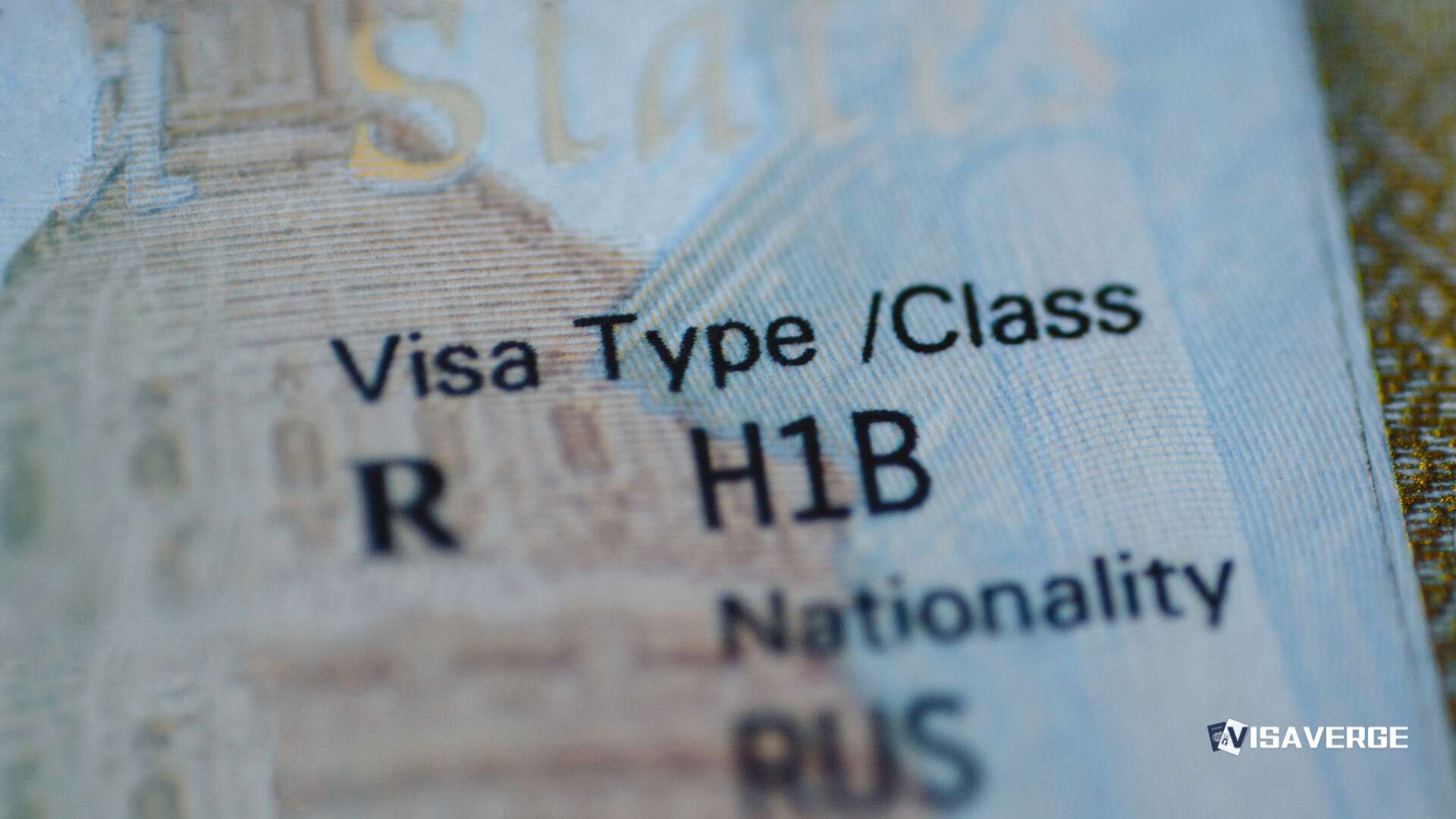
Watson Coleman’s bill targets a September 2025 Presidential Proclamation that imposed a $100,000 sponsorship fee for new H-1B applicants and rigid wage level requirements, moves that employers and institutions have said reshaped costs and compliance expectations for hiring foreign workers.
In a press release, Watson Coleman said, “Trump’s short-sighted proclamation has created significant barriers for U.S. employers, universities, hospitals, and research institutions that rely on highly-skilled professionals,” linking the legislation to workforce needs in higher education, healthcare, and research.
Watson Coleman also framed the bill as a defense of the visa program’s role in hiring and growth. “The H-1B program does not replace the domestic workforce; it serves as a bridge between U.S. talent and global talent that fuels U.S. economic growth,” she said.
The Welcoming International Success Act focuses on undoing the September 2025 changes, rather than rewriting the broader structure of H-1B. Backers have cast it as a rollback of a fee-and-wage framework they say discourages participation by employers and institutions that use the visa to recruit specialized workers.
If enacted, WISA would nullify the September 2025 Presidential Proclamation that created the $100,000 sponsorship fee for new H-1B applicants and set rigid wage level requirements. That would remove the new sponsorship-fee concept for new H-1B applicants and remove or relax the wage rules that the proclamation put in place.
Supporters argue the measure would reduce what they describe as a cost barrier and ease wage-setting rigidity that can complicate hiring decisions. The bill’s approach also reflects an effort to restore predictability for employers and institutions that plan recruitment, retention, and staffing around the H-1B pipeline.
Watson Coleman’s push also arrives as broader debate over H-1B restrictions continues in Washington, with businesses and public-sector employers watching closely. Universities, hospitals, and research institutions feature prominently in Democratic arguments for rolling back the proclamation.
House Democrats quickly lined up behind the proposal. Representatives Yvette Clarke, Lois Frankel, Seth Moulton, and Hank Johnson signed on as co-sponsors, a roster that signals the issue is gaining organized support inside the caucus.
Co-sponsorship can shape how quickly a bill draws attention from committees and party leadership, even when passage remains uncertain. For employers and institutions following the issue, that visible support can also serve as a focal point for lobbying and public messaging tied to hiring and workforce needs.
The legislation also lands alongside mounting legal pressure on the September 2025 Presidential Proclamation. Multiple lawsuits challenge the restrictions, including one from the US Chamber of Commerce and a coalition of Democrat-ruled states led by California.
Those lawsuits argue the restrictions are unconstitutional and detrimental to public services like education and healthcare, placing the proclamation at the center of both political and legal contests. For employers and workers, ongoing litigation can add uncertainty about how long the current rules remain in place and how consistently they apply.
While Democrats press WISA as a rollback, Republican lawmakers have advanced proposals that take sharply different approaches, including ending the program. That contrast has raised the stakes for employers that rely on H-1B hiring and for current beneficiaries thinking about extensions or transfers.
Republican Representative Marjorie Taylor Greene introduced the End H-1B Now Act in January, seeking to terminate the visa programme entirely while allowing a temporary 10-year extension only for medical professionals. Republican Representative Greg Steube introduced the EXILE Act in February, which would phase out the programme entirely by 2027 by reducing the annual visa allocation to zero.
Taken together, the competing bills highlight a split between proposals that would reverse President Trump’s September 2025 H-1B restrictions and proposals that would curtail or eliminate the program. That divergence matters for planning because each approach implies different costs, timelines, and compliance expectations for employers that depend on specialized hiring.
For supporters of WISA, the argument centers on the visa as a tool that connects U.S. employers with global talent, a theme Watson Coleman emphasized in her press release. Opponents and sponsors of alternative proposals have moved in the opposite direction, pushing restriction or termination frameworks that would narrow or shut off the pipeline.
Employers, universities, hospitals, and research institutions often build staffing plans around budgets, wage-setting, and petition timing, and policy shifts can reshape all three at once. In the near term, WISA remains a proposal, and the September 2025 proclamation remains in place while legislation and court challenges proceed on parallel tracks.