- The Trump administration is using $45 billion for detention expansion to support a massive increase in arrests.
- Internal plans detail the creation of seven mega-centers and sixteen smaller warehouses to hold over 100,000 detainees.
- Local resistance is growing as cities and states use zoning and taxes to block new federal facilities.
PHOENIX, ARIZONA — The Trump administration moved to expand immigrant detention sites nationwide using $45 billion authorized by a sweeping 2025 law, a plan officials cast as necessary for higher arrest levels even as communities and some Republican leaders try to block new facilities.
Funding for the detention buildout sits inside the One Big Beautiful Bill Act (OBBBA), a reconciliation bill President Donald Trump signed into law on July 4, 2025. The measure allocated $170 billion for border and interior enforcement and set aside $45 billion specifically for detention capacity.
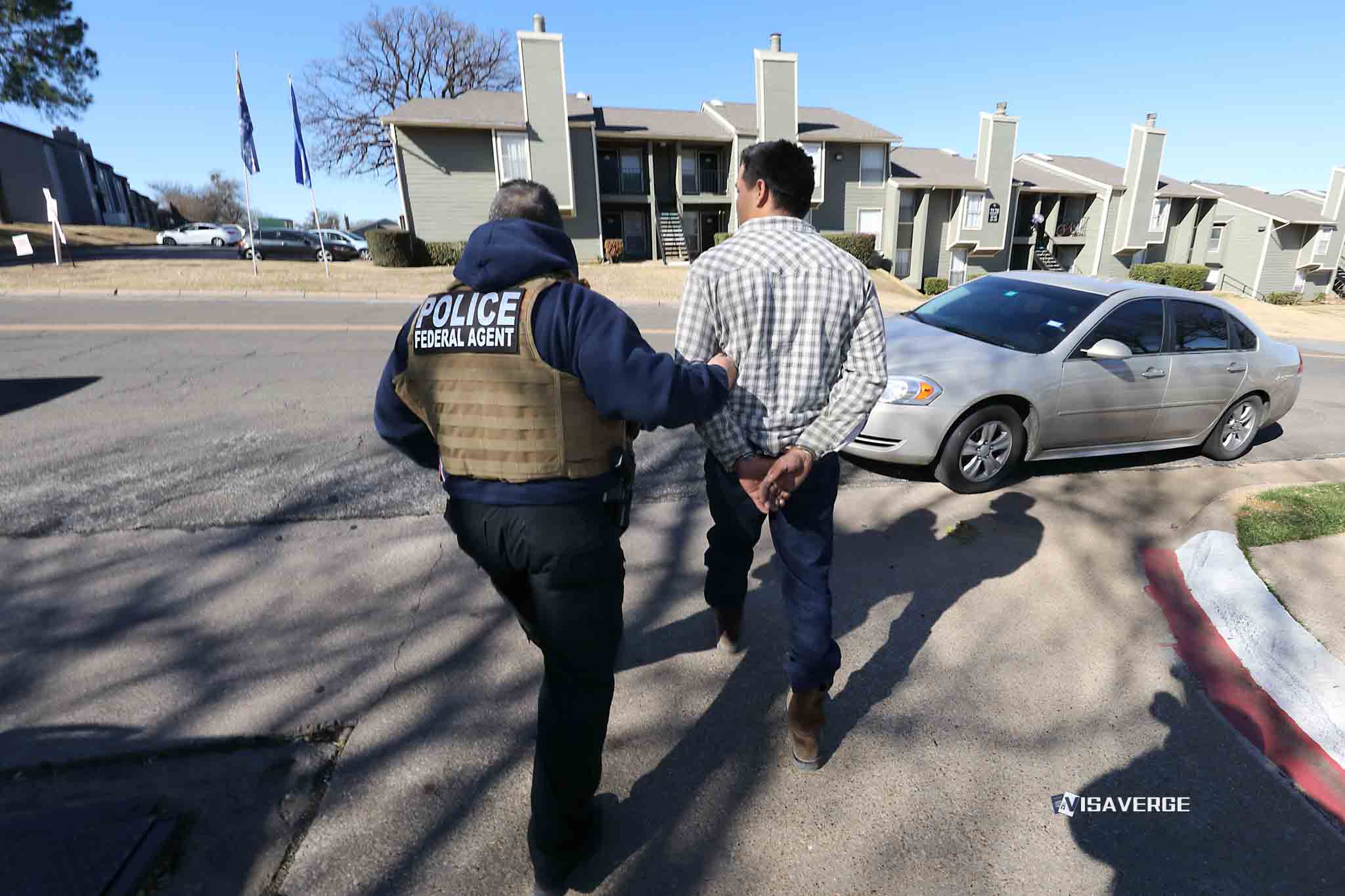
ICE leadership has framed the effort as an operational overhaul tied to the administration’s mass deportation mandate, with a stronger federal role in owning or controlling detention infrastructure.
At the 2025 Border Security Expo in Phoenix on April 8–9, 2025, ICE Acting Director Todd M. Lyons urged the agency to run detention and removals with private-sector discipline. Lyons said ICE needs to get better at treating this like a business and described an envisioned system like [Amazon] Prime, but with human beings.
“to get better at treating this like a business”
“like [Amazon] Prime, but with human beings.”
DHS Secretary Kristi Noem later linked the detention buildout to rising enforcement activity. In a press release dated January 20, 2026 titled “DHS Sets the Stage for Another Historic, Record-Breaking Year Under President Trump,” Noem said the agency is “reviewing its detention structure and acquisition strategy to address a historic operational tempo and increasing arrests.”
“reviewing its detention structure and acquisition strategy to address a historic operational tempo and increasing arrests.”
An ICE spokesperson also defended the approach after questions about warehouse-style purchases. “They will be very well structured detention facilities meeting our regular detention standards. It should not come as news that ICE will be making arrests in states across the U.S. and is actively working to expand detention space,” the spokesperson said in an official ICE statement on February 3, 2026.
“They will be very well structured detention facilities meeting our regular detention standards. It should not come as news that ICE will be making arrests in states across the U.S. and is actively working to expand detention space.”
The detention spending authority and acquisitions come alongside other immigration-related revenue changes under the same law, though USCIS operates separately from ICE detention. In an end-of-year review dated December 22, 2025, USCIS reported it has been “implementing the new fees established under President Trump’s One Big Beautiful Bill Act. collecting millions of dollars to pay down the national debt and fund additional immigration enforcement resources.”
“implementing the new fees established under President Trump’s One Big Beautiful Bill Act. collecting millions of dollars to pay down the national debt and fund additional immigration enforcement resources.”
The administration has described a sharp increase in daily detention capacity from approximately 40,000 beds at the start of 2025 to over 100,000 beds. Documents reported by the Washington Post in December 2025 outlined a “feeder system” that would rely on fewer, larger facilities and a standardized warehouse network.
That model differs from older approaches that leaned heavily on contracts with county jails. Under the newer strategy, the footprint shifts toward federally owned or controlled sites designed for high-volume processing, with geography and access shaping how detainees reach lawyers and families.
The documents described seven large-scale “mega-centers” designed to hold 5,000–10,000 people each, paired with 16 smaller warehouses holding 1,500 people each. The plan’s emphasis on industrial-scale facilities has helped drive the political fights now unfolding in cities, counties, and state capitols.
Recent purchases and targeted acquisitions show how the strategy is taking shape in disparate regions. In Washington County, MD, the government paid $102 million for a warehouse with 1,500 capacity.
In Berks County, PA, the administration bought a warehouse for $84 million. In Surprise, AZ, the government spent over $70 million for a facility, underscoring the effort’s reach beyond the immediate border region.
The acquisitions also signal an approach built for speed, using large structures that can be converted or retrofitted into detention space. Supporters inside the administration argue that fewer, larger sites offer standardized conditions and clearer command over operations.
Opponents, including local officials and residents, have focused on zoning, permits, and political pressure to slow or stop conversions. Some of the friction has come in places far from typical border enforcement debates, reflecting the administration’s emphasis on cross-state arrests and detention expansion.
In Byhalia, Mississippi, Republican Senator Roger Wicker opposed a proposed 8,500-bed “mega-site” planned for a former warehouse, citing infrastructure and economic concerns. On February 6, 2026, Wicker said Noem agreed to “look elsewhere” for the facility after he pressed the administration to abandon the plan.
“look elsewhere”
Kansas City, Missouri, took a different route, with local officials passing an ordinance in early 2026 aimed at blocking the conversion of industrial sites into detention centers. The ordinance targets land-use pathways used to turn warehouses and similar structures into detention facilities.
In Virginia, residents in Hanover County held tense public hearings in late January 2026 over a proposed facility. Speakers cited a recent enforcement episode in Minnesota as they argued against hosting a detention site in their community.
That episode in January 2026 intensified the national debate after federal agents fatally shot two U.S. citizens, Renee Good and Alex Pretti, during an immigration enforcement action in Minneapolis. The incident galvanized opposition and produced calls for the impeachment of Noem.
California pursued a financial deterrent at the state level. The state proposed a 50% tax on proceeds for companies running ICE facilities, described as a way to “nudge” operators out of the state.
The proposed tax has become part of a broader contest over whether detention expansion takes root through local approvals or federal workarounds. Cities and counties have argued they retain authority over industrial zoning and building standards, while federal officials have emphasized detention capacity as a national enforcement priority.
Advocacy groups have criticized the warehouse-based approach for isolating detainees from legal services and support networks. The ACLU and the National Immigrant Justice Center have said remote warehouse detention makes it harder for detainees to reach counsel and for attorneys to sustain representation.
Those concerns have intersected with scrutiny of medical care and accountability as the detention system grows. Early 2026 statistics cited by advocates show six people died in ICE custody in the first three weeks of the year, prompting warnings that expansion may outpace staffing and health care capacity.
Oversight of detention operations typically includes inspections, reporting requirements, litigation, and congressional inquiries, mechanisms that critics say can lag behind rapid change. The scale and speed of acquisitions, along with the shift toward fewer, larger sites, has sharpened questions about how quickly problems get detected and addressed.
Federal officials, meanwhile, have argued that standardized facilities meeting ICE detention standards can improve consistency across the system. The ICE spokesperson’s February 3 statement also emphasized nationwide enforcement, saying arrests will occur “in states across the U.S.” as the agency expands detention space.
“in states across the U.S.”
The administration’s approach ties detention more directly to the enforcement tempo described in DHS messaging, while using the OBBBA’s funding to pursue a build-and-buy strategy that reduces reliance on local jail contracts. That shift has also changed the battleground for opponents, from renegotiating county contracts to fighting new permits and conversions.
Noem’s January 20 statement that DHS is “reviewing its detention structure and acquisition strategy” has become a central reference point for supporters describing the buildout as a response to rising arrests. Lyons’ Border Security Expo remarks, delivered in Phoenix, have also drawn attention because they cast detention and removals in explicitly operational terms.
USCIS’s December 22 end-of-year review has added another layer to the political environment, with the agency citing fee implementation “under President Trump’s One Big Beautiful Bill Act” and saying it is “collecting millions of dollars” to support debt reduction and “additional immigration enforcement resources.” USCIS does not run ICE detention, but its statement placed immigration administration and enforcement funding under the same legislative umbrella.
The push and pull between federal plans and local resistance now shapes where new detention capacity can open, and how quickly. Acquisitions in Maryland, Pennsylvania, and Arizona show the administration can move ahead in multiple regions, even as Byhalia’s project drew pushback strong enough to prompt Wicker’s announcement that DHS would “look elsewhere.”
For more information on official announcements and the funding context referenced by the administration, readers can consult the DHS Newsroom at dhs.gov/news, the ICE Newsroom at ice.gov/news, the USCIS Newsroom at uscis.gov/newsroom, and the legislative summary at house.gov.