- Colombian Congresswoman’s son detained during traffic stop despite pending asylum and no criminal record.
- Ángela Vergara alleges inhumane detention conditions and seeks a humanitarian flight for her son’s repatriation.
- The case highlights how pending asylum applications do not provide immunity from ICE detention actions.
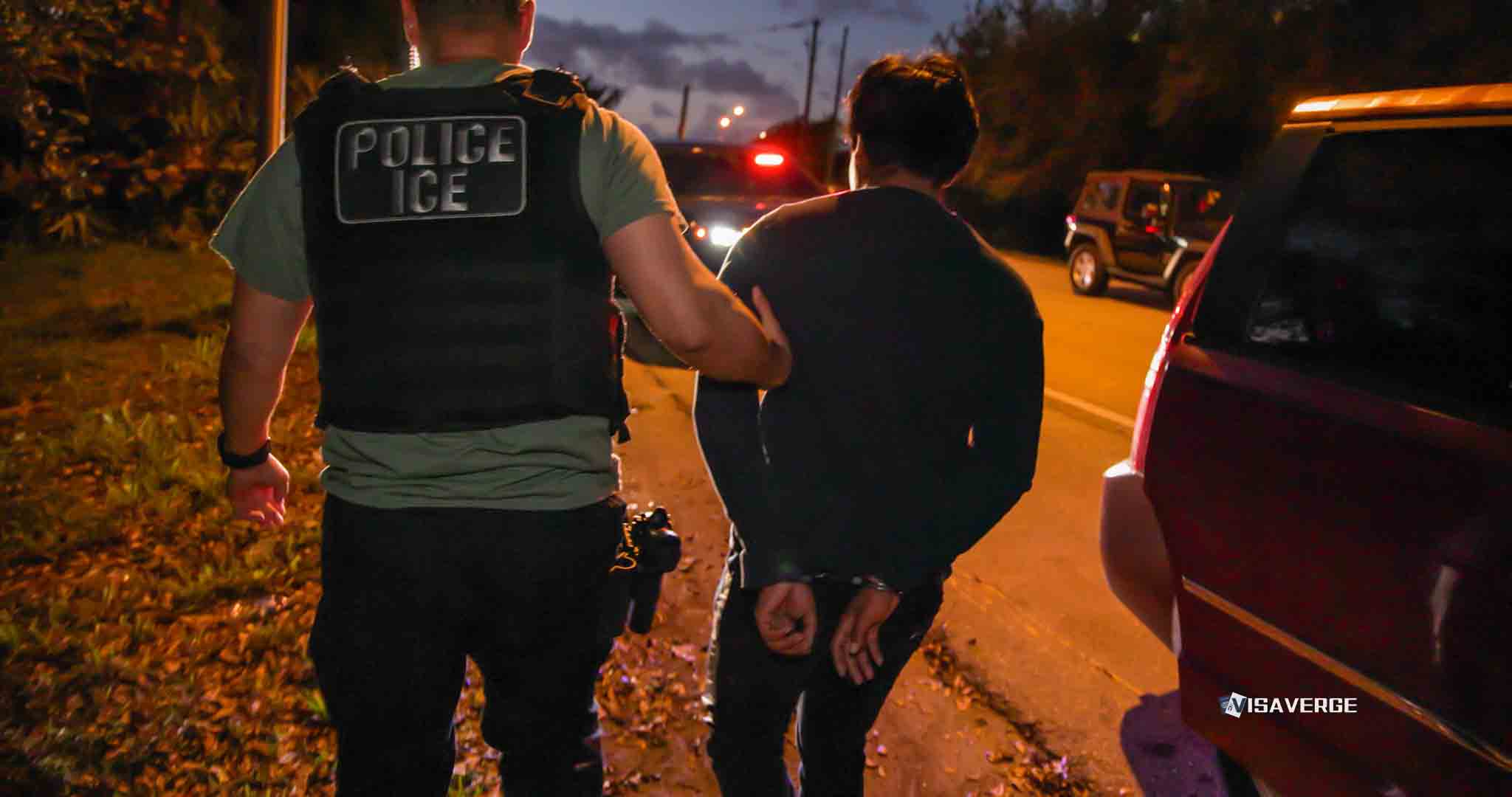
(LOUISIANA) — U.S. Immigration and Customs Enforcement detained Rafael Alonso Vergara during a traffic stop in Louisiana in early February 2026, holding the Colombian Congresswoman’s son in ICE detention for weeks as his asylum process remained pending.
Ángela Vergara, a member of Colombia’s Conservative Party, disclosed the detention on social media last Friday and cast the case as a test of how U.S. authorities treat migrants with no criminal histories.

Vergara said her 22-year-old son entered the United States legally in 2022, held a work permit and Social Security number, and had no criminal record or even traffic violations when ICE agents stopped him while he was driving a commercial truck.
ICE transferred him to the River Correctional Detention Center, where he remained held for at least 18-20 days as of mid-February 2026, she said.
Vergara described her son as “chained in inhumane conditions” for extended periods and said he faced limited communication with relatives while in custody.
She also said he could not leave the United States despite requesting voluntary departure, a claim that has fueled criticism of the detention system and raised questions about how enforcement discretion works for people who say they followed legal pathways.
In a letter, Vergara asked Colombian President Gustavo Petro, Foreign Minister Rosa Yolanda Villavicencio, and the Air Force head to press U.S. authorities for urgent help, including a “humanitarian flight” for repatriation, according to details she shared publicly.
Vergara said 30 cross-party congress members joined the request, as the case drew attention beyond Colombia and into wider Latin American political debate.
The congresswoman framed her appeal as “humanitarian” rather than partisan, arguing that migrants without criminal histories deserve fair treatment and due process.
She called the situation a “humanitarian crisis” affecting hundreds of Colombians, linking her son’s case to broader concerns about detention conditions and access to basic protections.
Vergara said she initially stayed quiet and trusted U.S. justice, then spoke out because of “deep emotional wear and tear.”
Public reaction intensified because of Vergara’s conservative alignment with stricter immigration policies in the United States, including support for President Trump and deportation policies, according to accounts of the political backlash.
Critics on social media pointed to what they viewed as contradiction, with a lawmaker associated with tougher enforcement now demanding relief from the same system.
Vergara has not presented her appeal as a reversal on border policy, but as a demand that immigration enforcement distinguish between people with criminal records and people who have pending cases and work authorization.
Immigration experts say detention can occur even when a person has a pending asylum application, possesses work authorization, or lacks criminal records.
Under discretionary authority in the Immigration and Nationality Act, ICE can detain non-citizens if their immigration status remains under review, removal proceedings are active, or officers decide detention is necessary during case processing.
Having an active immigration case does not automatically prevent detention under U.S. immigration law, experts said, a point that often surprises families who believe a pending application functions like a shield from custody.
The case comes as the United States expands detention operations and takes a more aggressive posture on enforcement, developments that have affected migrants from multiple countries across Latin America.
Advocates and oversight efforts have continued to focus on detention conditions, including questions about attorney access, medical care, and how custody decisions get made for people who say they pose no public safety risk.
Vergara’s public campaign has also brought diplomatic and consular pressure into view, a frequent complication when foreign nationals are held in immigration facilities far from their families and home governments.
Her request to Colombian officials sought direct engagement with U.S. authorities, as well as logistical support for repatriation, underscoring how quickly a high-profile detention can become a bilateral issue.
The allegations about conditions at the River Correctional Detention Center sit within a wider set of complaints documented in broader reports spanning 2025-2026, including claims involving access to food and water, physical and sexual abuse, barriers to legal counsel, and delayed medical care.
A January 2025 investigation by Senator Jon Ossoff confirmed patterns of abuses, according to the account summarizing findings, as scrutiny of contract facilities has expanded.
Facilities in Louisiana that rely on contracts can mix immigrants with criminal populations and vary in resources, immigration experts said, a structural feature that has drawn criticism from advocates and lawyers.
Vergara’s account of restraints and limited contact resonated because it offered a single, vivid example that families in detention often describe, while placing a recognizable political figure at the center of the story.
Detention statistics cited in the same context show that a large share of people in ICE custody have no criminal convictions, and that detention concentrates heavily in a small number of states, with Louisiana and Texas serving as major hubs.
Those figures have become central to debates about whether detention decisions reflect public safety priorities, administrative convenience, or broader policy choices about deterrence and enforcement.
Recent ICE policy also limits bond eligibility for those entering without inspection, even long-term residents without arrests, amid expanded detention funding, according to the summary of policy changes circulating alongside the case.
That shift matters for families seeking release, because custody determinations can turn on categorical rules as well as case-by-case discretion, and because detention can push people to abandon claims they might otherwise pursue.
The combination of limited bond pathways, constrained access to counsel in remote facilities, and backlogged immigration courts can keep cases moving slowly, leaving people detained as their hearings sit far off in the calendar.
Vergara said her son’s asylum hearing was scheduled for 2028, placing his case within the longer timelines that many asylum seekers face after filing.
For international students, visa holders, and immigrants, the episode has become a reminder that legal presence does not guarantee immunity from detention, and that pending immigration benefits do not ensure protection from enforcement actions.
It also highlights how enforcement decisions can unfold independently of political relationships between countries, even when the detainee’s family includes an elected official.
As of February 2026, no update confirmed Rafael Alonso Vergara’s release, and his family pursued voluntary return, according to the information provided by the congresswoman.
Detainees can seek release through bond hearings where eligible, secure legal representation, and track custody through tools such as the ICE Detainee Locator, immigration experts said, though outcomes can vary widely by case and jurisdiction.
Policy changes in 2026, immigration court backlogs, and enforcement shifts under Trump have added uncertainty for detainees and their families, increasing the stakes of early legal advice and timely filings.
Vergara’s public push has centered less on politics than on her claim that her son’s treatment crossed a line, and she said she spoke out after “deep emotional wear and tear.”