- Morocco’s National Human Rights Council hosted 17,791 refugees from over 64 different countries by late 2024.
- The report calls for urgent legal reforms to approve the long-delayed 2013 draft law on asylum rights.
- New U.S. policies including Operation PARRIS are increasing scrutiny and enforcement for global refugee populations.
(MOROCCO) — Morocco’s National Human Rights Council released an annual report on March 11, 2026 saying the country hosted 17,791 refugees and asylum seekers from over 64 countries as of 2024 year-end, a snapshot that underscored Morocco’s growing role as a destination country under the National Strategy for Immigration and Asylum.
CNDH described the shift as a move away from Morocco’s long-seen position as a transit hub, as authorities and aid groups handle a larger, more settled population seeking protection and access to services.

The report’s headline figure of nearly 18,000 people added detail to a debate that spans documentation, border governance and long-delayed legal reforms, while also landing amid early-2026 U.S. policy moves that tightened scrutiny and enforcement around refugee status.
Morocco’s current system for “refugees and asylum seekers” operates in an administrative framework where UNHCR plays a central role in recognition and case verification, with national procedures still shaped by the absence of a dedicated asylum law.
An official U.S. assessment published earlier described that division of responsibilities in blunt terms. “The [Moroccan] government historically deferred to UNHCR as the sole agency in the country entitled to perform refugee status determinations and verify asylum cases,” the State Department said in its human rights report released on August 12, 2025.
CNDH’s report framed Morocco’s approach through its National Strategy for Immigration and Asylum, often referred to by its French acronym, SNIA, which it presented as the policy foundation for a country it said increasingly hosts, rather than merely channels, displaced populations.
The CNDH figures were measured as a year-end total for 2024, placing a fixed number on a population that can change with new arrivals, onward movement, and administrative recognition.
The report said refugees and asylum seekers in Morocco came from over 64 countries, a breadth that suggests varied needs in language access, health care, education, and pathways to stable residency.
At the same time, the report pointed to concentration among a few nationalities. It listed Syria as the largest group, with 5,149 people, and said other large groups included Sudan and the Central African Republic.
That concentration matters for service provision because communities with similar backgrounds often cluster in the same neighborhoods and rely on shared networks for housing and work, increasing the pressure on local support systems when documents lapse or renewals stall.
CNDH also highlighted maritime rescue operations, saying Moroccan rescue services saved 18,645 migrants at sea in 2024, a figure the council placed in the context of its description of “Humanized Border Management.”
The rescue number sits alongside the council’s broader claim that Morocco has increasingly embedded migrants, refugees and asylum seekers into public policy, including by counting refugees in the 2024 national census.
CNDH tied its year-end snapshot to a structural issue that repeatedly complicates comparisons between recognition, residency and rights: a draft legal framework that has waited years for adoption.
The council again urged the Moroccan parliament to approve the 2013 draft law on the right to asylum, describing the pending legislation as central to building a permanent legal structure and clear procedures for people seeking protection.
Without a formalized national asylum law, recognized refugees can still face difficulties obtaining residency documents in practice, the report said, a problem that can affect access to work, services, travel, and routine renewals even when individuals hold proof of recognition.
Those documentation bottlenecks shape daily life, because an expired or hard-to-renew residency document can cut across multiple areas at once, from renting housing to opening bank services and maintaining stable employment.
The report’s release also came as U.S. immigration agencies issued early-2026 memos and announcements that raised the stakes for some refugees abroad who look to U.S. policy as a signal of broader enforcement posture, and for refugees already in the United States who have not yet adjusted their status.
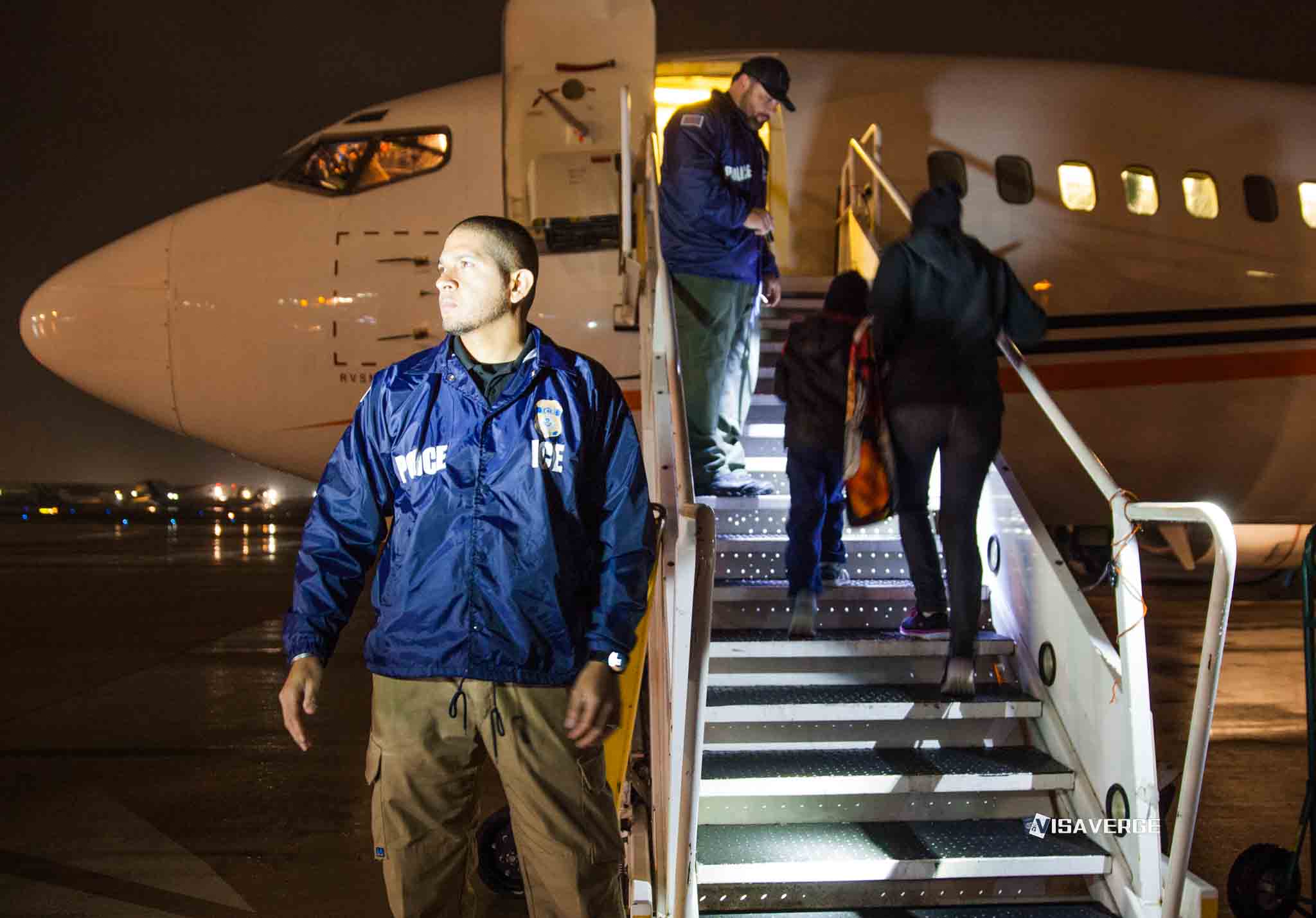
On February 18, 2026, USCIS and ICE issued a joint memorandum titled “Detention of Refugees Who Have Failed to Adjust to Lawful Permanent Resident Status,” spelling out a detention-and-inspection approach tied to the one-year adjustment timeline.
“Refugee admission is expressly conditional and time-limited. One year after admission, a refugee must return to DHS custody for inspection and examination for admission as a lawful permanent resident. If the individual does not voluntarily return, DHS will return the individual to custody, including by arrest or detention,” the memo said.
That language framed refugee admission as contingent, placing emphasis on compliance with the adjustment process and warning of enforcement consequences when refugees do not report back, a posture that can reverberate through refugee communities with ties across regions.
Weeks earlier, USCIS announced the launch of Operation PARRIS, describing it as “Post-Admission Refugee Reverification and Integrity Strengthening,” and said it would reexamine previously approved admissions.
USCIS said on January 9, 2026 that it has “begun a large-scale review of previously approved refugee admissions” and “immediately paused the adjudication of lawful permanent residence applications” for refugees admitted between January 2021 and February 2025.
The agency’s announcement sat within a broader theme of review and enforcement in refugee adjudications, and it introduced uncertainty for applicants whose cases fall into the paused window even when outcomes remain case-by-case.
CNDH’s Morocco report did not link its year-end count to U.S. actions, but the overlap in timing has drawn attention to how protection systems can interact across borders when displaced people weigh options for safety, family reunification, or long-term residency.
The connection is not direct policy coordination, but a shared reality that many displaced people move through multiple systems, and a tightening in one jurisdiction can alter expectations and planning in another.
Morocco’s year-end figure of 17,791 refugees and asylum seekers provides a baseline for understanding the scale of governance needed, but it does not automatically translate into uniform legal status outcomes for individuals, given the pending 2013 draft law and continuing reliance on administrative arrangements.
CNDH’s emphasis on a “permanent legal structure” and clearer procedures highlighted the difference between recognition and the practical ability to maintain lawful residency documents, a gap that can produce uneven experiences across cities and service offices.
In practical terms, predictable procedures can shape whether individuals can renew documents on time, whether families can plan schooling without interruptions, and whether employers accept paperwork as sufficient for hiring.
The council’s framing also positioned Morocco as a regional actor on migration management and protection, pointing to both rescue operations and the integration of refugees into national statistical exercises such as the census.
That positioning carries consequences for how Morocco engages with international partners on migration routes, search-and-rescue responsibilities, and the administrative capacity needed to handle protection claims.
The State Department’s human rights report provided additional context for how refugee status determinations operate in Morocco, emphasizing that UNHCR has historically handled determinations and verification, a model that can leave refugees navigating multiple layers of authority for daily documentation needs.
In the U.S. context, the February memo and the January Operation PARRIS announcement outlined official actions that affect review and detention posture, while individual cases and adjudication decisions remain dependent on the facts of each file.
For refugees from countries that appear prominently in Morocco’s snapshot, including Syria and Sudan, heightened scrutiny in other jurisdictions can create uncertainty about travel plans, family pathways, or long-term settlement strategies, even when decisions differ from person to person.
CNDH’s insistence on legal reform in Morocco centered on what an adopted asylum law could change: clearer status determination procedures, more consistent administrative practice, and defined rights and processes that reduce uncertainty for applicants and recognized refugees.
A dedicated law could also shape appeals and procedural guarantees in a way that makes outcomes more predictable over time, reducing reliance on ad hoc or shifting administrative steps.
For now, the report’s year-end snapshot and rescue figures offered a measurable picture of the pressures facing Morocco’s institutions as they manage a population drawn from over 64 countries and concentrated in a few of the largest groups.
Readers seeking official updates can consult CNDH through its publication channel at cndh.ma, while U.S. policy and operational announcements are posted in the USCIS newsroom and the DHS newsroom.
Local notices and services information can also appear through the U.S. Embassy in Morocco, alongside the State Department’s human rights reporting on Morocco at state.gov’s Morocco country report page.