- China now enforces strict 3C certification for all power banks on domestic flights.
- Devices exceeding 160Wh or lacking clear capacity labels are strictly prohibited from boarding.
- Starting March 2026, new power banks must feature traceability QR codes for security inspection.
(CHINA) — China’s civil aviation authority enforced some of the world’s toughest flight rules for power banks from June 28, 2025, banning uncertified, unclearly marked or recalled devices from all domestic flights departing mainland China and driving widespread confiscations at airport checkpoints.
Security staff now require passengers to take power banks out of their bags for visual inspection, checking for a clear 3C, or China Compulsory Certification, mark, a readable capacity label and whether the device appears on recall lists. If a device fails, passengers may have to abandon it, place it in temporary storage for a fee at some airports, or risk being denied boarding if they refuse.
The crackdown has continued into March 2026, adding a new rule from March 1, 2026 that requires all newly certified power banks to carry a traceability QR code next to the 3C mark. Existing certified units remain grandfathered, but airport checks have intensified as carriers and security teams focus on lithium battery risks in cabins.
Battery Size Limits Remain in Place
China’s rules leave basic battery size limits unchanged. Devices rated at ≤100Wh are allowed in carry-on bags without airline approval, while those between 100-160Wh need pre-approval and passengers may carry no more than two. Anything above >160Wh remains banned entirely.
The restrictions grew out of a series of safety concerns in 2025. A China Southern Airlines flight turned back on May 31 because smoke came from a passenger’s power bank and camera battery, while a Hong Kong Airlines flight diverted in March after a fire in an overhead compartment.
Chinese regulators also moved after recalls spread across the consumer electronics market. More than 1.2 million units from brands including Anker, Romoss, Baseus and Ugreen were recalled in 2024-2025 for defects, prompting the Civil Aviation Administration of China, or CAAC, to warn of “growing risks to civil aviation safety” from passenger-carried power banks.
Those risks have collided with the scale of China’s air travel market. As of March 2026, the rules affect China’s 730 million+ annual domestic passengers, reshaping what travelers can pack and what airports must inspect.
How the 3C Mark Works
For many passengers, the first hurdle is the 3C logo itself. The mark, shown as an oval enclosing “CCC,” confirms a device passed China’s domestic safety tests for electronics. Security officers look for a label that is clear, unfaded and legible, and they distinguish it from other common markings such as CE in Europe or FCC in the United States.
That distinction has become a problem for foreign travelers and for Chinese-made export models sold outside the domestic market. A power bank can be made in China and still fail inspection if it lacks the domestic-market 3C certification. Uncertified power banks are prohibited even when they work normally and fall within standard battery size limits.
The rules also go beyond certification. Recalls still banned means a device from a recalled batch cannot board even if it carries a 3C mark, and regulators have treated recalls as a separate safety issue rather than a paperwork matter. Passengers must check manufacturer websites and official notices to confirm their model has not been pulled from sale.
How the Rules Developed
China placed power banks in its CCC catalog in August 2023, requiring certification for sales from August 1, 2024. Flight enforcement then accelerated in late June 2025, with some accounts citing June 26 and the broader enforcement date fixed at June 28, 2025 for domestic flights and business aviation departing mainland China.
By 2026, the push had spread beyond airports. E-commerce platforms such as Tmall and JD.com removed uncertified products from their listings, while offline retailers began asking suppliers for CCC proof. The combination tightened the market at the point of sale and at the point of boarding.
What Happens at the Airport
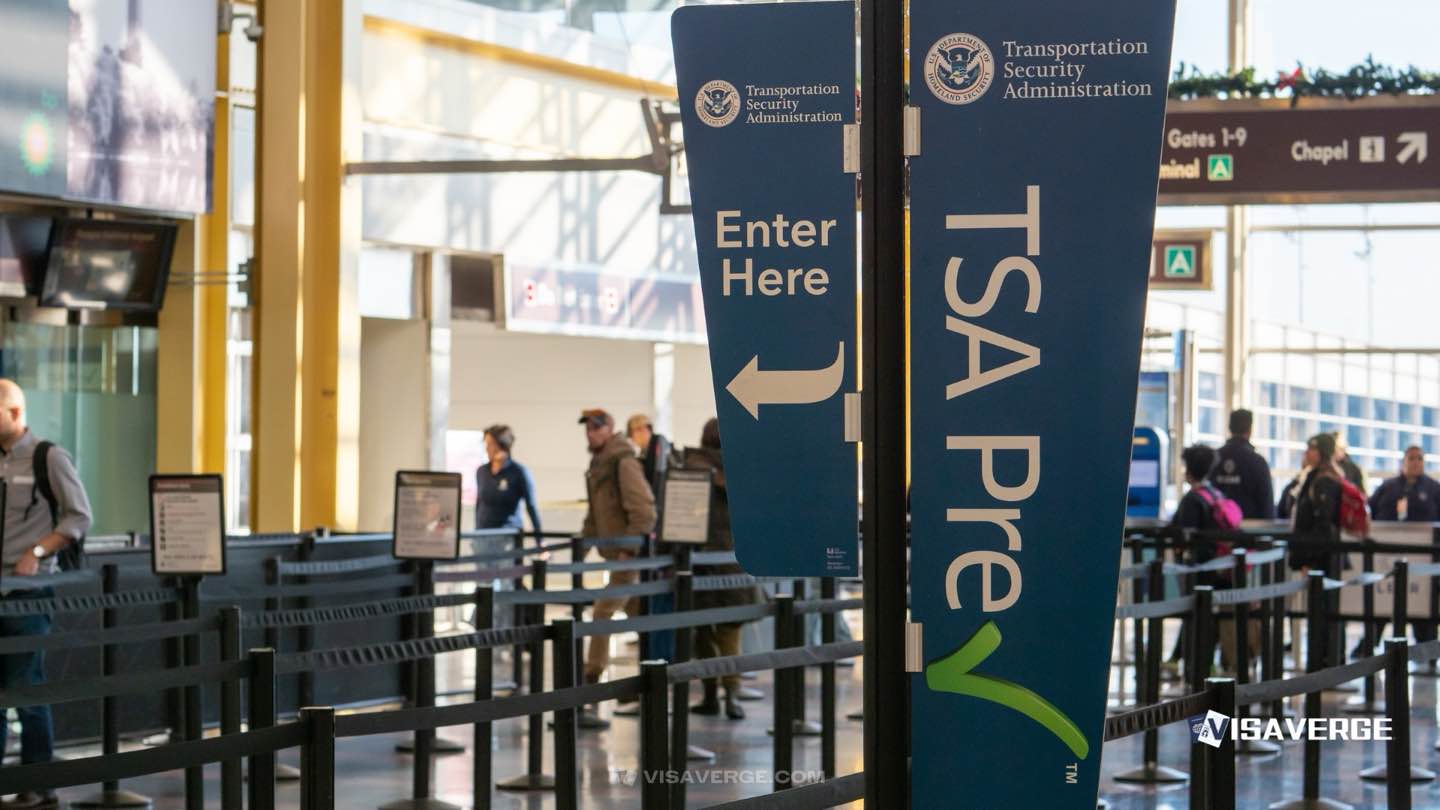
At airports, the process has become routine. Travelers must present the power bank separately, and staff inspect the casing for the 3C logo, the capacity marking in mAh or Wh and the general condition of the device. A blurry label, missing capacity information or visible damage can trigger confiscation.
Passengers cannot move power banks to checked baggage to avoid inspection. China requires them to travel in hand luggage only, matching the broader global approach that keeps lithium batteries in the cabin where crews can respond quickly if something overheats or ignites.
In the cabin, the restrictions continue. Power banks must remain off during the flight, and passengers may not charge devices with them or use in-seat power to charge the power bank, steps intended to reduce the risk of short circuits and overheating. Some carriers elsewhere have gone further by requiring fire-resistant bags, but China’s domestic rules center on carriage, certification and non-use in flight.
The new QR code rule adds another layer. From March 1, 2026, newly certified devices must display a traceability QR code to the right of the 3C mark, giving inspectors and manufacturers a tool to track models and verify recall status more quickly. Older certified units can still fly without the code, but newly sold devices must carry it.
Airline Policies and Pre-Approval
Airline rules largely mirror the CAAC framework. Air China, China Eastern and China Southern allow power banks at ≤100Wh without prior approval, while requiring approval for units rated 100-160Wh. Hainan Airlines and Spring Airlines follow similar standards, though low-cost carriers apply tighter approval practices for larger batteries.
Carriers advise passengers with power banks above 100Wh to contact the airline 48-72 hours before departure. Even with approval, travelers can carry no more than two devices in the 100-160Wh range, and they must insulate the terminals.
The practical dividing line for most consumers remains 100Wh, roughly 27,000mAh. Below that threshold, a compliant device can travel in carry-on baggage without special approval. Above it, rules tighten quickly, and above 160Wh there is no path to carry the battery on board.
Domestic Flights, Connections and Confusion
China’s enforcement officially applies to domestic flights, including domestic segments within an itinerary. A traveler arriving from abroad and then connecting onward inside China faces the domestic screening rules on that internal leg. Accounts from travelers in 2026 also describe checks on some international departures from major hubs such as Beijing and Shanghai, even though the formal policy remains limited to domestic operations.
Those reports have added to confusion among foreign passengers. Travelers can enter China with a power bank that lacks 3C certification, but they may run into trouble when they try to board a domestic departure later in the trip. That gap between entry and onward travel has become a common point of friction.
Airports and airlines have responded with extra staffing, inspection points and reminders through signs, apps and announcements. The system puts more pressure on security lanes, but Chinese regulators have framed the trade-off as a safety requirement after repeated battery incidents and large recalls.
The state also tightened oversight of manufacturers. The State Administration for Market Regulation suspended certifications for unsafe firms in 2025, reinforcing the message that compliance requires both a valid mark and a clean recall record. For passengers, that means checking not only the logo on the shell but also whether the product remains approved for use.
Some brands have moved to reassure buyers. Belkin and Momax have confirmed CCC compliance, and travelers looking for certainty often buy locally in China, where stores and airports stock power banks intended for the domestic market. Airport charging stations have also expanded, giving passengers another option if their own device does not pass inspection.
A Broader Regional Tightening
The restrictions place China at the front of a broader regional tightening on lithium batteries. South Korea banned in-flight use in Jan 2026, Hong Kong barred storage in overhead bins in April 2025, and Singapore and Qantas limited charging. Across the industry, regulators and airlines increasingly accept the same principle: carry the battery, but do not use it.
For passengers, the rules now come down to a few practical checks before leaving for the airport. The device needs a visible 3C mark, a clear capacity label and no link to any recall list. It must stay in carry-on baggage, and a unit above 100Wh needs advance airline approval.
What once passed unnoticed in a backpack now draws close scrutiny. In China’s domestic aviation system, a power bank without the right mark or with the wrong history can stop a journey before boarding begins.