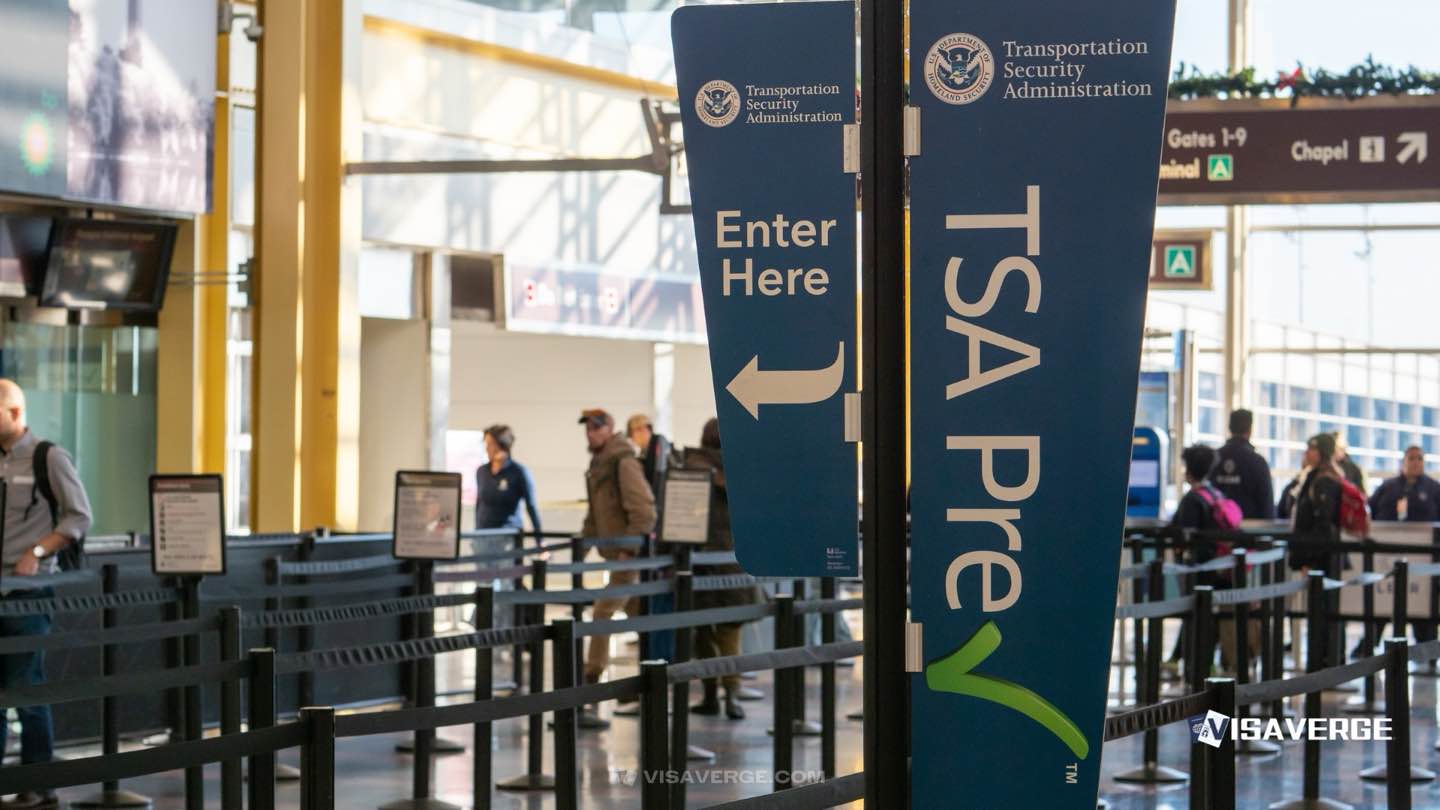
- Charlotte Douglas Airport ended its donation program following a federal order for TSA back pay.
- The six-week initiative provided grocery and gas cards to unpaid workers during the DHS shutdown.
- President Trump signed an executive order authorizing retroactive payments starting March 30, 2026.
(Charlotte, North Carolina) — Charlotte Douglas International Airport ended its TSA gift card donation program on Monday, March 30, 2026, after a federal executive order directed back pay for Transportation Security Administration employees affected by the partial Department of Homeland Security shutdown that began February 14, 2026.
The airport had collected grocery and gas gift cards for TSA workers who had gone without paychecks for more than six weeks. The program closed as the Trump administration moved to start back pay for those employees through DHS.

President Trump signed the executive order on Friday, March 27, 2026. It instructed the Department of Homeland Security to process back pay, with TSA employees potentially receiving it as early as March 30, 2026, even though the DHS shutdown remained in place.
Charlotte Douglas officials said DHS will handle back pay in the coming weeks, making the local gift card donation program unnecessary. That marked a shift from a local relief effort to a federal payment process.
The airport’s donation drive had accepted only grocery and gas gift cards in $10 or $20 denominations. Each donation could carry a maximum value of $20, and the program excluded Visa, Mastercard or other cash-value cards.
Travelers could leave donations at the Airport Info Desk near Checkpoint 1. That collection point operated Monday through Saturday from 5 a.m.-9 p.m. and on Sunday from 8 a.m.-4 p.m..
Two off-airport sites also accepted donations. Renaissance West Initiative, at 2610 Nobles Ave., Charlotte, NC 28203, took cards Monday through Friday from 9:30 a.m.-4 p.m., and Goodwill Industries of the Southern Piedmont, at 5301 Wilkinson Blvd., accepted them Monday through Friday from 9:30 a.m.-4 p.m.
Charlotte Douglas had framed the effort around immediate needs as TSA employees worked or remained affected during the shutdown. By Monday, that local support program had run its course because the back-pay process had started at the federal level.
The federal action aligned with the Government Employee Fair Treatment Act of 2019, or GEFTA. That law guarantees retroactive pay for furloughed and excepted workers, including employees required to work without pay, once funding resumes.
In every recent shutdown resolution, that retroactive pay protection has been confirmed. The March 27 order aimed to move those payments forward for TSA employees during the ongoing DHS lapse.
The shutdown described in this case affects only DHS agencies. Other parts of the federal government, including the IRS, VA and SSA, remain funded.
ICE and CBP are insulated by $140 billion from the One Big Beautiful Bill Act, which was signed in July 2025. That funding cushion set those agencies apart from TSA’s position inside the partial DHS shutdown.
The airport’s donation campaign took shape against that narrower funding dispute. It centered on a workforce that continued to face immediate money problems while waiting for back pay that federal law guarantees but does not deliver instantly.
Over 360 TSA officers reportedly quit because of immediate financial pressures. The strain fell on workers averaging $45,000-$55,000 annually, whose back pay does not cover bills due now.
That gap between a legal promise and day-to-day cash needs drove the airport’s gift card donation program. Grocery and gas cards addressed expenses that arrive before a federal payroll fix.
Monday therefore carried two developments at once. Charlotte Douglas shut down the local donation effort, and TSA employees could begin receiving back pay that same day under the March 27 order.
The sequence began on February 14, 2026, when the partial DHS government shutdown started. It moved to a new phase on March 27, 2026, when Trump signed the executive order directing back pay, and reached another turning point on March 30, 2026, when the airport ended the donation program as payment processing began.
For Charlotte Douglas, the program had been tightly defined from the start. It did not take cash, broad-purpose prepaid cards or higher-value donations, instead limiting contributions to grocery and gas gift cards in small denominations.
That structure kept the effort focused on basic expenses. A worker could use a $10 or $20 card for fuel or food, rather than wait for a federal paycheck tied to the shutdown dispute.
The airport also spread collection across locations with different audiences. The Airport Info Desk near Checkpoint 1 served travelers, while Renaissance West Initiative and Goodwill Industries of the Southern Piedmont gave community members places to contribute during weekday hours.
By ending the program, Charlotte Douglas signaled that the emergency local bridge was no longer needed. Officials said the back-pay process now sits with DHS.
The change does not erase the effect the shutdown had on the TSA workforce. More than six weeks without paychecks had already created financial pressure, and the report that over 360 officers quit pointed to the depth of that strain.
TSA workers occupy a different spot in this shutdown than employees at agencies kept whole by separate funding. ICE and CBP, backed by $140 billion from the One Big Beautiful Bill Act signed in July 2025, did not depend on the same stopgap response from an airport gift card collection drive.
Non-DHS agencies also remained outside the standoff. The IRS, VA and SSA stayed funded, narrowing the crisis to one department rather than the full federal government.
That distinction shaped both the airport’s response and the federal one. Charlotte Douglas built a short-term donation system for TSA workers, while the administration used a federal executive order to start back pay despite the ongoing shutdown.
The timing matters because GEFTA guarantees retroactive pay only once funding resumes. The March 27 action opened the possibility of payment as early as March 30, 2026, before the broader DHS shutdown had ended.
For workers facing rent, groceries, gas and other near-term bills, that difference was central. Back pay may be guaranteed, but it arrives after the financial pressure starts.
Charlotte Douglas’ now-ended program tried to fill that gap with narrowly tailored donations. It accepted grocery and gas gift cards, capped each contribution at $20, and used airport and community collection points to direct support to TSA employees.
The airport closed that chapter on Monday as federal payment processing began. What remained was the record of a six-week stretch in which local donations stepped in until Washington moved to put TSA pay back on track.