- Minnesota police leaders accuse ICE agents of targeting off-duty officers of color and racial profiling.
- Operation Metro Surge has deployed thousands of agents to the Twin Cities, resulting in 3,000 arrests.
- A federal lawsuit seeks to halt the operation, alleging unconstitutional tactics and excessive use of force.
BROOKLYN PARK, MINNESOTA — Brooklyn Park Police Chief Mark Bruley accused ICE agents on Tuesday of targeting off-duty officers of color from his department, as metro-area police leaders demanded tighter supervision of federal agents working Operation Metro Surge in the Twin Cities.
Bruley and three other Minnesota law enforcement leaders spoke at a January 20, 2026 news conference after what they described as two weeks of complaints about stops, drawn weapons and demands for proof of citizenship that they said crossed constitutional lines and eroded public trust.
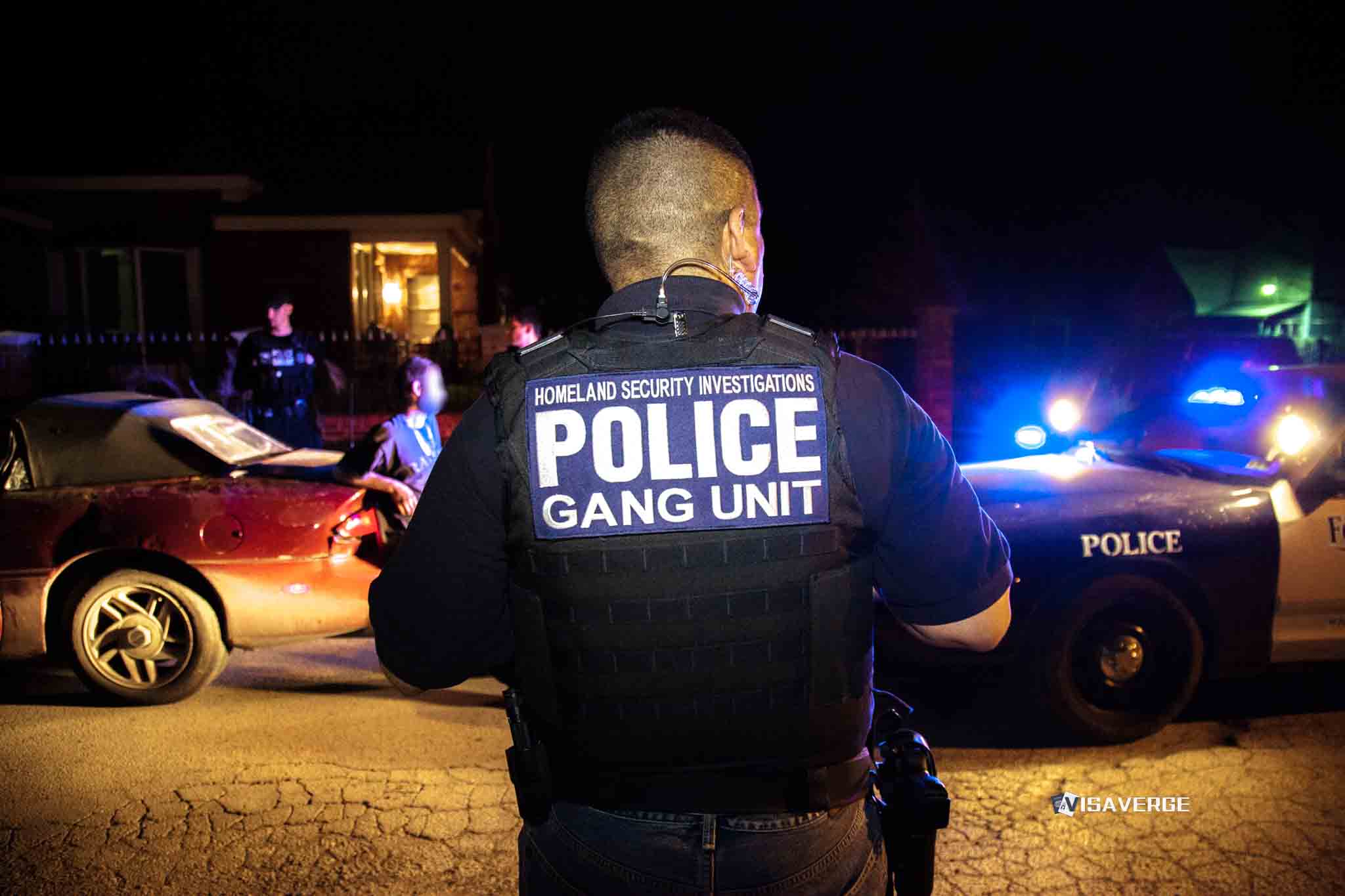
Mark Bruley, police chief of Brooklyn Park, said off-duty officers of color reported being stopped in Brooklyn Park.
he said, adding,“Every one of these individuals is a person of color who has had this happen to them,”
“If it is happening to our officers, it pains me to think of how many of our community members are falling victim to this every day. It has to stop.”
Bruley described one incident involving a female officer who was “boxed in” while driving, had her phone knocked out as she recorded, and faced drawn weapons from federal officers. He said the behavior reflected problems with what the chiefs repeatedly called a “small group” of federal agents operating without adequate oversight.
“These are not accusations against all federal law enforcement,” the chiefs said in essence, framing their concern as a breakdown in coordination that, they warned, could deepen fear in immigrant communities and spill into broader mistrust of policing.
Dawanna Witt, sheriff of Hennepin County, said she had heard of people being stopped and questioned because of their race.
“I am seeing and hearing about people in Hennepin County being stopped, questioned and harassed solely because of the color of their skin – solely being the operative word here. Now that same discrimination is also spilling into the law enforcement community,”
Axel Henry, police chief of St. Paul, called for enforcement operations that protect constitutional rights while maintaining public safety.
“People are afraid right now. Can we find a way to make sure that we can do these things without scaring the hell out of our community members?”
Brian O’Hara, police chief of Minneapolis, said videos circulating of ICE activity had angered him, including one showing disabled U.S. citizen Aliya Rahman pulled from her car.
“It pisses me off to see that. If those cops worked for me, they’d have a problem right now,”
O’Hara said he feared confrontations could escalate.
he said, adding that stops appeared to target people “appearing to be Somali or Latino.”“I’m afraid we’re going to have another moment where it all explodes,”
The chiefs said they supported lawful federal work but wanted better supervision and clearer lines of responsibility when federal agents operate in their jurisdictions, arguing that aggressive encounters in public spaces reverberate quickly through neighborhoods and complicate local policing.
Bruley said the issue was not only what happens on the street, but whether leaders in the federal system understand what agents are doing.
“I don’t think the leaders in Washington, D.C., fully understand what some of their groups are doing here on the street,”
Operation Metro Surge launched in December 2025 in the Twin Cities and involves DHS components including ICE, CBP and HSI. Federal officials have described the effort as a public-safety initiative aimed at criminal undocumented immigrants and fraud, deploying 2,000-3,000 DHS agents into the metro area.
Homeland Security Secretary Kristi Noem said the operation produced 3,000 arrests in six weeks. Noem said those arrested included “vicious murderers, rapists, child pedophiles,” and she called it a “HUGE victory for public safety.”
Local officials and attorneys, however, have described a parallel pattern of enforcement actions they say swept beyond targeted arrests, prompting disputes over how agents select people for stops and how force is used. The chiefs said that even when federal authorities focus on serious crime, community fear rises when residents believe they can be stopped for how they look or sound.
Beyond the stops described by Bruley, the broader controversy has sharpened since a January 7, 2026 fatal shooting in Minneapolis involving an ICE officer. ICE officer Jonathan Ross fatally shot 37-year-old Renee Good after she allegedly hit him with her vehicle, and DHS said he acted in self-defense.
The episode added to already tense public debate over how federal agents conduct street operations, with critics citing encounters captured on video and accounts of questioning tied to perceived ethnicity, citizenship or language.
Among the allegations aired in Minnesota in recent days is racial profiling of U.S. citizens, including an account of an ICE agent citing accent differences. The chiefs said the reported conduct risked undermining efforts by local departments to build cooperation with residents, including witnesses and victims of crimes who may hesitate to call police if they fear enforcement actions.
Some of the reported activity, officials said, occurred near sensitive locations such as schools and hospitals, leading to lockdowns and interruptions. Business owners and local stakeholders also reported disruptions, including closures and revenue drops of 50-80%, adding to pressure on local services already dealing with heightened tensions.
Minneapolis police, meanwhile, tracked the strain on their own resources during the operation. The department logged over 3,000 overtime hours by January 9, 2026, and the cost climbed to over $2 million by January 11, 2026, figures that local officials pointed to as they argued that a surge of federal activity can create knock-on demands for city police response and crowd control.
The dispute has moved into court as state and city leaders seek to block the operation and force changes in how it is carried out.
Minnesota Attorney General Keith Ellison joined Minneapolis Mayor Jacob Frey and St. Paul officials on January 12, 2026 in a lawsuit against DHS that names Secretary Kristi Noem, filed as CASE 0:26-cv-00190. The suit alleges unconstitutional racial profiling, excessive force and retaliation against Democratic areas.
Ellison used blunt language in criticizing the federal effort.
“People are being racially profiled, harassed, terrorized, and assaulted. This federal invasion of the Twin Cities has to stop,”
The lawsuit seeks to halt Operation Metro Surge and cites First and Tenth Amendments and the Administrative Procedure Act. The filing escalated what began as political and community backlash into a direct legal challenge to DHS and the way federal agents conduct enforcement in the region.
Marcos Charles, speaking for ICE, defended the tactics.
and said no officer discipline had occurred.“targeted enforcement looking for the worst of the worst,”
Imran Ali, a local attorney, said public confrontations had emerged around enforcement actions, including moments where police were seen aiding ICE. The chiefs said those flashpoints complicate local efforts to reassure residents that city departments operate under constitutional constraints and are accountable to local oversight.
At the January 20 news conference, the police leaders said they wanted federal agencies to coordinate more closely with local departments and ensure nondiscriminatory enforcement, describing the controversy as a test of how multiple layers of government share authority in public safety operations.
Bruley framed his warning in personal terms as well as professional ones, pointing to his officers’ experiences as a sign of wider harm.
“If it is happening to our officers, it pains me to think of how many of our community members are falling victim to this every day. It has to stop,”
The lawsuit and the chiefs’ complaints now set up competing narratives over Operation Metro Surge: federal officials describing a crackdown on serious offenders, and local leaders warning that aggressive tactics and perceived profiling can corrode community trust and create lasting damage that outlives any enforcement surge.
Court filings in CASE 0:26-cv-00190 and requests for an injunction now stand alongside calls for interagency coordination as the next formal steps in the conflict, even as Minnesota police leaders said their immediate focus remained preventing another stop from escalating into violence or deepening fear across the Twin Cities.