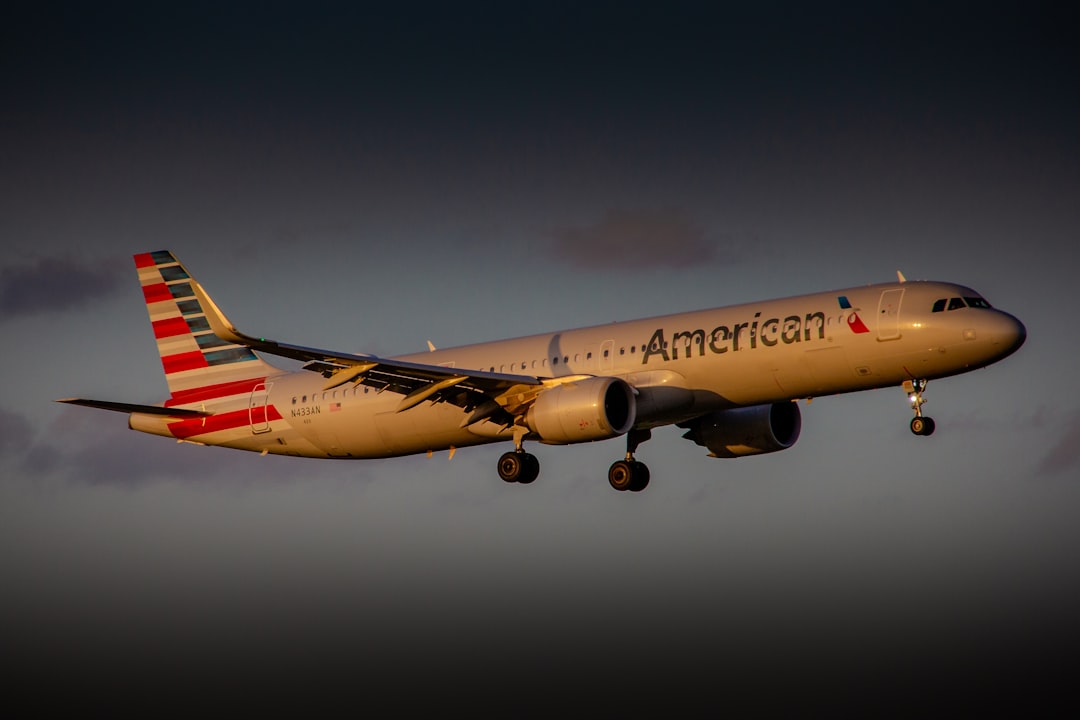
(CHICAGO, ILLINOIS) American Airlines has paid $30 million to acquire two Spirit Airlines gates at Chicago O’Hare International Airport, a seemingly simple real estate deal that is in fact wrapped inside a bitter power struggle over control of one of the country’s most important aviation and immigration gateways.
The purchase covers Spirit’s gates G8 and G10, often called the Spirit Gates by regular travelers in Terminal 3, and marks the first sale of Spirit facilities to another carrier as part of the low‑cost airline’s ongoing bankruptcy process. Spirit currently holds four preferential‑use gates at Chicago O’Hare — G8, G10, G12, and G14 — but has cut its peak daily departures there by half, leaving more capacity than it can reasonably use. Instead of keeping the money to support daily operations, Spirit is using the $30 million to prepay debtor‑in‑possession loans tied to its restructuring.
Why the deal matters to American Airlines
For American Airlines, the deal is about far more than two doors to the ramp. It comes just weeks after the carrier lost four other gates at Chicago O’Hare in a contested reallocation that handed extra capacity to rival United Airlines.
The gate reshuffle, based on flight volumes and implemented on October 1, 2025, was run by the City of Chicago and left United with five additional gates while American saw its own footprint shrink. American tried to stop that transfer in court, arguing the city had moved too soon under a 2018 use and lease agreement that governs how gates are shared at the city‑owned airport. A Cook County judge rejected American’s request for a preliminary injunction, clearing the way for United to assume control of the disputed positions.
Current capacity shares (from court filings)
| Airline | Approximate share of capacity at Chicago O’Hare |
|---|---|
| United Airlines | 48.16% |
| American Airlines | 32.78% |
The acquisition of the former Spirit Gates is widely seen by analysts, including those quoted by VisaVerge.com, as an attempt by American to claw back some physical space while the lawsuit plays out.
Competing narratives: American vs. United and the City
- American’s position:
- Argues the October reallocation breaks the terms of the 2018 agreement, which it says did not allow reassessment before April 2027.
- Claims the city’s early move hands United an unfair advantage and limits American’s ability to grow at its long‑time Midwestern hub.
- Has filed a breach‑of‑contract lawsuit against both the City of Chicago and United Airlines.
- United and the City’s position:
- United’s president Brett Hart has publicly criticized American for what he describes as neglect of the Chicago market.
- Praises the court’s refusal to halt the gate transfer as validation of United’s expansion strategy and investment at O’Hare.
- Argues that airlines putting more flights and more money into the airport should control a larger share of gates.
“Airlines putting more flights and more money into the airport should control a larger share of gates.” — framing used by United and supporters of the reallocation
Why gate control matters to passengers and immigration flows
Gate space at Chicago O’Hare affects not only domestic travelers but also international visitors and immigrants who pass through U.S. immigration and customs in Chicago.
- Direct impacts on travelers:
- Number of gates an airline controls affects how many flights it can schedule and how often routes operate.
- Fewer gates can restrict an airline’s ability to add new routes or restore flights cut during downturns.
- Changes can reduce nonstop options to cities with large diaspora populations, increase connection times, or create crowded peak banks of flights.
- Immigration-related consequences:
- For many arriving on long‑haul flights, gate distribution shapes how crowded U.S. Customs and Border Protection (CBP) inspection lines become.
- While immigration checks occur in federal inspection areas (not at gates themselves), the number and timing of flights influences wait times and route availability for visa holders and family reunions.
For official guidance on what to expect at inspection points after landing at hubs like Chicago O’Hare, see U.S. Customs and Border Protection on the Department of Homeland Security website at https://www.cbp.gov.
Track gate updates directly with your airline app on departure day. Gate reallocations can happen in busy hubs; confirm your boarding gate and any last‑minute changes to avoid missed connections.
The broader stakes: infrastructure and precedent
American’s legal fight could influence how future infrastructure projects and gate allocations are negotiated at O’Hare and other airports.
- If American convinces a court that Chicago acted too soon:
- Airports may be pressured by major carriers to lock in similar timing protections in use and lease agreements.
- If the city and United prevail:
- Airports may feel freer to reassign gates earlier when another carrier is growing faster and can use the capacity more intensively.
Use and lease agreements like the 2018 deal set rules for:
– Who pays for new terminals,
– How facilities are assigned,
– How long airlines can rely on a certain level of access.
Spirit’s bankruptcy and the local balance of power
The Spirit bankruptcy adds another layer to the dispute.
- By selling G8 and G10, Spirit demonstrates how financially distressed airlines can reshape local market dynamics even before a full restructuring plan is approved.
- Giving up gates that once supported dense low‑cost operations opens the door for a legacy carrier like American to alter the mix of fares and flight choices available to price‑sensitive travelers — including many recent immigrants who depend on ultra‑low‑cost tickets.
What travelers can expect now
- The $30 million Spirit Gates deal gives American a modest but symbolically important boost after losing four positions to United.
- The lawsuit over the 2018 agreement continues and could take months or longer to resolve, likely leaving the current gate map in place through busy travel seasons.
- Travelers often feel the effects first: changes in nonstop service, connection patterns, and peak‑period crowding.
The outcome of this fight over who owns which doors may quietly shape journeys for years to come, particularly for people starting a new chapter in the United States.
As airlines, city officials, and lawyers argue over clauses and capacity shares, O’Hare’s role as a front door to the United States remains central. For many people arriving to meet U.S. officials for the first time, those first steps on American soil happen after a long walk off a jet bridge controlled by American, United, or a struggling carrier like Spirit.
American Airlines acquired Spirit’s gates G8 and G10 for $30 million amid Spirit’s bankruptcy, after Spirit cut peak departures. The purchase follows a contested reallocation on October 1, 2025 that awarded United five gates and reduced American’s share at O’Hare. American sued the City of Chicago and United, citing a 2018 use-and-lease agreement it says barred reassignment before April 2027. The dispute affects flight frequency, nonstop routes, and immigration-related passenger flows, and could set precedent for future gate allocations.