


(UNITED STATES) Allegiant Air’s plan to secure permanent U.S. residency for dozens of foreign pilots has been thrown into doubt after its pilots’ union blocked a key step in the immigration process, refusing to back the company’s effort to show the U.S. government that the jobs meet federal pay rules. The dispute, reported on December 6, 2025 by Reuters, centers on a union decision to withhold support for federal labor certification, a requirement for employment-based green cards. At stake are the careers of pilots from Chile, Australia, and Singapore, who were recruited to fly for the ultra-low-cost carrier, as well as Allegiant’s ability to lock in sorely needed cockpit staff.
What the union blocked and why it matters
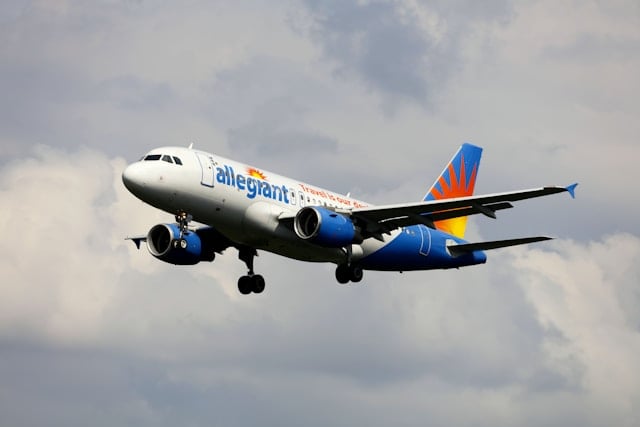
According to Reuters, the union has refused to certify to the U.S. Department of Labor that the positions, which Allegiant says start at about $50,000 per year, meet the legally required prevailing wage for pilots at similar airlines.
The union’s arguments:
- Union leaders say pay of $50,000 per year is far below what pilots at other regional carriers earn.
- They contend that such a wage fails the U.S. government’s test for whether an immigrant worker is being hired on terms that do not undercut the local labor market.
Consequences of the union’s refusal:
- Without the union-backed certification, the foreign pilots cannot move forward with the first stage of the employment-based green card process, known as labor certification or PERM.
- The decision effectively freezes Allegiant’s staffing plans and the immigration hopes of the recruited pilots.
How PERM (labor certification) works
PERM is handled by the Department of Labor and requires employers to demonstrate fair pay and recruitment efforts before offering a job permanently to a foreign national.
Key references and forms:
– PERM information: the Department of Labor’s PERM program page (https://www.dol.gov/agencies/eta/foreign-labor/programs/permanent)
– PERM application form: Form ETA-9089
– Employer files an immigrant petition after PERM: Form I-140
Important PERM requirements:
– Employers must pay at least the prevailing wage, set based on job duties and location.
– VisaVerge.com notes that if an employer offers less than the prevailing wage, the Department of Labor can deny the application, stopping the green card process early.
PERM — simplified step-by-step
- Employer determines the job and obtains a prevailing wage determination.
- Employer attempts to recruit qualified U.S. workers.
- Employer files
Form ETA-9089(PERM) with the Department of Labor. - If PERM is approved, the employer can file an employment-based petition (e.g.,
Form I-140) with USCIS.
Effects on pilots and Allegiant
The union’s position stops the company from showing the government that its permanent U.S. residency sponsors meet federal standards. That freeze means:
- Foreign pilots cannot move from temporary work status (if they have it) to stable paths like employment-based green cards and long-term residence.
- Many affected pilots have tied major life decisions—housing, family planning, long-term financial commitments—to the promise of permanent U.S. residency.
- When a union challenge interrupts the process, those life plans can stall for years, particularly if an employer contests the decision or seeks a new wage determination.
Broader labor and industry context
The Allegiant dispute highlights broader tensions in airline pay models:
- Regional and low-cost carriers often offer lower starting salaries than major airlines, arguing their business models require tight labor-cost control.
- Pilots’ unions push for higher pay and better conditions, noting low wages make it harder to attract and retain qualified aviators.
- By refusing to endorse Allegiant’s claim that $50,000 per year reflects the market rate, the union wields a powerful lever: it can stop the company from converting temporary jobs into permanent immigration paths.
Reuters reported that Allegiant is seeking labor certification for dozens of pilots, indicating the airline hoped to build a long-term pipeline of foreign talent. Sponsoring them for permanent U.S. residency would:
- Secure pilot services for years, and
- Reduce the risk pilots might leave for better-paid roles after gaining experience.
With the union now standing in the way, Allegiant’s likely options include:
- Raising wages to meet the union and prevailing-wage standards,
- Revising its immigration strategy, or
- Risking the loss of pilots who counted on a stable future in the U.S.
Legal and practical lessons
Immigration lawyers note a common practice across industries:
- Employers and unions typically coordinate pay scales with official wage data before starting a PERM case.
- Doing this homework early reduces the risk of a breakdown later, when immigrant workers may already rely on promises of permanent U.S. residency.
Allegiant’s clash shows what happens when pay scales and immigration plans are not aligned: dozens of pilots already flying for the airline now face an uncertain path, while the airline loses long-term staffing security.
The case is a test of how far unions will use immigration procedures to push for higher wages—and how much airlines are willing to pay when immigration status and staffing needs collide.
Advice for foreign workers and final implications
Workers’ advocates emphasize caution for foreign pilots and other skilled professionals:
- Examine salary levels carefully before accepting a job that includes promised green card sponsorship.
- If offered pay is well below what similar U.S. workers earn, the employer may struggle to prove it is paying the prevailing wage, and the entire labor certification bid can fail.
If you’re offered sponsorship, verify the salary aligns with similar roles in the area and has a realistic path to permanent residency. Have backup options in case the employer’s plan changes.
For the Allegiant pilots, the next months will likely determine whether they can remain in the United States long-term or must pursue other employers, other countries, or entirely different plans for their families abroad.
Allegiant Air’s effort to obtain labor certification for dozens of foreign pilots is paused after the pilots’ union refused to certify that positions meet the prevailing wage. Allegiant lists starting pay near $50,000, which the union says undercuts market rates for comparable pilot roles. Without union support, the PERM process cannot proceed, jeopardizing recruited pilots’ paths to permanent residency and forcing Allegiant to consider higher pay or alternate staffing strategies.





Good!
We have AMERICAN pilots looking for work, why on earth would we bring in foreign labor?
Odd, it’s only the low paying airlines running these visa schemes to undermine American pilots.