- Packing mistakes cause significant checkpoint delays and can lead to missed international flight connections.
- Portable power banks and lithium batteries must stay in carry-on luggage to avoid safety hazards.
- TSA treats substances that spread, spray, or pour as liquids subject to the 3.4-ounce rule.
U.S. air travelers are still triggering checkpoint delays because they pack by habit instead of by rule, as the Transportation Security Administration keeps a category-by-category system that can allow an item in checked baggage, ban it in carry-on baggage, limit it by size, or make it subject to airline approval.
Those packing mistakes do more than lead to confiscations. They also cause missed flights, civil penalties, bag-check reshuffles and last-minute stress, with the effects reaching students, workers, visa holders, tourists and other international travelers.
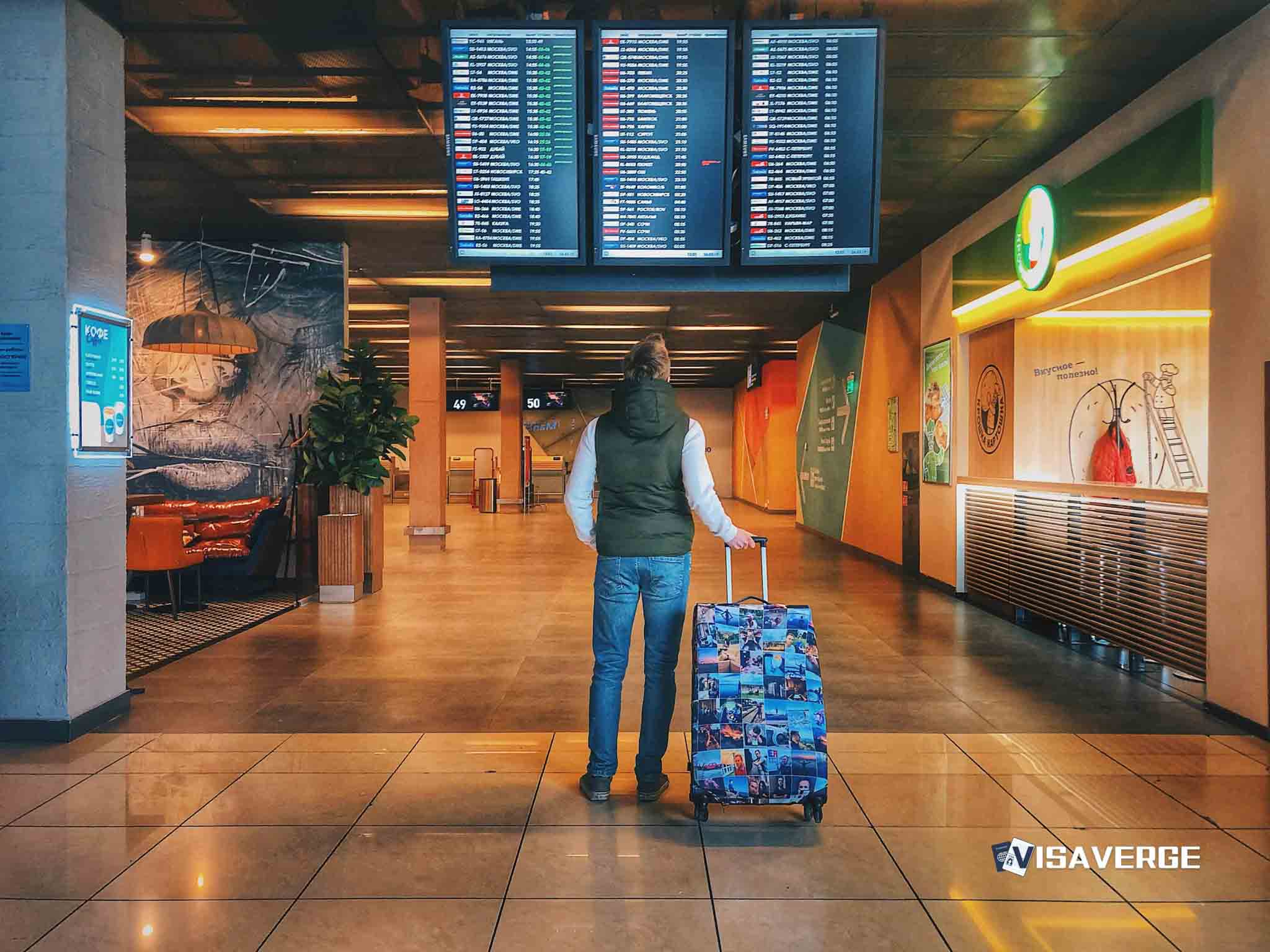
Many travelers still treat airport security as a simple yes-or-no system. TSA rules do not work that way. A single item may be permitted in one part of a trip and restricted in another, depending on whether it goes in a carry-on bag, a checked bag or both.
That structure matters most when travelers rely on memory. Mistakes often send bags into secondary screening, force passengers to surrender property and, on tight itineraries, put onward connections at risk.
For international students, H-1B workers, green card holders, tourists, NRIs and first-time U.S. visitors, the stakes can extend beyond inconvenience. Many are traveling with electronics, medication, university items, gifts, food and relocation baggage, making them more likely to face repacking problems at the checkpoint.
Some of the most common packing mistakes involve routine items rather than obviously restricted ones. Toiletries, cosmetics, sunscreen, hair products, protein spreads, sauces and filled beverage containers often become problems because TSA sorts them by how they behave, not by how harmless they seem in ordinary use.
TSA’s carry-on rule for liquids, aerosols, gels, creams and pastes generally limits travelers to containers of 3.4 ounces or less, packed in a single quart-size bag. Many of those same items may be transported differently in checked baggage.
The agency’s own phrasing is broad. If an item can be spilled, spread, sprayed, pumped, or poured, the carry-on restriction likely applies.
That distinction catches travelers who assume a product is allowed because it is common. At the checkpoint, a bag containing expensive cosmetics, sunscreen or food spreads can get pulled aside even when the item poses no everyday threat.
For passengers on tight international schedules, the delay can matter more than the loss. Secondary screening can consume the minutes needed to make a domestic first leg or clear a connection before a long-haul departure.
Battery and power-related items have become one of the fastest-growing sources of packing trouble. Portable power, not shampoo, now creates some of the most frequent avoidable errors.
Spare lithium batteries, including power banks, must go in carry-on baggage and are prohibited in checked luggage under TSA and FAA guidance. The FAA also says spare lithium batteries should be protected from short circuit.
Larger lithium-ion batteries in the 101–160 watt-hour range generally require airline approval. Anything over 160 Wh is not allowed on passenger aircraft.
That rule reaches a wide range of travelers. Students, remote workers, digital nomads and people carrying camera equipment or backup chargers often travel with more battery-powered devices, and many still pack those items by routine instead of checking the category.
A frequent problem emerges at the gate rather than at home. When an airline unexpectedly gate-checks a carry-on bag, travelers may forget that spare batteries, power banks, e-cigarettes and vaping devices must be removed and kept in the cabin.
That last-minute scramble can create another round of delays. It also increases the chance that travelers will miss items buried inside their bags, especially when they are carrying relocation gear, paperwork or multiple devices.
For travelers trying to avoid airport security problems, the working rule is straightforward: if it stores power and is not installed in the device, it belongs in a carry-on bag unless a specific rule says otherwise.
Firearms remain the costliest checkpoint mistake. TSA reported intercepting 6,678 firearms at airport checkpoints in 2024.
That figure shows how often passengers still arrive at screening with a weapon in a carry-on bag. Firearms are prohibited in carry-on baggage, and travelers who bring them to the checkpoint can face law-enforcement action and TSA civil penalties.
Passengers may transport firearms only through checked baggage and only under strict conditions. Travelers must unload the firearm, lock it in a hard-sided container and declare it to the airline at check-in.
TSA says civil penalties can reach up to $17,062 per violation. The agency has also emphasized that an “I forgot it was in my bag” explanation does not remove the consequences.
Unlike a discarded toiletry, a firearm mistake can stay with a traveler after the flight is missed. Citations, police involvement and documented violations can create wider problems than a single disrupted trip.
Alcohol, food and gift items also catch travelers off guard because they look harmless and often travel with passengers during holidays, family visits and student moves. Those categories can be trickier than many people expect.
Alcohol rules depend on alcohol content. Beverages over 70% alcohol, including some high-proof spirits, are not allowed.
Other alcoholic beverages above 24% but not above 70% are limited in checked bags to 5 liters per passenger. They also must remain in unopened retail packaging.
Food creates a separate layer of confusion because TSA treats solid and liquid-like products differently. Solid foods are often allowed, while sauces, gravies, jams, creamy dips and similar items can fall under liquids rules in carry-on baggage.
That distinction can surprise travelers returning from visits with family, students bringing food from home and passengers carrying gift baskets or regional specialties. A product may look like a gift, but if it acts like a liquid under TSA rules, screening officers can still take it.
The consequences fall harder on international travelers than on many domestic passengers. A person on a short domestic trip who loses a bottle of sauce or a toiletry may leave annoyed and move on.
A traveler connecting to an international departure faces more exposure. Missing a first domestic segment can trigger rebooking costs, missed long-haul check-in windows and luggage separation.
That pressure rises when important items are packed in the wrong place. A passport pouch, chargers, medication or school papers can become harder to reach if a bag is suddenly diverted to checked luggage after a checkpoint issue or a gate-check decision.
Student visa holders and work visa holders often carry more document-heavy hand luggage than other travelers. They may also bring multiple electronics, adapters and relocation essentials, which increases the chance of bag repacking during secondary screening.
That combination can turn a routine search into a wider disruption. A traveler who opens one crowded carry-on bag to remove batteries, liquids and devices may end up reorganizing the entire trip at the checkpoint.
TSA’s rule structure means the safest packing plan in 2026 is not simply to pack less. It is to pack according to where each item belongs at screening.
One of the first steps is separating cabin-only items before leaving home. Power banks, spare lithium batteries, e-cigarettes and vaping devices should sit in carry-on baggage rather than in checked luggage, and travelers should keep them easy to remove if a gate agent takes a bag planeside.
A second step is sorting liquids away from solids before the bag is zipped. Cosmetics, sauces, gels, spreads and filled drink containers are among the most predictable sources of screening delays because travelers often decide by habit instead of by category.
A third check involves specialty items that have their own rules. Tools, sports equipment, alcohol, replica weapons, firearm parts and certain batteries require item-by-item review rather than guesswork.
TSA’s official “What Can I Bring?” database exists for that reason. Travelers who verify an unusual item before they leave home are less likely to end up repacking a suitcase on the floor near a checkpoint.
The fourth check is to think ahead to gate-check risk. If a carry-on bag may be taken at the aircraft door, anything that must stay in the cabin should be placed so it can be removed in seconds.
That point matters for more than electronics. Travelers carrying medication, immigration paperwork, study materials or work items can avoid a last-minute search by placing those essentials where they can reach them quickly.
The broader takeaway is that airport security is not a single standard. It is a matrix of security, hazardous-material and baggage-placement rules, and the most common packing mistakes happen when passengers assume one general rule covers everything.
For travelers carrying immigration documents, electronics, medication, gifts and relocation gear, a five-minute pre-pack check can prevent delays, lost property and penalties. In 2026, the people moving fastest through the checkpoint are often not the ones who packed the lightest, but the ones who checked each item before they left home.