- Secretary Kristi Noem requested partisan video messages at airports, sparking legal concerns over the federal Hatch Act.
- Seventeen Democratic senators demanded the immediate removal of videos blaming their party for the government shutdown.
- Major airports in Chicago, Atlanta, and New York declined to play the content citing strict nonpartisan policies.
(U.S.) — Homeland Security Secretary Kristi Noem requested that airports play a roughly 30-second video blaming Democrats for the government shutdown that began October 1, prompting Hatch Act concerns about partisan messaging on government screens and in federally supported facilities.
Seventeen Democratic U.S. senators demanded that Noem “immediately remove the videos,” arguing that “federal law clearly prohibits using federal funding for partisan political activities” and that requiring airports to play her video is “likely” a violation of the Hatch Act.
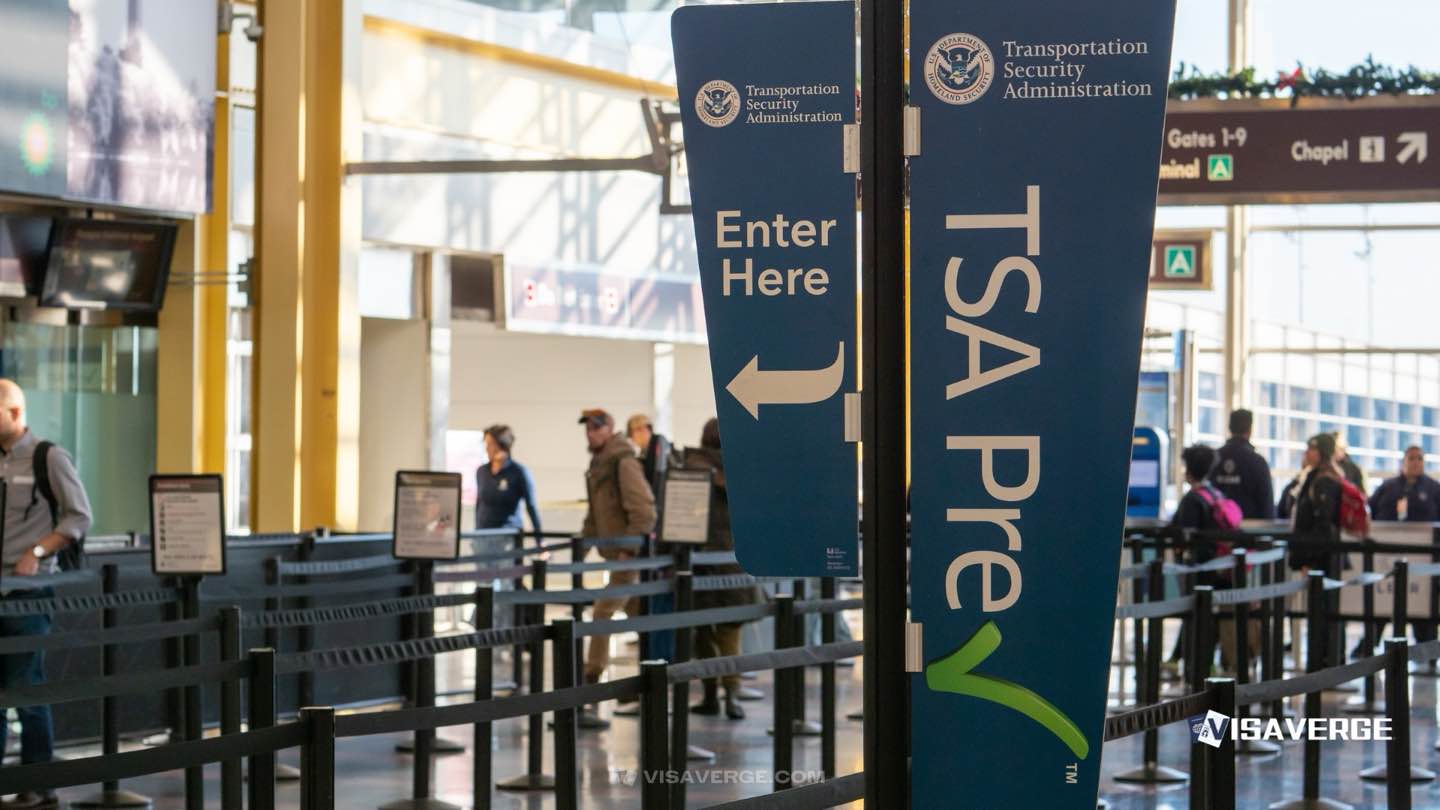
Noem’s message drew attention because it was tied to shutdown impacts on Transportation Security Administration operations at airports, where travelers pass through federally controlled screening areas and see government-provided messaging on monitors.
In the video, Noem says: “However, Democrats in Congress refuse to fund the government. And because of this, many of our operations are impacted and most of our TSA employees are working without pay.”
Stanley Brand, a professor at Penn State Dickinson Law, said Noem’s video “seems like a blatant use of political messaging in a forum and by somebody who probably shouldn’t be doing it.”
John Berry, a lawyer who has handled Hatch Act cases, said Noem in her official capacity is covered by the Act, especially if she filmed the video “using government resources.”
The Hatch Act is a federal law that governs the political activity of all federal government employees. Political activity is defined as activity directed at the success or failure of a partisan candidate, partisan political party or a partisan political group.
Under the law, federal employees are prohibited from engaging in partisan political activity while on duty, while wearing a uniform, while on government property or while inside a vehicle owned or leased by the government. The law also prohibits using federal funding for partisan political activities.
Airports occupy a complicated position in that framework because they often function as shared spaces. They host federal screening checkpoints and federal staff, while airport authorities, vendors, and local governments manage terminals, public announcements, and advertising rules.
Noem requested that the video be played across U.S. airports during the shutdown that began October 1. The request raised questions about how the video was distributed, who had authority over the screens it appeared on, and whether the content amounted to a partisan message displayed through government resources.
Some airports displayed the video at or near TSA screening areas, a detail that matters because the Hatch Act restrictions focus on partisan political activity “while on duty” and “on government property,” and because checkpoint equipment can be controlled by federal agencies.
Other airports declined the request and cited policies meant to keep airport messaging nonpartisan. Brand said “refusing to play the video could insulate them from future legal issues,” and he said airports “just don’t want to threaten their funding.”
Hartsfield-Jackson Atlanta International Airport said it “strives to maintain a neutral and welcoming environment for all travelers.”
Chicago’s O’Hare International and Midway International Airports declined, and the Chicago Department of Aviation said that “advertising at Chicago’s airports, including promotional materials and public service announcements, must comply with CDA’s Advertising Guidelines, which prohibit content that endorses or opposes any named political party.”
Chicago Mayor Brandon Johnson said: “Our airports are for Chicagoans and visitors to travel safely to and from our city; they are not for the Trump Administration to spread propaganda using taxpayer resources.”
Officials and spokespersons for Dallas Fort Worth International Airport, Dallas Love Field Airport, Corpus Christi International Airport, and San Antonio International Airport cited policies that prohibit political content as they declined to show the video.
Denver International Airport declined to display it. San Francisco International Airport and other Bay Area airports refused, and Los Angeles International Airport and Hollywood Burbank Airport also did not show the video.
In the New York region, John F. Kennedy, LaGuardia, Westchester, and Newark airports turned down the request. The Port Authority said “longstanding policies prevent airing of politically partisan messages at our facilities.”
Harry Reid International Airport in Las Vegas said the video “did not align with the neutral, informational nature” of public service announcements.
Seattle-Tacoma International Airport refused, and the Port of Seattle pointed to “the political nature of the content.”
Portland International Airport said: “we did not consent to playing the video in its current form, as we believe the Hatch Act clearly prohibits use of public assets for political purposes and messaging.”
A smaller set of airports did display it, with some pointing to federal control of checkpoint-area monitors. Detroit Metropolitan Airport and Sawyer Regional Airport in Michigan showed the video, and Detroit Metro said “the TSA operates its own display monitors in the passenger screening checkpoints.”
Bismarck Airport in North Dakota displayed it. El Paso International Airport in Texas showed the video at its TSA security checkpoint.
The split response highlighted how airport leaders and local officials weigh nonpartisan obligations against federal presence inside terminals, especially when the content appears tied to a government shutdown and attributes blame to a political party.
The senators’ demand to remove the video framed the matter as a legal and funding issue, arguing that “federal law clearly prohibits using federal funding for partisan political activities.” Their letter also called the airport video requirement “likely” a Hatch Act violation.
The question of federal funding sits alongside the Hatch Act limits on federal workers. As recipients of federal money, airports may face prohibitions on how to use that funding, raising the stakes for airport authorities asked to display messages that could be characterized as partisan.
Brand’s comments tied those concerns to decision-making at airports. He said refusing to air the video could reduce the risk of later legal trouble, and he said airports “just don’t want to threaten their funding.”
The enforcement pathway for a Hatch Act complaint runs through the Office of Special Counsel, an independent agency that investigates Hatch Act violations and takes disciplinary action. That process can include investigations and disciplinary outcomes, but the available response depends in part on who is accused and how they are employed.
Noem’s status changes how the process works. As a White House-commissioned officer and Senate-approved presidential appointee, if she is found to have violated the Hatch Act, the OSC may only submit a report to the President with a recommendation for disciplinary action.
That means President Trump would determine any sanctions against her, even if investigators concluded the video violated the Hatch Act.
U.S. Rep. Lizzie Fletcher, D-Houston, criticized the situation and linked it to the enforcement environment. Fletcher said President Trump “fired the federal watchdog responsible for enforcing the Hatch Act earlier this year.”
Fletcher called the airport video “a more blatant and egregious example of this administration making things political that shouldn’t be, and violating the law with impunity.” She added: “What is happening is not normal, and it is not OK.”
The episode also raised practical questions for airports about content controls in a shutdown environment. Airport monitors can be controlled by different entities, including federal agencies and airport operators, and airports often rely on vendor relationships and advertising guidelines to manage what passengers see.
Detroit Metro’s explanation underscored that point by describing the checkpoint screens as TSA-operated monitors, which can limit an airport’s direct control over what appears in screening areas even when the airport sets broader advertising rules in terminals.
At the same time, multiple airport authorities cited their own advertising guidelines or public messaging rules in refusing the video, reflecting a view that partisan content does not belong in facilities that serve the public and depend on broad political neutrality.
The government shutdown context intensified scrutiny because airports became a place where travelers could see messaging about federal operations and employee pay. Noem’s on-camera statement that “most of our TSA employees are working without pay” placed the shutdown dispute directly in front of the flying public.
For airports that refused, officials often framed the decision as protecting neutral public service messaging, maintaining a welcoming environment, or following long-standing policies that bar endorsements or opposition to political parties.
For airports that displayed the video, the accounts focused on where it ran and who controlled the screens. El Paso’s placement of the video at its TSA security checkpoint and Detroit Metro’s reference to TSA control of checkpoint monitors highlighted the sensitivity around federal property and equipment.
The legal questions now center on whether airing the video in airport spaces crossed the Hatch Act’s lines on political activity and use of government resources, and whether airports that accepted federal money risked violating prohibitions tied to that funding.
Even as airports made different decisions, the situation left a broader compliance question hanging over public-facing transportation hubs during a government shutdown: who decides what messages appear on screens in federal screening areas, and what safeguards prevent partisan content from reaching travelers through government-controlled channels.