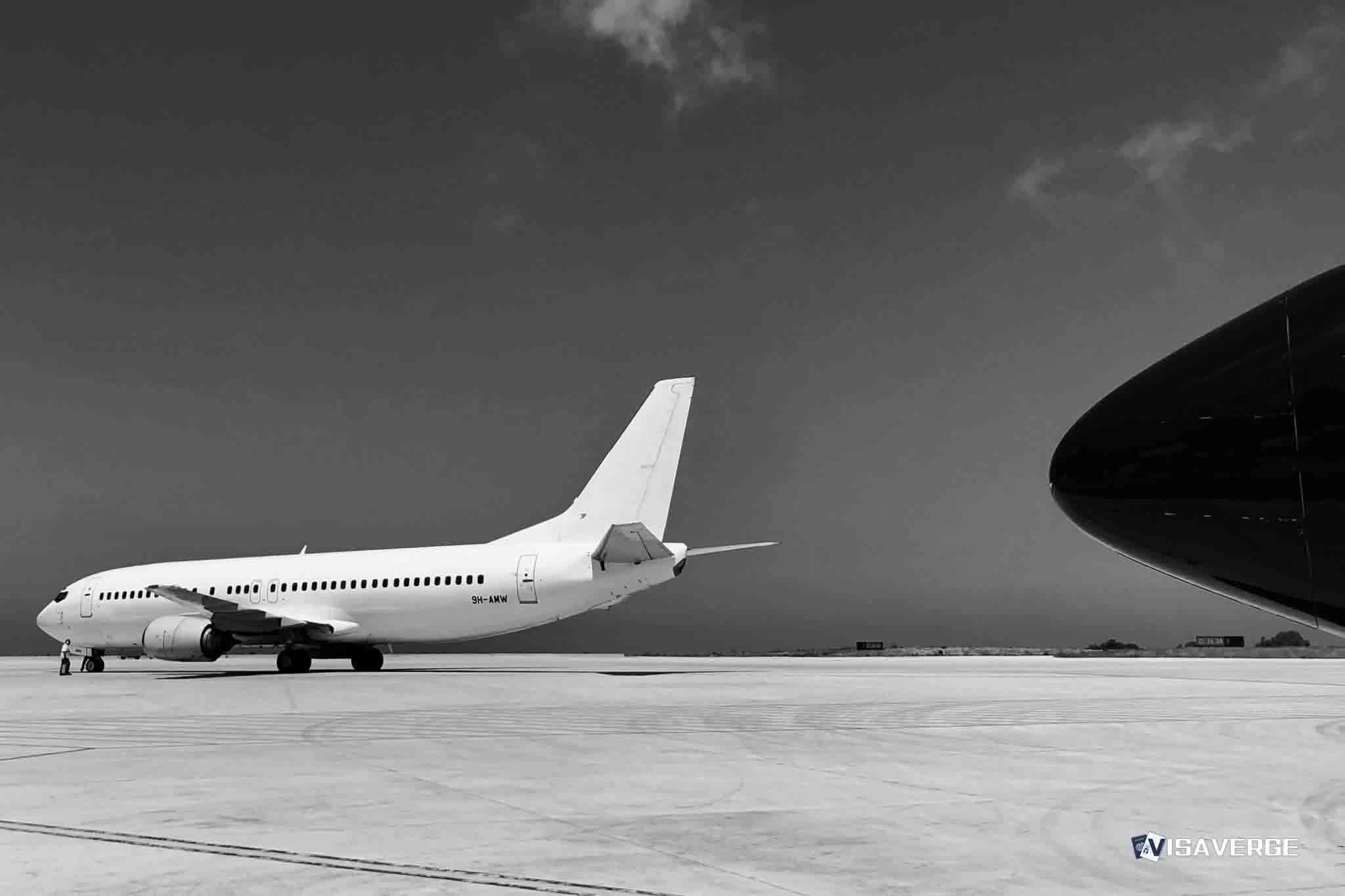
- Airlines canceled over 23,000 flights to and from the Middle East following the US-Iran War escalation.
- Total industry losses approach $1 billion as major Gulf transit hubs face unprecedented operational disruptions.
- Over one million passengers are affected, prompting large-scale repatriation efforts and the use of safe air corridors.
(MIDDLE EAST) — Airlines canceled more than 23,000 flights to and from the Middle East since February 28, 2026, as the US-Iran War drove airspace closures, security warnings and a scramble to reroute aircraft across one of the world’s busiest transit regions.
Data cited by The Kobeissi Letter and drawn from Cirium put the disruption above 23,000 global cancellations since Iran’s first retaliatory strike, after U.S.-Israeli strikes on Iran under Operation Epic Fury. Carriers and travel companies reported losses approaching $1 billion as schedules broke apart and passengers got stranded far from home.
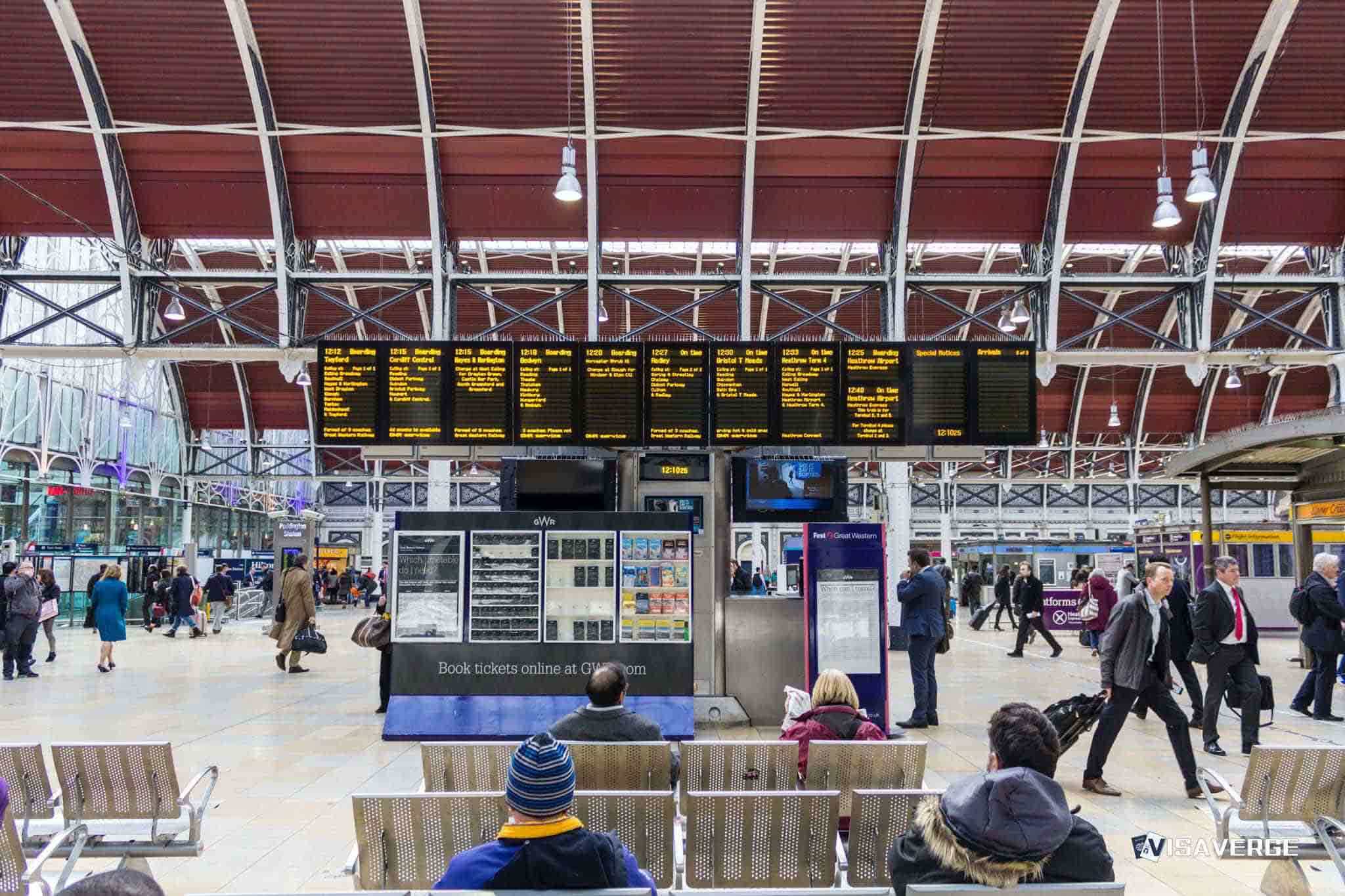
Military activity and shifting risk assessments forced airlines to suspend services, cut frequencies and hold planes on the ground, then restart only in limited corridors as airspace restrictions changed hour by hour. The knock-on effects quickly spread beyond the Middle East because Gulf hubs sit on major Europe-Asia-Africa routes.
Operation Epic Fury and subsequent escalation across the Gulf region turned routine long-haul connections into multi-day disruptions, as aircraft and crews ended up out of position and airlines struggled to rebuild rotations. Wider travel demand also came under pressure as passengers deferred trips and companies limited employee movement.
U.S.-Israeli strikes under Operation Epic Fury killed Iran’s Supreme Leader Ayatollah Ali Khamenei, the post said, and Iran launched retaliatory attacks across the Gulf region. The conflict has driven repeated airspace closures and a surge in flight suspensions across the region’s primary connecting airports.
Cirium data cited in the post showed cancellations clustering at Gulf hubs that normally handle dense banks of arrivals and departures, with knock-on disruption for onward flights to Europe, Asia and Africa. A single-day spike became a multi-day backlog as missed connections rippled through airline networks.
Earlier figures cited in the same chain of updates put the initial wave at 9,500+ across seven airports, before the cancellations climbed past the 23,000 mark. On February 28 alone, the cancellation rate reached 22.9% with 966 flights, the post said, underscoring how quickly schedules can collapse when a hub loses capacity.
Airlines and regulators tightened routing because missile and drone activity, as well as air-defense operations, raised the risk of operating through key corridors. Carriers also faced congestion on alternative routings, adding flight time, fuel burn and crew complications.
Debris incidents and maritime security concerns shaped the threat picture described in the post, including missile debris that hit Dubai’s Palm Jumeriah, injuring four and damaging hotels like Burj Al Arab. Separately, it cited an oil tanker strike off Kuwait that caused a spill, and said Iran threatened to close the Strait of Hormuz.
The Gulf’s role as a global transfer region amplified the impact, because passengers often rely on tightly timed connections across multiple airlines. Cirium figures cited by The Kobeissi Letter put the total number of impacted passengers at over a million.
One measure of that dependence came from 2025 traffic flows, with 138,000 daily connectors passing through Dubai, Abu Dhabi, and Doha, the post said. When cancellations spike at these hubs, airlines can take days to restore aircraft positioning and rebuild the sequence of inbound and outbound flights.
Simple Flying reported airline losses nearing $1 billion, with major exposure for carriers including Emirates and Qatar Airways. Costs mounted from grounded fleets, reroutes, crew hotels and repositioning aircraft and staff after abrupt suspensions.
The disruption also threatened demand and capacity beyond the immediate cancellations, given the Gulf’s role in long-haul itineraries and the way hub shutdowns constrain global networks. The Kobeissi Letter cited broader risks to the $12 trillion global travel industry as planes, crews and passengers were displaced.
Emirates suspended Dubai operations before moving toward partial resumption under a “safe corridor” concept described by UAE officials. The airline planned to resume more than 100 flights on a reduced schedule via a UAE “safe air corridor” with 48 flights/hour capacity shared with Etihad and FlyDubai.
Emirates said it would prioritize early bookings and advised passengers against traveling to the airport unless notified, reflecting the uncertainty around changing departure slots and security clearances. Reduced schedules also meant fewer seats for rebooking, even when flights restarted.
Etihad Airways resumed limited flights from Abu Dhabi to Atlanta, Boston, Chicago, JFK by March 6, a move aimed at restoring a small set of long-haul links while capacity remained constrained. Those resumptions came as airlines weighed crew duty limits, aircraft availability and routing constraints.
American Airlines canceled Middle East flights and offered changes tied to purchase dates and travel windows. Tickets bought by Feb 27 for Feb 28–Mar 15 travel qualified for rebooking Feb 28–Mar 29 in the same cabin and the same origin and destination, or a refund in all fare classes.
United Airlines canceled U.S.-Dubai through Mar 4, and U.S.-Tel Aviv through Mar 6, then issued a set of waivers tied to purchase dates and travel periods. For tickets bought by Feb 27 for travel through Mar 7, United allowed rebooking Feb 28–Mar 15 with no fees or differences in the same cabin and cities.
A second United waiver covered tickets bought by Feb 28 for travel Mar 8–31, and applied to Dubai, Tel Aviv, Abu Dhabi, Beirut, and Erbil. The staggered windows reflected how airlines tried to manage demand and capacity as airport operations reopened unevenly.
Disruptions extended beyond airlines into cruise and tour operations that rely on Gulf flight connections to move passengers. MSC Cruises canceled three Dubai sailings and said it would charter five 1,000-passenger flights for 6,300 guests on MSC Euribia.
Passenger disruption left hundreds of thousands stranded, with some travelers paying $200,000+ for Europe charters, the post said. Limited commercial seats, high demand and scarce routings pushed travelers toward expensive alternatives when standard rebooking options ran out.
The U.S. State Department urged Americans to “DEPART NOW” as repatriation efforts expanded. Nearly 20,000 were repatriated by Thursday via chartered and military flights, the post said, as officials navigated airspace control delays and tight operational constraints.
Secretary Marco Rubio cited airspace control delays in comments referenced in the post, while White House Press Secretary Karoline Leavitt pledged full returns. President Trump organized free U.S. flights, it said, adding another channel for travelers who could not access commercial options.
Regional governments also moved to restore flows through controlled corridors and organized returns for citizens. Israel aimed for 10,000 passenger returns daily, the post said, illustrating how repatriation plans can hinge on airport capacity, limited routings and security approvals.
UAE Minister Abdulla bin Touq Al Marri announced a safe corridor, without operational details in the material cited. Airlines still faced bottlenecks because even when airspace reopens, crews and aircraft may be in the wrong cities and maintenance plans may have slipped.
Analyst Henry Harteveldt called the disruptions “unprecedented” because of the breadth of targeting across UAE, Qatar, Kuwait, Bahrain, Saudi Arabia, Oman, Jordan, Lebanon. He expected recovery as hotels report safety and flights resume, though traveler reluctance persists, the post said.
Airspace remained volatile with ongoing strikes that grounded aircraft and crews, while limited repatriation flights continued under constraints, including narrow routing options and airport throughput limits. For transit passengers, irregular operations also raised the risk of missed connections and tight entry and exit deadlines as airlines worked through rebooking backlogs.