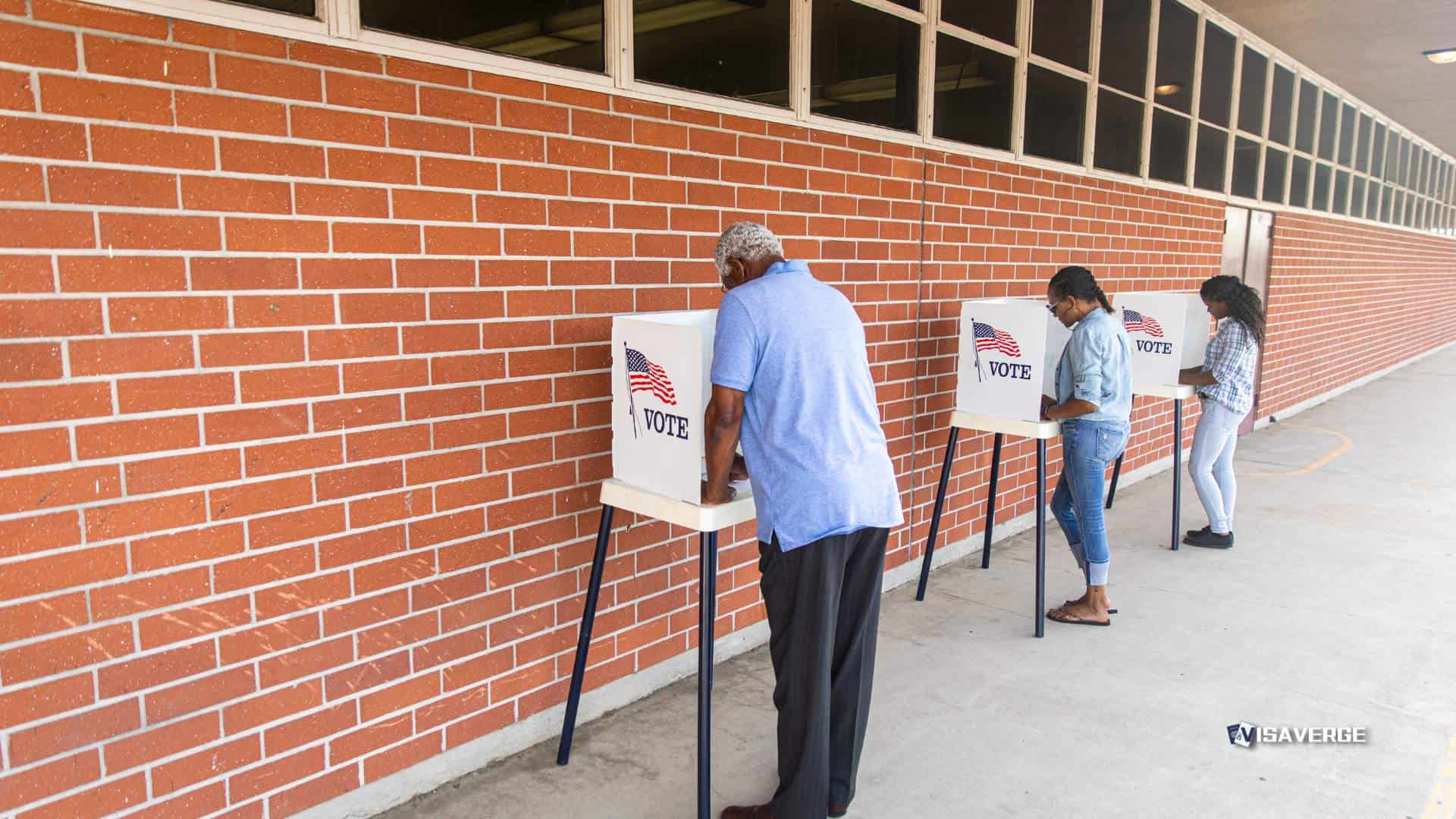
- South Dakota Governor Larry Rhoden signed a law allowing voters to challenge citizenship status of registrants.
- The new process requires sworn statements and documentation to initiate a formal eligibility review.
- County auditors act as primary gatekeepers for validity before a registration can be canceled or appealed.
(SOUTH DAKOTA) — Governor Larry Rhoden signed a new South Dakota law that lets voters challenge the citizenship status of other registered voters, adding a formal process that also allows county auditors and the Secretary of State’s office to bring such challenges.
Supporters in the Legislature framed the measure as part of an effort to tighten voting requirements and respond to perceived noncitizen voting. Critics countered that South Dakota already has tools to address eligibility problems and warned the new pathway could invite intimidation and pile more work onto local election officials.

Under the law, three groups gain explicit authority to initiate a citizenship challenge: voters, county auditors, and the Secretary of State’s office. The change matters because it expands who can trigger an eligibility review and sets out a more structured route for raising questions about a registrant’s citizenship.
The law requires that challenges be sworn and supported by documented evidence of noncitizenship, rather than informal complaints or generalized suspicion. That documentation threshold shapes how challenges can be filed and how election officials evaluate them.
Before this law, South Dakota election administration did not include this specific, formalized pathway for citizenship challenges initiated by voters alongside election officials, as described in the legislation’s design. The new approach emphasizes sworn statements and documentation and puts county auditors at the center of early decision-making.
The process begins when a challenger files a sworn challenge. The law says the challenge must include documented evidence that the registered voter is not a U.S. citizen.
A county auditor then reviews the filing and makes an initial determination on whether the challenge is valid. That threshold review acts as a gatekeeping step before any action on a voter’s registration.
If the county auditor determines the challenge is valid, the voter gets a chance to prove the registration is valid. The law sets up that opportunity as the registrant’s response stage after the auditor’s initial decision.
The auditor ultimately decides whether to keep the registration in place or cancel it. A cancellation does not end the matter, because the law also lays out appeal options.
After a county auditor cancels a registration, the voter can appeal either to a court or a county commission. The law does not treat the appeal routes as identical, but it gives the voter more than one venue to contest the cancellation.
The timing of the new procedures leaves one major election unaffected. The law takes effect in mid-2026, and it will not apply to the early-June 2026 primary because it starts after that contest.
That sequencing matters for voters and election offices because it draws a bright line between existing procedures used in the early-June primary and the new sworn-challenge system that begins later. It also affects the calendar for county auditors who must be prepared to evaluate sworn challenges and documentation once the law starts.
Implementing a new election procedure typically requires election offices to align internal steps with statutory requirements, including how staff accept filings, how they store and review documentation, and how they notify voters when a challenge is deemed valid. The law also puts county auditors in a position where they must decide, early on, whether the evidence and sworn statement meet the threshold to proceed.
The Secretary of State’s office plays a distinct role because the law allows that office itself to bring challenges, not only to issue guidance. That authority adds a statewide actor to a process that otherwise begins with a voter filing a sworn challenge in a county.
Supporters’ rationale, as described by South Dakota lawmakers, centers on preventing ineligible voting and tightening requirements around eligibility. Backers have pointed to perceived noncitizen voting as a reason to create a clearer process.
Critics argue the premise does not match the available record in South Dakota. They say there is “no documented pattern of noncitizen voting, widespread residency fraud, or double voting in South Dakota that current law cannot already address.”
State Senator Liz Larson criticized the bill in blunt terms. The Democrat said it is “adding fuel to the fire,” capturing opponents’ view that the measure escalates tensions around elections instead of solving a demonstrated administrative problem.
Opponents have also argued the measure could lead to voter intimidation. Their concern focuses on the fact that the law gives voters an avenue to challenge other voters, which critics say could chill participation even when a challenged registrant is eligible.
County auditors could also see added workload, opponents contend, because the law places them in the position of evaluating sworn filings and reviewing documented evidence before deciding whether a challenge is valid. Even when a challenge fails the threshold test, election offices still must receive it and make a decision.
Supporters, however, have described the law as a way to formalize how concerns about eligibility can be raised and evaluated, with a requirement for sworn statements and documented evidence. By building the documentation requirement into the filing itself, backers have cast the approach as more structured than casual allegations.
The law’s design also makes the county auditor’s review central to whether a challenged voter must respond. Only after the auditor deems a challenge valid does the voter receive the opportunity to prove the registration is valid.
That sequencing is part of what makes the measure different from a looser complaint process, because it embeds a threshold decision before a challenged voter must assemble a response. At the same time, critics see the existence of a voter-initiated process as a potential pressure point, regardless of the sworn-and-documented standard.
The Secretary of State’s office, as an entity authorized to file challenges, also becomes a visible participant in eligibility disputes under the new system. Alongside that authority, election offices across the state will have to manage how challenges are received and processed under the statute’s rules.
South Dakota’s move fits into a broader national trend in 2026 in which states have focused on voting eligibility and citizenship verification. The new law reflects that push by centering a citizenship claim in a sworn challenge process and directing election administrators to assess documented evidence.
South Dakota voters will also face a separate decision in 2026: a constitutional amendment that would explicitly disqualify noncitizens from voting in any state election. That forthcoming ballot question adds another layer to the state’s broader debate over how eligibility rules should be written and enforced.
The combination of a statutory challenge process and a planned constitutional amendment highlights how eligibility questions can play out both in election administration and at the ballot box. Even though the amendment is separate from the new challenge procedure, both address who can vote and how the state defines and enforces that boundary.
Variation from state to state can matter for people who recently moved or who updated their registration details, because eligibility rules and administrative processes do not look identical everywhere. The South Dakota law focuses on citizenship challenges within the state’s registration system, with county auditors making validity determinations and voters given a chance to show their registration is valid if a challenge clears the threshold.
For county auditors, the law establishes a direct responsibility: decide whether a sworn challenge supported by documented evidence is valid, then manage the next steps with the voter if it is. The auditor’s role also extends to the last administrative step before a possible appeal, because the auditor can cancel the registration and trigger a court or county commission appeal.
For voters, the law creates two roles in the system. It allows voters to file sworn challenges backed by documentation, and it also sets out how a voter must respond if the county auditor deems a challenge valid.
The new pathway also puts a sharper focus on the Secretary of State’s office as an active participant, not just a source of election information. Because the office can file challenges, it can initiate cases that move through county-level review by auditors.
Critics’ warnings about intimidation and administrative burden sit alongside supporters’ emphasis on tighter requirements and eligibility enforcement. The tension between those views, reflected in Larson’s “adding fuel to the fire” comment and in supporters’ framing of perceived noncitizen voting, will shape how the law is discussed as it moves from legislation into practice.
The law’s impact will begin only after it takes effect in mid-2026, leaving the early-June 2026 primary under existing procedures. After that, voters, county auditors, and the Secretary of State’s office will have a new, sworn-and-documented way to challenge the citizenship status of registered voters, with county auditors deciding validity, voters given an opportunity to prove their registration is valid, and appeals available to a court or county commission if a registration is canceled.