- Buffalo investigation reveals secretive ICE charter flights moving detainees without notifying legal counsel or families.
- Over 226 suspected flights occurred at Buffalo Niagara International between January 2025 and March 2026.
- Legal experts warn that rapid interstate transfers may violate constitutional due process and the right to counsel.
(BUFFALO, NEW YORK) — Buffalo television station WGRZ-TV’s “2 Investigates” reported on April 2, 2026, that ICE flights moving detainees through Buffalo Niagara International Airport and out of the Batavia detention facility are raising constitutional concerns over due process, legal access and secrecy.
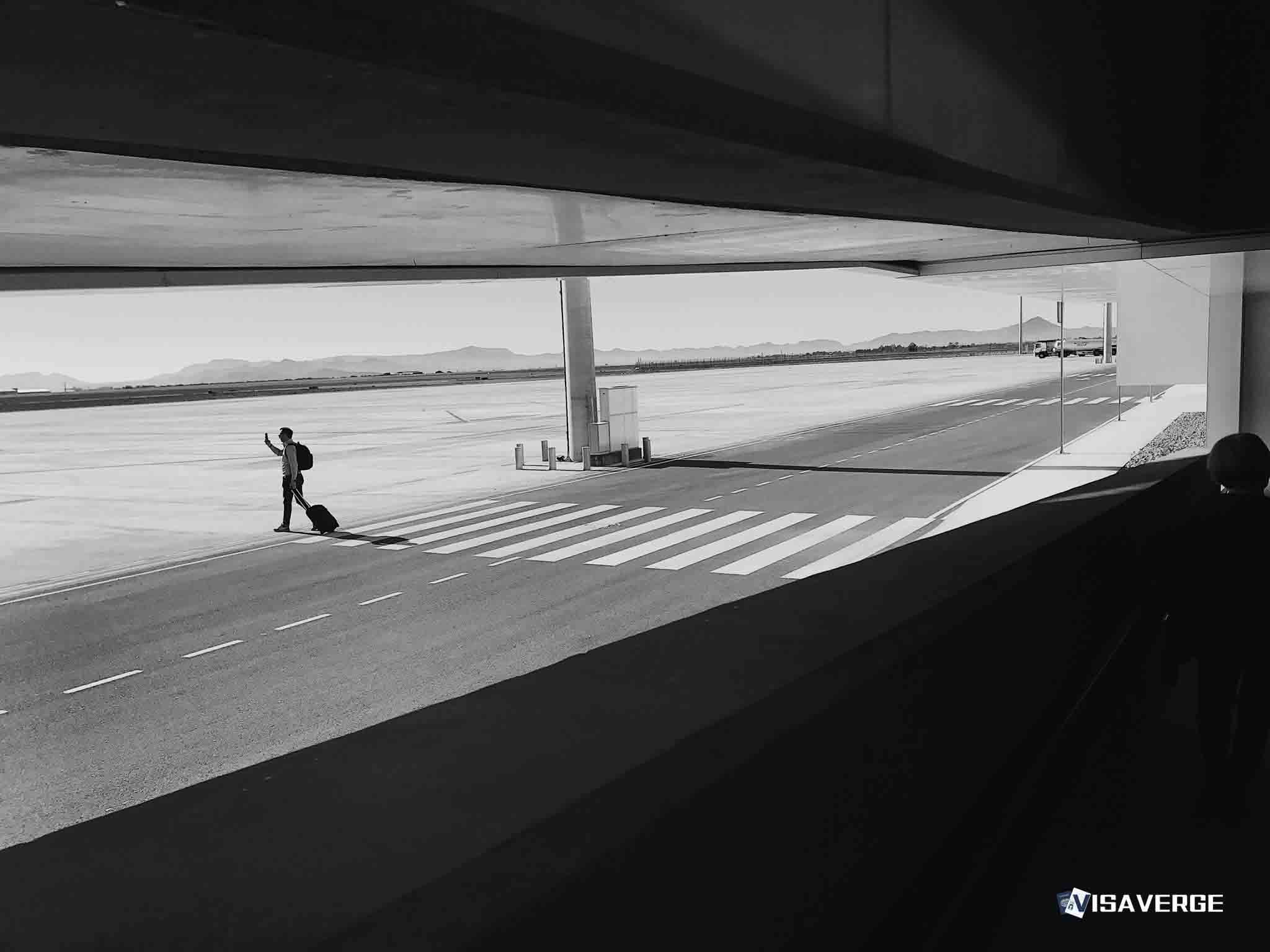
Reporter Nate Benson’s investigation focused on non-descript charter operations tied to U.S. Immigration and Customs Enforcement, or ICE, that move detainees to other states, often without their lawyers knowing where they have gone. The report said the flights do not appear on standard departure boards, making them difficult for families and attorneys to track.
The investigation described a system in which detainees can vanish from one legal setting and reappear in another hundreds of miles away. Attorneys said that breaks the attorney-client relationship and makes it harder to challenge detention in court.
Between January 2025 and March 21, 2026, there were 226 suspected ICE charter flights in and out of the Buffalo airport, according to the investigation. It also found that 80% of the individuals transported on those flights are designated by the agency as “non-threat.”
That local reporting landed as ICE Air operations expanded nationwide. Human Rights First reported that ICE Air flights increased by 155% in early 2026 compared to 2025, with domestic “shuffle” flights averaging 42 per day nationally.
The Buffalo findings also arrive during a broader dispute over immigration enforcement in western New York. On January 26, 2026, after Buffalo Mayor Sean Ryan signed an executive order prohibiting city cooperation with ICE, a Department of Homeland Security spokesperson said, “Buffalo will be less safe as a direct result of Mayor Sean Ryan’s executive order. Our partnerships with state and local law enforcement are key to removing criminal illegal aliens. from American communities.”
On March 22, 2026, amid a partial government shutdown, Border Czar Tom Homan defended ICE’s authority while discussing the deployment of agents to major airports. “We certainly can’t surrender ICE’s authorities and their congressionally mandated job. Agents will continue to enforce immigration laws as they deploy,” Homan said.
Local ICE officials had not answered Benson’s questions by the time of publication. Benson wrote, “I reached out to a spokesperson for ICE locally with several questions for this story; I have not yet received a response.”
At the center of the legal dispute is whether fast transfers by air deny detainees due process under the Fifth and Fourteenth Amendments. Immigration detention is a civil matter, but lawyers and advocates in the report said the way detainees are moved can make it much harder for them to exercise basic legal rights.
Professor Steven Yale-Loehr of Cornell Law said transfers across state lines can block or delay one of the few ways a detainee can challenge confinement. “If you send someone to a detention center for what essentially is a civil violation, without giving them the right to a hearing, that violates the Constitution,” Yale-Loehr said.
That issue becomes more acute when a detainee is taken from Batavia to a distant facility in the southern United States or another region with little warning. A lawyer preparing to file in one federal court may suddenly face a question of where the person is held and which court has authority to hear a challenge.
Habeas corpus actions often depend on where a detainee is physically confined. When the government moves someone quickly, the legal forum can shift with the plane ride, leaving attorneys scrambling to find their clients and reset filings.
The investigation also pointed to a separate court fight over legal mail at the Buffalo Federal Detention Facility in Batavia. On January 9, 2026, a settlement in PLS v. DHS ended a policy there that allowed ICE officers to open privileged legal mail.
Advocates described that settlement as a win for First Amendment protections. The dispute added to wider concerns in the report that detainees’ access to counsel can be narrowed not only by movement, but also by policies inside detention centers.
Transfers affect families as well as lawyers. Relatives in western New York often learn that a loved one has been moved only after a missed visit or an unanswered phone call, the investigation said.
That uncertainty can last for hours or longer while families try to find out where the detainee has been sent. Because the flights are not listed like standard commercial departures, tracking those movements can be difficult even for people who know a transfer is possible.
For detainees, the move itself can create new barriers. The report said people sent to remote facilities often face language barriers and more limited legal resources than those available in Buffalo or Batavia.
That matters because local support networks can disappear overnight. A person who had family nearby, access to a lawyer and some familiarity with the system may suddenly be held far away from all three.
Advocates in the investigation said those practices feel punitive for people whom ICE itself classifies as “non-threat.” They argued that the use of shackles and secretive flights sits uneasily with the civil nature of immigration enforcement.
The Buffalo airport has become one visible node in that system. The flights tied to ICE transport do not announce themselves to ordinary travelers, yet they form part of a much larger network moving detainees around the country.
Those movements have drawn attention because Buffalo serves both as a detention point and a departure point. Detainees held at Batavia can be transferred out quickly, changing the legal and personal ground beneath them.
The figures cited in the investigation suggest the scale is not occasional. With 226 suspected ICE charter flights recorded from January 2025 through March 21, 2026, the traffic described in Buffalo reflects a regular pattern rather than isolated transport.
National growth in ICE Air adds another layer. Human Rights First’s estimate of a 155% increase in early 2026 compared to 2025, along with 42 domestic “shuffle” flights per day, places the western New York operations within a much wider federal transport system.
The political fight over local cooperation with immigration enforcement has also sharpened scrutiny of those flights. Buffalo officials and the federal government have clashed over whether limiting city assistance to ICE improves public trust or hinders immigration enforcement.
DHS answered that question in blunt terms after Ryan’s executive order. “Buffalo will be less safe as a direct result of Mayor Sean Ryan’s executive order. Our partnerships with state and local law enforcement are key to removing criminal illegal aliens. from American communities,” the department spokesperson said.
Homan’s remarks on airport deployments, though centered on security lines during the shutdown, carried the same message on federal power. “We certainly can’t surrender ICE’s authorities and their congressionally mandated job. Agents will continue to enforce immigration laws as they deploy,” he said.
Yet the constitutional questions raised in Buffalo turn less on ICE’s power to enforce immigration law than on how that power is exercised. Lawyers and scholars in the investigation said moving civil detainees without notice can make legal rights hard to use in practice, even when those rights still exist on paper.
That tension runs through the report. The government describes enforcement and public safety needs, while attorneys point to due process, access to counsel and the ability to seek judicial review before a detainee is moved beyond reach.
People looking for official federal statements can find department updates in the DHS newsroom and agency announcements in ICE press releases. Court records in cases such as PLS v. DHS are available through the U.S. District Court for the Western District of New York.
The Buffalo investigation did not frame the issue as an abstract legal fight. It showed how ICE flights, detention transfers and airport operations can reshape a case in a day, separating detainees from lawyers, relatives and the courts meant to hear their claims.
For Yale-Loehr, the constitutional question remains direct. “If you send someone to a detention center for what essentially is a civil violation, without giving them the right to a hearing, that violates the Constitution.”