- A federal judge blocked the deportation of five-year-old Liam Ramos and his father from a Texas facility.
- Lawmakers reported deteriorating mental health for the child during his detention at the South Texas center.
- Legal strategies focus on pursuing asylum while simultaneously litigating for immediate release through humanitarian parole.
(DILLEY, TEXAS) — For detained families like 5-year-old Liam Ramos and his father, Adrian Conejo Arias, the most immediate “defense strategy” is often a two-track approach: (1) pursue protection-based relief (asylum, withholding of removal, and CAT), while (2) aggressively litigating custody for release through parole, bond, or federal court safeguards.
This matters beyond one case because family detention in South Texas frequently compresses timelines, limits access to counsel, and raises urgent child-welfare and medical issues that can affect both custody and litigation posture.
ICE detention decisions, immigration court proceedings (EOIR), and any federal court orders can move on separate, overlapping tracks.
1) Key figures and background: what detention at Dilley means procedurally
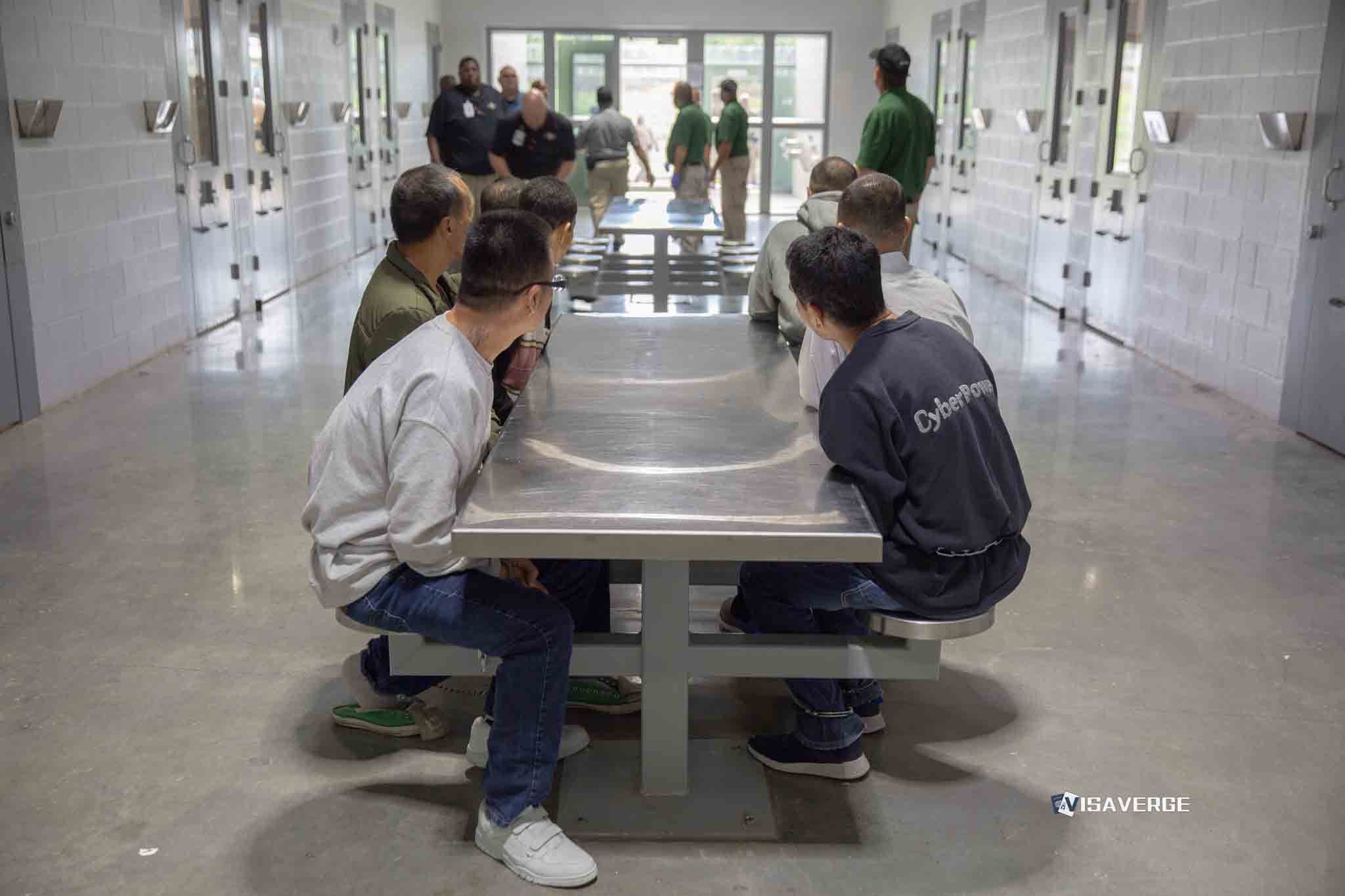
Liam Ramos (also reported as Liam Conejo Ramos) is a 5-year-old child detained with his father, Adrian Conejo Arias, at the South Texas Family Residential Center in Dilley, Texas. The facility is used to hold families during removal processing and while protection claims proceed.
The family reportedly presented at a port of entry and requested asylum. In many border-processing cases, DHS may place people into expedited removal under INA § 235(b)(1), followed by a credible fear interview under 8 C.F.R. § 208.30.
A positive credible fear finding typically allows the person to pursue asylum in removal proceedings before an immigration judge. DHS still controls custody during this time.
Members of Congress, including Reps. Joaquin Castro and Jasmine Crockett, became publicly involved after visiting the facility. Congressional offices can make inquiries, request information, and apply oversight pressure. They generally cannot order ICE to release someone or direct an immigration judge’s rulings.
2) Timeline of events and rulings: what a temporary order usually does (and does not) do
A federal judge in Texas issued a temporary order on January 27, 2026, blocking deportation while an immigration matter remained pending. In removal-related litigation, temporary orders often preserve the status quo.
They are not a final grant of asylum, withholding, or any permanent status.
The following day, lawmakers toured the Dilley facility and held press activity. Protests at or near detention sites can draw attention to conditions and access-to-counsel concerns, but they do not substitute for motions, filings, or administrative remedies.
- DHS/ICE custody decisions, including parole requests and detention reviews.
- Immigration court proceedings (EOIR), including pleadings and protection applications.
- Federal court review, in limited circumstances, including temporary stays or habeas-type claims.
Deadline Warning: Missing an immigration court filing deadline can be fatal to relief. Detained cases can move quickly. Ask counsel for the next hearing date and due dates immediately.
3) Facility conditions and capacity: why overcrowding claims matter to legal strategy
The South Texas Family Residential Center is a large-scale family detention site, reportedly with capacity around 2,400. In practice, capacity affects legal outcomes because it can shape access to counsel and confidential meeting space.
Capacity also affects phone access for attorneys and evidence gathering, medical and mental health care (including pediatric care), and schooling, recreation, and sleep — all of which can be relevant to child-welfare documentation.
Overcrowding allegations typically surface through detainee accounts, attorney observations, grievances, inspection findings, and medical records. Documentation is critical. Vague descriptions rarely move courts or agencies.
Specific dates, names, symptoms, and requests made are more persuasive. Finally, there is a key legal distinction: being “authorized to remain” temporarily can mean a person is allowed to pursue proceedings, but it does not mean they are free from physical detention.
4) Legal and policy actions advocated: what Congress can do versus what courts can do
Public officials may call for defunding practices or changing detention policy. The “power of the purse” can, in some contexts, mean Congress can set funding conditions, reporting requirements, and oversight mandates affecting detention operations.
Still, those levers usually work slowly and may not deliver immediate release for a particular family. What can matter more quickly is a strong parole request supported by medical and child-welfare records, a well-supported custody/bond strategy where available, or targeted litigation to enforce an existing court order.
Congressional inquiries can increase visibility and may speed responses from agencies. They are not equivalent to a judicial stay or a grant of immigration status.
5) Detainee welfare and testimony: how health concerns can support custody and litigation
Lawmakers reported Liam appeared depressed, with appetite and sleep changes, and repeated questions about his mother, classmates, and school. In detention cases, such facts can be legally relevant in several ways.
- Medical and mental health needs can support parole and humanitarian release requests.
- Child welfare impacts can support arguments about least restrictive custody.
- Documented deterioration can support emergency motions when access to care is delayed.
Common channels to raise urgent welfare issues include written medical requests inside the facility, attorney escalation with ICE, and formal documentation for court filings. Outcomes vary, and timelines can be short.
Lack of criminal history does not automatically prevent detention. Much custody is discretionary under INA § 236(a). ICE may still detain families based on enforcement posture, flight-risk allegations, or program directives.
Health Record Tip: Ask counsel to request medical records immediately. Keep a daily log of symptoms, meals, sleep, and requests for care, with dates and staff names.
6) Protests and on-site incidents: separating merits from conditions, while preserving evidence
Reports described a protest by detainees over living conditions and an alleged entry by guards into a women’s dormitory. These incidents can be relevant to safety, oversight, and conditions-of-confinement claims, and they are usually distinct from the merits of asylum eligibility.
Even so, conditions and safety incidents can matter in custody litigation. They may support arguments for humanitarian parole, or claims that detention is causing harm to a child.
Where retaliation is alleged, contemporaneous evidence is key. That can include sworn declarations, medical records, grievance forms, and witness accounts.
For official information and processes, readers often start with:
- EOIR Immigration Court: [justice.gov/eoir](https://www.justice.gov/eoir)
- ICE Detention information
- DHS Office of Inspector General
- DHS Civil Rights and Civil Liberties
7) Public statements and media moments: useful for oversight, not a legal substitute
A public event outside San Antonio City Hall was reportedly disrupted, and there were no confirmed release updates as of January 28, 2026. Media attention can help generate oversight, but it does not prove statutory eligibility for relief or require ICE to release a detainee.
Families should be cautious about public disclosures. Publicity involving a child can create privacy and safety risks. It can also complicate fact development if statements are inconsistent with later sworn declarations.
Attorneys often advise limiting public details about trauma history, travel routes, and family addresses. They may also seek protective orders for sensitive records in litigation.
8) Current status and open questions: what to watch next in cases like this
When a case is “awaiting developments,” it often means several procedural steps may be pending:
- ICE review of a parole request (often framed under INA § 212(d)(5)).
- A custody determination, including a possible bond hearing if legally available.
- Compliance reporting related to a temporary federal court order.
- Upcoming immigration court hearings on removability and protection claims.
A temporary block on deportation can be lifted, extended, or replaced with a different order. It does not itself grant asylum or permanent status.
Developments that materially change the situation typically include a written decision granting release/parole, a bond or custody ruling changing detention status, an immigration judge’s decision on asylum, withholding, or CAT, or a federal court disposition that changes the removal posture.
The core “defense strategy” in family-detention asylum cases
Relief options. Protection claims generally include asylum under INA § 208 (discretionary, requires a protected ground nexus), withholding of removal under INA § 241(b)(3) (higher burden, mandatory if met), and CAT protection under 8 C.F.R. §§ 1208.16–1208.18 (torture by, or with acquiescence of, officials).
Key asylum requirements typically include: a well-founded fear of persecution, nexus to a protected ground, and no mandatory bars. Applicants must also address the one-year filing rule in non-expedited contexts, under INA § 208(a)(2)(B), subject to exceptions.
Evidence that usually matters. Detailed declarations describing threats, harm, and why the government cannot protect; corroboration where available (police reports, medical records, affidavits, messages, photos); country-conditions reports from reputable sources; proof of identity, family relationship, and entry processing documents; and for custody, pediatric records, mental health screening, school letters, and facility request logs.
Strengtheners and weakeners. Strengtheners include consistent accounts, prompt corroboration, strong nexus evidence, documented child harm in detention, and a stable sponsor and address for release.
Weakeners include inconsistencies, prior removals, missed hearings, adverse credibility indicators, and evidence suggesting a safe internal relocation option.
Bars and disqualifiers. Common bars include certain criminal convictions, firm resettlement, persecutor bar, or security-related grounds. These are fact-specific and require attorney review.
Representation Warning: Detained family cases move fast, and errors can be hard to fix later. Seek qualified counsel immediately, especially before signing removal paperwork or accepting stipulated orders.
Attorney representation is often decisive in detained cases. Counsel can coordinate records requests, file emergency motions, prepare declarations, and pursue custody release while protecting the asylum merits record.
Resources (official and legal aid)
– EOIR Immigration Court: [justice.gov/eoir](https://www.justice.gov/eoir)
– USCIS Asylum: [uscis.gov/humanitarian/asylum](https://www.uscis.gov/humanitarian/asylum)
– ICE Detention
– [AILA Lawyer Referral](https://www.aila.org/find-a-lawyer)
Legal Disclaimer: This article provides general information about immigration law and is not legal advice. Immigration cases are highly fact-specific, and laws vary by jurisdiction. Consult a qualified immigration attorney for advice about your specific situation.