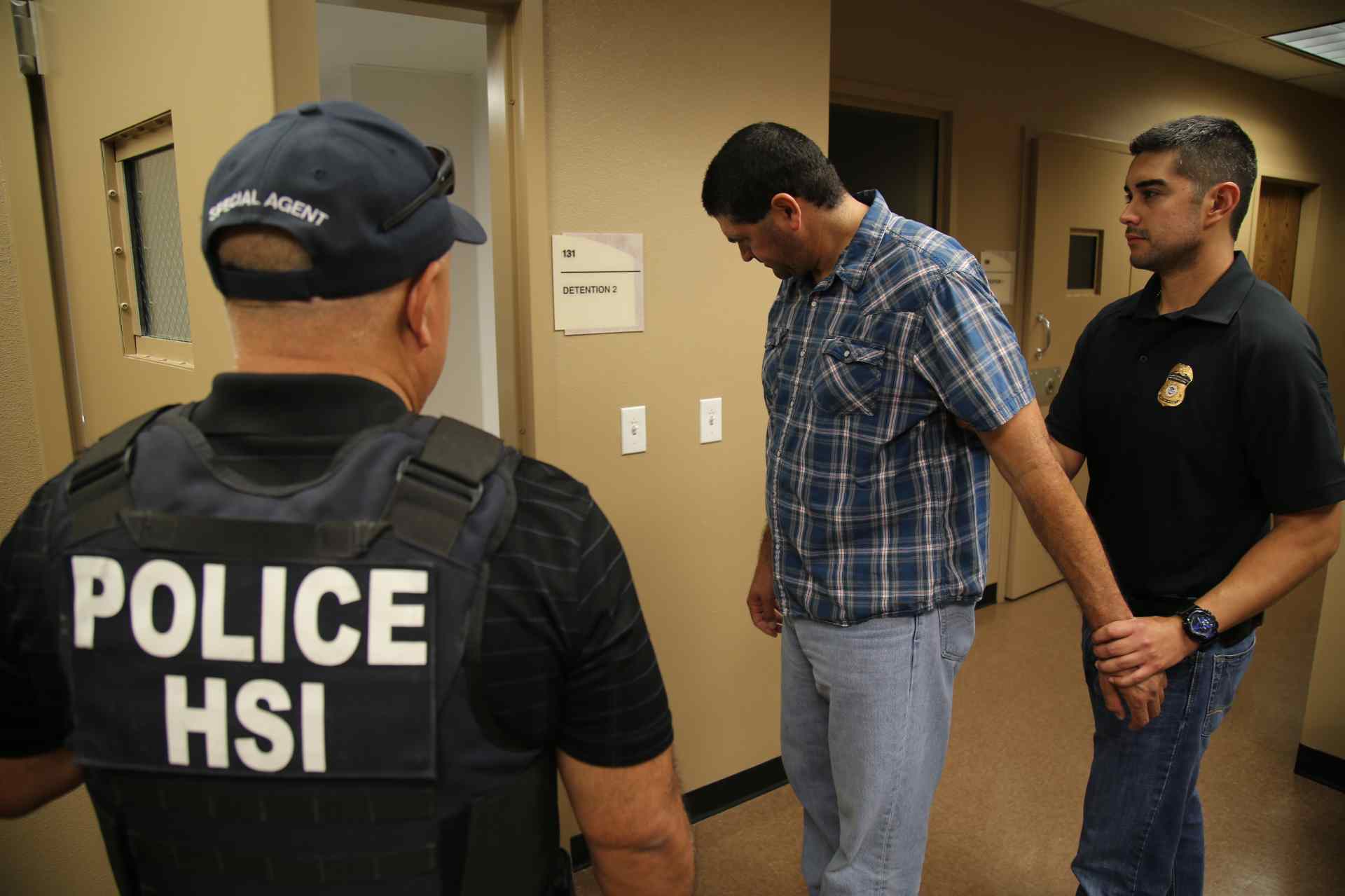
- Migrants in U.S. custody maintain essential due process rights despite high-profile media controversies.
- An unaired 60 Minutes segment regarding El Salvador’s CECOT prison remains unconfirmed and pending.
- Legal protections require official documentation and court records over social media reports and leaks.
(EL SALVADOR) — People in U.S. immigration custody and removal proceedings have a right to due process and a fair chance to challenge removal, even when public debate is driven by a high-profile media controversy like the reported unaired 60 Minutes segment about deported migrants and El Salvador’s prison.
This rights guide explains what that right is, who has it, where it comes from in law, and how to exercise it in practice—especially when reports involve alleged transfers to foreign detention facilities, harsh prison conditions, or rapid removals that can make it hard for families to locate loved ones.

In immigration matters, silence can be treated as waiver. Missing a deadline, failing to update an address, or signing papers without counsel can permanently limit options.
1) What the unaired 60 Minutes segment is about (and why it matters)
What’s reported. Public reporting described an unaired 60 Minutes segment attributed to veteran correspondent Sharyn Alfonsi.
The alleged subject was deported migrants—reportedly Venezuelans and others—sent after U.S. removal to El Salvador’s CECOT facility, often described as El Salvador’s prison in this context.
Coverage also described CBS promoting the segment, then not airing it as scheduled.
What “pulled for more context” means in practice
When a network says a piece needs “additional reporting,” it usually signals editorial concerns like missing responses, incomplete documentation, or fairness issues.
That is different from saying the underlying facts are wrong. A story can be partly accurate and still be held for more sourcing.
Why immigration law intersects with the controversy
Even if a media segment never airs, the underlying legal questions are real:
- Did the person receive notice and a meaningful chance to be heard before removal?
- Were they removed to their country of citizenship, or to a third country?
- Did they express fear of return, triggering screening obligations?
- Are there records confirming where they were taken and under what authority?
Immigration law answers those questions through documents and procedures, not headlines.
2) Timeline and airdate status: what’s confirmed vs. what’s unverified
Confirmed (based on the available reporting summarized in the provided material):
- The segment was scheduled for a late-December 2025 broadcast and did not air.
- As of mid-January 2026, there is no confirmed airdate.
- CBS’s stated rationale was that additional reporting was needed for context and “missing voices,” with a stated intent to air later.
Reported (but not independently established in the material provided):
- The content may have appeared briefly through a Canada-linked streaming or partner distribution pathway.
- The controversy included claims from within the newsroom about whether the segment was “factually correct,” along with disagreement about the decision to hold it.
Speculation (treat carefully):
- Claims that the segment “aired with very few changes.”
- Claims that any editorial decision was definitely political, or definitely routine, without corroboration.
The safer approach is to treat leaks, reposted clips, and secondhand accounts as non-definitive until corroborated by on-the-record statements or primary documentation.
For immigration cases, the most reliable “timeline” is usually the A-file, the immigration court record, and ICE custody paperwork—not social media recaps.
Helpful official starting points include EOIR’s Immigration Court information at https://www.justice.gov/eoir and USCIS case and records information at https://www.uscis.gov.
3) Key individuals and decision points inside a news organization
The reported dispute highlighted how editorial chains work:
- Correspondent and producers gather interviews, footage, and documents.
- Editors and standards teams assess fairness, sourcing, and completeness.
- News leadership and communications handle final broadcast decisions and public statements.
Public reporting also suggested names and titles were sometimes misspelled across outlets. That happens often with fast-moving stories and reposts.
Readers should cross-check names and roles using primary statements from the organization involved, when available.
“Missing voices” typically means one or more stakeholders were not interviewed or did not respond on the record.
In immigration-related stories, that can include DHS, ICE, counsel for specific individuals, or foreign government officials.
From a legal standpoint, missing voices in a broadcast are not proof that removals were unlawful.
The legal proof usually comes from court orders, warrants, charging documents, custody records, and sworn declarations.
4) Controversies, political framing, and what it does (and doesn’t) prove legally
Media controversies often produce two competing narratives:
- “The story was suppressed for political reasons.”
- “The story was delayed for editorial rigor.”
Either may be argued in public. Neither automatically proves a legal violation in an immigration case.
What determines legality. Removal and detention are governed by statutes, regulations, and constitutional limits.
Core sources include:
- Fifth Amendment due process protections that apply to “persons,” including many noncitizens physically present in the U.S.
- INA § 240 (removal proceedings) and related procedures.
- INA § 241 (detention and removal period after a final order).
- 8 C.F.R. § 1240.10, which requires immigration judges to advise respondents of key rights in removal proceedings, including the right to counsel at no government expense.
Key right in plain terms. If you are placed in removal proceedings, you typically have the right to:
- Receive notice of the charges and hearing.
- Be represented by counsel at your own expense.
- Present evidence and testify.
- Examine the government’s evidence.
- Appeal an adverse decision to the BIA, if eligible.
A media report may point to potential problems. It does not replace the record of proceedings.
Do not assume a viral clip proves where a person is detained. Location errors can derail real cases and put families at risk of scams.
5) Leak and online dissemination: what to watch for (and how misinformation spreads)
The material provided described the segment allegedly surfacing outside the U.S. broadcast pipeline.
That can happen through licensing, partner platforms, apps, or regional feeds.
When immigration stories involve deported migrants, misinformation can spread quickly and cause real harm.
Families may spend money on fake “locators.” Witnesses may panic and go silent. Victims may be pressured into unsafe travel.
Checklist for assessing leaked or reposted video:
- Are the intro and outro intact, or does it start mid-sentence?
- Are there hard cuts that could omit a denial, correction, or legal caveat?
- Does narration appear over the original audio?
- Do timestamps match the claimed broadcast date?
- Is the uploader a primary source, or a reposting aggregator?
- Are there on-the-record statements confirming authenticity?
For legal action, attorneys generally rely on declarations and records. Video can help, but it is rarely enough by itself.
6) Current status and open questions: what to track next
Status as of Monday, January 19, 2026. Based on the material provided, there is no confirmed airing date for the segment as of today.
CBS’s stated position was that it may air after additional reporting.
Trackable questions that matter legally:
- Will CBS publish an updated schedule or statement confirming a future airdate?
- Will additional stakeholders be interviewed, such as DHS components or counsel for individuals discussed?
- Will documentation be produced that can be authenticated, such as removal paperwork or detention transfer records?
- Are named individuals able to be located through official channels?
For families searching for someone in U.S. immigration custody, the most practical verification step is often the ICE online detainee locator.
For immigration court hearings and notices, EOIR’s official resources remain the safest starting point: https://www.justice.gov/eoir.
If you move, you must update your address promptly with the immigration court and DHS. Failure can lead to an in-absentia removal order. Address rules are strict and time-sensitive.
7) Practical next steps for readers: verification, safety, and advocacy
If you think you or a loved one is directly affected
- Confirm custody and location through official channels. Start with the ICE locator.
- Preserve evidence. Save voicemails, texts, booking numbers, paperwork, and dates. Take screenshots with timestamps.
- Ask for the A-number and charging documents. The Notice to Appear and custody paperwork matter more than media summaries.
- Get qualified counsel quickly. Immigration timelines can move fast after a final order.
How to exercise the right to counsel (practically).
- You have the right to hire a lawyer, but the government does not provide one in most immigration court cases. See INA § 240(b)(4)(A).
- Ask the immigration judge for time to find counsel. Judges often grant continuances, but not always.
- Do not sign stipulated orders, voluntary departure agreements, or “withdrawal” forms without advice.
How rights are commonly waived or lost.
- Missing a hearing because notices went to an old address.
- Accepting removal or “expedited” processing without stating fear.
- Giving up appeal rights on the record.
- Signing documents you do not understand.
If you fear persecution or torture, say so clearly and repeatedly. Fear claims can trigger specific screening processes, depending on posture and prior orders.
If you believe rights were violated
Options depend on posture, timing, and jurisdiction. A lawyer may consider:
- Motion to reopen or motion to reconsider with the Immigration Court or the BIA, if deadlines and grounds are met.
- Stay of removal requests, where available.
- Federal court litigation, including habeas in certain detention contexts, depending on circuit law and the claim.
- FOIA requests to obtain records, which can be essential for third-country transfer or detention questions.
Complaints and oversight channels may include DHS Office for Civil Rights and Civil Liberties (CRCL).
If you are not directly affected
- Verify before amplifying. Treat viral clips as unconfirmed until corroborated.
- Support reputable legal services organizations. Funding lawyers and bond support often helps more than reposting.
- Avoid doxxing and “crowd investigations.” They can endanger families and witnesses.
Legal help and official resources
– EOIR (Immigration Court) information: https://www.justice.gov/eoir
– USCIS information and records basics: https://www.uscis.gov
– AILA Lawyer Referral: https://www.aila.org/find-a-lawyer
This article provides general information about immigration law and is not legal advice. Immigration cases are highly fact-specific, and laws vary by jurisdiction. Consult a qualified immigration attorney for advice about your specific situation.