- The BIA uses the totality of the circumstances to evaluate bond and flight risk in detention cases.
- Documented unsanitary detention conditions can support procedural due process requests and parole applications.
- The Flores settlement sets minimum safety standards for minors, regardless of facility budget increases.
Holding (and practical impact). In Matter of Guerra, 24 I&N Dec. 37 (BIA 2006), the Board of Immigration Appeals held that immigration judges deciding custody redetermination (bond) should weigh the totality of the circumstances using a non-exhaustive list of factors tied to flight risk and danger.
The decision is not a “conditions-of-confinement” case. Its flexible, factor-driven approach matters in today’s family-detention disputes because it gives counsel room to argue that documented, medically significant detention conditions—including food contaminated with worms or mold, lack of potable water, and delayed care—bear on a parent’s ability to appear, communicate with counsel, and protect children’s health while proceedings continue.
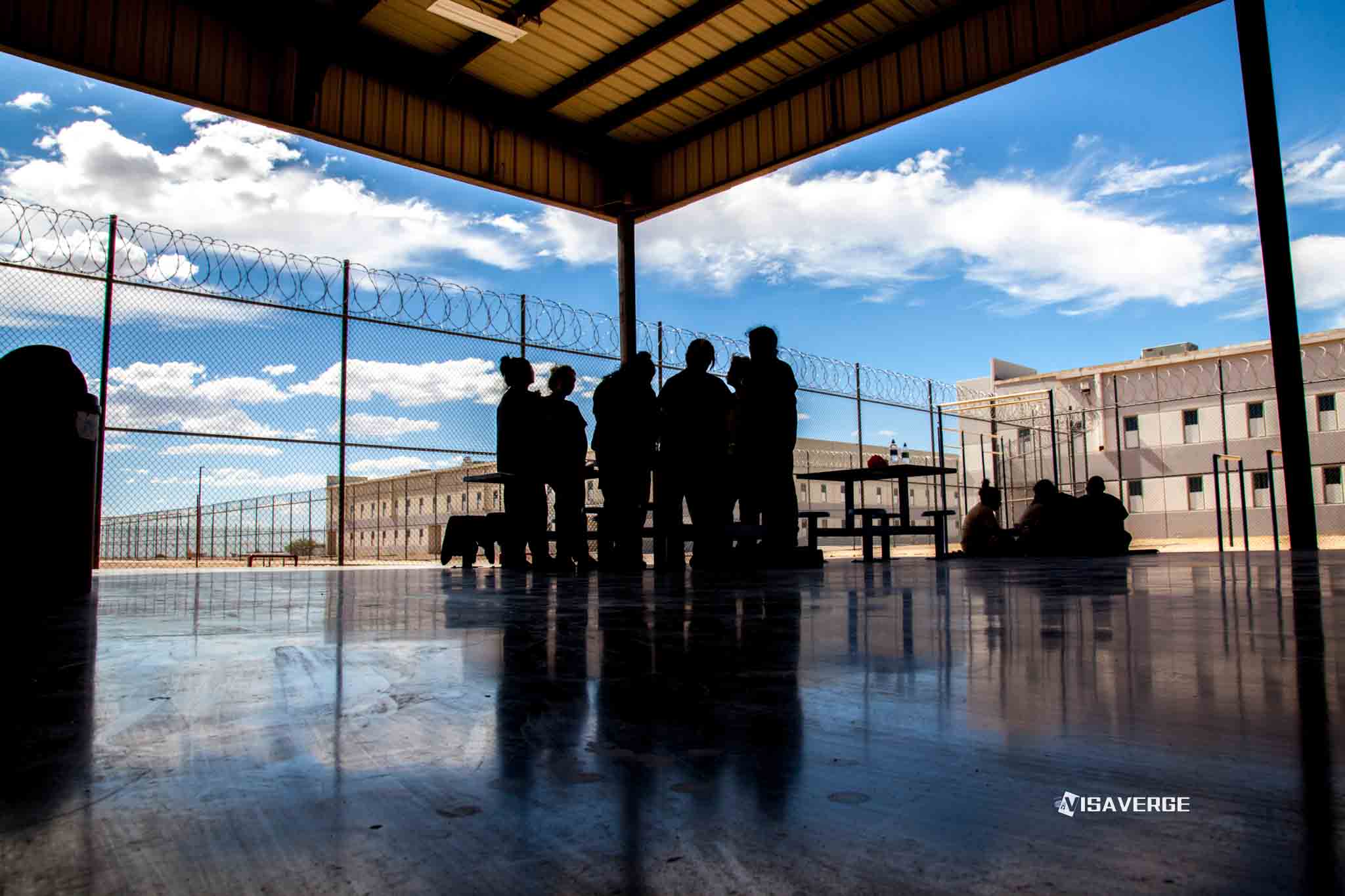
For Migrant families held in ICE family residential settings, the practical consequence is this: conditions evidence is rarely enough by itself, but it can strengthen (1) parole or release requests, (2) bond arguments where bond jurisdiction exists, and (3) due process-based procedural requests like continuances, telephonic appearance accommodations, or expedited hearings when illness or facility restrictions interfere with case preparation.
Immigration courts generally cannot order ICE to fix facility conditions. Conditions claims are usually pursued through federal court litigation, oversight complaints, and facility grievance systems, while removal defense proceeds on a separate track.
Key facts driving the current litigation posture (and why they matter legally)
Recent court filings from detained families describe children in ICE custody facing unsanitary and unsafe conditions. Reported problems include contaminated food, limited water, and delays in necessary medical care.
- Contaminated food (allegations of worms and mold).
- Limited clean drinking water and restricted access to potable water.
- Inadequate medical care, including delayed evaluation and treatment.
- Lack of schooling or educational access for children in detention.
These allegations matter beyond health and safety. They can also affect due process in removal proceedings because illness and facility restrictions often impair a parent’s ability to participate meaningfully in their case.
When children are sick, parents may struggle to gather documents, meet filing deadlines, or communicate with counsel. When facilities restrict movement or access to phones, families may miss attorney calls or fail to receive hearing notices, which can lead to in absentia removal orders.
A central legal theme in these filings is detention duration. Advocates have alleged that dozens of families and children have remained detained for more than 80 days, far longer than the “about 20 days” benchmark often associated with the Flores settlement litigation.
Preserving facts is critical
Families typically strengthen later review—whether in court, in an investigation, or in a bond record—by recording specific details about incidents. Timely documentation preserves credibility and supports multiple remedy tracks.
- The date and time of each incident.
- The facility name, housing unit, and bed or pod.
- Names and titles of staff involved, if known.
- Symptoms (vomiting, fever, dehydration, rash) and whether a child was seen by medical staff.
- Requests made (medical visit, clean water, alternative meals) and responses received.
- Any written grievances and the outcome.
The Flores settlement: scope, minimum conditions, and the contested “time limit” question
The Flores settlement is a long-running federal consent decree that sets baseline standards for the treatment of minors in immigration custody. It governs release and placement practices for children and functions as a minimum floor for care, sanitation, and safety when children are detained.
Flores-related standards commonly referenced in current filings and court orders include access to basic necessities and prompt medical care. These minimums inform many family-detention disputes and oversight claims.
- Toilets and sinks
- Potable drinking water
- Adequate food
- Emergency medical assistance
- Safe temperatures and ventilation
Oversight and enforcement. Flores compliance disputes have been supervised in federal court, including by Judge Dolly Gee in the Central District of California. Enforcement typically occurs through motions in federal court, not through immigration court orders.
Detention duration and why it is contested. Many public discussions refer to a “20-day limit,” but the legal reality is more complicated. The settlement addresses release and placement standards, and later litigation shaped how long children may be held in restrictive settings.
The Ninth Circuit has addressed Flores compliance disputes in cases such as Flores v. Lynch, 828 F.3d 898 (9th Cir. 2016) and Flores v. Sessions, 862 F.3d 863 (9th Cir. 2017). Agencies sometimes argue that compliance can be met through facility standards and licensing, while challengers argue that prolonged detention in secure-like settings violates Flores principles.
Because Flores litigation is supervised in federal court and has been heavily Ninth Circuit-driven, arguments and outcomes may vary by jurisdiction, especially when plaintiffs seek nationwide relief or when detention occurs outside the Ninth Circuit.
If conditions are causing missed filings or missed hearings, families should tell counsel immediately. Motions to reopen, reconsider, or rescind in absentia orders have strict timing rules. See generally 8 C.F.R. § 1003.23 (immigration court motions) and 8 C.F.R. § 1003.2 (BIA motions).
Budget expansion does not settle Flores compliance questions
Congress has recently appropriated major funding to expand detention capacity, including family detention facilities. Funding, however, does not answer the core legal questions that keep recurring in Flores disputes.
Three points tend to drive conflict in implementation: construction and contracts alone do not ensure practice-level compliance, detention duration remains contested, and more capacity can lead to more prolonged detention.
- More beds can mean more children detained longer. That can heighten Flores-based challenges, especially when release options exist.
- Construction and contracts do not guarantee practice-level compliance. Day-to-day access to clean water, edible food, and timely medical care are operational issues, not just design issues.
- Duration disputes remain live even when facilities claim to meet standards. Agencies may argue they comply through internal standards, while plaintiffs argue prolonged detention itself conflicts with Flores protections.
For families and advocates watching implementation, the most useful indicators are practical and documentable: policies, educational access, grievance pathways, and medical referrals beyond the facility when indicated.
- Written facility policies on water access, meal replacement, and medical triage.
- Whether children receive age-appropriate education and structured activities.
- Whether staff provide meaningful grievance pathways, with receipts or tracking numbers.
- Whether medical concerns lead to outside referrals when indicated.
Flores minimums vs. ICE standards: how to evaluate compliance problems
ICE cites internal standards for family residential settings, including the Family Residential Standards. These internal standards can matter as measurable benchmarks and as evidence that failures to meet ICE’s own standards support broader claims that detention conditions are unsafe or unlawful.
A structured way to assess a reported problem is to ask whether it looks like an isolated incident, a pattern, or a policy gap. This helps prioritize remedies and evidence collection.
- An isolated incident (a single spoiled tray).
- A pattern (multiple families reporting repeated contaminated meals).
- A policy gap (no reliable way to obtain potable water after set hours).
Flores baseline concepts translated into observable practices often include operational questions about water, sanitation, food safety, medical care, and the general environment for young children.
- Water: Is potable water continuously available? Are cups provided? Are children denied water outside meal times?
- Sanitation: Are sinks, toilets, and showers functioning and accessible? Are hygiene items rationed?
- Food safety: Are meals stored at safe temperatures? Is there a process to replace meals that appear spoiled?
- Medical care: Are sick-call requests logged? Are children assessed promptly? Are emergencies treated as emergencies?
- Environment: Are temperature and ventilation appropriate, especially for infants and toddlers?
Evidence quality matters. Even when photography is restricted, families may gather other types of documentation that are persuasive to oversight bodies and useful in immigration-court requests tied to due process.
- Medical request slips and discharge paperwork.
- Written grievances and responses.
- Names of witnesses in the same unit.
- Symptom timelines tied to meals or water access.
- Attorney declarations summarizing consistent accounts from multiple families.
This documentation can support oversight complaints and may also help in immigration-court requests that relate to due process, such as continuances where illness prevented preparation.
Do not break facility rules to obtain evidence. If photographing is prohibited, ask counsel about lawful alternatives, including written declarations and requests for preservation of video or logs.
Oversight and investigations: CRCL, OIG, and what stalled reviews can mean
Conditions allegations often trigger a parallel oversight ecosystem that runs outside immigration court. That ecosystem includes federal offices and facility grievance systems that create a separate record for later use.
- DHS Office for Civil Rights and Civil Liberties (CRCL) reviews civil rights and civil liberties complaints, including some detention-condition allegations.
- DHS Office of Inspector General (OIG) investigates waste, fraud, abuse, and systemic problems, and accepts tips and complaints.
- Facility-level grievance systems create an internal record, which can matter later even when the facility denies wrongdoing.
Reports that hundreds of investigations were halted, if accurate, can affect accountability by slowing fact-finding, delaying corrective action, and reducing transparency. For families, that makes follow-up and paper trails even more important.
Practical steps often include filing an internal grievance, escalating through counsel, and submitting CRCL and OIG complaints with consistent details and supporting documents.
How this precedent affects future cases (and where the limits are)
Matter of Guerra will not transform Flores litigation. Flores enforcement remains a federal court matter. But Guerra’s “totality” approach can still influence detention-related advocacy in several practical ways.
- Bond and release advocacy may become more evidence-driven. Where bond jurisdiction exists, lawyers may cite conditions evidence to support arguments about family stability, health risks, and the reasonableness of release conditions.
- Procedural due process arguments may be stronger when tied to documented barriers. If illness, lack of water, or facility practices prevented attorney communication or document gathering, counsel can connect facts to remedy requests in immigration court.
- Record-building becomes strategic. Even if immigration judges cannot order facility reforms, a well-developed record can support federal court filings, oversight complaints, or emergency medical advocacy.
Circuit conflict note. Flores disputes have been shaped heavily by Ninth Circuit case law. Other jurisdictions may view nationwide remedies differently, and detention authority questions can intersect with Supreme Court detention jurisprudence in separate lines of cases.
No significant dissents exist within Matter of Guerra itself that change this bottom line. The main legal tension is structural: immigration court decides removability and relief under the INA, while conditions litigation proceeds through federal courts and oversight channels.
Practical takeaways for migrant families and counsel
- Treat conditions problems and the removal case as two related but distinct tracks.
- Document events carefully, with dates, symptoms, and staff responses.
- If conditions are interfering with hearings or attorney access, raise that promptly with counsel and, when appropriate, on the record.
- Consider parallel complaints to CRCL and OIG, and keep copies of everything.
- For families with children, Flores principles remain a central framework in federal litigation about detention conditions and duration, even when agencies dispute what Flores requires.
For families facing detention, illness, or prolonged confinement, consultation with a qualified immigration attorney is not optional. It is often the difference between building a usable record and losing key rights through missed deadlines or incomplete filings.
The attorney can also coordinate with civil rights counsel when a federal conditions case may be appropriate.
Legal resources
EOIR Immigration Court information: justice.gov/eoir
This article provides general information about immigration law and is not legal advice. Immigration cases are highly fact-specific, and laws vary by jurisdiction. Consult a qualified immigration attorney for advice about your specific situation.