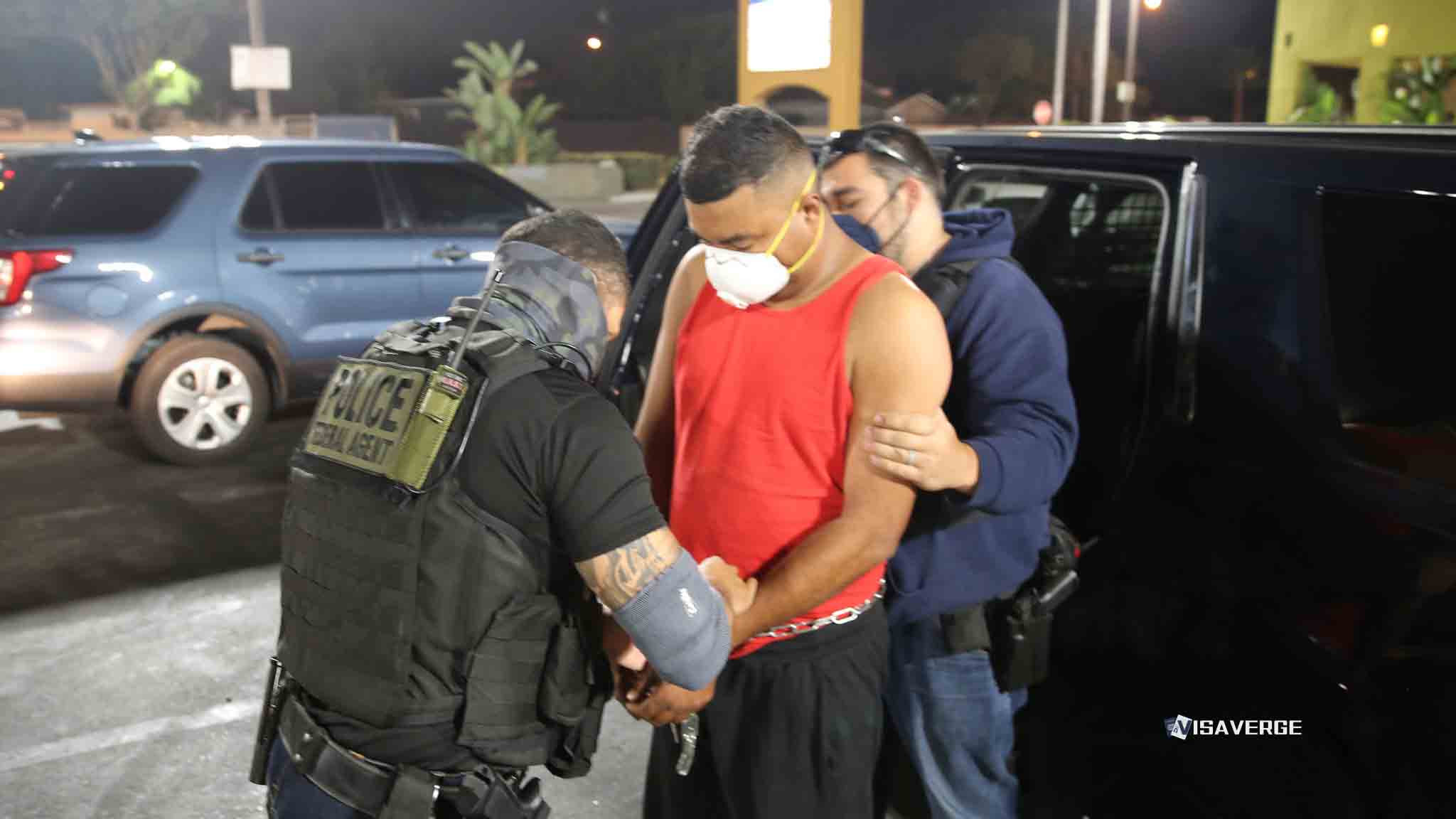
- Everyone in the U.S. has the right to remain silent during federal law enforcement questioning.
- An FBI supervisor resigned after the DOJ shifted the Renee Good shooting investigation focus.
- Reframing an investigation as an assault changes the legal risks for witnesses and families.
(MINNEAPOLIS, MINNESOTA) — Anyone in the United States—including undocumented immigrants, visa holders, and lawful permanent residents—generally has the right to remain silent and to speak with a lawyer before answering law-enforcement questions, including questions from the FBI or ICE connected to a high-profile investigation.
That principle matters in Minneapolis right now because, according to sources, the FBI’s internal handling of the fatal shooting of Renee Good has become the subject of unusual scrutiny, including a reported supervisory resignation and a reported shift in investigative framing.
This guide explains the legal foundations for key rights during federal questioning, searches, and immigration enforcement, and how immigrants and mixed-status families can exercise those rights in practice—especially when investigators’ theories and priorities change.
1) Overview: the right at issue, and why this resignation matters procedurally
The core right is straightforward: you can usually decline to answer questions from law enforcement, and you can ask to consult a lawyer. That right applies broadly, but its practical impact varies depending on whether you are free to leave, in custody, at home, at work, or at a port of entry.
Constitutional protections commonly implicated include the Fifth Amendment (right against self-incrimination), the Sixth Amendment (right to counsel after criminal charges), and the Fourth Amendment (limits on unreasonable searches and seizures). Key immigration statutes and regulations also matter, including INA § 287 (immigration officer authority), INA § 292 (right to counsel at no government expense in immigration matters), and regulations like 8 C.F.R. § 287.3 (procedures after a warrantless arrest) and 8 C.F.R. § 292.5 (appearance of attorneys and representatives).
In the Minneapolis matter, sources say Tracee Mergen, the acting FBI supervisor of the Public Corruption Squad in the Minneapolis field office, resigned after pressure tied to whether to reclassify or discontinue the investigation into the fatal shooting of Renee Good by an ICE officer. In a legal-process context, a supervisory resignation can be notable because it may signal a disagreement about investigative scope, classification, and priorities, which in turn can shape who is treated as a witness, a subject, or a target.
Sources also describe an investigative shift: what was reportedly treated initially as a civil rights investigation later came with direction from Justice Department leadership to treat the incident as an assault on a federal officer, with added scrutiny reported to include Good’s wife. The FBI has stated that “the facts on the ground do not support a civil rights investigation,” while saying it continues to investigate the incident and “violent criminal actors.”
Even when the public facts are limited, scope changes like these can have real consequences for community members. People may be contacted as witnesses, asked to share devices, or approached for interviews. How you respond can affect both criminal exposure and immigration risk.
Warning: If federal agents ask to speak with you about a sensitive incident, anything you say can be used in a criminal case and may also be used in immigration proceedings. Ask if you are free to leave, and consider requesting counsel before answering questions.
2) Timeline: what classification changes usually mean, and how they affect your rights
According to the reported accounts, the matter began with an initial civil-rights framing, then shifted after DOJ leadership direction toward an “assault on a federal officer” theory, with reported direction to expand scrutiny to Good’s spouse.
Two-sentence summary (TL;DR): The FBI’s handling of the Renee Good shooting was initially treated as a civil rights matter, but sources say DOJ leadership later pushed a different investigative theory. Sources also say pressure to reclassify or discontinue the civil-rights framing contributed to the resignation of a Minneapolis FBI supervisor.
An initial civil rights investigation often signals that investigators are examining whether an official acted “under color of law” and violated constitutional rights, such as through excessive force. When an investigation is reframed toward assault on a federal officer, investigators may prioritize evidence about threats, resistance, or conduct that could justify defensive force.
These shifts are not just labels. They can influence:
- Interview strategy. Who is contacted first, and how questions are framed.
- Evidence requests. Whether agents seek device extractions, social media, location data, or vehicle data.
- Prosecutorial coordination. Which prosecutors take the lead and what charges are considered.
- Documentation. How leads are recorded, and which facts are emphasized in reports.
From a rights perspective, your main protections do not disappear when investigative priorities change. But the risk profile can change quickly. A person approached “as a witness” may later be treated as a subject, especially if their statements conflict with other evidence.
Key practice point: If agents suggest an interview is “informal,” you can still decline, ask for counsel, or request to schedule later with a lawyer present.
Deadline / Time-sensitive: If you are arrested or placed in immigration custody, ask to call a lawyer immediately. Also ask for a copy of any paperwork, including the Notice to Appear (NTA) in immigration court.
3) Key individuals and roles (and what those roles typically imply)
Tracee Mergen is described by sources as the acting supervisor of the FBI’s Public Corruption Squad in the Minneapolis field office. Units with civil-rights experience often interface with use-of-force inquiries and public-integrity matters.
When a supervisor resigns amid a disputed classification decision, it can be significant because supervisors often control staffing, investigative approvals, and communications up the chain.
Renee Good is described as the decedent, a 37-year-old Minneapolis resident. Victim identity matters because it can affect the legal framing. A “civil rights” lens tends to focus on the conduct and intent of officials. Other framings may elevate different facts, including the actions of the decedent or associates.
ICE agent Jonathan Ross is identified as the involved officer who fired the shots. “Involved officer” status commonly triggers parallel tracks, which can include administrative review, potential criminal investigation, and possible civil exposure. Those processes can move at different speeds and can involve different agencies.
Finally, reported DOJ leadership direction is important because it can redefine investigative scope and the working theory for prosecutors. A scope shift can also influence whether agents seek to interview additional witnesses, including a spouse or partner, and what questions they ask.
For community members, you may encounter multiple federal actors—FBI agents, ICE agents, and federal prosecutors—whose objectives may not be identical.
4) What “civil rights” versus “assault on a federal officer” framing can mean—and how to protect yourself
Civil-rights investigation framing (conceptual)
A civil-rights framing often examines official conduct through constitutional and statutory standards. In use-of-force contexts, investigators may focus on reasonableness and intent, depending on the potential charge. The constitutional backdrop often includes the Fourth Amendment and due process principles.
People contacted as witnesses may be asked about what they saw, what was said, and what videos exist. They may be asked to share phone footage, doorbell video, or messages.
Assault-on-a-federal-officer framing (conceptual)
An assault-on-a-federal-officer framing typically centers on whether a person assaulted, resisted, or interfered with a federal officer performing official duties, and whether the officer’s response can be characterized as defensive. That can shift the evidentiary lens toward threats, movements, proximity, and perceived danger.
This framing can also increase scrutiny of people close to the decedent if investigators believe a second person’s conduct is relevant. In some investigations, spouse or partner evidence may be pursued through witness interviews, subpoenas, or search warrants, depending on the facts and legal standards.
How to exercise your rights in practice
- Ask who they are and what agency they represent. Request a business card.
- Ask: “Am I free to leave?” If yes, you can end the conversation.
- Say clearly: “I am exercising my right to remain silent. I want to speak to a lawyer.” This language tracks Miranda principles. See Miranda v. Arizona, 384 U.S. 436 (1966).
- Do not consent to a search. You can say, “I do not consent to any search.”
- Do not sign statements you do not fully understand. Ask for an interpreter if needed.
- If you are not a U.S. citizen, avoid guessing about immigration status or history. Errors can create immigration consequences.
For noncitizens, it is also important to know that removal proceedings are civil, and evidentiary rules differ. Still, constitutional violations can sometimes support suppression arguments in immigration court in limited circumstances. See Matter of Barcenas, 19 I&N Dec. 609 (BIA 1988).
Warning: “Cooperating” without counsel can waive protections. Casual conversations, device “voluntary” reviews, and consent searches are common ways people give up rights unintentionally.
5) Incident basics, typical records, and what to do if rights are violated
Incident details and immediate aftermath (as reported)
According to the reporting, the shooting occurred on January 7, 2026, in Minneapolis. ICE agent Jonathan Ross fired three shots at Renee Good as she sat in her Honda Pilot. Good was transported to Hennepin County Medical Center and pronounced dead.
Records that typically exist after a fatal shooting
- Dispatch and radio logs and incident CAD records
- Medical examiner and hospital records
- Scene documentation, including photographs and measurements
- Agency incident reports and administrative review files
- Video evidence, which may include nearby surveillance, squad video, or other recordings, depending on what systems were present
Parallel processes may proceed at once. A federal criminal inquiry can run alongside internal agency reviews and potential civil claims. Timelines can diverge, and agencies may restrict disclosures while an investigation is active.
If you believe your rights were violated
If you are searched, detained, or questioned in a way you believe was unlawful, document what you can safely document:
- Names, badge numbers, and agencies
- Date, time, location, and witnesses
- Copies or photos of paperwork given to you
- A written timeline while memories are fresh
Then speak to a lawyer promptly. In criminal cases, counsel can assess suppression issues and advise on communications with investigators. In immigration cases, counsel can evaluate bond, custody review, and defensive strategies.
Possible complaint channels may include agency offices and inspectors general, depending on the facts. For federal immigration detention standards and procedures, official background information is available through EOIR at immigration court and immigration benefits agency information at USCIS. For general constitutional reference, see Fourth Amendment.
Source Attribution (as provided):
- FBI public statement described in reporting
- Sources with knowledge of Tracee Mergen’s departure
- Reported incident details involving Hennepin County Medical Center
Who has these rights (citizens, LPRs, visa holders, undocumented)
- U.S. citizens: Full constitutional protections apply.
- Lawful permanent residents (green card holders): Constitutional protections generally apply. Immigration consequences can still follow arrests or admissions.
- Visa holders: Constitutional protections generally apply in the U.S. Status can be fragile after arrests or certain allegations.
- Undocumented immigrants: Constitutional protections generally apply in the U.S., including the right to remain silent. Immigration enforcement risk is often higher after any law-enforcement contact.
At a port of entry or airport inspection, the government has broader authority to question travelers. Noncitizens may face denial of admission. Still, you can request counsel, and you can decline to sign statements you do not understand. If you are an LPR, do not assume you are “always admitted.” Certain criminal or immigration histories can trigger tougher processing.
Where to find legal help
If you or your family is contacted by the FBI or ICE in connection with a high-profile Minneapolis investigation, consider speaking with an immigration attorney and, when appropriate, criminal defense counsel. Coordination matters when criminal exposure and immigration status overlap.
Resources:
Legal Disclaimer: This article provides general information about immigration law and is not legal advice. Immigration cases are highly fact-specific, and laws vary by jurisdiction. Consult a qualified immigration attorney for advice about your specific situation.