India’s higher income tax rates are set to shield many U.S.–India taxpayers from paying U.S. tax on the same income this filing season, after new guidance reviewed on October 27, 2025 highlighted how the Foreign Tax Credit (FTC) works when India tax exceeds the U.S. bill on the same earnings. The rule affects U.S. citizens, Green Card holders, students, and H‑1B professionals with income from India, and it hinges on claiming the credit on Form 1116. According to analysis by VisaVerge.com, when the Indian tax paid is greater than the U.S. tax due on that income, the FTC can reduce the U.S. liability to zero and even create a pool of extra credits for future use.
How the Foreign Tax Credit (FTC) works for India income
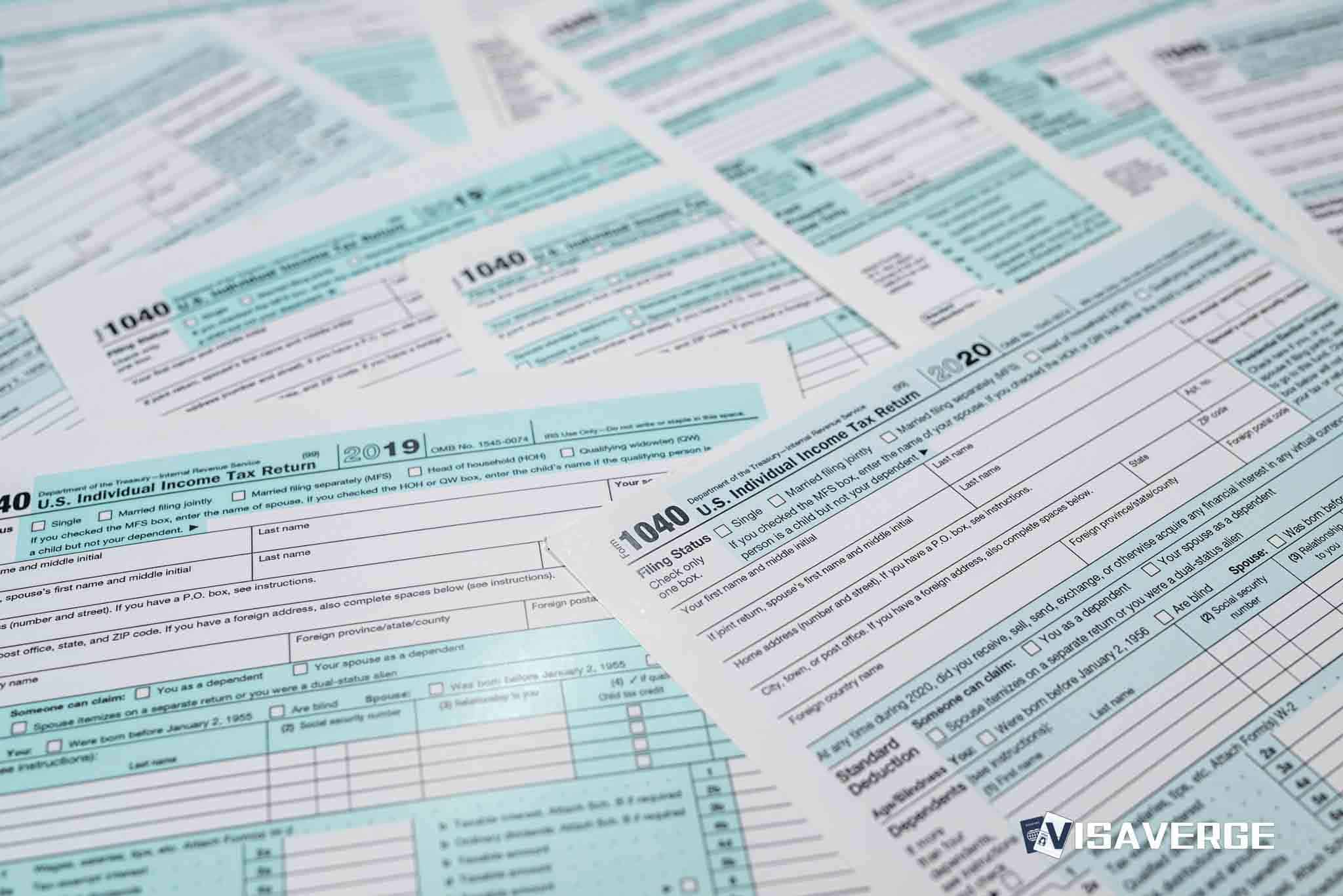
Under U.S. law, Americans must report worldwide income, including salary and investments earned in India. The FTC provides relief from double taxation by offering a dollar‑for‑dollar offset of U.S. tax based on foreign taxes paid or accrued on the same income. Taxpayers claim the credit by filing Form 1116 with their annual return.
Key timing rules that matter in high‑tax countries like India:
– Excess credits can be carried back one year.
– Excess credits can be carried forward ten years.
In practice, if India tax is higher in one year than the U.S. tax on that same income, the unused credits can offset U.S. tax on foreign income from a prior year or on future years’ foreign income. The IRS overview is available here: Foreign Tax Credit.
Examples that illustrate the benefit
VisaVerge.com gives clear, practical examples that mirror common U.S.–India situations:
- A salaried worker who pays ₹600,000 in India tax (about $7,200) on India‑sourced wages, but whose U.S. liability on those wages would be $5,000, could claim a $7,200 FTC, wiping out the $5,000 and generating $2,200 in excess credit that carries forward.
- A landlord who pays ₹200,000 in India tax (about $2,400) on rental income, where U.S. tax on that rental would be $1,600, would similarly end up with zero U.S. tax and an $800 carryforward.
The same pattern applies across pay types: when India tax is higher, the FTC usually eliminates U.S. tax on that income and builds a cushion of future credits.
Claiming the credit — forms and baskets
The mechanics run through Form 1116, which groups foreign income and foreign taxes into baskets (for example, general income vs. passive income). Filing Form 1116 is required to:
– Measure and claim the allowable credit
– Track carrybacks and carryforwards
Useful IRS form links:
– About Form 1116
– Annual U.S. return: About Form 1040
Note: You must still file Form 1040 even when the net U.S. tax on India‑sourced income is zero.
FTC vs. Foreign Earned Income Exclusion (FEIE)
Workers posted to India often face a choice between the FTC and the Foreign Earned Income Exclusion (FEIE) (claimed on Form 2555).
- FEIE lets qualifying taxpayers exclude a portion of earned income from U.S. tax if they meet residency or physical presence tests.
- But if India tax is high, using FEIE can backfire because excluded income cannot generate FTCs.
VisaVerge.com reports many taxpayers skip FEIE in high‑tax India years and claim the FTC instead to preserve credits for future use (e.g., against dividends, interest, rental income).
IRS FEIE resource: About Form 2555
Who benefits most
Groups likely to benefit include:
– U.S. citizens living long‑term in India (often taxed at rates above U.S. levels)
– Green Card holders on assignment in India
– H‑1B professionals who return to India mid‑year and become India tax residents
– Students with India rental income, where India property tax and rates increase the India tax bill
– Overseas Citizens of India who also hold U.S. citizenship
Common thread: higher India tax paired with careful use of Form 1116.
Reporting and compliance obligations (important)
Even when FTC reduces U.S. income tax to zero, reporting obligations and potential penalties remain:
- Bank Secrecy Act / FBAR: file FinCEN FBAR (FinCEN 114) if combined highest balance of foreign financial accounts exceeds $10,000. Info: Report of Foreign Bank and Financial Accounts (FBAR)
- FATCA: some taxpayers must file Form 8938 to report specified foreign financial assets when thresholds are met. Info: About Form 8938
- PFIC rules: holding Indian mutual funds or pooled passive investments may require Form 8621. Info: About Form 8621
Important: Penalties can apply even if no U.S. tax is due. Filing and documentation remain essential.
Practical use cases and timing rules
Timing matters for taxpayers whose income sources change:
- An engineer working two years in Bengaluru paying high India tax may build a carryforward that later offsets U.S. tax on foreign dividends after returning to the U.S. ??.
- A teacher paying higher India tax one year but lower the next might carry back excess credits to reduce last year’s U.S. bill (subject to the one‑year carryback rule and basket limitations on Form 1116).
VisaVerge.com recommends keeping records of:
– India tax withholding (TDS)
– Annual tax statements like Form 16
– Challans and currency conversion notes
These documents are critical to substantiate the FTC.
Rules on what qualifies as foreign tax
The FTC applies only when:
– The foreign levy is a tax on income
– It is compulsory, paid or accrued on the same income that the U.S. taxes
– The tax is not otherwise refundable
While the framework is global, India often stands out because effective rates on salaried and passive income commonly exceed comparable U.S. tax for mid‑to‑high earners — creating the excess credits and carryforwards illustrated in VisaVerge.com’s examples.
Special situations: H‑1B, students, and short windows for planning
- H‑1B workers leaving the U.S. mid‑year can have U.S‑source pay for part of the year and India‑source pay for the rest. FTC cannot offset U.S. tax on U.S‑source wages, but excess India credits can carry forward to years when foreign income returns.
- F‑1 students with India rental income often see India tax on that rent exceed U.S. tax, so the FTC can zero out their U.S. bill if Form 1116 is filed correctly.
Final practical checklist
As the filing season nears, consider these steps:
1. Keep proof of India tax paid (TDS certificates, Form 16, challans).
2. Record and document exchange rates used for currency conversions.
3. Match each item of India income with the related India tax when completing Form 1116.
4. Evaluate whether not using FEIE (Form 2555) is preferable in a high India tax year to preserve FTCs.
5. Observe carryback (1 year) and carryforward (10 years) rules to maximize benefit.
6. File required informational returns (FBAR, Form 8938, Form 8621) where applicable.
7. Consider professional advice to coordinate U.S. and India filings if your situation is complex.
Key takeaway: For many U.S.–India taxpayers facing higher India tax, the FTC offers a clear, law‑based path to avoid double taxation and potentially create a buffer of credits for future years — but timely filing, careful documentation, and awareness of related reporting obligations are essential.
This Article in a Nutshell
New guidance confirms that when India tax paid on income exceeds the U.S. tax on that same income, U.S. taxpayers can use the Foreign Tax Credit (claimed on Form 1116) to reduce U.S. tax to zero and generate excess credits. Excess credits can be carried back one year or forward ten years. This benefits U.S. citizens, Green Card holders, H‑1B professionals, and students with India income. Taxpayers should keep India tax documentation, weigh FEIE tradeoffs, and comply with FBAR and FATCA reporting obligations.