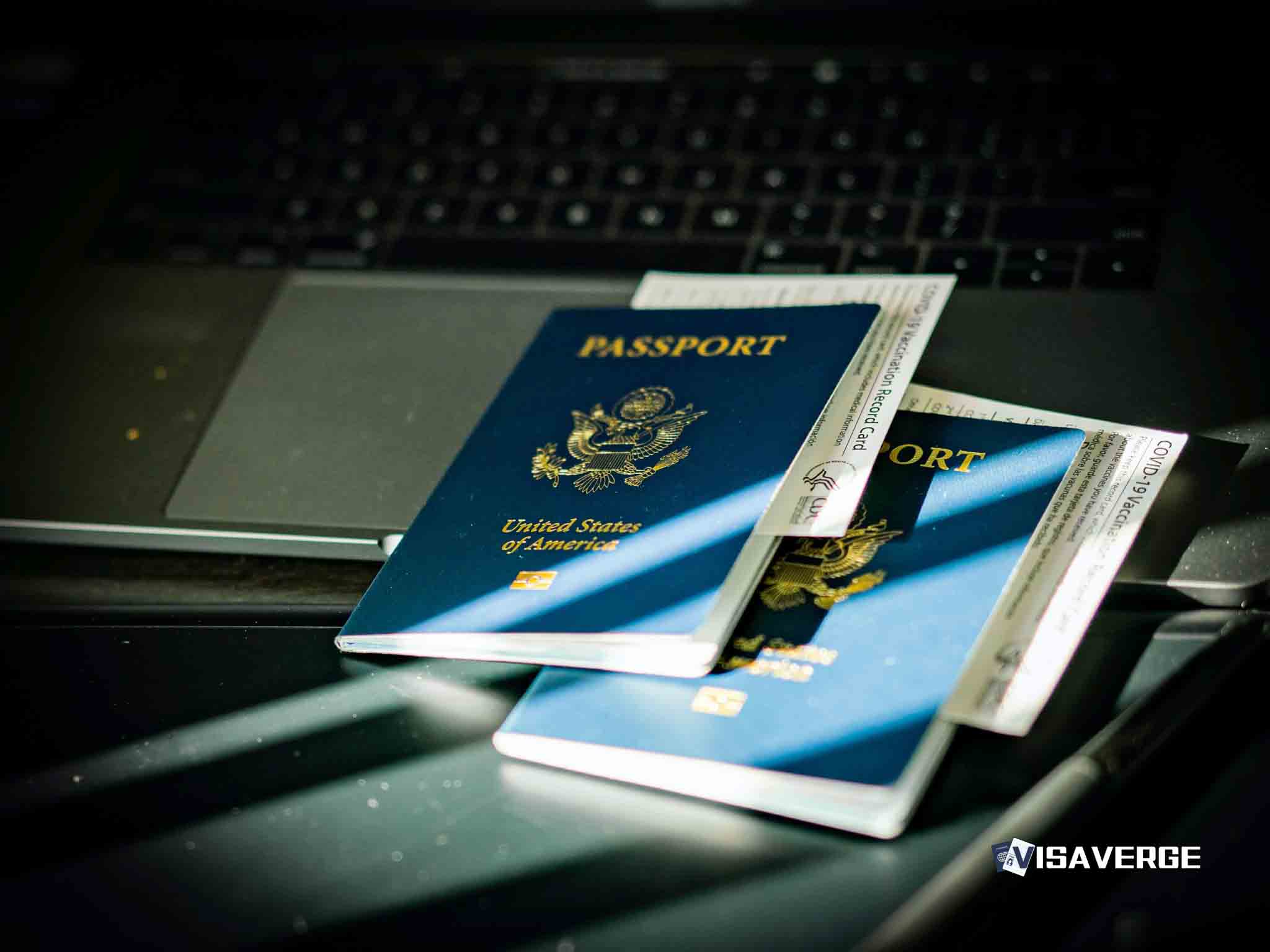
For many families, creating a clear Eligibility Checklist is the only way to turn the dream of studying abroad into a real plan. Between 2025 and 2030, the rules in the United States 🇺🇸, Canada 🇨🇦, the United Kingdom, and Australia share common themes: enough education, solid English, strong money proof, and the right visa. The details, however, are very different — and those details decide whether your application is approved or refused.
According to analysis by VisaVerge.com, the smartest way to prepare is to treat the entire journey as a step‑by‑step process, not just a single application. Choose a country, check if you meet the rules, get your documents ready, arrange funding, and then face the visa stage. At each step, the government looks for proof that you are a genuine student, that you can pay your costs, and that you understand the course you’re going for.

Below is a practical, process‑based guide that walks you through the full journey for each of the four main destinations, using only confirmed rules and figures from the 2025–2030 period.
Step 1: Use the Eligibility Checklist to Choose Your Country
Before you fill any form, your first real task is to decide where to apply. The four countries in this guide have very different profiles.
United States — Best for high‑paying careers, strictest entry rules
The United States remains the top study destination but has the toughest combination of academic, financial, and visa demands.
- Academics
- 12 years of schooling for a bachelor’s (UG).
- 4‑year equivalent bachelor’s degree for a Master’s.
- Minimum GPA 2.5–3.0/4.0 (around 60–65%); higher at top universities.
- Tests
- English: TOEFL / IELTS / Duolingo.
- SAT/ACT may be required for some UG courses; many have made them optional.
- GRE/GMAT are officially optional at most schools after 2023 but still helpful for competitive programs.
- Money
- Must show 1 full year of tuition plus living costs in liquid form (bank statements, loans, scholarships).
- Visa
- F‑1 visa requirements:
- Offer from a SEVP‑approved school.
- I‑20 issued by the university.
- SEVIS fee payment.
- In‑person visa interview.
- Proof you intend to return home after study.
If you want the highest‑paying jobs and access to a strong STEM system, the United States is attractive — but only if you can accept a tough interview and strict financial checks.
Canada — Best for easier PR and predictable pathways
Canada is widely seen as the easiest entry among the four, especially under the Student Direct Stream (SDS).
- Academics
- 12 years of schooling for UG.
- 3‑ or 4‑year bachelor’s for Master’s (some schools insist on 4‑year).
- Minimum 55%+ overall at degree level for many institutions.
- English
- Mostly IELTS Academic; TOEFL and PTE accepted.
- Typical minimums:
- UG: IELTS 6.0 overall
- PG: IELTS 6.5 overall
- Money
- Proof for:
- First‑year tuition.
- Living expenses: CAD 20,635/year (2024–25); CAD 22,895 from September 1, 2025.
- GIC (Guaranteed Investment Certificate) for SDS.
- Visa
- Study permit approval.
- SDS gives faster handling for eligible students.
- No visa interview in normal cases.
Canada suits you if you want clear PR options, lower academic thresholds than the United States, and a process based mostly on documents rather than interviews.
United Kingdom — Best for fast 1‑year Master’s
The UK attracts students who want to finish quickly and move into work.
- Academics
- 12 years of schooling (no A‑levels needed for international students).
- Bachelor’s with 50–60%+.
- Some programs want specific subjects, especially in business or engineering.
- English
- IELTS / PTE / TOEFL accepted.
- Typical minimums:
- UG: IELTS 6.0
- PG: IELTS 6.5
- Money
- Funds for:
- First‑year tuition, plus
- Living costs:
- £12,006/year in London
- £9,207/year outside London
- Money must stay in the account for 28 days before visa filing.
- Visa
- Student Route Visa (formerly Tier 4).
- No interview in most cases.
- Biometrics are required.
- Graduate Route gives about 18 months of post‑study work.
If your goal is to finish a Master’s in one year and start earning early, the UK is a strong option if you can meet the living‑cost proof.
Australia — Best mix of work rights and PR options
Australia is popular with students seeking strong work rights and long‑term stay options.
- Academics
- 12 years of schooling for UG.
- Bachelor’s with 50%+ for Master’s entry.
- Some courses require certain subjects (engineering, IT, etc.).
- English
- IELTS / TOEFL / PTE accepted.
- Typical minimums:
- UG: IELTS 6.0
- PG: IELTS 6.5
- Money
- Evidence for:
- 1‑year tuition
- Living costs: AUD 24,505/year
- Travel: about AUD 2,000
- Visa
- Student Visa (Subclass 500).
- New Genuine Student (GS) rule, replacing GTE, asks for strong proof you are a real student.
- OSHC (Overseas Student Health Cover) is mandatory.
- Biometrics and medical checks are needed.
- No standard interview, but one can be requested.
Australia fits students who value work rights and PR pathways, especially in STEM, health, and engineering.
Important: The four countries share broad themes, but the details — exact fund amounts, specific tests accepted, document timing, and interview practices — determine real success. Always verify current numbers with official sources before applying.
Step 2: Check Your Academic and English Readiness
Once you pick your country, use the Eligibility Checklist as a filter: do you meet the academic and language rules?
Academic readiness
Ask yourself:
- Do I have 12 full years of schooling for UG entry?
- Is my bachelor’s degree treated as:
- A 4‑year equivalent (for the United States)?
- A 3‑ or 4‑year degree (for Canada)?
- Is my percentage or GPA in the required band?
- United States: usually 2.5–3.0/4.0 (60–65%).
- Canada: 55%+.
- UK: 50–60%+.
- Australia: 50%+.
If you fall slightly below, you may find colleges with lower cut‑offs, but plan on being above the listed minimums for a smoother route.
English language planning
Your English test is your passport for most systems. All four countries accept combinations of:
- IELTS
- TOEFL
- PTE
- Duolingo English Test (DET) — accepted in the United States
Common minimum overall IELTS scores from the checklist:
- UG: 6.0
- PG: 6.5
Plan your process:
- Check which test each target university accepts.
- Aim for at least 0.5 band higher than the minimum for a safety margin.
- Keep the test report form scanned and backed up; you must upload or email it with applications.
Note: For Canada, strong English scores also support future PGWP and work rights.
Step 3: Map Out Your Financial Proof
Money proof is where many qualified students fail. Every country wants evidence you can pay tuition and live safely without breaking work rules.
Common financial elements
Across all four systems, you generally need:
- First‑year tuition (as per the offer letter).
- Living cost proof, per country rules.
- Liquid funds (not just fixed assets):
- Bank statements.
- Education loans.
- Scholarships.
- GIC (for Canada SDS).
- Clear link between the sponsor (often a parent) and the money shown.
Country specifics (at a glance)
| Country | Required funds (high level) |
|---|---|
| United States | 1 year of tuition + living costs (liquid funds) |
| Canada | 1 year tuition; Living CAD 20,635 (2024–25), CAD 22,895 (from 01‑Sep‑2025); GIC for SDS |
| UK | Tuition + living: £12,006 (London) or £9,207 (outside London); funds must remain 28 days |
| Australia | 1 year tuition; Living AUD 24,505/year; Travel ≈ AUD 2,000 |
When planning, treat these as minimums. Visa officers and universities often prefer a buffer above the bare minimum — particularly for the United States and Australia, where proof must be “consistent and legitimate.”
Step 4: Build Your Document File Step by Step
A strong file is more than money and marks. Every system expects a full story of who you are, what you studied, and why this course is logical for you.
Core documents (for all four countries)
- Valid passport
- Academic transcripts and degree certificates
- CV / Resume
- English test report
Country‑specific documents
- United States
- I‑20 form (SEVP‑approved school)
- Statement of Purpose (SOP)
- Letters of Recommendation (LORs)
- Proof of English test
- Canada
- SOP
- LORs (may be optional)
- Proof of funds (bank statements, GIC, tuition receipts)
- Medical exam and biometrics
- United Kingdom
- CAS (Confirmation of Acceptance for Studies)
- SOP / personal statement
- LORs
- English proof
- TB test certificate (for certain nationalities)
- Australia
- Confirmation of Enrolment (CoE)
- SOP
- LORs
- English test results
- OSHC policy
- Medical exam proof
Practical tips:
- Keep a digital folder with clear filenames (e.g., “Bachelor‑Transcript‑Final.pdf”).
- Keep a physical folder with originals and photocopies.
- For the United States, be ready to present originals during the in‑person interview.
For official F‑1 student rules, see the U.S. Department of State page: Student Visa – travel.state.gov.
Step 5: Understand the Visa Stage for Each Country
The visa step tests your intent, your finances, and sometimes your ability to answer questions on the spot.
United States — F‑1 visa with mandatory interview
Process outline:
- Secure admission at a SEVP‑approved school.
- Receive I‑20.
- Pay the SEVIS fee.
- Prepare:
- Financials for 1 year tuition + living
- SOP, LORs, transcripts, test scores
- Attend the F‑1 visa interview.
- Officers look for: genuine study plan, clear funding, and intent to return home.
Because of the mandatory interview and strict requirements, the United States ranks lower on ease of entry despite strong OPT benefits.
Canada — Study permit, usually paper‑based, no interview
Process outline:
- Get an offer from a Designated Learning Institution.
- Arrange:
- GIC (if using SDS)
- First‑year tuition payment proof
- Gather documents: passport, transcripts, SOP, English proof, funds proof
- Apply for a study permit (or SDS if eligible)
- Provide biometrics and medicals if required
With no standard interview and clear money rules, Canada is often the easiest to gain admission among the four.
Official site: Study in Canada – canada.ca
United Kingdom — Student Route visa focused on documents
Process outline:
- Accept offer and receive your CAS.
- Prepare:
- SOP / personal statement
- LORs
- Proof of English
- Bank documents showing tuition + £12,006 (London) or £9,207 (outside), held for 28 days
- TB test certificate (if applicable)
- File Student Route application
- Provide biometrics
In most cases, no interview is required. UK compliance rules for universities tightened from July 22, 2025, so institutions now have stricter obligations.
Official site: Student visa – gov.uk
Australia — Subclass 500 with Genuine Student focus
Process outline:
- Accept offer; get your CoE.
- Purchase OSHC.
- Gather documents:
- Passport, transcripts, SOP, LORs, English test results
- Proof of funds: tuition + AUD 24,505 living + AUD 2,000 travel
- Apply for Student Visa (Subclass 500)
- Complete biometrics and medical checks
The Genuine Student (GS) requirement gives extra weight to your SOP and course choice. While no routine interview is required, an interview can be requested.
Official site: Student visa (subclass 500) – immi.homeaffairs.gov.au
Step 6: Plan for Work Rights and After‑Study Options
When building your Eligibility Checklist, include not only “Can I get in?” but also “What happens after I graduate?”
Work during study (typical limits)
- United States: up to 20 hours/week
- Canada: 20 hours/week, rising to 25 hours/week from November 3, 2025
- UK: 20 hours/week
- Australia: 48 hours per fortnight (equivalent to 24 hours/week)
Post‑study work
- United States: OPT (policy can be uncertain; check updates)
- Canada: PGWP — strong route to PR
- UK: Graduate Route (~18 months)
- Australia: Post‑Study Work (PSW) visa
Which country to pick depends on your goals:
- Choose the United States for highest‑paying job prospects and a strong STEM ecosystem.
- Choose Canada for easier PR and predictable post‑study routes.
- Choose the UK for a 1‑year Master’s and quick work exposure.
- Choose Australia for a balance of work rights and PR options, especially in STEM and health.
Practical Checklist: Steps to Follow (Numbered)
- Select your target country based on personal goals (work, PR, speed of study).
- Verify academic equivalence and aim to be above minimum GPA/percentage.
- Choose and prepare the accepted English test; aim for +0.5 band margin.
- Calculate total funds required and assemble liquid proof (bank statements, loans, GIC).
- Gather core documents and create organized digital + physical folders.
- Secure offer / I‑20 / CAS / CoE and purchase any required insurance (OSHC/GIC).
- File the visa, provide biometrics, complete medicals if needed.
- Prepare for the visa interview if required (US F‑1 is mandatory; Australia may request).
- Plan work‑during‑study schedules and post‑study visa strategies.
Key takeaway: Your Eligibility Checklist becomes a full plan — not just a list of marks and bank figures. It should cover entry requirements, document timing, financial proof, visa processes, and realistic post‑study outcomes for the United States, Canada, UK, or Australia (2025–2030).
Using this structured approach helps convert ambition into a step‑by‑step plan with clear milestones and realistic expectations.
This guide outlines clear, step‑by‑step eligibility checks for study in the United States, Canada, the UK, and Australia (2025–2030). It covers academic prerequisites, accepted English tests, country‑specific financial minimums, core documents, visa procedures, and post‑study work options. The US demands strict interviews and one‑year liquid funds; Canada emphasizes SDS and GICs; the UK enables one‑year master’s routes; Australia stresses Genuine Student proof and OSHC. Applicants should verify official figures and compile a complete, well‑timed document file.