- St. George Regional Airport is planning a $100 million expansion to handle rapid passenger growth.
- New United Airlines service to Chicago begins May 2026, improving Midwest and European connectivity.
- A 100-foot air traffic control tower is currently under construction, targeting completion in summer 2027.
(ST. GEORGE, UTAH) — Flying out of St. George (SGU) is still one of the easiest “curb-to-gate” experiences in the West, but the airport is hitting real growing pains. If you’re traveling in 2026, expect a smooth small-airport flow most days, plus occasional pinch points at security, the gate holdrooms, and baggage claim during peaks.
The good news is that a major airport expansion is moving through design now, with construction to follow once funding is locked. I’ve flown a lot of regional routes in and out of SGU over the years, and this airport sits in a rare sweet spot.
It’s small enough to be painless, yet busy enough to have meaningful connectivity. Here’s what the experience is like today, what’s coming next, and how to pick the right flight so you don’t feel like you’re “settling” for a regional airport.
Quick verdict: Worth it, with one caveat
SGU is absolutely worth booking if St. George, Zion, or Southern Utah is your destination. You’ll likely save time versus driving to Las Vegas, and you’ll arrive closer to where you actually want to be.
The caveat is capacity. Passenger traffic is projected to exceed 350,000 in 2025, more than double a decade ago. That kind of growth shows up first in lines and crowded holdrooms.
If you can choose, I’d schedule flights outside the morning and late-afternoon bank. Those peaks are when SGU feels tight.
The basics: What you’re really “buying” when you book SGU
SGU is served by a limited set of nonstop markets, which means most trips connect. That’s normal here, and it changes what matters when you book.
- You’re buying access to Southern Utah without a long drive.
- You’re buying time at a small terminal, for better and for worse.
- You’re usually buying a regional jet seat, not a mainline one.
Here’s the typical nonstop structure today, with at least one notable near-term change.
| Detail | Information |
|---|---|
| Airport | St. George Regional Airport (SGU) |
| Typical nonstop cities | Salt Lake City, Denver, Phoenix, Dallas, Los Angeles |
| Upcoming service change | United flights to Chicago planned to start May 2026 (operated by SkyWest) |
| Peak-stress periods | Seasonal travel, event weekends, and morning/late-afternoon departures |
That planned Chicago link matters. It shortens connections to the Midwest and Europe. It can also reshape peak crowds at the terminal.
Seat and comfort: What to expect on SGU flights (with real dimensions)
Most SGU flights are on regional aircraft, often operated by SkyWest for major brands. Your comfort depends heavily on whether you draw an Embraer E175 or a CRJ.
The good: Embraer E175 is the “regional jet you actually want”
If you see an E175, grab it when prices are similar. The cabin feels wider, and the layout is more forgiving.
- Economy: about 31 inches of pitch and 18 inches of width
- First: about 37 inches of pitch and roughly 19.5 inches of width
- Layout: 2-2 in first, 2-2 in economy (no middle seats)
Overhead bins usually fit standard roll-aboards on most E175s. That reduces gate-check drama.
The fine: CRJ-700/900 can feel tight, especially if you’re tall
CRJs do the job, but they’re narrower. Boarding can feel more congested, and bins are more limited.
- Economy: about 31 inches of pitch and roughly 17.3 inches of width
- Layout: 2-2, with a narrower aisle and tighter shoulder room
If you’re broad-shouldered, the CRJ is the regional jet where you’ll feel it.
Power outlets and connectivity
Power is not guaranteed on every regional aircraft. It depends on the operator and tail number.
- On many E175s, you’ll often find seat power in first class. Economy power is more variable.
- On CRJs, power is less consistent. Plan as if you won’t have it.
If you need to work, bring a charged battery pack and download everything before boarding.
Food and service: Minimal onboard, but the crew usually shines
On SGU routes, onboard catering is typically light. Think packaged snacks and drinks on shorter hops.
Where the experience improves is service. Regional crews tend to be efficient, and they know these routes well. On quick flights to hubs like Salt Lake City or Phoenix, a calm, fast boarding process matters more than a fancy snack basket.
One note for families: regional jets mean smaller aisles and tighter galley space. Board early if you need time for car seats or diaper bags.
Entertainment: Set expectations for short hops
Entertainment on SGU flights is usually “bring your own.” Some flights offer streaming entertainment through the airline app, but it varies by aircraft type and retrofit status.
- Download shows before you arrive.
- Bring wired headphones as a backup.
- Assume spotty streaming once you’re in the air.
For frequent flyers, this matters because many SGU trips are two-segment days. A comfortable first leg helps.
Amenities on the ground: SGU is easy, but it’s outgrowing its footprint
This is where the story gets interesting. SGU is pushing forward with airport expansion plans because the current terminal struggles during surges.
What the terminal experience feels like today
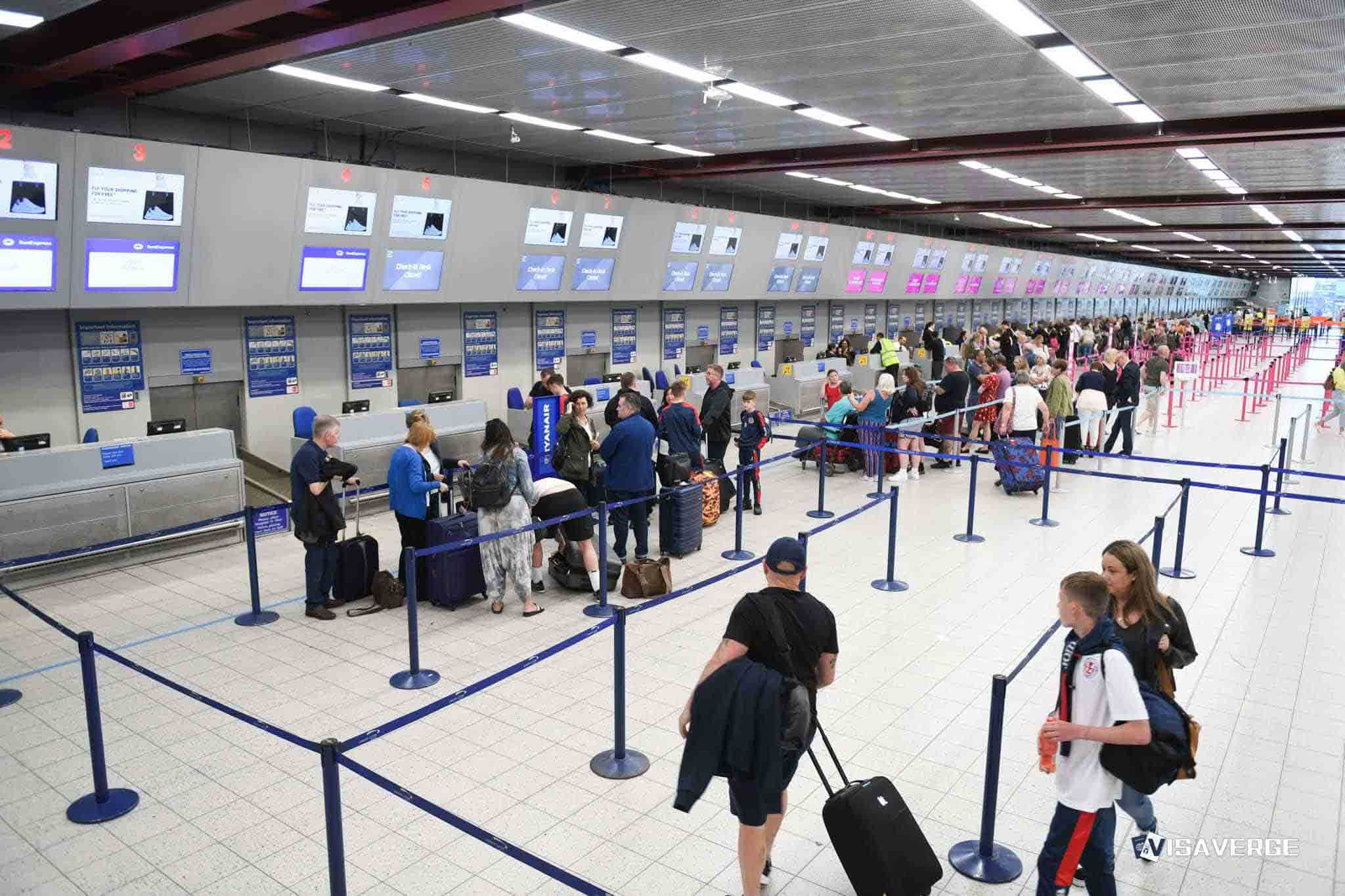
SGU’s biggest strength is simplicity. You’re not walking a mile or riding a train.
- Parking or drop-off
- Ticketing and bag drop
- Security checkpoint
- Gate holdrooms
- Arrivals and baggage claim
- Rental cars and pickup
When it’s quiet, SGU feels almost private. When multiple departures stack up, the same spaces compress fast.
What’s getting better soon: more room where it counts
St. George is planning a major terminal expansion, with a reported total cost around $100 million and a state funding request of $20 million.
Planned elements include more gate capacity, expanded security, and more concessions, including restaurants. Design work is expected to reach completion around June 2026.
- More gate capacity and larger holdrooms
- Expanded security screening space
- More baggage claim area
- More ticketing and check-in capacity
- More concessions, including restaurants
- Vertical circulation improvements, including escalators
“Design complete” is the point where plans are detailed enough to price, permit, and bid construction. For travelers, that’s the moment when timelines start to feel real.
Project scope and context: what SGU is building and why it matters
SGU’s terminal is being planned for a very different demand level than it had a decade ago. The airport opened in 2011, replacing an older facility, and growth has outpaced the building.
Passenger projections above 350,000 a year create pressure in four places: security queues, gate holdrooms, restrooms and concessions, and baggage claim. The expansion is aimed at smoothing those pinch points.
It’s not about luxury. It’s about throughput and comfort.
Funding and financials: where the money may come from
Airports rarely write one big check for projects like this. The funding picture is usually layered.
For a project around $100 million, you typically see a mix of city and airport funds, county participation, state appropriations, and FAA participation through eligible airport programs.
St. George is asking the state for $20 million. That request then moves through review and budget decisions. Timing matters because public funding often follows legislative cycles.
Funding uncertainty can affect sequencing. Airports may build “must-have” pieces first, then add extras later. That can mean prioritizing security and gates before expanding concessions.
⚠️ Heads Up: Watch for city council actions and state budget votes in 2026. Those decisions can change the construction start and what opens first.
How to navigate SGU as a traveler (especially as facilities evolve)
Right now, SGU’s advantage is that you can arrive later than you would at a big airport. That said, growth has made buffer time more valuable on peak days.
- If you’re checking a bag, arrive earlier than you think you need.
- If you’re flying during event weekends, pad extra time for lines.
- If you’re connecting to an international flight, don’t cut it close.
As expansion work progresses, the first noticeable changes are usually temporary queue lanes near ticketing and security, shifts in entrances or pedestrian paths, and construction walls near concessions or gate areas.
Accessibility should improve as the terminal grows. Escalators and better vertical circulation help travelers with strollers and mobility devices. Wayfinding matters more once layouts change.
During construction phases, trust posted signage over memory. Small airports can reroute you quickly when they need to.
Air Traffic Control Tower: safety, reliability, and capacity
SGU is also building a new air traffic control tower. Groundbreaking occurred on August 14, 2025 for a 100-foot tower, with controllers positioned around 70 feet.
Funding includes $15 million approved by the state in the 2024 session, plus FAA support. Construction began around September 2025, with an operational target of summer 2027.
- Helps manage aircraft separation and surface movement
- Improves situational awareness near the airport
- Supports more complex operations as traffic grows
For passengers, the build itself should have limited direct impact. The longer-term benefit is a foundation for growth and more stable operations.
Growth context and demand: why SGU is under pressure
SGU’s network is “thin” by design. It relies on a handful of hub routes. That creates concentrated peaks.
When a Denver or Phoenix bank is about to depart, everyone arrives at once. A compact terminal feels it. Events are another stress test. Southern Utah draws big crowds for sports and tourism.
Local officials have cited surges of 30,000 to 40,000 visitors around major event periods. Even if only a fraction fly, SGU feels it.
The planned United-to-Chicago start in May 2026 could add demand during new peaks. It also gives travelers more one-stop options to the East Coast and beyond.
Timeline and milestones: what happens next and when
Public infrastructure projects follow an order, and SGU is in the “plans becoming real” phase.
- Design completion target around June 2026
- Funding commitments and procurement steps
- Construction phases
- Commissioning and operational readiness
Timelines can shift with permitting, contractor schedules, and funding cycles. That’s normal. It’s also why you should treat early target dates as a best case.
The clearest hard date in the mix today is the tower. The target is summer 2027 for it to go operational.
Officials, governance, and decision-making: who’s involved
Airport growth involves layers of decision-makers. At SGU, you’ll see city leadership pushing connectivity and economic growth, airport management driving operational needs and project planning, and state lawmakers deciding on appropriations like the $20 million request.
FAA involvement is tied to standards, approvals, and eligible funding programs. Public messaging tends to focus on safety, access, and taxpayer value.
For travelers, the important part is simpler. Projects move when design, money, and approvals align.
Miles and points: how SGU bookings affect earning and redemptions
Most SGU flights are marketed by major carriers but operated regionally. Your earning is still tied to the marketing airline and your fare class.
Practical implications: if you’re chasing status, SGU is useful because you can stack segments through hubs. If you’re booking with points, short regional hops can be a poor cents-per-point value. Compare cash first.
If you hold an airline credit card, you may save on checked bags. That matters on ski and national park trips.
Chicago service in May 2026 may also create new award options. A one-stop SGU–ORD itinerary can price better than stitching separate awards.
Competitive context: SGU vs. just driving to Las Vegas
| Feature | SGU | Las Vegas (LAS) |
|---|---|---|
| Drive time to St. George | Local | Roughly 2 hours each way, plus traffic risk |
| Airport size | Small, fast to move through | Large, longer walks and more congestion |
| Nonstop options | Limited | Extensive |
| Aircraft | Often regional jets | More mainline aircraft |
| Best for | Convenience and short trips | Lowest fares and widest schedules |
If your trip is short, SGU usually wins. If you need a specific long-haul nonstop, LAS may be the better play.
Who should book this?
Book SGU if you want the easiest arrival for Zion, St. George, and Southern Utah, and you value time over having ten flight options per day. It’s also useful if you’re earning status and can use hub connections to stack segments.
Consider driving to LAS if you need a long-haul nonstop and hate connections, you strongly prefer mainline aircraft cabins, or the fare difference is large enough to justify the drive.
If you want to “buy forward” into a better SGU experience, circle May 2026 for the new Chicago flights, and watch for the terminal design milestone around June 2026. Those are the dates that can reshape both schedules and the day-to-day comfort of flying out of St. George.