- Investigators focus on deliberate pilot action after ruling out mechanical failure in the Air India Flight AI171 crash.
- Engine fuel switches moved to cutoff position just three seconds after takeoff from Ahmedabad airport.
- The disaster resulted in 260 total fatalities and triggered a major international investigation involving UK and US agencies.
(AHMEDABAD) — Indian investigators intensified their focus on deliberate pilot action in the Air India Flight AI171 crash, after ruling out mechanical failure and sabotage as the primary causes to date.
Authorities led by India’s Aircraft Accident Investigation Bureau have centered scrutiny on the cockpit crew following preliminary findings that the fuel control switches for both engines moved from RUN to CUTOFF three seconds after takeoff from Ahmedabad’s Sardar Vallabhbhai Patel International Airport.
The switch movements shut down both engines and triggered cockpit confusion, investigators have found, as international teams from the UK and the United States continue to review data from the Air India Boeing 787-8 Dreamliner.
Air India Flight AI171 crashed on June 12, 2025, minutes after departing Ahmedabad on a service bound for London Gatwick, killing 260 people in total.
The dead included 241 passengers and 19 crew, while one person survived. Among the victims was Vijay Rupani, the former Gujarat Chief Minister (2016-2021), who authorities identified via DNA on June 15, 2025.
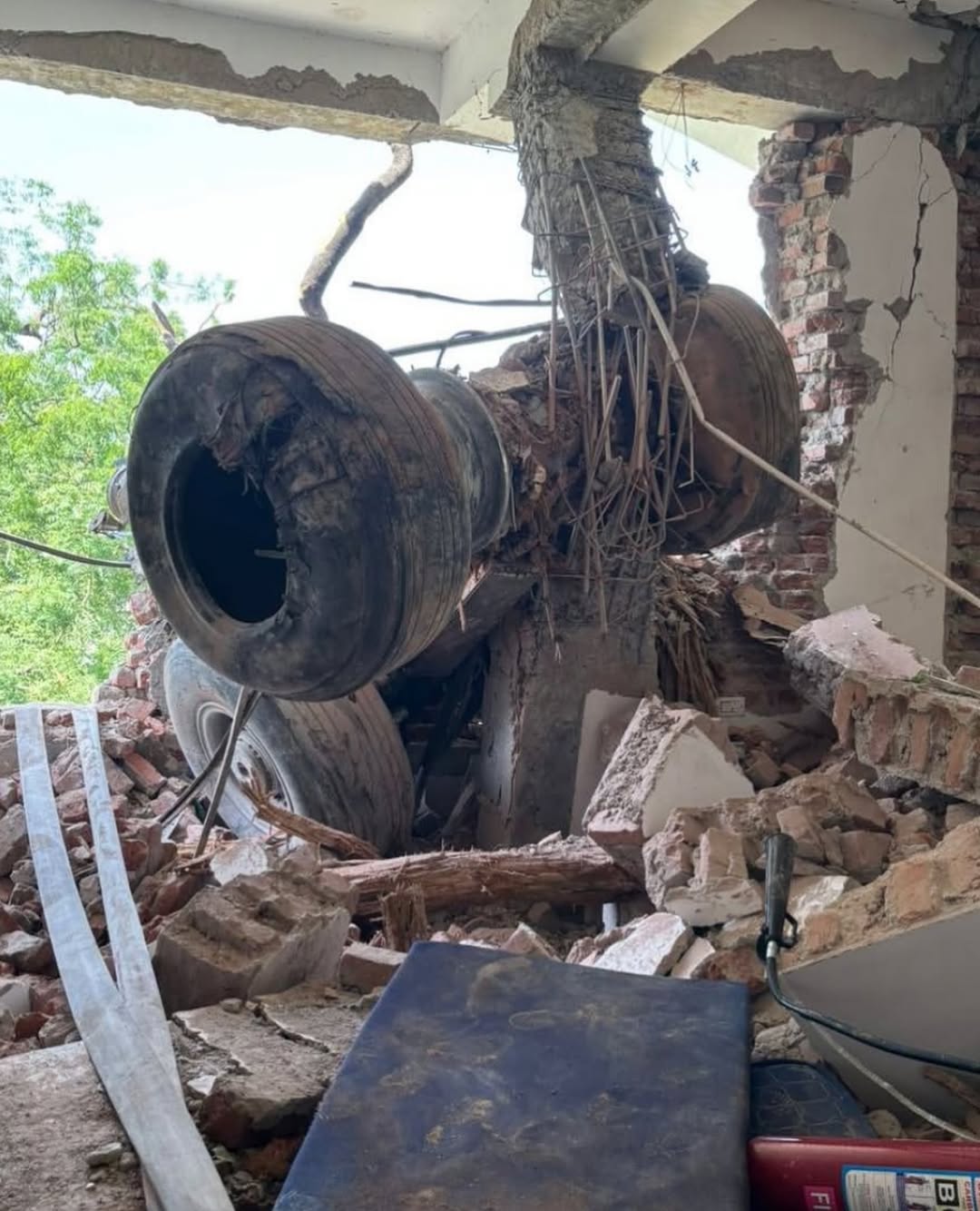
The aircraft plunged into a hostel complex, injuring at least 50 medical students at the impact site at BJ Medical College in Meghani Nagar. The crash also left 10-12 people trapped in the fire there.
Investigation Focus and Process
Investigators found that fuel supply to both engines was interrupted within one second post-liftoff, a key technical detail that has shaped the inquiry’s direction.
The AAIB has not publicly issued final conclusions, and queries to the AAIB, the Ministry of Civil Aviation and India’s aviation regulator, the Directorate General of Civil Aviation, have gone unanswered.
The AAIB has applied the SHELL model—Software, Hardware, Environment, Liveware—using an elimination process as it assesses technical, operational, organizational and human factors.
International Involvement and Technical Review
- The UK Air Accidents Investigation Branch sent four investigators
- The U.S. National Transportation Safety Board dispatched a “go team”
- The Federal Aviation Administration said it was ready to assist
- GE Aerospace has analyzed data as part of the effort
Investigators seek to understand how and why both engines stopped so soon after the aircraft left the runway. A preliminary report released July 12, 2025, set out the early technical picture and marked the start of a longer process to establish the chain of events.
The AAIB must issue a final report by June 12, 2026, the one-year anniversary of the crash, though planning documents anticipated an earlier completion.
Key Technical Details
One focus has been the sequence around the fuel control switches. Investigators found the switches for both engines moved from RUN to CUTOFF three seconds after takeoff.
Investigators found that fuel supply to both engines was interrupted within one second post-liftoff. The switch movements shut down both engines, according to preliminary findings.
The cockpit voice recorder captured one pilot asking the other, “Why did he cut off?” The other pilot denied doing so.
“Why did he cut off?”
Investigators have withheld the transcript for the final 10 seconds before impact, leaving a gap in the publicly known record of the last moments of the flight.
The AAIB’s work has also examined pilot control inputs. Captain Sumeet Sabharwal did not pull back on the yoke, while First Officer Kunder did at the end, investigators found.
A U.S. trip in December 2025 analyzed the cockpit and flight data recorders as a final stage in the international review, as investigators worked through remaining questions.
Disputes, Leaks and Legal Reactions
Even as the technical inquiry narrowed on cockpit actions, the public narrative has remained contested, with reported tensions between U.S. and Indian perspectives on what the evidence suggests.
The Wall Street Journal reported in November 2025 that some U.S. officials viewed the evidence as pointing to Captain Sabharwal deliberately crashing. The Indian side resisted the captain’s culpability, the report said.
Within India, the investigation’s direction has prompted objections from the captain’s family and the country’s pilot union, who questioned the scope of the probe and raised concerns about leaks and process.
Pushkaraj Sabharwal, 91, the captain’s father, demanded a formal probe in an August 2025 letter to the Civil Aviation Secretary and the AAIB director general, citing leaks that speculated suicide.
The Federation of Indian Pilots condemned the AAIB’s summons of Captain Varun Anand, Sabharwal’s nephew and a current Air India pilot, calling it “harassment” lacking statutory grounds.
The union issued a legal notice over the summons, adding a legal dimension to the dispute over how investigators and authorities handled communications and participation.
India’s Supreme Court weighed in during September 2025 proceedings, criticizing the selective leaking of preliminary report material and its effect on public understanding.
The court called the leaks “unfortunate and irresponsible” for fueling a media narrative, during a hearing of a public interest litigation from an NGO seeking a court-monitored probe.
That petition alleged rights violations and raised concerns about the safety of the 787 fleet, placing the Air India disaster in a wider debate over oversight, disclosure and accountability.
Regulatory and Industry Responses
Regulators also moved quickly after the crash. On June 13, 2025, the DGCA ordered extra inspections across Air India’s 787 fleet.
Those checks covered fuel systems, cabin air, engine controls and oil checks, and the DGCA order said inspections would start June 15.
Air India’s owner, Tata Group, paid ₹1.25 crore compensation per deceased family, a step that came alongside the continuing technical and legal scrutiny.
Separate concerns about the Boeing 787’s reliability have also surfaced in the wake of the crash, though investigators have not verified claims tying those concerns to the cause of AI171.
The Foundation for Aviation Safety, in a January 2026 submission to a U.S. Senate subcommittee, flagged prior electrical and systems failures on the specific 787 involved in the crash.
The AAIB has not verified those claims or connected them to the cause, even as the group said it noted roughly 2,000 issues across the global 787 fleet.
A source involved in the process said, “Nothing has been ruled out,” reflecting the inquiry’s stated approach of testing competing explanations while it eliminates those not supported by evidence.
“Nothing has been ruled out.”
For now, the AAIB has not released official final conclusions, leaving the investigation’s ultimate findings pending as the June 12, 2026 deadline approaches.
The crash’s effects have extended beyond the investigation itself. It derailed Air India profitability targets, with record losses projected for the fiscal year ending March 31, 2026.