- Consular delays can strand H-1B workers abroad regardless of their U-S employment status.
- Travelers must secure a valid visa stamp before attempting to re-enter the United States.
- Foreign visitors to India must register within 14 days with the local FRRO office.
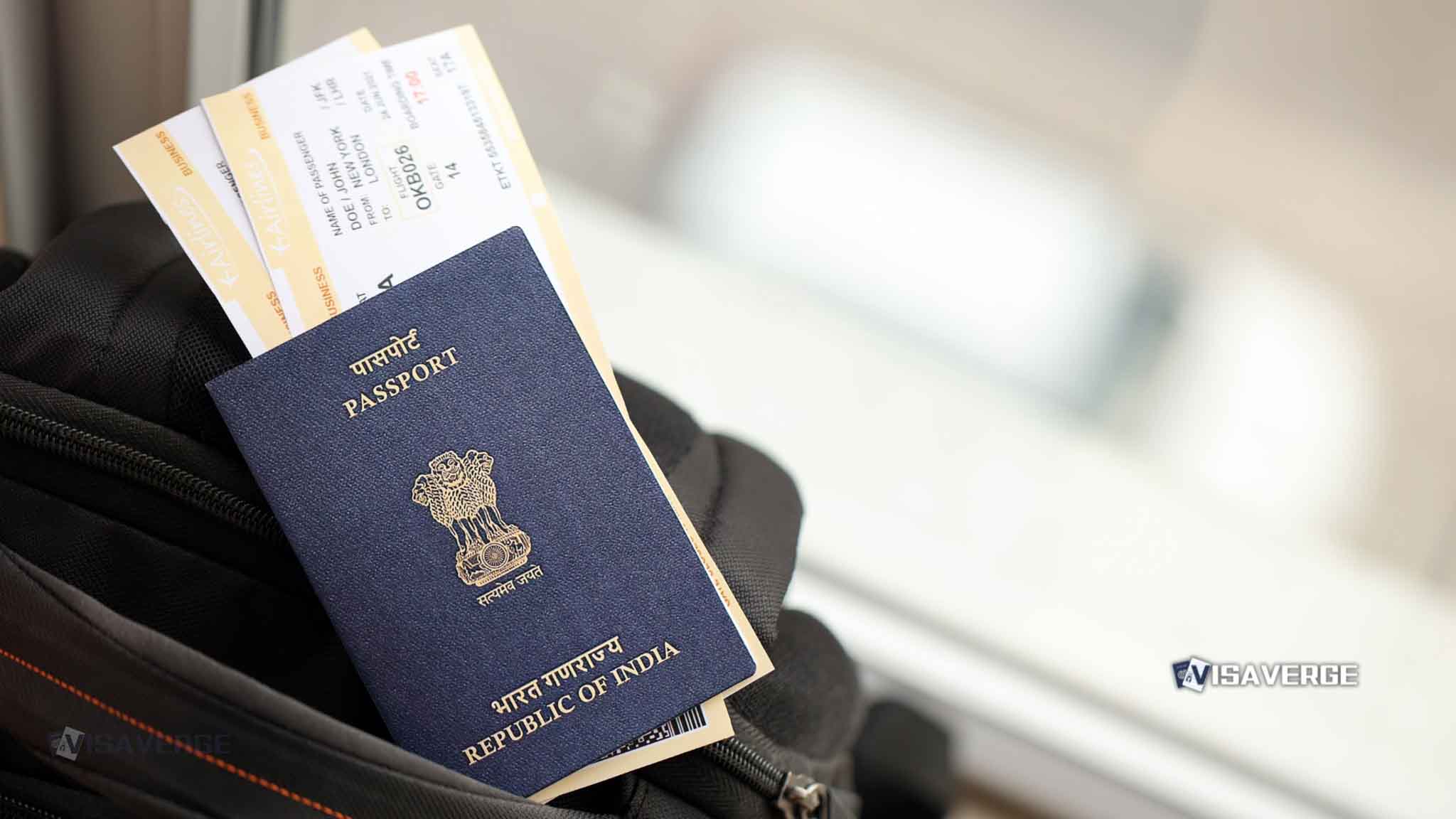
(INDIA) An Indian worker in the United States on an H-1B visa traveled back to India after his father died in April 2021 and said he could not return quickly because he needed a new visa stamp. At the time, his wife and children stayed in the U.S., while he remained stuck in India as consular delays and travel rules slowed reentry.
That case reflected a wider problem during the COVID-19 period. Many workers on U.S. employment visas found themselves trapped outside the country after emergency travel, family loss, or short visits home. For anyone who depends on a work visa, the gap between leaving and reentering is not just a travel issue. It can affect jobs, paychecks, family life, and legal status.

The travel chain for an H-1B holder in India
For H-1B workers, the journey usually has two separate sets of rules. India controls who may enter and leave its territory. The United States controls who may come back in on a valid immigration status.
Free toolCSPA Age-Out Calculator OnlineThat distinction matters because a valid job in the U.S. does not guarantee immediate reentry after travel. A worker may still need a fresh visa stamp at a U.S. consulate before boarding a flight back. If the stamp has expired, the person must wait for an appointment, interview, and passport return before traveling again.
During the pandemic, embassy slowdowns made those waits longer. Reduced staffing, fewer appointments, and backlogs at consulates added pressure on workers who had already left the U.S. for family emergencies. Visa holders who expected a short trip sometimes faced weeks or months of separation from spouses and children.
According to analysis by VisaVerge.com, this kind of delay became one of the clearest examples of how one missing travel document can disrupt an entire family’s plans. The issue was especially hard for workers whose relatives stayed in the U.S. while they handled an emergency abroad.
India’s entry and exit rules for foreign travelers
India requires a valid Indian visa or OCI card to enter and exit. Travelers without the correct document, or with the wrong visa type, can be denied entry. That rule applies even when the traveler has strong personal ties to India or urgent family reasons for travel.
For foreign citizens visiting India for work, study, or research, the paperwork does not end at the airport. They must hold the proper visa category and register their stay or residency within 14 days of arrival with the local FRRO. The FRRO, or Foreigners Regional Registration Office, is the local authority that records foreign visitors in India.
This registration step is easy to miss, but it matters. It ties the traveler’s legal presence in India to the stated reason for the visit. A work visitor, researcher, or student who arrives and ignores the deadline can run into problems later when trying to extend a stay, leave the country, or prove lawful compliance.
The U.S. State Department’s India country page provides official travel information for Americans and other travelers: U.S. State Department – India travel information.
Why H-1B travel creates extra risk
The H-1B visa is designed for temporary skilled work in the United States. In practice, it often ties a worker’s life to two immigration systems at once. A trip to India can trigger Indian entry rules, U.S. reentry rules, and consular processing delays all at the same time.
That is why family emergencies create such difficult choices. A worker may need to travel quickly after a death in the family, but a return flight is not guaranteed. If the visa stamp has expired, the person must secure a new one before rejoining their U.S. employer. If appointments are scarce, the wait can stretch far beyond the original travel plan.
The April 2021 case captured that reality sharply. The traveler went to India after his father died, then reported that he could not immediately return because the stamp issue blocked him. His wife and children remained in the U.S., turning a temporary visit into a prolonged separation.
Steps that reduce the risk of being stranded
Travelers in a similar situation should prepare before leaving the U.S. The most important checks are simple, but they must be done early.
- Confirm that your U.S. immigration document is current before travel.
- Check whether your visa stamp will still be valid when you need to return.
- Make sure you have the correct document for India, either a valid Indian visa or OCI card.
- If your trip involves work, study, or research, prepare for FRRO registration within 14 days of arrival.
- Review embassy and consulate appointment timelines before booking a return flight.
- Watch official travel advisories and processing updates before and after departure.
Those steps do not remove all risk. They do, however, make the risk visible before a plane ticket is bought. That matters because travel after a family emergency is rarely planned with much margin for delay.
The timeline that travelers keep missing
Three dates or rules stand out in this kind of case. April 2021 marked the father’s death and the trip to India. The 14-day period is the registration window for foreign visitors with the local FRRO. And the requirement for a valid Indian visa or OCI card governs entry and exit from India.
These are not abstract rules. They shape whether a person can go home, care for family, and then return to work on time. For an H-1B worker, the missing piece is often not the job offer or the U.S. approval. It is the travel document that allows reentry after departure.
When consular offices slow down, that missing stamp becomes the difference between a short absence and an open-ended stay abroad. Employers lose continuity. Families lose time together. Workers lose certainty.
For immigration readers, the lesson from this case is straightforward. One visa controls work in the U.S. Another document controls the trip back. India’s own entry and registration rules add a third layer. Any one of them can delay return, and together they can leave an H-1B holder far from home with no quick path back.