Air India will end its nonstop flights to San Francisco (SFO) from Bengaluru and Mumbai in late February 2026, changing how you plan trips tied to U.S. visas, work, school, and reentry through the Bay Area. If you live in San Francisco or fly into SFO for a visa-related deadline, plan now for at least one stop on these routes going forward.
This affects you most if you regularly fly Bengaluru–San Francisco or Mumbai–San Francisco to protect your immigration status (work start dates, STEM OPT reporting, H-1B transfers, green card travel, or visa stamping travel). A one-stop trip also adds more points of failure—missed connections, lost bags, and delays.
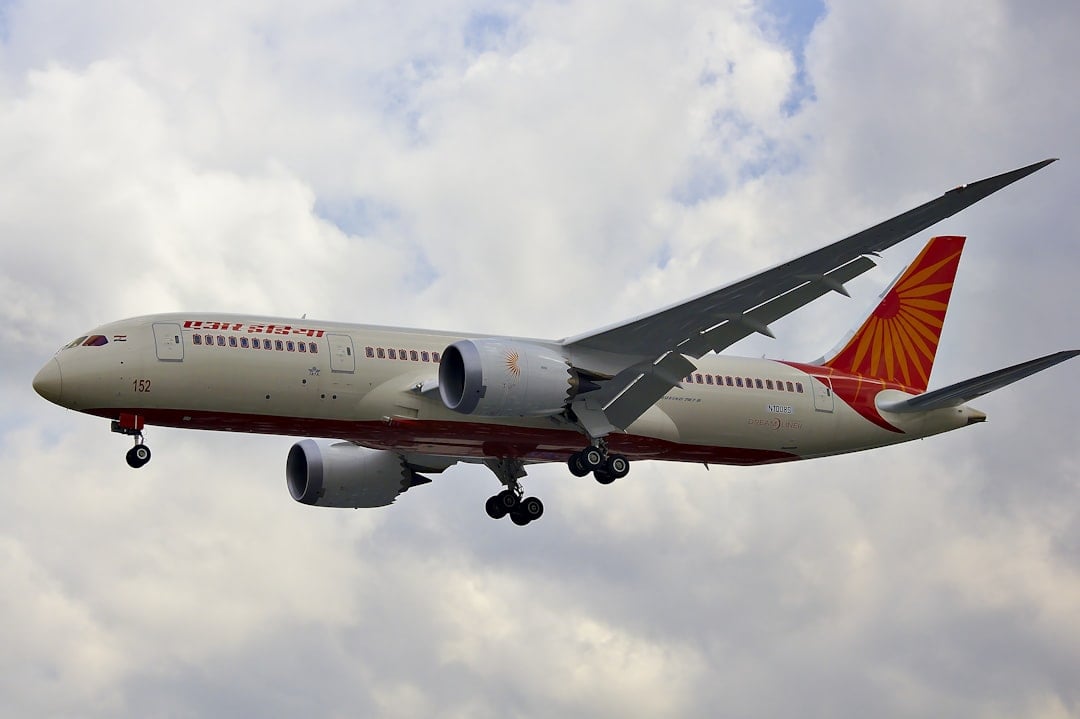
Air India has said it will focus West Coast service on Delhi–San Francisco, with about 10 weekly outbound nonstop departures from Delhi starting March 2026. On the return, flights may include a technical fuel stop in Kolkata. The airline linked the changes to longer flight times and higher operating costs caused by airspace closures, plus operational reviews connected to its 2025 “Safety Pause” schedule reductions.
Your two realistic choices to keep flying to San Francisco
Once the nonstops end (Bengaluru’s final flight is February 27, 2026, and Mumbai’s final flight is February 28, 2026), most travelers have two practical paths:
- Option A: Route through Delhi and use the Delhi–San Francisco service
- Option B: Switch to other one-stop routings on different airlines or partners that still get you into SFO (or nearby Bay Area airports), then connect onward
Air India to SFO after February 2026: Quick comparison
| Feature | Option A: Air India via Delhi (DEL) | Option B: Other one-stop routings (non–Air India primary) |
|---|---|---|
| What changed | You replace the former Bengaluru–SFO or Mumbai–SFO nonstop with a connection via Delhi | You move to a different airline’s one-stop network into the Bay Area |
| Stops | At least 1 stop (in Delhi) | At least 1 stop (varies by airline and hub) |
| San Francisco arrival airport | Typically SFO | Often SFO, sometimes another Bay Area airport depending on airline |
| Schedule direction | Air India plans about 10 weekly outbound nonstops from Delhi starting March 2026 | Depends on airline network and season |
| Return-trip complexity | Return flights may include a technical fuel stop in Kolkata | Depends on routing; could be a different hub each way |
| Who it fits best | You prefer staying with Air India and can tolerate a Delhi connection | You want more routing choices and better backup options if disruptions hit |
| Immigration-risk exposure (missed connections, delays) | Moderate: one connection plus any return fuel stop considerations | Varies: more moving parts can raise risk |
| What you must do if you already booked | Check your itinerary and use Air India/ticketing-channel rebooking or refund options | If you rebook, confirm ticket rules and keep documentation for your travel record |
Option A: Fly Air India to San Francisco via Delhi
If you still want Air India into San Francisco after the change, Delhi becomes your main gateway.
Why this can work for Bay Area immigration deadlines
If you have a tight, date-specific need to be in San Francisco—like a new job start, a required in-person school check-in, or returning before a work authorization ends—Air India concentrating service on Delhi–San Francisco gives you a predictable “spine” to plan around.
The planned about 10 weekly outbound nonstop departures from Delhi starting March 2026 can reduce how long you wait for a workable date.
Where it can trip you up
A Delhi connection changes the risk profile. Key vulnerabilities:
- Missing the long-haul segment to the U.S. If you miss the Delhi–San Francisco flight, you may arrive later than planned, which can be serious when physical presence by a specific date matters.
- Longer returns. Return flights may include a technical fuel stop in Kolkata. Even if you stay on the same aircraft, the added stop can lengthen the day and increase the chance of schedule shifts that disrupt onward connections in India.
What to do when arriving on time matters
Use these rules when immigration timing is high-stakes:
- Arrive early for critical events. For hard deadlines (first day of work, school reporting date, required appointment), aim to arrive in the Bay Area with buffer days.
- Keep your “entry packet” in your personal item. Carry your passport with visa stamp (if required), I-797 approval notice (for many work visas), I-20 (for F-1), DS-2019 (for J-1), and proof of your current U.S. job or school status.
- Know your U.S. arrival airport inspection point. If you choose SFO, you complete U.S. inspection there, where Customs and Border Protection (CBP) decides admission and class of admission.
Map your 2026 visa-related deadlines and test 1-stop itineraries now. Prepare flexible fares or change alerts, and confirm rebooking options so a disruption doesn’t derail your critical date.
⚠️ Important: After you enter the U.S., check your electronic I-94 (your arrival/departure record). Fixing errors fast prevents later problems with work authorization and extensions. Use CBP’s official site: CBP.
If you already hold a Bengaluru–SFO or Mumbai–SFO ticket for 2026
If your booking falls after the nonstop service ends, treat your itinerary as “must confirm”:
- Check your airline’s schedule and any email or app notifications tied to your reservation.
- If you booked through a travel agency or third-party site, confirm whether changes must be processed there.
- Save written confirmation of any rebooking or refund outcome, and keep it with your records if you later need to explain disruptions to an employer or school.
Option B: Switch to other one-stop routings to reach San Francisco
If you don’t need Air India specifically, the simplest replacement is choosing another one-stop path into the Bay Area. This is mainly about flexibility and backups.
Why this is often better for high-stakes immigration travel
When your status has strict timing—maintaining employment, returning before a travel signature expires, or coming back for a time-sensitive filing—the priority is reliable arrival, not airline loyalty. Other networks can help because you can:
- Choose from multiple hubs and departure times
- Avoid a single “choke point” if one airport or carrier has a disruption
- Rebook more easily onto alternate flights when problems happen (varies by ticket type)
The tradeoffs
- More complicated rebooking rules. Separate tickets or mixed itineraries can leave you unprotected if the first flight delays and you miss the second.
- Longer journeys. A one-stop trip is already longer than the old nonstop; some routings add long layovers or overnight stops.
- More document checks. Extra transits can mean more checkpoint interactions, increasing the chance you’ll need a document you forgot.
Rules that protect your U.S. status on multi-leg travel
- Avoid separate tickets when you can. A single ticket gives the airline a clearer duty to rebook you if a segment breaks.
- Leave wider connection time on the outbound to the U.S. Missed connections are a top reason people arrive late.
- Keep proof of status ready for check-in. Airlines often verify documents before allowing boarding on a U.S.-bound flight.
Which option is right for you? (San Francisco-focused scenarios)
Choose Option A (Air India via Delhi) if…
- You want to keep your trips centered on Air India and are fine connecting through Delhi.
- Your India-side plans already revolve around Delhi for family, business, or domestic flights.
- You value having Air India concentrate West Coast service on Delhi–San Francisco with higher outbound frequency starting March 2026.
Choose Option B (other one-stop routings) if…
- Your travel is “deadline travel” tied to immigration timing, and you want more airline and routing choices.
- You have low tolerance for disruption and want the ability to pivot quickly to different routings.
- You plan to combine your U.S. trip with stops outside India and want a network that supports those combinations more easily.
Visa-stamp appointments and high-risk returns
If you’re traveling for a visa stamp appointment outside the U.S., your biggest risk is missing your return flight and being stuck abroad longer than planned. Build extra time on the return side, no matter which option you choose.
If your employer expects you back in San Francisco on a specific date, get that expectation in writing and align your flights to beat it.
Students and exchange visitors (F-1, J-1)
You protect your status by returning with the right documents and entering in the correct category. Before you fly, confirm you have:
- A passport valid for your travel period
- A valid visa (unless you qualify for a narrow exception)
- Your signed Form I-20 (F-1) or DS-2019 (J-1)
- Proof of enrollment or program continuation
Work visa holders (H-1B, L-1, O-1, etc.)
Carry proof you still have the job you’re returning to (recent pay statements and an employment confirmation letter help). Keep your Form I-797 approval notice with you.
What to do this week if you rely on these San Francisco routes
- Pull up your 2026 travel calendar and mark where you used to rely on the Bengaluru–San Francisco or Mumbai–San Francisco nonstops.
- Decide which failure you can’t accept: arriving late, extra stops, or higher rebooking hassle—then pick Option A or B.
- Build buffer days around any immigration-critical event in San Francisco.
- Set a habit after every entry: download and save your I-94 after you land.
If you want more immigration travel guides that focus on real-life trips into San Francisco and other U.S. gateways, visit VisaVerge.com.
Air India is ending its direct Bengaluru-SFO and Mumbai-SFO routes in February 2026, shifting its West Coast focus to the Delhi-SFO corridor. This restructuring requires travelers to use one-stop connections, which may impact those with time-sensitive immigration requirements. Travelers should prepare for potential delays by arriving early for critical deadlines and ensuring all visa documentation is readily available for inspection.