- Utah’s SB 136 aims to restrict federal enforcement activity in designated sensitive locations like hospitals and churches.
- A long-standing precedent requires detailed factual evidence for the suppression of immigration court evidence.
- The bill proposes banning facial coverings for federal agents during enforcement actions within the state.
(MILLCREEK, UTAH) — A long-standing immigration court precedent makes one practical point clear for Utah institutions watching Senate Bill 136: even if a state restricts where and how federal agents may operate, the main courtroom remedy in removal cases is still narrow, and suppression of evidence typically requires a strong, well-supported record of unlawful conduct.
That framework comes from Matter of Barcenas, 19 I&N Dec. 609 (BIA 1988), where the Board of Immigration Appeals (BIA) held that a respondent seeking to suppress evidence must first make a prima facie showing of an unlawful search or seizure before the government must justify how it obtained the evidence.

In plain terms, generalized claims usually do not shift the burden. Detailed facts and documentation often matter.
SB 136—often called the ICE Out bill—was introduced by Utah State Sen. Nate Blouin (D-Millcreek) and is aimed at limiting certain federal immigration enforcement practices at designated locations and under specific conditions.
If enacted, SB 136 would not create a federal immigration “status” or defense by itself. But it could shape the factual record that later appears in criminal court, civil rights litigation, or immigration proceedings.
Warning: SB 136 is a state proposal. It cannot change removability, eligibility for relief, or federal enforcement authority under the Immigration and Nationality Act (INA). It may, however, affect access rules and local cooperation within Utah.
1) Overview of SB 136 and the “ICE Out” concept
SB 136 is Utah legislation designed to place guardrails around federal immigration enforcement activity within the state. Supporters describe it as an “ICE Out” measure because it attempts to keep certain enforcement actions away from particular settings and limit how those actions are carried out.
That label can be misleading if read too broadly. Even if SB 136 passes, it would not override federal immigration law or prevent federal officers from enforcing the INA.
The more realistic impact is indirect. It could regulate state and local conduct, control access to non-public areas of certain facilities, and reduce local logistical assistance at specified sites.
The bill arrives amid a national patchwork of state approaches. Some states have moved toward expanded cooperation with ICE, as discussed in coverage of ICE cooperation. Others have explored limits tied to campuses and public-facing services.
SB 136 was introduced in mid-January 2026, with formal distribution shortly thereafter. Exact legislative timing and milestones should be verified on Utah’s official bill page.
2) Key provisions of SB 136 (what the bill would change in practice)
SB 136 centers on three operational levers: sensitive locations, face coverings, and state/local cooperation.
Sensitive locations and “non-public areas.” The bill’s sensitive-location concept focuses on spaces where people receive services or exercise core rights.
Operationally, “non-public areas” typically mean staff-only rooms, back offices, records areas, restricted wards, or secured spaces not open to the general public. For institutions, the line between public and non-public space is often the critical fact.
The bill’s emphasis on a judicial warrant matters because a warrant requirement creates a clearer checkpoint. It also creates a clearer record if disputes arise later.
That record can be important in litigation, and sometimes in removal proceedings when a respondent seeks suppression.
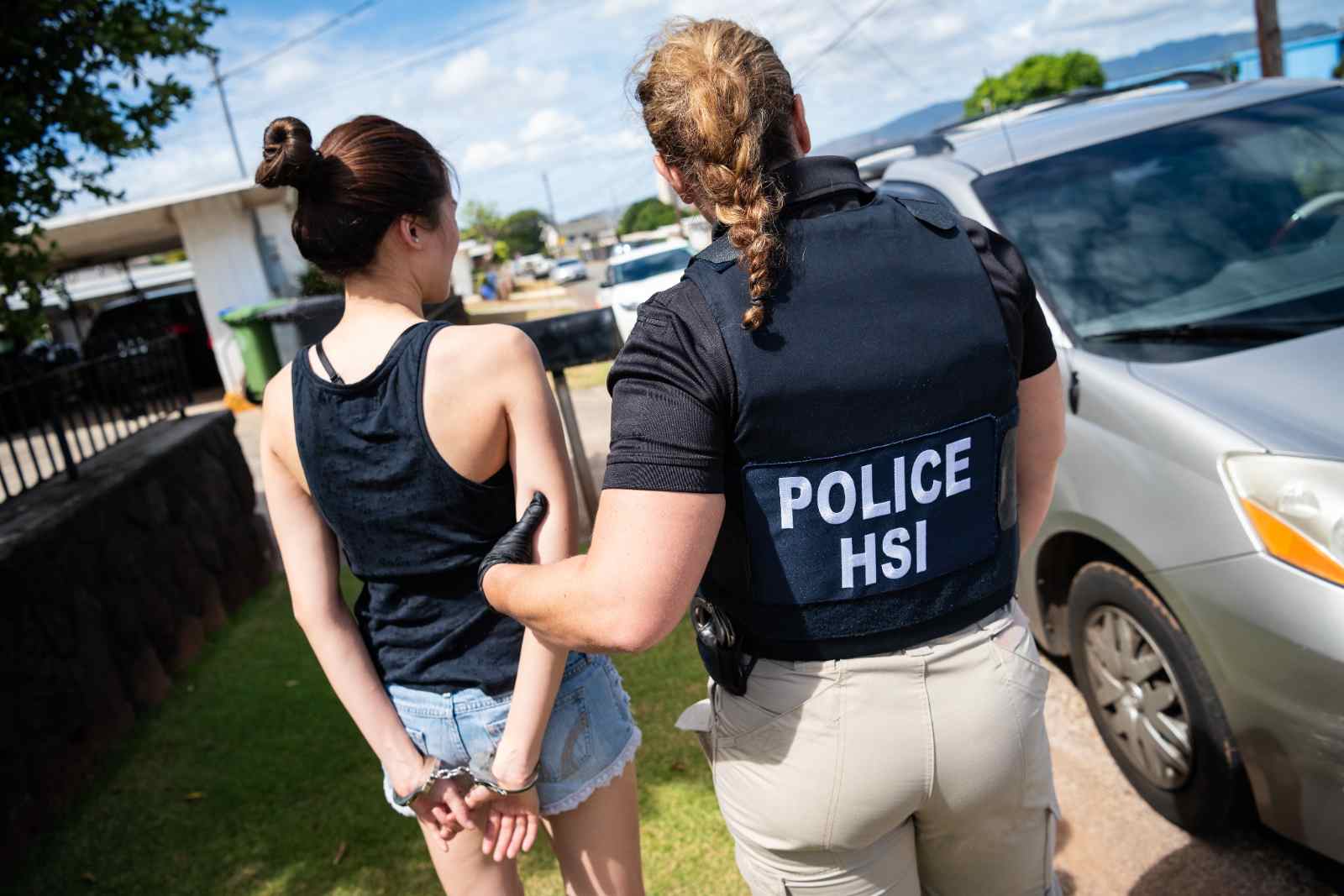
Face covering restriction, with exceptions. SB 136 would generally bar federal agents from using facial coverings during enforcement actions, while carving out exceptions described at a high level as safety-related or tied to undercover work.
That structure mirrors debates seen in other states, including reporting on mask limits.
Limits on state and local assistance at sensitive sites. SB 136 would also restrict how Utah state and local law enforcement can assist federal immigration arrests at designated sites. In practice, this can include coordination, presence, or logistical support.
Accountability mechanisms. The bill includes an accountability concept that may include narrowed immunity or potential damages tied to certain violations. Measures like this often face litigation over preemption and scope.
Courts may also limit remedies depending on how the statute is drafted and applied.
SB 136’s “applies to” universe includes common examples like healthcare and worship settings, libraries, and similar community institutions. The full list should be read in the bill text.
Warning: Even if SB 136 passes, a violation does not automatically mean immigration evidence will be excluded. Under Matter of Barcenas, suppression usually requires a well-supported, fact-specific motion.
3) Official statements and government context (DHS, ICE, and related messaging)
As of January 16, 2026, DHS has not issued a statement focused solely on Utah’s SB 136. But federal messaging about sanctuary-style resistance, officer safety, and enforcement tactics is directly relevant to how these disputes may be framed.
A DHS spokesperson has publicly tied an increase in threats or violence to what the agency describes as “sanctuary politicians” and media rhetoric. DHS leadership has also warned state and local officials against interfering with federal operations, emphasizing prosecution for assaults or obstruction.
In parallel, ICE has publicly defended face coverings as a protection against “doxing,” arguing that disclosure can endanger officers and their families. That framing is in tension with state proposals that treat masking as intimidation or as incompatible with public accountability.
Readers should separate three things that are often blended together in public debate:
- Public relations statements (explain the agency’s position).
- Operational policy guidance (internal rules that may change).
- Legally binding authority (statutes, regulations, warrants, and court orders).
The bill debate is partly about safety and partly about institutional trust. Those themes show up in broader discussion of agents’ mask use and the competing narratives around enforcement visibility.
4) Why SB 136 matters: state–federal dynamics and Utah’s political landscape
SB 136 comes at a moment of intensified state–federal friction. Large-scale federal enforcement operations can prompt swift legislative responses and public demonstrations, especially when an operation results in serious injury or death.
Utah’s political structure also shapes the bill’s path. A Republican supermajority can determine whether SB 136 advances, stalls in committee, or is amended into a narrower form. Even bills that do not pass can influence institutional protocols and local practices.
State leaders have also signaled priorities emphasizing enforcement against serious offenders. That posture can affect compromise language and committee negotiations.
Utah is not acting in isolation. Other states have considered measures that move in the opposite direction by formalizing partnerships. Recent Texas activity, including reporting on ICE partnerships, highlights how different state legislatures are testing the boundary between cooperation and constraint.
Deadline/Status note: Bill language and amendments can change quickly. Always confirm the latest SB 136 text, substitute bills, and vote history on the Utah Legislature’s official site before relying on summaries.
5) Impacts and perspectives: what communities, institutions, and officers are saying
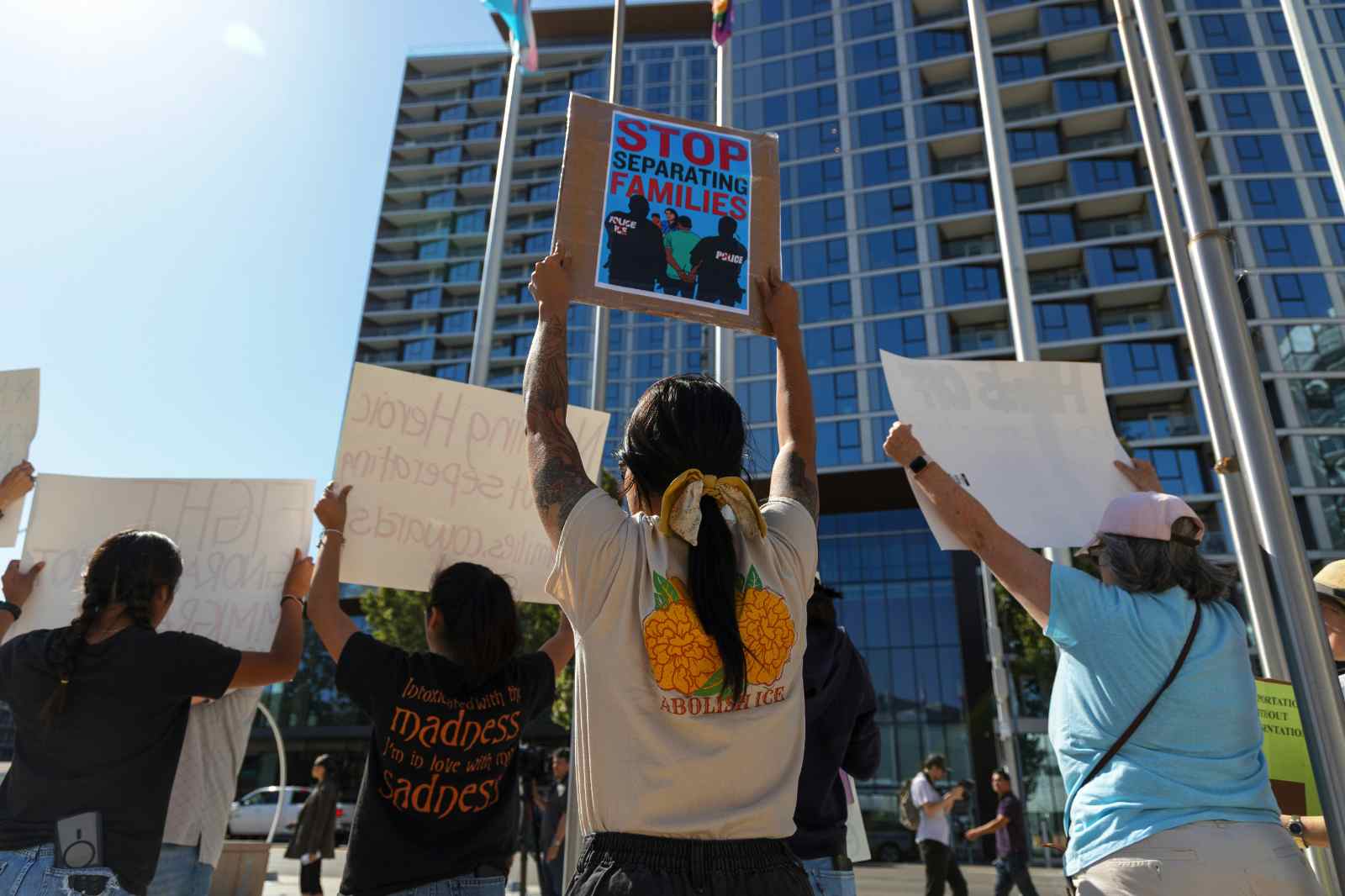
Community groups and service providers report behavioral shifts when enforcement activity is perceived as likely near daily-life institutions. In Utah, advocates have described fear affecting attendance at community events.
The reported drop is significant, and it aligns with a common pattern seen in other jurisdictions: people delay care, avoid reporting crime, or skip public events when they fear arrest.
That dynamic is especially acute in healthcare. While hospitals generally provide emergency care regardless of immigration status, fear of enforcement can still reduce timely visits, follow-up appointments, and preventive care.
Those effects can ripple across public health systems.
Supporters of SB 136, including Sen. Nate Blouin, frame the bill as promoting safe access to worship and community life. Some characterize it as touching religious freedom and the ability to attend services without fear.
Opponents focus on officer safety, especially concerns about retaliation if officers cannot conceal identities. They also argue that operational constraints could make arrests more dangerous if officers must wait outside or abandon protective gear.
For institutions—churches, clinics, shelters, libraries, and similar sites—preparedness often looks less like confrontation and more like process:
- Designate who speaks to agents.
- Define where public space ends and restricted space begins.
- Train staff on calm documentation and de-escalation.
- Maintain a plan for verifying warrants and contacting counsel.
These steps can matter regardless of SB 136’s fate, because they clarify boundaries and reduce confusion during high-stress encounters.
6) Official sources and how to verify updates (avoid misinformation as the bill evolves)
A practical verification checklist helps separate real developments from rumor:
- Utah bill status and text: Use the Utah Legislature’s official site to review SB 136 text, amendments, fiscal notes, votes, and current status.
- DHS statements: Check DHS’s official newsroom for releases and attributed quotes.
- ICE public materials and data: ICE’s ERO statistics and public pages include the ERO statistics dashboard.
- USCIS updates are different: USCIS handles benefits, not enforcement. For immigration benefit alerts, use USCIS Newsroom Alerts. Do not assume a USCIS update changes ICE enforcement activity.
Finally, remember what Matter of Barcenas teaches in practice. If an enforcement encounter becomes part of a removal case, outcomes often turn on what can be proven, how it is documented, and whether the facts meet the suppression threshold recognized in immigration court.
Practical takeaways
- SB 136 would not grant lawful status. It would not erase removability under the INA.
- Institutions should clarify “public vs. non-public” spaces and train staff on warrant review.
- Mask restrictions and sensitive-location rules may be litigated, including preemption challenges.
- In removal proceedings, suppression is difficult and typically requires detailed evidence under Matter of Barcenas, 19 I&N Dec. 609 (BIA 1988).
- Get case-specific legal help early. Strategy differs by jurisdiction and facts, and circuit case law can affect suppression arguments.
⚖️ Legal Disclaimer: This article provides general information about immigration law and is not legal advice. Consult a qualified immigration attorney for advice about your specific situation.
Resources: