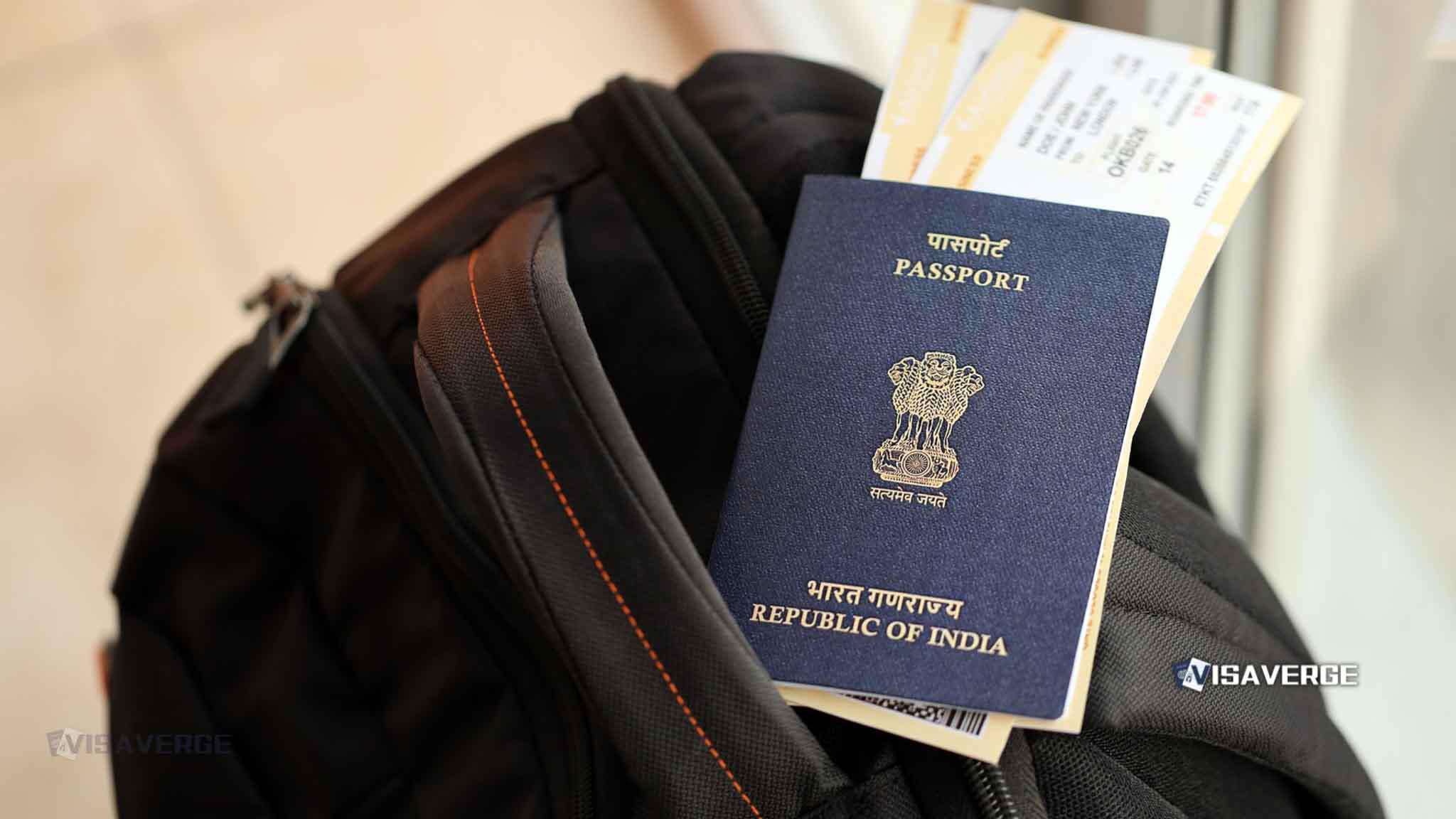
(FRANCE) — Official bodies and rights groups urged Britons living in France on Tuesday to upgrade their post-Brexit residency permits as tens of thousands of five-year cards issued after the Brexit Withdrawal Agreement begin to expire.
Jane Golding, co-founder of the British in Europe coalition, issued a warning aimed at British nationals marking the five-year anniversary of the end of the transition period.

“Don’t delay and don’t miss out on getting proof of permanent residence. There are benefits to upgrading to permanent residence and you are entitled to them,” Golding said.
Who is affected and why now
- The focus is on roughly 45,000 British nationals in France who hold the five-year “temporary” residency card known as the Carte de séjour Article 50 TUE (also referred to as WARP).
- Many holders are now reaching five years of continuous legal residence, the threshold that entitles residents to a 10-year permanent residence card.
- The year 2026 is described as a “milestone year” because it marks five years since the end of the post-Brexit transition period on December 31, 2020.
Officials and campaigners warn that the coming months could bring a surge of renewal and upgrade applications from people whose initial five-year permits are now reaching their end dates. They advise starting early, keeping paperwork current, and avoiding gaps in proof of status.
Official messaging and international context
A joint statement after the Specialised Committee on Citizens’ Rights meeting in London on December 18, 2025, emphasized the point:
“Both UK and EU representatives raised the importance of ensuring a successful transition to permanent residence for eligible UK nationals and EU citizens over the course of 2026.”
Campaigners and officials frame 2026 as a test of how smoothly time-limited status can be converted into longer-term residence.
Practical benefits of upgrading to permanent residence
Campaigners are urging an upgrade from the Withdrawal Agreement residence card to permanent residence, citing practical protections:
- Longer absence allowance:
- Permanent status: can be absent from France for up to five consecutive years without losing residency rights.
- Temporary (WARP) status: rights can be lost after only six months of absence in a year.
- Financial and social protections:
- Permanent residence is said to ensure continued access to student grants, loans, and social benefits for economically inactive residents.
- Daily life:
- Up-to-date status is often required by employers, healthcare providers, and other institutions.
French domestic changes and treaty exemptions
- On January 1, 2026, France implemented stricter integration laws for standard residency renewals, including mandatory French language tests at A2/B1 levels and a civics exam.
- Article 50 / Withdrawal Agreement permit holders are exempt from these new requirements under the terms of the treaty, per the policy details circulated with the upgrade push.
- Even with the exemption, holders are urged to keep documentation up to date because everyday interactions commonly require proof of status.
Administrative process and practical steps
Applicants are encouraged to prepare early. The process and expected documents include:
- Valid UK passport
- Current WARP card
- Proof of continuous residence for five years
- Three recent photos
- Most applications are handled via the local préfecture website; some regions use the ANEF online portal.
- If a permit expires while a renewal is pending, applicants are urged to request a récépissé — a receipt of application that can be used to prove the right to work and access healthcare while paperwork is processed.
- Campaigners caution that administrative bottlenecks are likely if many people apply at once, and they highlight the importance of obtaining a récépissé to show employers and services if needed.
Border systems and travel implications
The administrative pressure is expected to rise as broader European border systems change:
- The roll-out of the EU’s Entry/Exit System (EES) and the upcoming ETIAS, planned for late 2026, are cited as reasons to ensure paperwork is current before crossing Schengen borders.
- A separate U.S. travel and security update issued on January 1, 2026, may also affect foreign nationals in France planning international travel.
The U.S. update referenced Presidential Proclamation 10998 and was summarized in a notice from the U.S. Embassy & Consulates in France:
“Pursuant to Presidential Proclamation 10998 on Restricting and Limiting the Entry of Foreign Nationals to Protect the Security of the United States, which takes effect at 12:01 a.m. EST on January 1, 2026, the United States is suspending or limiting entry and visa issuance to nationals of 39 countries. Applicants subject to this Proclamation may still submit visa applications and attend interviews, but may be ineligible for admission,”
The notice did not focus on Britons specifically, but it was presented as relevant to all foreign nationals in France who may be planning international travel.
Why this matters
Campaigners say the combination of expiring Withdrawal Agreement cards, new border systems, and changing travel rules makes proof of residence more than a formality. For Britons, the central issue is shifting from a five-year permit issued after Brexit to a longer-term status reflecting established residence.
The Withdrawal Agreement framework underpins these residence documents, and as the first five-year cycle ends, residents are encouraged to treat the upgrade as a necessary measure to reduce risks when moving, working, studying, or travelling.
Guidance and further information
Official guidance remains available online:
- French government Brexit advice: https://brexit.gouv.fr
- UK government guide: https://www.gov.uk/guidance/living-in-france
- U.S. Embassy & Consulates in France visa/security update (Jan 1, 2026): https://fr.usembassy.gov/visas/
- U.S. Department of Homeland Security newsroom: https://www.dhs.gov/newsroom
Final reminder from campaigners
Jane Golding’s message on January 6, 2026, targeted Britons who might assume their existing post-Brexit paperwork will remain sufficient without action. By urging residents to upgrade, campaigners press people to secure a 10-year card with the longer absence allowance and additional assurances associated with permanent status.
“Don’t delay and don’t miss out on getting proof of permanent residence. There are benefits to upgrading to permanent residence and you are entitled to them,” Golding said.
British residents in France must now upgrade from five-year temporary residency to ten-year permanent status. This transition is critical as 2026 serves as a milestone for the Withdrawal Agreement. Permanent status provides superior travel flexibility and social security protections. Although exempt from new French language requirements, applicants face potential administrative delays and must secure official receipts (récépissé) to maintain legal work and healthcare rights during the renewal process.