- Citizenship does not prevent brief investigative detentions during federal immigration operations or facility protests.
- Protesters in Phoenix clashed with ICE agents resulting in chemical irritant use and temporary detentions.
- A U.S. citizen and tribal member was detained for four hours while agents verified his identity.
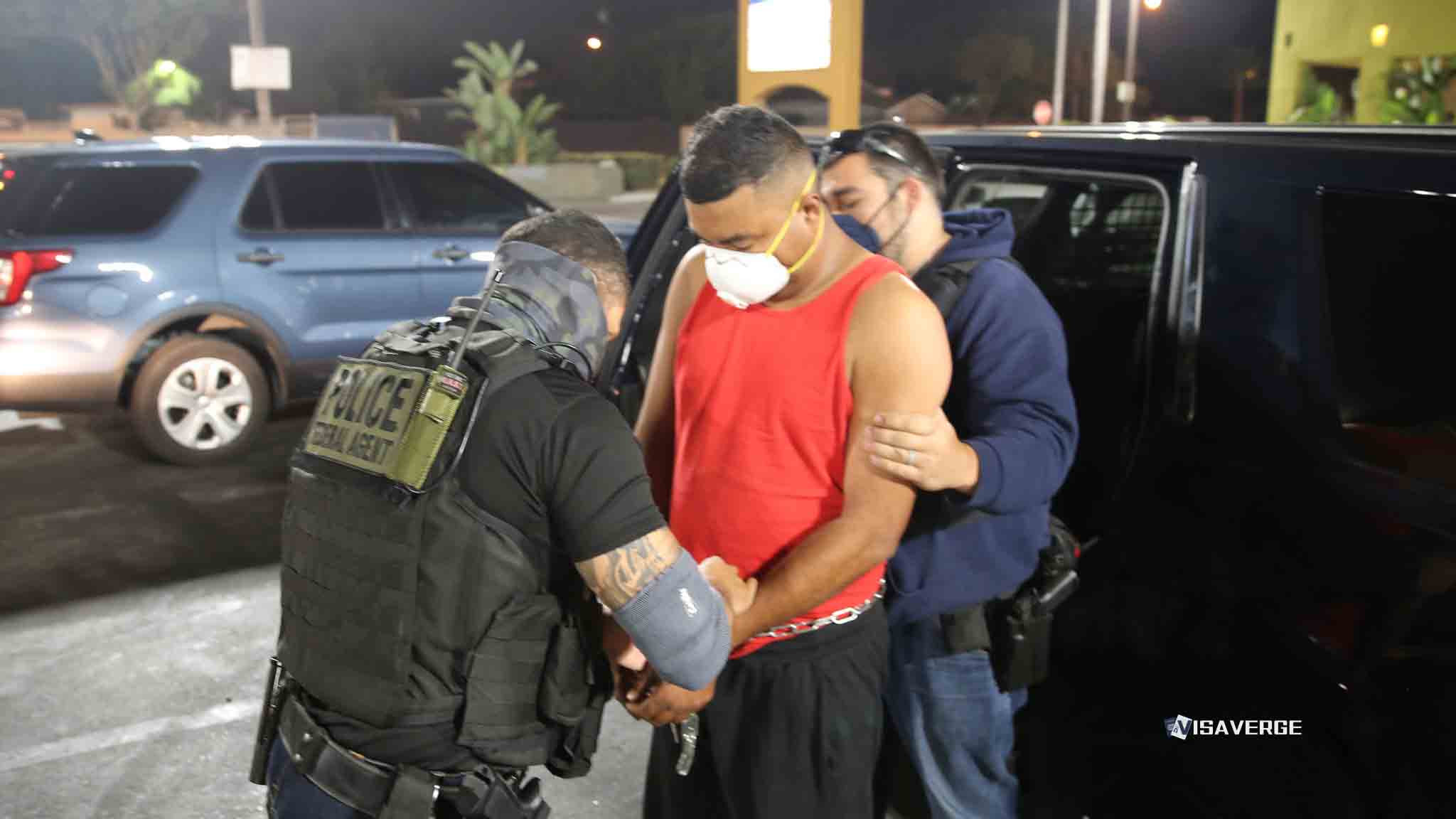
(PHOENIX, ARIZONA) — Anyone present at or near federal immigration operations—especially at a Phoenix protest outside an ICE facility—must comply with lawful orders and avoid conduct that can be treated as interference, even when the person is a U.S. citizen. That core compliance point sits at the center of the clashes reported January 22–23 near ICE’s Phoenix field office and the separate, widely criticized detention of Peter Yazzie, a U.S. citizen, earlier in the month.
Federal immigration agencies have broad authority to operate, secure their facilities, and take reasonable steps to verify identity. At the same time, constitutional protections for speech and assembly remain, and mistaken or prolonged detentions can trigger serious legal exposure.
This article explains what is confirmed, what is alleged, and what “compliance” looks like in practice when immigration enforcement and public demonstrations intersect.
1) Overview: what happened in Phoenix, and why a citizen-detention claim matters
Official statements from DHS and local authorities describe escalating confrontations between ICE agents and protesters in Phoenix. Reports from the scene also describe at least one temporary detention during the January 22–23 confrontations, and a separate incident in which Peter Yazzie, a U.S. citizen and tribal member, was detained for several hours before release.
A key legal point: citizenship does not always prevent a brief detention. Officers may temporarily detain someone to verify identity or address an immediate safety issue. But if a U.S. citizen is detained without adequate legal basis or for an unreasonable time, the legal stakes change quickly.
Plain-language terms help here:
- Detention vs. arrest: A detention is a temporary stop. An arrest typically involves formal custody based on probable cause.
- Charges vs. release without charges: A person can be held and released without criminal charges. That does not automatically make the detention lawful.
- Verification: Officers may check identification and databases. Verification can take time if records do not match.
2) Jan 22–23 near the ICE Phoenix field office: sequence, detention, and use-of-force claims
According to reports summarized here, confrontations escalated late Thursday, January 22, at the ICE field office on Central Avenue. Crowd activity reportedly increased as vehicles attempted to move in and out of the facility. Multiple physical clashes were described.
Detention details (reported): At least one protester, described as a 32-year-old woman, was detained for several hours. Agents reportedly accused her of using a flag in a way that obstructed operations. She was reportedly released early January 23 without charges.
Use-of-force claims: Activists reported that pepper spray or mace was used to disperse parts of the crowd. One person reportedly required hospitalization for an allergic reaction. Medical effects can become important later. They may shape internal reviews, public-records requests, or civil claims.
In many cases, ICE or other federal officers may detain people near a facility for reasons such as identity verification, officer safety, or suspected interference with official duties. Those stated reasons are not proof. They are common legal rationales asserted after fast-moving events.
Recurring misconceptions have also circulated about the Phoenix protest. Several claims flatten complex standards, including the idea that officers can never detain a U.S. citizen, or that blocking vehicles is always protected activity. In practice, legality depends on specific facts and local charging decisions.
Warning: Do not assume “no charges” means “no risk.” Conduct described as interference can still lead to later citations or referrals, depending on evidence and jurisdiction.
Writeups and summaries of these events may later be supplemented by video, audio, dispatch logs, witness statements, and internal agency review documents. Those materials often determine whether detentions and uses of force were reasonable under the circumstances.
3) The Peter Yazzie case: verification, tribal identity, and why disputes happen
Peter Yazzie’s case drew attention because he is a U.S. citizen and a citizen of tribal nations. The reported sequence is straightforward: he was approached by ICE agents at a gas station on January 12 while going to work, he asserted citizenship and referenced documents, and he was held for about four hours before release after verification.
Why can verification take time, even for citizens?
- ID checks in the field: Officers may rely on state IDs, tribal IDs, passports, or other documents. Not all IDs resolve citizenship.
- Database queries: Officers often check multiple systems. Errors can occur from misspellings, date mismatches, or incomplete records.
- Follow-up confirmation: If records are unclear, agencies may seek secondary confirmation. That can extend a detention.
Tribal identification can add complexity in public interactions, even though tribal citizens may also be U.S. citizens. Some tribal IDs are widely accepted for certain purposes, but they may not always answer the narrow question an officer is asking in the moment.
Outcomes vary by facts, documentation, and agency practice. Two people with similar stories can have different timelines.
4) Arizona legal and policy context: obstruction proposals, local police positioning, and state pushback
Compliance risk increases when lawmakers and agencies emphasize “obstruction.” A proposal described by Pinal County Attorney Brad Miller would make it a felony to obstruct a federal immigration officer. Such proposals typically target threats, physical interference, blocking access, or disrupting official movements. The definition matters. Broad language can create protest-related exposure.
Phoenix Police have publicly framed their role as not conducting immigration enforcement while also not interfering with federal operations. That positioning is common for local departments trying to separate immigration enforcement from crowd control.
State-level actions can also shape the environment. Arizona’s governor recently vetoed the “Arizona ICE Act,” reflecting pushback against certain cooperation structures. Federal authority still exists, but state messaging and resource choices can affect how events unfold.
“Operation Salvo” has been used as shorthand for a heightened national enforcement posture. Even without granular public details, the label matters because it raises expectations of increased activity around field offices.
Policy developments mentioned in the record include the following dated items: January 13 (felony obstruction advocacy), January 23 (Phoenix Police public stance), January 21 (DHS comments on cooperation and protest risk), and January 15 (DHS comments on ICE training).
This section provides context that may be supplemented by interactive tools showing proposed language and local statement timelines.
5) How DHS/ICE described events: why official framing matters
DHS spokesperson Tricia McLaughlin attributed danger to protests and lack of local cooperation in a January 21 statement. She also emphasized agent training in a January 15 statement. ICE Acting Executive Associate Director Marcos Charles said on January 23 that officers acted to uphold the rule of law and keep people safe, while warning that interference raises escalation risk.
These statements serve multiple functions. They are public messaging. They can also preview litigation positions and internal justification. Readers should distinguish statements from evidence, such as video, medical documentation, dispatch logs, and reports.
Date-stamping matters. A January 15 training statement is not the same as a January 23 description of field conditions.
6) Why it matters: civil-liberties risks and community behavior changes
Mistaken or extended detention can create civil-liberties concerns. Common risk points include mistaken identity, language-based assumptions, record mismatches, and aggressive crowd-control tactics.
When a U.S. citizen is detained, the fallout can be outsized. It often increases oversight pressure, raises liability exposure, and erodes trust, even if the agency later cites verification needs.
Reports also describe community behavior shifts in Phoenix, including carrying passports or avoiding speaking Spanish in public. These are not legal requirements. They are risk responses to perceived enforcement uncertainty.
Noncitizens should note one specific legal compliance rule: federal law requires most noncitizens age 18 or older to carry proof of registration. See INA § 264(e) (codified at 8 U.S.C. § 1304(e)) and related documentation rules at 8 C.F.R. Part 264. Violations can be charged as a misdemeanor, and they can complicate enforcement encounters.
Deadline: If you receive an NTA (Notice to Appear) in immigration court, missing the hearing can lead to an in‑absentia removal order. Hearing dates and addresses matter immediately.
7) Key dates and what to watch next
The timeline centers on four labels: January 12, January 22, January 23, and January 24. Together, they link Yazzie’s detention, the Phoenix field office confrontations, and the public-policy debate.
What typically clarifies incidents like these?
- Agency reports and any cited criminal statutes.
- Medical documentation when publicly available or provided by affected parties.
- Video footage and public records, where obtainable lawfully.
- Internal reviews and court filings if claims proceed.
What to monitor on policy?
- Whether obstruction legislation advances, and how it defines “interference.”
- Updates to local policing guidance on protest response near federal facilities.
- Changes in state-federal cooperation agreements and messaging.
Warning: If you were detained or injured, avoid self-incrimination in public posts. Speak with a qualified attorney before giving detailed statements.
For court-process basics, EOIR’s official site is a starting point: EOIR information.
Practical compliance tips (general)
- Stay aware of posted boundaries and lawful dispersal orders near secured facilities.
- Keep documents organized. Noncitizens should carry required registration proof under INA § 264(e).
- If questioned, ask calmly whether you are free to leave. If not, ask the basis for the stop.
- If detained, request counsel as soon as feasible and document the timeline afterward.
Legal resources (official and referral)
- AILA Lawyer Referral: AILA Lawyer Referral
- Immigration Advocates Network: Immigration Advocates Network legal directory
This article provides general information about immigration law and is not legal advice. Immigration cases are highly fact-specific, and laws vary by jurisdiction. Consult a qualified immigration attorney for advice about your specific situation.