- Travelers generally maintain rights against unreasonable searches and self-incrimination during airport screenings.
- Increased DHS-TSA-ICE coordination uses domestic air passenger data for interior immigration enforcement.
- The new ConfirmID process beginning February 1, 2026 adds verification steps for those without ID.
Right explained (and who has it): People in the United States—citizens, lawful permanent residents (LPRs), visa holders, and undocumented travelers—generally have the right to be free from unreasonable searches and seizures and the right to decline to answer questions that could be self-incriminating. Those rights can matter at airports when TSA identity screening and Secure Flight air passenger data are used in ways that may lead to ICE encounters.
This guide explains how DHS describes TSA–ICE coordination, how identity “matches” can happen, what practical steps help reduce disruption, and what to do if you believe your rights were violated.
Date: Monday, January 19, 2026
1) Overview: DHS–TSA–ICE integration and the government’s framing
What the coordination is. TSA and ICE are both components of the Department of Homeland Security (DHS). TSA runs aviation security screening and identity checks at checkpoints. ICE enforces immigration law in the interior, including arrests and removals.
In late 2025 and early 2026, DHS publicly confirmed a strategy that ties domestic air passenger data and airport touchpoints more closely to interior immigration enforcement. In public statements, DHS has framed the effort as identification and compliance-focused, including identifying people with removal orders.
What “data sharing” means in practice. “Data sharing” usually does not mean a TSA officer is making an immigration decision at the checkpoint. It typically means that passenger identity information collected for aviation security can be cross-referenced against DHS and ICE databases. That process can generate “matches,” “flags,” or referrals.
This does not mean every traveler is individually targeted. Most domestic travelers will still pass through screening without any immigration contact. Still, the integration matters because airports create predictable identity checkpoints and concentrated data flows.
Official framing. DHS and TSA have described these efforts as consistent with security and enforcement priorities. DHS statements in December 2025 and January 2026 emphasized enforcement against people without lawful status. TSA’s January 2026 messaging also highlighted identity verification procedures for travelers who lack acceptable ID.
Warning: Domestic air travel is not “status-neutral.” If you have prior immigration contact, an old removal order, or unresolved identity issues, airports can become high-risk locations because identity checks and database matching are built into the process.
2) Data sharing mechanics and identity verification (Secure Flight, manifests, and “choke points”)
What Secure Flight is (and what data is in play)
TSA’s Secure Flight program is a watchlist matching and identity vetting system used for commercial aviation. It typically relies on passenger information transmitted by airlines, often called manifests or passenger name record (PNR) elements.
While the exact fields can vary, they commonly include identifying data such as name, date of birth, gender, and travel details. That information can be compared against government records.
Secure Flight is rooted in TSA’s aviation security authority under federal law and regulation, including 49 C.F.R. part 1560 (Secure Flight) and TSA’s broader statutory mission under 49 U.S.C. § 114.
How information can move from TSA to ICE
In the current environment described by DHS reporting, TSA shares Secure Flight-derived passenger manifest information with ICE multiple times per week. ICE can cross-reference that data against its enforcement databases.
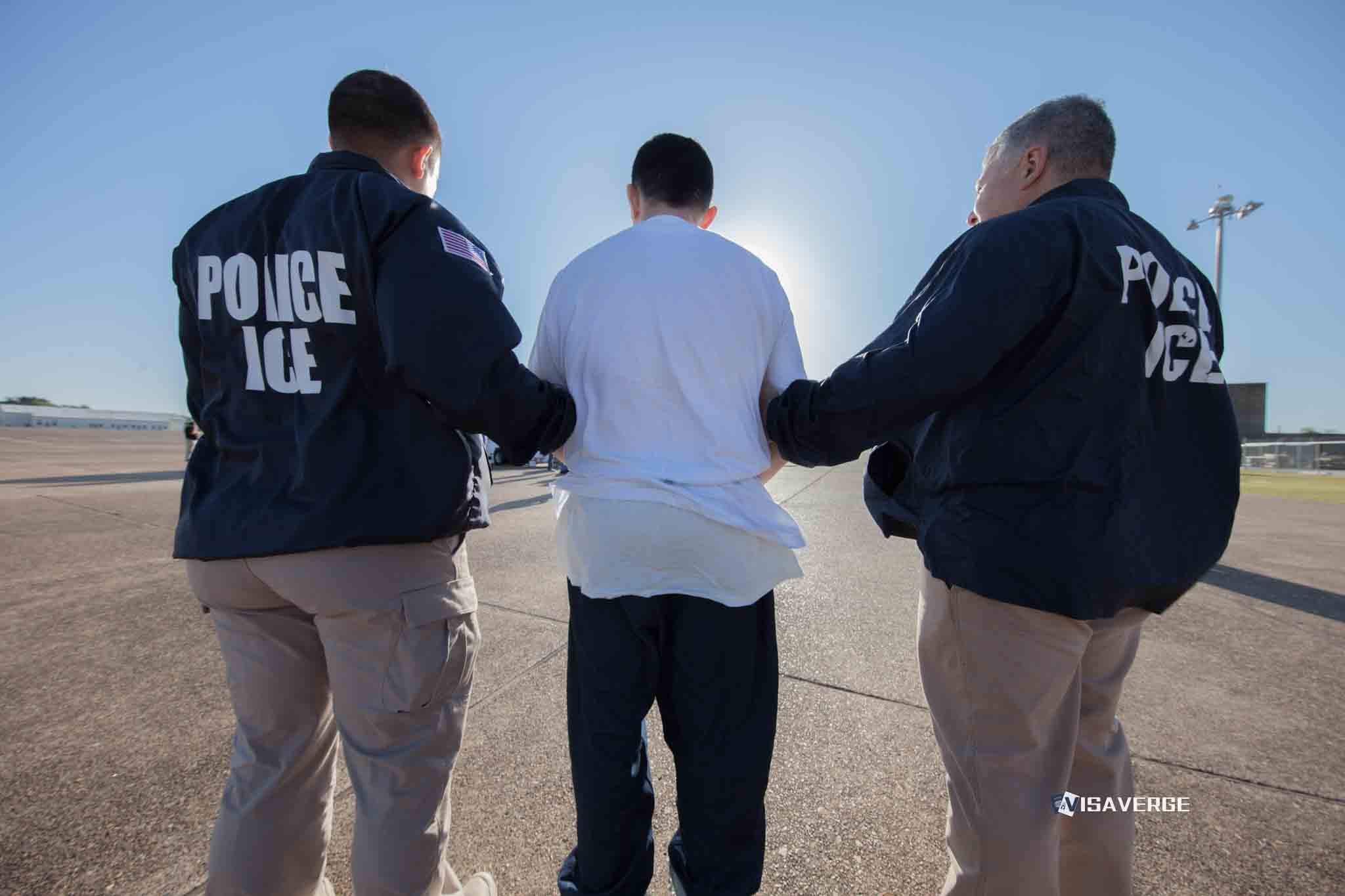
If ICE systems produce a match, ICE may decide to take action at an airport, sometimes in coordination with local field offices. That can occur even on domestic itineraries.
What can trigger extra scrutiny
- A possible match to a person with a prior removal order.
- A name and date-of-birth match that needs identity confirmation.
- An alleged identity discrepancy.
- A document issue, including lack of acceptable ID.
Common airport “choke points.” Encounters can happen at airline check-in counters, TSA checkpoint screening, the gate or jet bridge, baggage claim, and secondary questioning areas.
ConfirmID and the practical reality for travelers without acceptable ID
TSA has announced a ConfirmID process for travelers who do not present acceptable identification at checkpoints. TSA has stated it begins February 1, 2026, and includes a $45 fee.
From a rights perspective, the key point is practical. A traveler without acceptable ID may face added identity-resolution steps. Those steps can increase delay and may increase the chance of a database mismatch being noticed and escalated.
Deadline: TSA has stated that ConfirmID begins Feb. 1, 2026 and carries a $45 fee. If you may lack acceptable ID, plan early and expect added time.
What you can do in practice
- Bring the strongest identity documentation you have. Originals help.
- Arrive early to allow time for added verification.
- If you have a lawful status, carry evidence of it when appropriate. Examples include a green card, EAD, I-94, or approval notice.
- If your name changed, bring linking documents. Examples include a marriage certificate or court order.
3) Biometric tools and surveillance expansions (and where mistakes happen)
What biometric checks are
Biometrics include fingerprints and facial recognition used to confirm identity or link a person to an existing record. Agencies use biometrics for “identity resolution,” meaning they try to determine who someone is when documents are missing, inconsistent, or disputed.
In immigration enforcement, biometrics are often used to connect a person to prior immigration encounters, prior removals, or criminal history entries. Errors can occur when records are outdated, incomplete, or incorrectly linked.
What “Mobile Fortify” is described as doing
DHS reporting has described ICE’s Mobile Fortify as a smartphone-based tool that can query biometric databases using facial and fingerprint inputs during field encounters. Public reporting indicates it has been used over 100,000 times nationwide as of January 2026.
This matters at or near airports because an officer who is trying to “validate identity” may use biometrics to confirm whether a match is real.
Practical implications for travelers
- A false match can escalate quickly if biometrics are used to “confirm” an incorrect record.
- Old removal orders can resurface if they are tied to your identity.
- If you have multiple A-numbers, variant spellings, or prior encounters under a different name, mismatches are more likely.
If you have any history of immigration proceedings, ask an attorney to review your file before you travel. A FOIA request may also help identify what DHS systems show.
4) Enforcement statistics and geographic impact (why some airports see more activity)
DHS has reported large enforcement and departure totals since January 2025. Public reporting also distinguishes between formal deportations and voluntary departures. Those categories can reflect different legal processes and consequences.
Why airports can see heightened visibility. Airports are operationally efficient locations for enforcement activity because identity checks are routine, travelers are time-constrained, manifests and itinerary data create predictable patterns, and coordination can be centralized and repeatable.
Geographic impact. Some metros and airports may see more encounters due to local ICE field office priorities, concentrations of prior immigration cases in the region, and hub status, which increases connecting passengers and manifest volume.
Even if national numbers are large, your personal risk is usually driven by your own record. Prior removal orders, old in absentia orders, and unresolved identity issues often matter more than headlines.
Warning: If you have an old order of removal, even one you did not know about, domestic airport travel can carry serious risk. An attorney can assess whether a motion to reopen is possible before you travel.
5) Advocacy responses, warnings, and legal challenges (what’s alleged, and what could change)
Civil liberties groups and immigrant advocacy organizations have raised concerns about privacy and breadth of data sharing, due process and notice (especially with old removal orders), database errors and misidentification, and chilling effects on travel for mixed-status families.
It is important to distinguish between policy criticism and what is proven in court. Many disputes take years, and remedies can be partial.
The Illinois/Chicago lawsuit challenge (as reported)
A lawsuit filed January 12, 2026, by the State of Illinois and the City of Chicago challenges DHS’s interior use of biometric tools, including Mobile Fortify. The reported claims include constitutional privacy concerns and arguments that DHS exceeded statutory authority in certain contexts.
Possible outcomes in litigation can include injunctions limiting certain practices, court-ordered disclosures about how tools are used, and narrow rulings based on jurisdiction-specific facts.
Litigation timelines can be long. Policies can also shift during court proceedings, including via agency guidance.
6) Real-world impact at airports: how encounters happen, and what to do
Illustrative scenarios reported by advocates and media
Reported accounts have described a DACA recipient detained after clearing TSA, later released; a traveler deported based on an old removal order they reportedly did not know existed; and document checks on jet bridges at certain airports.
These examples do not prove a uniform practice at every airport. They do show how quickly a routine trip can turn into an enforcement event when identity and records collide.
What rights apply at domestic airports
Fourth Amendment: The Constitution prohibits unreasonable searches and seizures. TSA screening is generally treated as an administrative search for aviation security. ICE detentions, however, still must comply with constitutional limits.
Fifth Amendment: You have due process rights. Noncitizens in the United States generally have due process protections in removal-related proceedings.
Right to remain silent: You can usually refuse to answer questions about where you were born or your immigration status. You may state you want to remain silent.
Right to counsel (immigration context): In removal proceedings, you have the right to be represented by counsel at no government expense. See INA § 292. At an airport encounter, officers are not required to provide a free attorney, and questioning can happen fast.
ICE arrest authority: ICE often relies on INA § 287 for immigration officer powers and INA § 236 for detention authority. The legality of a particular stop can depend on facts and the circuit.
How to exercise your rights in practice
If approached by ICE or another officer in a non-TSA context, ask, “Am I free to leave?” If not free to leave, say, “I want to remain silent.” Ask, “Am I being detained? On what basis?” and ask to speak with a lawyer as soon as possible.
Do not present false documents or lie. That can create criminal exposure and immigration bars.
If you are an LPR, visa holder, or have a pending case: carry proof of your current status when traveling. If you have pending USCIS filings, carry key receipts, such as Form I‑797 receipt notices. If you have an immigration court case, carry your next hearing notice.
Common ways rights get waived or lost
- Consenting to a search beyond what is required. Consent can expand what officers can examine.
- Signing papers you do not understand. That can include stipulations or “voluntary departure” paperwork.
- Making casual admissions. Small statements can be used later as evidence.
- Assuming old orders do not matter. A prior order can be enforceable, even if you moved or never received notice.
What to do if you believe your rights were violated
Write down the time, place, and agency names. Keep badge numbers if possible. Preserve documents, boarding passes, and screenshots of itineraries. Ask witnesses for contact information. Seek legal advice quickly, especially if you were issued paperwork.
You may also consider filing a FOIA request for your records. DHS components each have FOIA processes. Submitting complaints through agency channels, including DHS oversight offices, may be appropriate in some cases.
For immigration status and case documentation, USCIS updates are here:
Where to find legal help
If you have any prior removal order, prior ICE contact, or a pending immigration case, consult a qualified immigration attorney before flying. That review can identify risks and options, including whether a motion to reopen may be viable.
This article provides general information about immigration law and is not legal advice. Immigration cases are highly fact-specific, and laws vary by jurisdiction. Consult a qualified immigration attorney for advice about your specific situation.