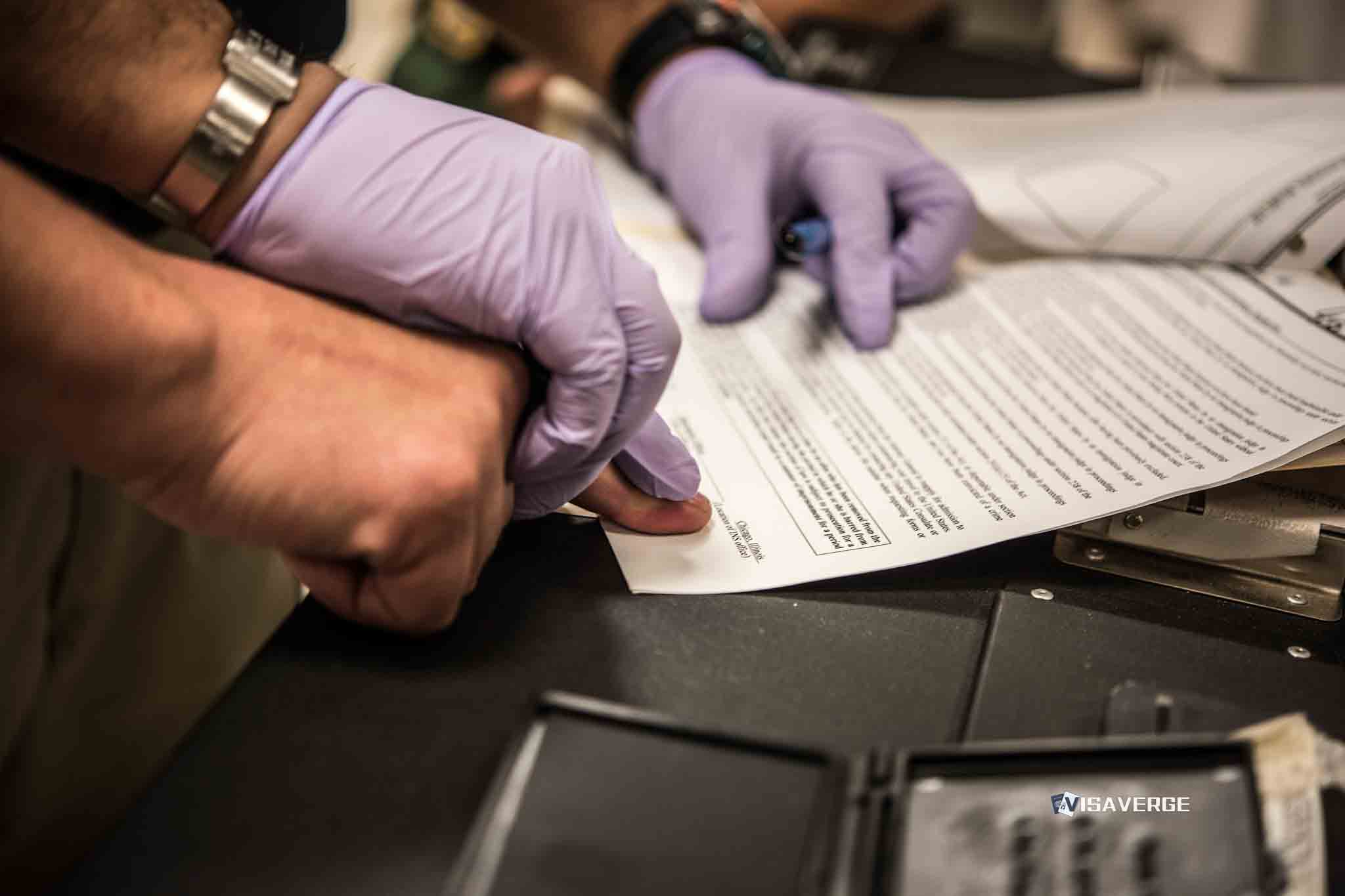
- Individuals have the right to refuse entry to ICE agents without a valid judicial warrant.
- You may exercise the right to silence and should decline signing any documents you do not understand.
- DHS and ICE have significantly increased detention capacity and staffing levels through early 2026.
The right: In the United States, people inside a home generally have the right to refuse entry to ICE unless agents have a valid judicial warrant or you give consent. Relatedly, you have the right to remain silent, and you can decline to sign documents you do not understand.
These rights matter more when DHS and ICE increase interior enforcement activity, because more encounters tend to happen at homes, workplaces, and during traffic stops.

This guide explains the legal basis, who has these rights, how to exercise them, and what to do if ICE or DHS actions violate them. It also summarizes major policy and enforcement developments reported as of Thursday, January 22, 2026, including under President Trump and DHS Secretary Kristi Noem, without predicting outcomes in any individual case.
1) Overview: DHS, ICE, and the Trump administration stance
DHS is the cabinet agency that oversees immigration enforcement and many immigration functions. ICE is the DHS component that conducts interior enforcement, detention, and removals.
USCIS is the DHS component that adjudicates immigration benefits.
| India | China | ROW | |
|---|---|---|---|
| EB-1 | Apr 01, 2023 ▲31d | Apr 01, 2023 ▲31d | Current |
| EB-2 | Jul 15, 2014 ▲303d | Sep 01, 2021 | Current |
| EB-3 | Nov 15, 2013 | Jun 15, 2021 ▲45d | Jun 01, 2024 ▲244d |
| F-1 | May 01, 2017 ▲174d | May 01, 2017 ▲174d | May 01, 2017 ▲174d |
| F-2A | Feb 01, 2024 | Feb 01, 2024 | Feb 01, 2024 |
Public messaging from DHS and ICE can shape what field offices prioritize. In practice, an “enforcement posture” may show up as more arrests and detentions, transfers between facilities, expedited processing of removal cases, workplace or home encounters, and issuance of charging documents.
At the same time, USCIS-facing processes are different from ICE operations. USCIS adjudicates benefits, but it can also initiate removal proceedings in some circumstances through Notices to Appear (NTAs).
DHS statements and press releases reflect the agency’s position. Third-party reporting may interpret or challenge those statements. Readers should separate verified official statements from allegations, leaks, or litigation claims.
For official updates, see the DHS newsroom and ICE’s enforcement pages.
2) Manpower, detentions, and enforcement scale (2025–2026)
“Scale” is not a slogan. Operationally, it usually means staffing, detention capacity, and throughput (how quickly people can be booked, transported, and processed).
Recent reporting and DHS/ICE announcements describe a sharp increase in staffing and detention levels through early January 2026. You should not assume that “capacity” equals a legal mandate to detain everyone.
Capacity is the ability to hold people, not a statute that eliminates constitutional limits or due process.
- More field teams can mean more home visits and workplace actions.
- Faster transfers may reduce time to contact family or counsel.
- Crowded facilities can affect custody decisions, access to phones, and case preparation.
- Triage decisions may happen, including which cases are prioritized for detention or removal.
Detention itself is governed by multiple legal authorities. Some people may be subject to mandatory detention under INA § 236(c).
Others may request a bond hearing under INA § 236(a), depending on status and criminal history. The BIA has long treated bond as a discretionary decision. See, e.g., Matter of Guerra, 24 I&N Dec. 37 (BIA 2006).
Warning: Higher detention numbers often mean faster timelines. If a loved one is detained, ask for the A-number, location, and a next hearing date immediately. Delays can make it harder to gather evidence.
3) Arrests, removals, and “non-criminal” cases: why definitions matter
A rights guide has to be precise with terms, because people often conflate very different events.
Arrest (ICE custody event): ICE takes a person into custody. That can occur at home, work, a courthouse, a check-in, or after jail transfer.
Removal (deportation): The U.S. carries out a formal deportation order. Removal typically follows either an immigration judge’s order in EOIR court, or a summary process authorized by statute, such as expedited removal in certain circumstances.
Self-departure / “self-deportation”: A person leaves on their own. This can happen after contact with DHS, after a removal order, or without any formal case. The legal consequences vary widely.
The label “criminal” also requires care. Public reporting often groups people as convicted, charged (but not convicted), or having no criminal record. Those categories are not the same.
A charge can be dismissed. A conviction can be vacated. Records can be incomplete. Those distinctions matter for custody arguments and discretionary relief.
Operations with public names often signal priorities and resourcing. They do not, by themselves, change constitutional limits. Even during a named operation, ICE generally still needs lawful authority to detain and must follow Fourth and Fifth Amendment rules.
4) Policy changes and legal questions (TPS, home-entry memo, and legal scrutiny)
TPS terminations: what “termination” changes
Temporary Protected Status (TPS) is authorized by INA § 244. When TPS for a country is terminated, it typically involves a future effective date (often called a wind-down period), publication of official guidance, and changes to employment authorization tied to TPS.
In the current reporting:
- TPS for Somalia is described as terminated effective March 17, 2026.
- TPS for Ethiopia is described as terminated as announced December 12, 2025.
People who relied on TPS often explore other pathways. These may include family petitions, employment options, asylum-related protection, or other humanitarian benefits.
Eligibility is highly fact-specific, including entry history and prior orders.
Deadline alert: If your TPS country designation is terminated, do not wait for the last week to act. Wind-down dates can affect work authorization and exposure to enforcement.
Official status updates are typically posted at USCIS TPS pages and in Federal Register notices.
Home-entry allegations and the Fourth Amendment
As of January 22, 2026, reporting described an alleged internal memo tied to use of Form I-205 (Warrant of Removal). DHS also issued public comments defending “administrative warrants” in immigration enforcement.
Here is the key legal framework at a high level:
- The Fourth Amendment generally protects against unreasonable searches and seizures.
- Entering a home is treated as especially sensitive under Fourth Amendment doctrine.
- In many contexts, law enforcement must have a judicial warrant to enter a home without consent, absent exigent circumstances. See Payton v. New York, 445 U.S. 573 (1980).
Immigration enforcement often uses administrative warrants (signed within the agency). An administrative warrant may support certain immigration actions, but it is not the same as a judge-signed warrant.
Disputes arise when administrative paperwork is presented as if it authorizes forced home entry.
If ICE comes to the door, the practical rights issue is usually consent. If you open the door and invite agents in, you may be consenting to entry. If you sign papers without understanding them, you may be waiving rights.
Warning: Do not rely on verbal claims like “we have a warrant.” Ask to see it. Check whether it is signed by a judge and lists the correct address.
Litigation, injunctions, and updated agency guidance are common ways these disputes are tested. Outcomes can vary by jurisdiction and the specific facts of the encounter.
5) Public sentiment and incident-driven concern among Trump swing voters
Public perception can move policy, but it is not proof of legality or illegality.
Recent reporting described a Minneapolis incident involving the death of Renee Macklin Good, reportedly during an ICE operation. Any such incident can increase community fear and scrutiny of tactics.
It can also prompt internal reviews and civil rights complaints. Facts can evolve as investigations proceed.
Reporting also referenced an NPR focus group of “Biden-to-Trump” voters in Pennsylvania, where 6 of 14 participants said ICE had “gone too far.” Focus groups are qualitative. They can show what people felt in that room, not what the public believes nationwide.
Even so, political pressure points tend to cluster around accountability for uses of force, proportionality in non-criminal cases, and whether enforcement claims match operational reality.
6) Impact on individuals and communities — and how to exercise your rights in practice
Who has these rights?
Everyone in the United States, including U.S. citizens, lawful permanent residents (LPRs), visa holders, asylum seekers, and undocumented people, has Fourth Amendment protections against unreasonable searches and seizures, and Fifth Amendment protections against compelled self-incrimination.
Noncitizens also have due process protections in removal proceedings. See INS v. Lopez-Mendoza, 468 U.S. 1032 (1984) (addressing suppression issues in removal proceedings).
Remedies in immigration court differ from criminal court, and suppression is not automatic.
How to exercise the “no home entry without a judge’s warrant” right
If ICE comes to your home:
- Stay calm and keep the door closed. You can speak through the door.
- Ask what agency they are with. Ask for names and badge numbers if possible.
- Ask to see the warrant. Request they hold it up to a window or slide it under the door.
- Check for a judge’s signature and your address. A judicial warrant is typically signed by a judge or magistrate.
- Say clearly: “I do not consent to entry.” Repeat it if needed. Consent is a major waiver issue.
- Do not run. Do not resist physically. You can assert rights without escalating the encounter.
Your right to remain silent
In many ICE encounters, people harm their cases by answering questions about where they were born, how they entered, whether they have papers, or whether they have an old order.
A safer approach is to state: “I am going to remain silent.” Then ask to speak to a lawyer.
Be especially careful about signing documents. Signing can convert uncertainty into a binding record. It can also be treated as acceptance of removal or waiver of a hearing, depending on the form and context.
Common ways people waive or lose protections
- Opening the door and stepping aside, which may be framed as consent.
- Letting agents “take a quick look” inside.
- Handing over foreign ID that confirms alienage.
- Signing forms in English you do not understand.
- Talking to officers to “clear things up.”
In detention, people may also miss deadlines. Immigration courts move quickly. Motions and appeals have strict time limits. EOIR resources are at EOIR immigration court.
What to do if your rights are violated
If you believe ICE violated your rights:
- Document immediately: date, time, location, names, badge numbers, car numbers, and witnesses.
- Save evidence: photos, doorbell video, phone video, and medical records.
- Do not post everything publicly first: public posts can be used against you.
- Contact counsel quickly: a lawyer can advise on suppression arguments, bond strategy, and complaints.
Possible avenues may include raising the issue in immigration court (fact-specific, remedies limited), a complaint to the DHS Office for Civil Rights and Civil Liberties (CRCL), or other oversight channels.
Family and community preparedness
Given reports of increased detention and faster processing, preparedness can reduce harm:
- Identify an emergency caregiver for children.
- Keep key documents in one safe place.
- Memorize at least one phone number.
- Avoid carrying false documents.
Reports also described increased fear and reduced mobility. Community members may hesitate to report crimes. Victims of crime may have options, including U visas in some cases, but eligibility requires careful screening.
Legal help and official resources
– AILA Lawyer Referral: aila.org/find-a-lawyer
– USCIS newsroom and alerts: uscis.gov/newsroom/news-releases
– EOIR Immigration Court information: justice.gov/eoir
⚖️ Legal Disclaimer: This article provides general information about immigration law and is not legal advice. Immigration cases are highly fact-specific, and laws vary by jurisdiction. Consult a qualified immigration attorney for advice about your specific situation.