- Two ICE chartered flights used Shannon Airport for refueling while transporting detainees to Israel.
- Irish politicians are demanding accountability regarding technical refueling stops and international law concerns.
- Detainees reported prolonged physical restraint during the 20-hour journey before being left at checkpoints.
Two long-haul ICE chartered removal flights used Shannon Airport as a refueling stop on the way to Tel Aviv, triggering a political firestorm in Ireland and fresh questions about routing, accountability, and cross-border removal practices.
The two U.S. deportation flights to Israel were tracked as operating on a multi-stop itinerary that linked a U.S. removal hub with Europe before landing at Ben Gurion Airport, Tel Aviv. Each trip relied on a “technical” or “non-traffic” stop at Shannon Airport in County Clare, Ireland, meaning the aircraft refueled without taking on commercial passengers or cargo.
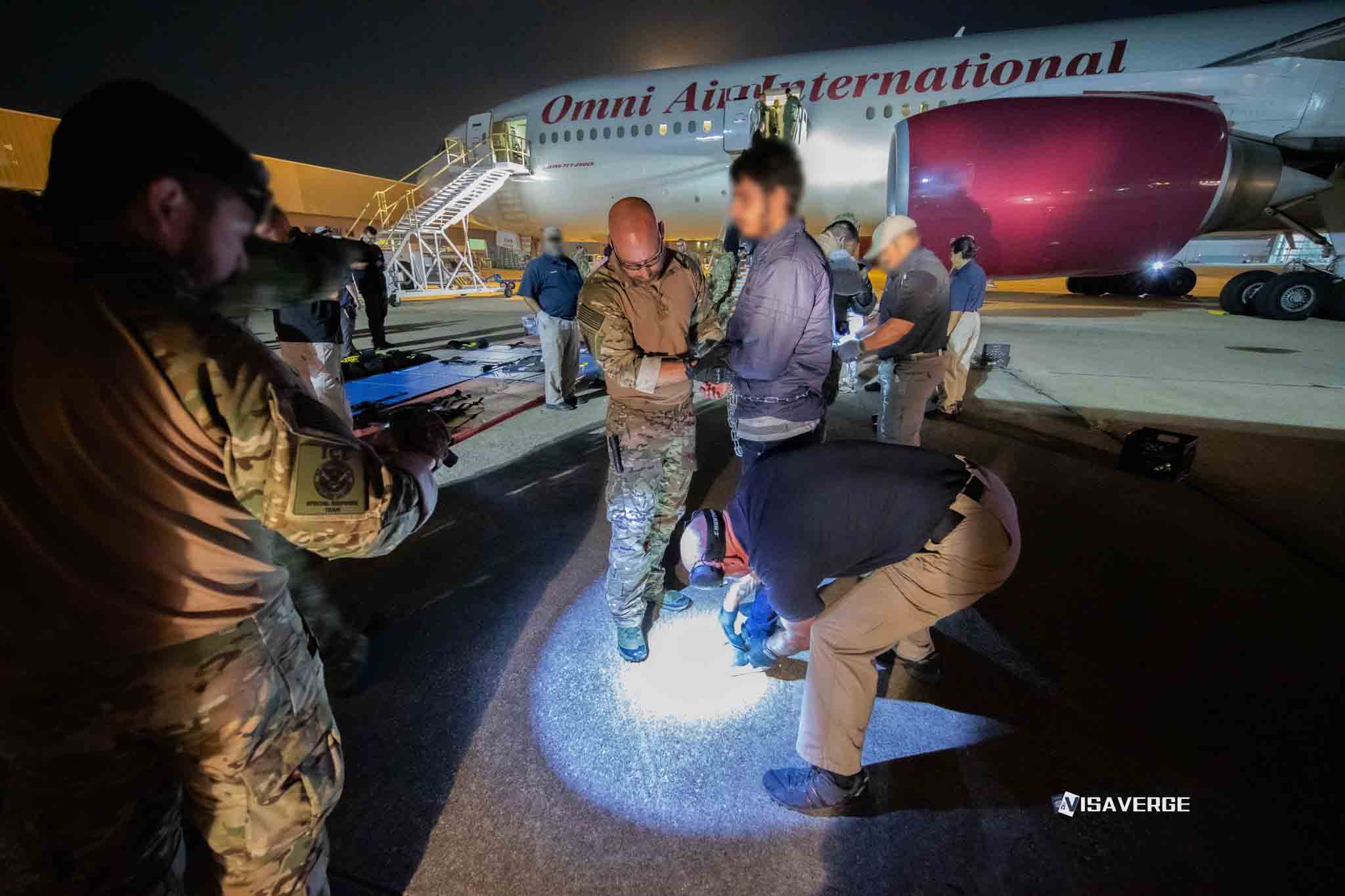
Shannon’s role has drawn scrutiny because the flights were not scheduled airline services. They were charter operations tied to Immigration and Customs Enforcement (ICE), using a private jet and a chain of contracting relationships that can make oversight harder than for commercial carriers.
Irish politicians demanded answers about how such refueling stops are treated under Irish practice, and whether Ireland should allow any transit linked to removals into the Israeli-occupied West Bank. Media reports and parliamentary questions intensified after passengers described restraints and transfer conditions following arrival.
U.S. officials, meanwhile, addressed removals at the policy level while avoiding flight-by-flight confirmation. That split has become a central feature of the debate, as critics focus on the route and Ireland’s permissions, while U.S. agencies cite enforcement priorities.
Duncan Smith, foreign affairs spokesperson for the Irish Labour Party, called the use of Shannon Airport “reprehensible” on February 6, 2026. “It is absolutely reprehensible that any ICE deportation flights would be allowed stop and refuel in Shannon,” Smith said.
Roderic O’Gorman of the Green Party described the reports as “deeply disturbing,” as Irish parties pressed the government to clarify what it allows at Shannon. Patricia Stephenson of the Social Democrats said the flights may raise international law and human rights concerns.
DHS and the Department of State issued short public responses during February 5-6, 2026, offering broad framing rather than confirming operational detail. The gap left campaigners and lawmakers focusing on observable aviation data, like tail numbers and routings, alongside reported accounts from those removed.
A Department of Homeland Security spokesperson said: “If a judge finds an illegal alien has no right to be in this country, we are going to remove them. Period.” The statement was reported by The Guardian and The Irish Times.
A Department of State spokesperson said: “Per longstanding Department policy, we do not discuss the content of private diplomatic and interagency conversations.” The spokesperson added that the administration prioritized rapid deportations, particularly for people with criminal records, in a statement reported by The Independent.
Those lines illustrate how official messaging often works in removal cases. Agencies may speak in general terms about enforcement, while avoiding confirmation of routing, security arrangements, or diplomatic coordination tied to individual flights.
⚠️ Important: Readers should distinguish between confirmed facts (aircraft, routes, dates) and reported/uncorroborated details (logistics, internal discussions, or diplomatic coordination)
Flight tracking and reporting identified two separate long-haul charters with the same basic route structure. Both were described as originating from a removal hub in Phoenix, Arizona, then operating via Teterboro, New Jersey, before crossing the Atlantic to Shannon Airport, then continuing to Sofia, Bulgaria, and onward to Ben Gurion Airport, Tel Aviv.
Aviation observers say such staging can reflect range limits, crew planning, and operational preferences for predictable handling and refueling. Technical stops also reduce time on the ground at the final destination, where security coordination can be tight.
The flight dates were January 21, 2026 and February 1, 2026, reported as arrivals in Tel Aviv. Each date refers to a separate removal operation, not a single multi-day itinerary, though the journey itself was described as long.
| Leg | Origin | Stop | Destination | Notes |
|---|---|---|---|---|
| 1 | Phoenix, Arizona | — | Teterboro, New Jersey | Reported departure from removal hub to U.S. staging point |
| 2 | Teterboro, New Jersey | — | Shannon Airport | Refueling stop in County Clare, Ireland; technical/non-traffic stop described |
| 3 | Shannon Airport | — | Sofia, Bulgaria | Reported refueling and onward staging before Israel |
| 4 | Sofia, Bulgaria | — | Ben Gurion Airport, Tel Aviv | Reported arrival leg into Israel |
Both flights were linked to a Gulfstream IV jet, registration N352BH, a detail that matters because tail numbers allow public tracking across borders. The aircraft was reported as owned by Gil Dezer and chartered by ICE via Journey Aviation, placing multiple parties between the government and the plane’s operation.
In charter chains, the owner is not always the operator, and a broker may arrange service on behalf of a contracting agency. That structure can complicate transparency compared with a scheduled airline, where the brand selling tickets usually matches the operator and regulatory footprint.
For opponents of the flights, Shannon Airport’s role raises a different accountability question. Even if Ireland treats a refueling stop as non-traffic activity, critics argue that repeated technical stops can still amount to practical assistance for removals.
Cost estimates cited by aviation experts placed each flight in a high six-figure band, though such ranges can only suggest scale rather than prove a specific bill. Pricing for long-haul charters can rise with aircraft type, crew duty limits, handling fees, overflight permissions, and repositioning legs needed to place an aircraft in Phoenix, Arizona, or to retrieve it afterward.
Security requirements and ground logistics can also affect total cost, especially for movements tied to removals. Even when a charter price is reported, it may not capture every related expense, and procurement details may be spread across contracts and vendors.
Irish critics have used cost as a proxy for asking who approved the flights and what rules applied during a stop in Ireland. Oversight questions often focus on whether public authorities can confirm permissions while still respecting privacy and diplomatic sensitivities.
Reports also pointed to coordination among ICE, the Department of State, and Israeli security authorities. In many cases, removals that end in a receiving country require identity checks, travel documentation, and security planning that do not appear in public statements.
Operational coordination typically looks different from public-facing policy language. One sets the enforcement message, while the other arranges the practical steps that allow an aircraft to land, refuel, and transfer people across jurisdictions.
Transit-country rules become central when refueling stops are used. Ireland’s reported rule-of-thumb is that technical (non-traffic) stops may be treated differently from passenger or cargo operations, a distinction that can carry real political weight when the passengers are detainees on a removal flight.
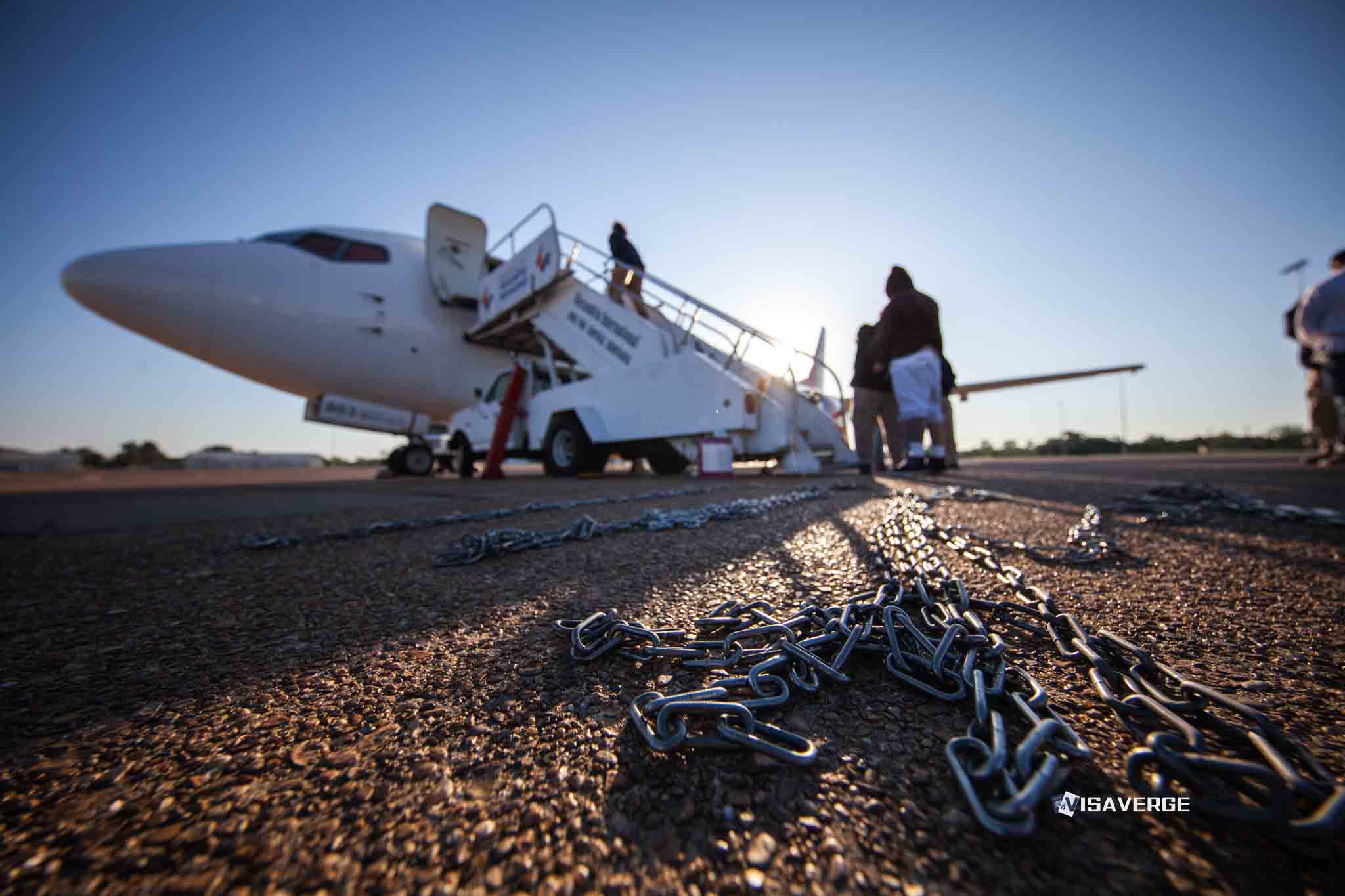
Accounts of the human impact focused on long-duration restraints and transfers after arrival. Maher Awad was among individuals identified in reporting by The Guardian and +972 Magazine, which described detainees shackled by wrists and ankles for the duration of an approximately 20-hour journey.
Awad said he was forced to wear a body restraint that made eating difficult, according to the reports. Health and safety concerns often rise on long flights because prolonged restraint can increase risks tied to circulation, dehydration, and stress, although conditions can vary case by case.
After landing at Ben Gurion Airport, Tel Aviv, the men were reported to have been transferred to Israeli security vehicles and left at military checkpoints, including the Ni’lin checkpoint. Reports described them wearing gray ICE-issued tracksuits and carrying belongings in plastic bags.
Family separation was another flashpoint. Some deportees were described as long-term U.S. residents, including former green card holders, with American-citizen spouses and children, and Awad was reported to have a four-month-old son in Michigan he had never met.
In many cases, families try to confirm a person’s location, request records, and seek legal counsel in the relevant jurisdiction, though options depend on immigration status history and pending proceedings. Advocacy groups also often track transfer points and detention handoffs, especially when removals involve multiple countries.
Official information about removals and enforcement priorities is typically published through agency newsroom channels, including the U.S. Department of Homeland Security (DHS) and ICE. Public-facing updates may describe general policy, while avoiding operational specifics tied to individual removals.
Irish guidance relevant to technical stops is generally associated with transport and aviation oversight, and Ireland’s Department of Transport has been cited in reporting around flight permissions. The key point repeated in coverage is that technical, non-traffic stops may not require prior authorization under current Irish practice, even as political leaders ask whether that approach should change.
For readers trying to separate policy from operations, it can help to treat three categories differently: verifiable aviation facts like routes and tail numbers, official statements about enforcement priorities, and reported accounts of conditions that may require further corroboration.
✅ What readers should monitor: official DHS/ICE statements, Irish transport guidance on technical stops, and any parliamentary inquiries or ministerial statements
This article discusses politically sensitive removal operations and involves legal and policy implications. Readers should not substitute this reporting for legal advice.
Official statements may not disclose operational details; treat unverified claims as reported rather than confirmed.