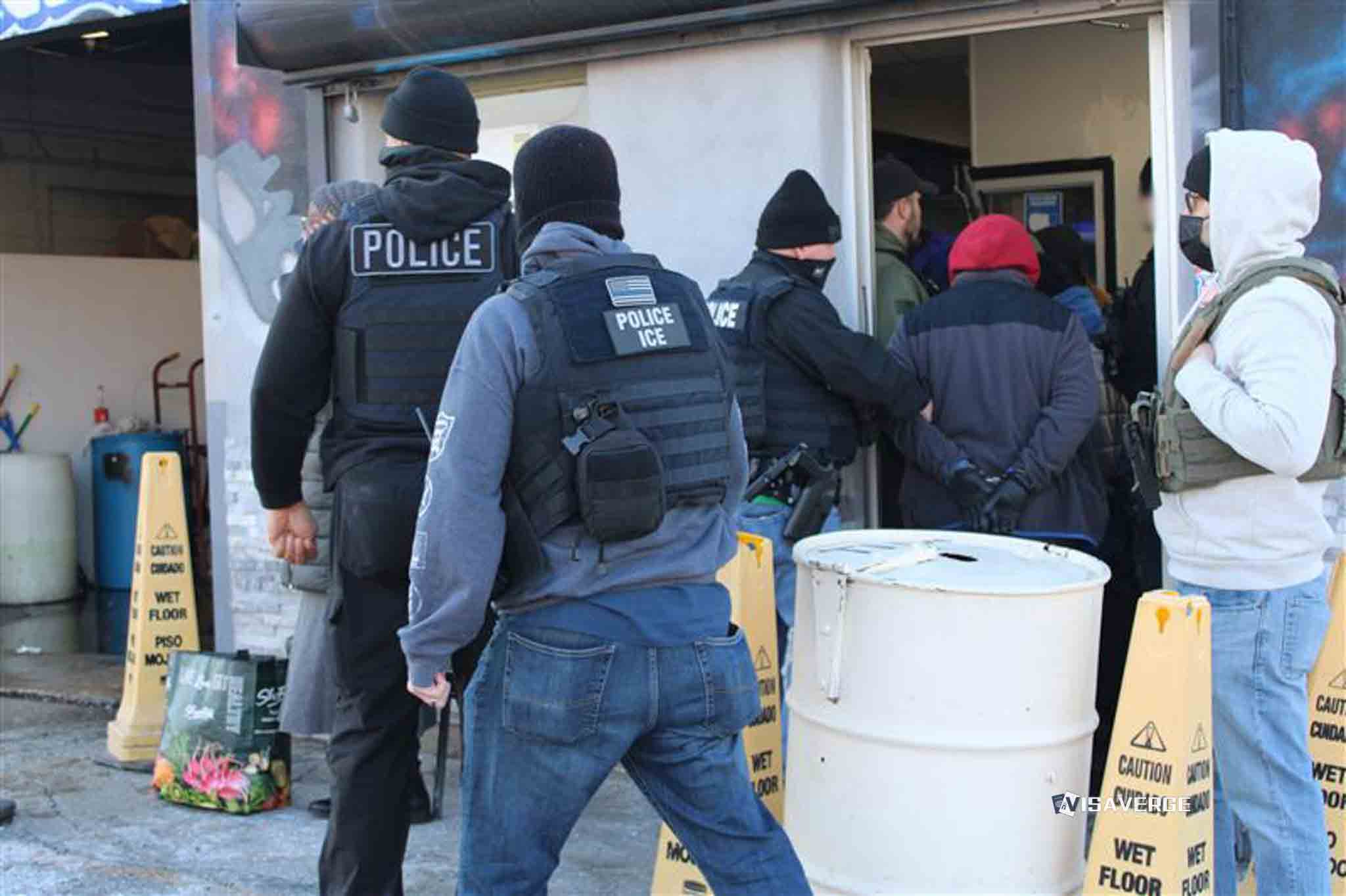
- Several states are passing laws to limit local law enforcement cooperation with federal immigration authorities.
- The Trump administration is threatening litigation and funding cuts against jurisdictions with sanctuary policies.
- Legal battles focus on the Tenth Amendment’s anti-commandeering doctrine regarding state assistance in federal enforcement.
(UNITED STATES) — A growing wave of state measures to limit local cooperation with federal immigration enforcement is setting up a new round of legal conflict with the Trump administration’s “anti-sanctuary” agenda, as DHS and DOJ press local agencies to assist with immigration arrests or face political and legal consequences.
The flashpoint is not whether the federal government can enforce immigration law. It can, primarily through DHS agencies including ICE and CBP.
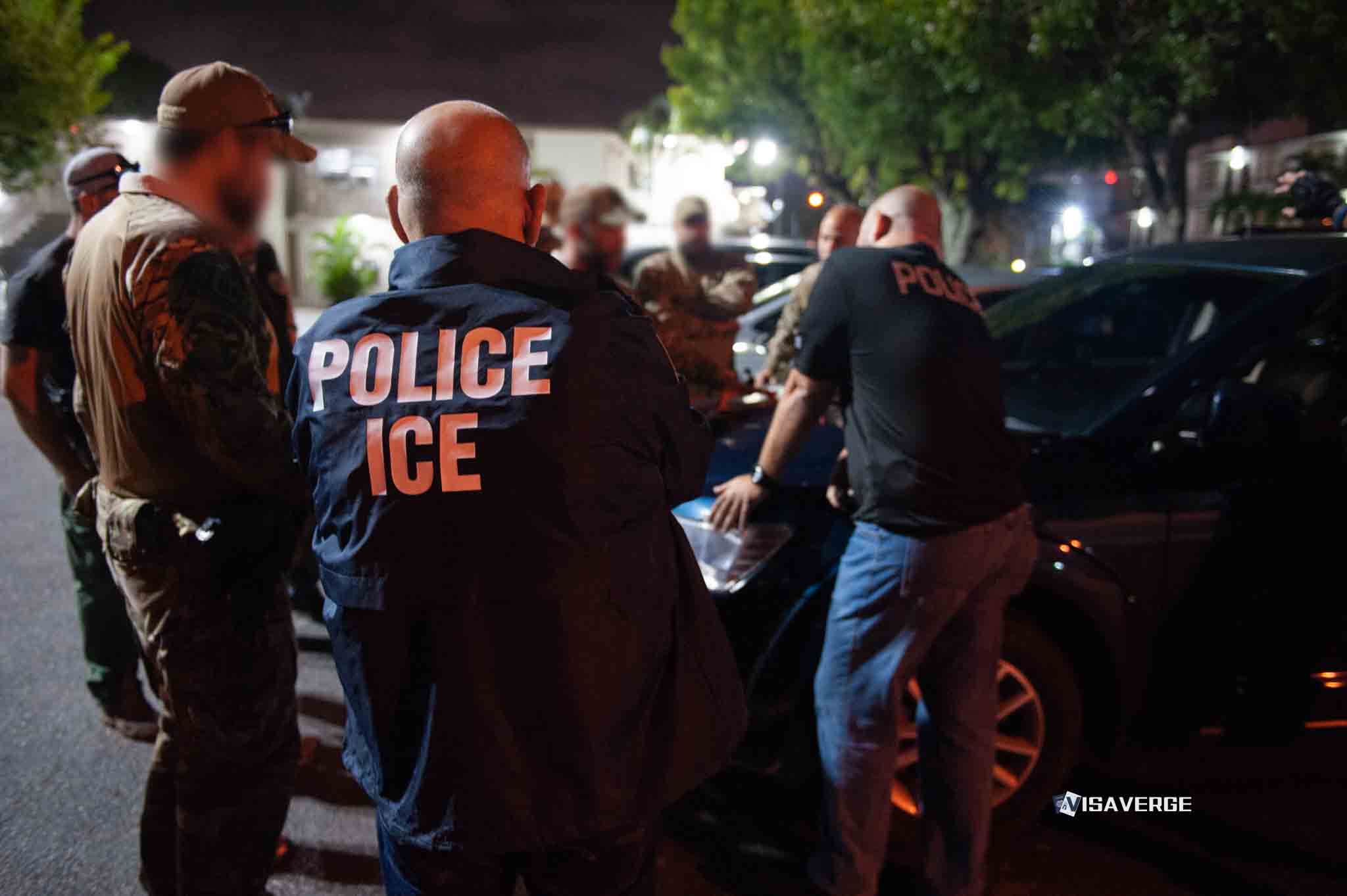
The dispute is whether states and localities must help. In practice, “local cooperation” can mean several different things.
A jail may honor an ICE detainer request to hold someone past their release time. A sheriff’s office may provide release notifications so ICE can make an arrest at the jail door.
Some jurisdictions enter 287(g) agreements that allow local officers to perform certain immigration functions under ICE supervision. Others share information, rent jail beds, or allow interviews in local facilities.
States restricting these mechanisms say they are managing local resources and community trust. DHS and DOJ argue non-cooperation harms public safety and officer safety, and they have signaled litigation and funding pressure.
This matters for residents and local agencies because policy swings can change booking practices, record-sharing, and arrest patterns quickly. For immigrants, the stakes include heightened arrest risk, family separation, and complications for people with pending benefits.
Federal posture: messaging, litigation, and agency roles
DHS has framed non-cooperation as a driver of risk to federal officers. On February 3, 2026, DHS Assistant Secretary Tricia McLaughlin said, “Sanctuary politicians…encouraging illegal aliens to evade arrest have incited violence against law enforcement,” and added DHS had “seen more than 180 vehicle attacks” since President Trump took office.
She also argued that “ICE law enforcement wouldn’t have to be in the field in New York if we had state and local cooperation,” according to DHS public statements. Readers should treat these as federal messaging and safety claims, not court findings.
DOJ has paired the public-safety framing with litigation threats. Attorney General Pamela Bondi said on August 5, 2025, that “Sanctuary policies impede law enforcement,” and that DOJ “will continue bringing litigation against sanctuary jurisdictions,” according to DOJ statements.
Historically, DOJ legal theories in these fights often include federal preemption arguments and challenges to policies DOJ says obstruct federal enforcement. Outcomes can vary by jurisdiction and the policy’s wording.
USCIS, which primarily adjudicates benefits rather than conducting street enforcement, has also entered the narrative. In a February 3, 2026 news release, USCIS highlighted a case involving the “apprehension of an MS-13 gang member” in Virginia and linked it to later changes in state cooperation with ICE.
That kind of messaging can be influential, but it does not convert USCIS into an enforcement agency. It also does not alter the legal standards for benefits adjudications under the Immigration and Nationality Act (INA) and related regulations.
Official sources: DOJ releases appear at justice.gov. USCIS releases are at USCIS News Releases.
Warning: A local “non-cooperation” rule can still allow some information-sharing. Labels like “sanctuary” often hide important legal differences.
State actions reshaping the ground rules (2025–2026)
Several states are moving beyond city-level sanctuary policies into statewide restrictions.
Maryland
In early February 2026, both chambers reportedly passed legislation barring local law enforcement from facilitating federal immigration arrests.
The practical effect could include limits on jail handoffs and assistance during ICE operations. The bill would also require termination of existing 287(g) relationships for nine sheriff’s offices, according to the reported summary.
New York
In January 2026, Gov. Kathy Hochul proposed the “Local Cops, Local Crimes Act.” As described publicly, it would bar local governments from entering 287(g) agreements or renting jail space to ICE until July 2029.
If enacted, that would significantly narrow formal partnerships even where counties want them.
Virginia
After taking office in early 2026, Gov. Abigail Spanberger issued an order ending the state’s formal cooperation with ICE.
Executive actions like this often operate through agency directives, MOUs, and jail policy changes. Implementation details can differ across counties.
Minnesota
Minnesota illustrates how disputes can center on definitions. Minnesota’s Department of Corrections launched a “Combatting DHS Misinformation” website on January 22, 2026.
It asserted state prisons do notify ICE of releases, despite federal claims. In practice, a “clarification” like this can matter. Notifications can enable arrests at release. They are different from detainers or holds.
Other states, including New Mexico and Hawaii, have considered similar limits during 2026 sessions. Longstanding non-cooperation states like California and Oregon continue to adjust their frameworks.
The mechanics: 287(g), funding pressure, and surge operations
The 287(g) program, authorized by INA § 287(g), allows ICE to sign a Memorandum of Agreement (MOA) with a law enforcement agency. MOAs typically define supervision, training, data access, and permitted activities.
ICE describes three common models: jail enforcement, task force, and warrant service officer. As of February 3, 2026, ICE reported 1,381 MOAs in 40 states, according to ICE program information.
Federal funding threats are also back in focus. President Trump threatened to cut off federal funds to sanctuary jurisdictions beginning February 1, 2026, according to the policy alert summary.
Funding conditions can trigger major litigation. Courts often examine whether conditions are clearly stated by Congress and tied to the purpose of the funding. Many disputes also raise Tenth Amendment limits.
DHS has also emphasized “surge” enforcement operations. Reported figures include “Operation Metro Surge” in Minneapolis reaching 3,000 arrests by mid-January 2026, and “Operation Angel’s Honor” yielding 1,030 arrests nationwide in late 2025.
Surges can increase collateral arrests, workplace disruption, and family separations. They can also strain local detention capacity and local court dockets.
DHS has cited officer-safety data in these debates, including a reported “3,300% increase” in vehicular attacks and a figure of 68 attacks between January 2025 and January 2026. Those figures can shape policy. They also depend on how incidents are defined and counted.
Deadline: Funding-related directives can move fast. Local policy changes may take effect on short notice after a bill is signed or an order is issued.
Why the legal conflict is intensifying: federalism and “anti-commandeering”
At the center is a basic constitutional principle. Under the Tenth Amendment, the federal government generally cannot force states to administer federal regulatory programs. This is often called the anti-commandeering doctrine.
States rely on it to argue they can decline to provide personnel, jail space, or operational help for federal civil immigration enforcement.
The federal government’s counter-arguments often focus on preemption and on the practical consequences of non-cooperation. The administration has also used formal “sanctuary jurisdiction” designations to apply pressure.
Executive Order 14287, signed April 28, 2025, directs publication of a sanctuary list and encourages litigation against listed jurisdictions, according to DOJ materials at https://www.justice.gov/opa/pr/justice-department-publishes-list-sanctuary-jurisdictions.
Warning: Even where local agencies refuse detainers, ICE may still arrest people in public areas. Arrest authority does not depend on local consent.
What this means for individuals, families, and pending cases
For immigrants, the immediate impact is uncertainty. Increased enforcement activity can affect people with lawful status, people with pending applications, and mixed-status families.
Arrests can also complicate bond eligibility and relief options in immigration court, including asylum under INA § 208, withholding under INA § 241(b)(3), CAT protection, or cancellation of removal under INA § 240A.
USCIS processing issues can matter too, even though USCIS is not ICE. Reports describe a USCIS “pause” on reviews for applicants from 39 countries as of January 2, 2026. Delays can affect work authorization, travel plans, and maintaining status.
People traveling while an application is pending should be careful. Some departures can be treated as abandoning an application, depending on the form and category.
Communities are responding with monitoring efforts. New York’s “Legal Observer Teams,” described as wearing purple vests, are intended to document operations and watch for compliance.
Observers typically cannot block enforcement. Documentation can still be valuable for later legal challenges.
Finally, “safe zones” around schools and hospitals are being promoted in some states and cities. These policies are often contested and may be agency guidance rather than enforceable rights.
Boundaries and exceptions can be unclear during fast-moving operations.
Practical step: If you or a family member could be targeted, ask a qualified immigration attorney to review detainer exposure, prior arrests, and any pending filings before an enforcement encounter occurs.
Resources (official and legal help)
- USCIS News Releases
- DOJ OPA (sanctuary list)
- AILA Lawyer Referral
Legal Disclaimer: This article provides general information about immigration law and is not legal advice. Immigration cases are highly fact-specific, and laws vary by jurisdiction.
Consult a qualified immigration attorney for advice about your specific situation.