- Federal ‘Protected Areas’ policies are discretionary guidance, not enforceable rights for immigrants in removal proceedings.
- Oregon’s SB 1570 seeks to require judicial warrants for immigration enforcement in non-public hospital areas.
- Healthier Oregon enrollment dropped by 10,000 participants amid rising fears of immigration enforcement near clinics.
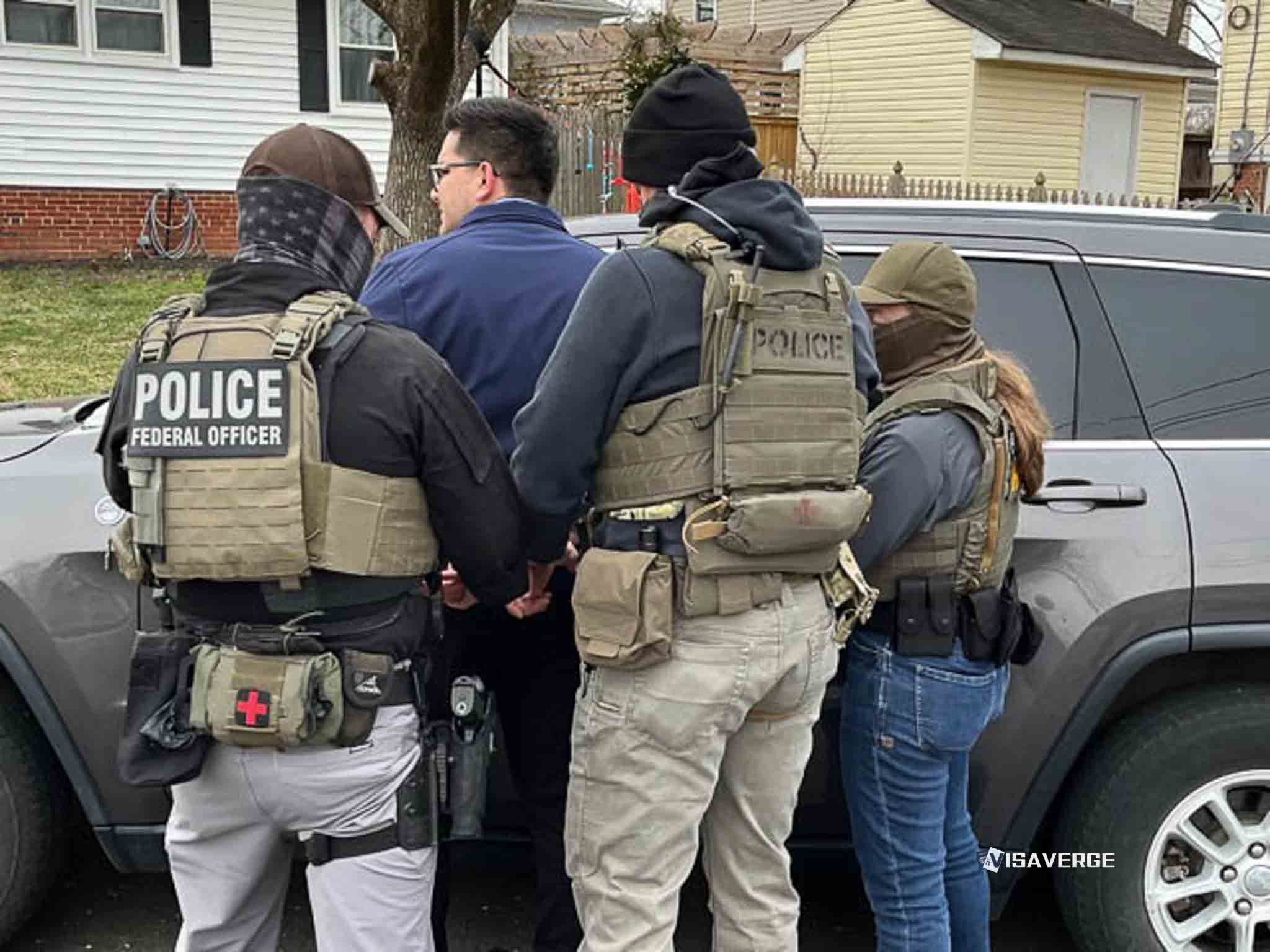
(OREGON) — A key lesson for patients and providers watching today’s headlines about immigration enforcement near hospitals is that federal “Protected Areas” policies are usually guidance, not enforceable rights, and immigration-court remedies generally require a constitutional or regulatory violation with actual prejudice. That principle is at the center of Matter of Garcia-Flores, 17 I&N Dec. 325 (BIA 1980), a Board of Immigration Appeals (BIA) decision that continues to shape how judges evaluate claims that ICE’s conduct—at or near healthcare settings—should affect removal proceedings.
The practical impact is immediate in Oregon. Even if a patient or family credibly reports enforcement activity at a clinic or hospital, immigration judges typically will not “throw out” a case merely because officers did not follow discretionary location guidance.
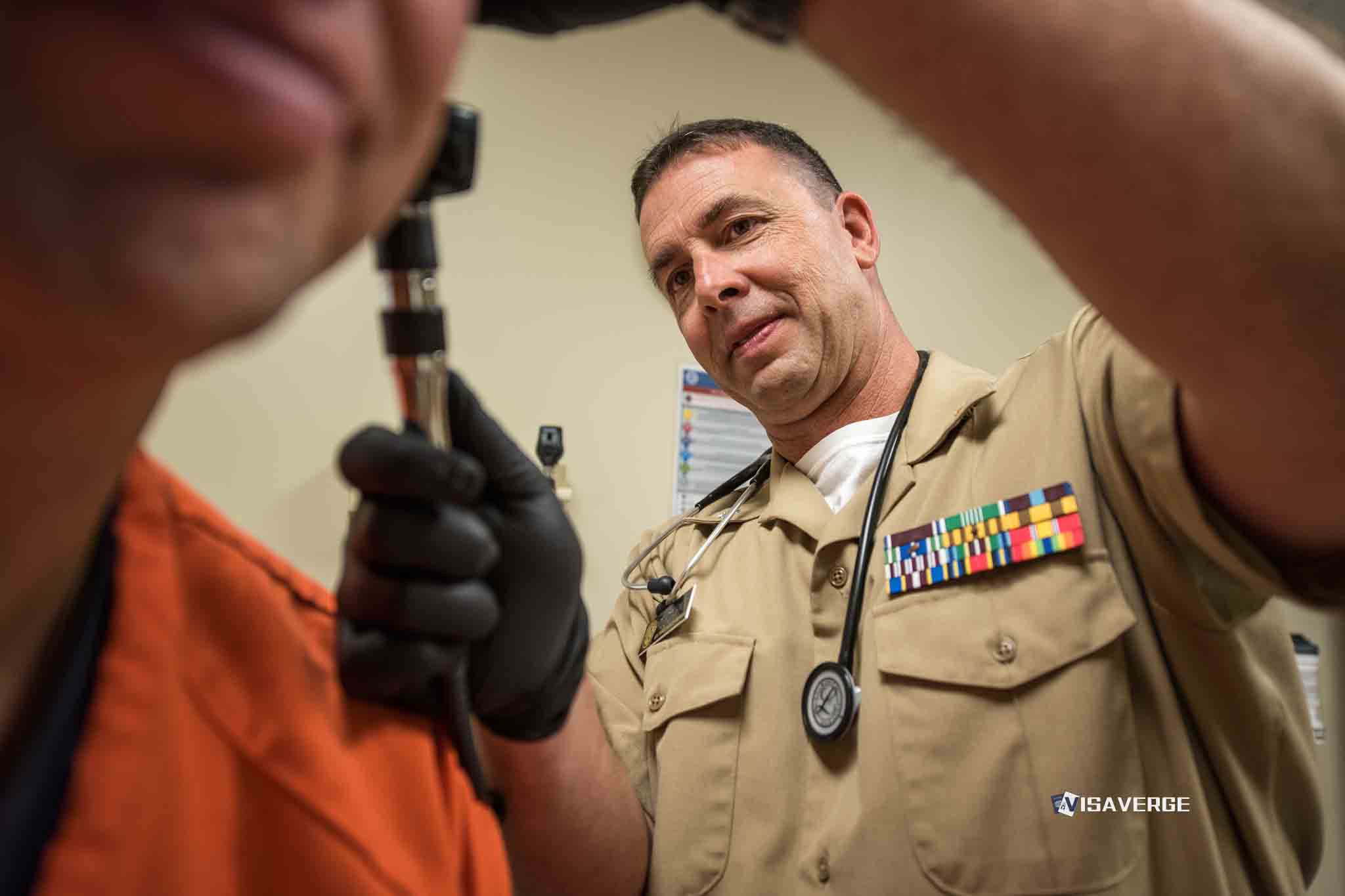
Instead, the analysis usually turns on whether the conduct crossed constitutional lines (for example, an egregious Fourth Amendment violation) or violated binding regulations in a way that harmed protected interests.
1. Overview: immigration enforcement and healthcare in Oregon (as of February 1, 2026)
“Enforcement near healthcare” refers to immigration arrests, interviews, surveillance, or other ICE activity in or around places where people seek medical care. That can include hospitals, primary-care clinics, urgent care centers, community health centers, and mobile clinics.
Oregon is in focus because state leaders have paired broad coverage efforts with a public-health message: people should seek timely care without fear. When enforcement activity is perceived as close to medical facilities, patients may delay care.
| India | China | ROW | |
|---|---|---|---|
| EB-1 | Apr 01, 2023 ▲31d | Apr 01, 2023 ▲31d | Current |
| EB-2 | Jul 15, 2014 ▲303d | Sep 01, 2021 | Current |
| EB-3 | Nov 15, 2013 | Jun 15, 2021 ▲45d | Jun 01, 2024 ▲244d |
| F-1 | May 01, 2017 ▲174d | May 01, 2017 ▲174d | May 01, 2017 ▲174d |
| F-2A | Feb 01, 2024 | Feb 01, 2024 | Feb 01, 2024 |
Providers may also face uncertainty about what they can lawfully do when federal officers appear. It is important to separate federal enforcement discretion from binding legal requirements.
Discretionary guidance can influence how officers act, but it generally does not create a private right enforceable in court. Binding requirements come from statutes, regulations, and the Constitution.
2. Official statements and policy shifts from DHS/USCIS/ICE
Federal posture matters because it shapes how field offices assess arrests near healthcare. But public statements and memoranda can function as operational direction, not necessarily as law.
The “Protected Areas” framework shifted from bright-line limits toward case-by-case decision-making.
- January 20, 2025: Acting Secretary Benjamine C. Huffman rescinded the 2021 “Protected Areas” guidelines and emphasized officer discretion and “common sense.”
- January 21, 2025: A DHS spokesperson stated the administration would not “tie the hands” of law enforcement.
- January 31, 2025: Acting ICE Director Caleb Vitello issued a memorandum titled “Common Sense Enforcement Actions in or Near Protected Areas,” directing local AFODs to make case-by-case determinations.
- January 27, 2026: Assistant Secretary Tricia McLaughlin defended enforcement tactics amid state criticism.
Operationally, “enforcement discretion” means immigration officers and their supervisors decide, case-by-case, whether to initiate or proceed with an action, when to do it, and where to do it. Discretion can be influenced by priorities, safety concerns, and resource limits.
It does not guarantee that enforcement will not occur at a hospital. Statements matter because they may affect what field offices treat as “presumptively avoided” areas, what approvals are required, and how supervisors document decisions.
They also influence risk assessments by patients and providers, even when legal authority is unchanged.
A rollback of “Protected Areas” style guidance can increase uncertainty. It does not eliminate constitutional protections, but it may reduce practical buffers that once lowered the chance of enforcement at healthcare sites.
3. Key facts and policy details in Oregon
Oregon’s response combines proposed legislation, executive coordination, and privacy concerns. Several specific developments are notable.
SB 1570 (Healthcare Without Fear Act). Oregon lawmakers and the Oregon Nurses Association introduced SB 1570 on January 30, 2026. At a high level, the bill seeks to require hospitals to designate non-public care areas where immigration enforcement is restricted unless agents present a judicial warrant.
Procedurally, readers should confirm whether SB 1570 is still introduced, amended, or enacted, because those details control what obligations hospitals actually have.
Governor’s executive order and interagency coordination. On January 31, 2026, Governor Tina Kotek signed an executive order establishing the Interagency Council for Immigrant and Refugee Coordination. Coordination across health agencies, licensing bodies, and consumer-protection offices can change provider guidance.
It can also standardize training on when to request a warrant and how to respond to officer requests.
Medicaid data access ruling (December 2025). The reported federal court ruling allowing ICE access to state Medicaid data raises privacy and chilling-effect concerns.
Even when data sharing is lawful under federal rules, the perception of exposure may deter enrollment or updates to addresses. From a legal perspective, data governance disputes are distinct from a person’s removability, but they can shape enforcement leads.
Reported incidents and how to evaluate them. Notable enforcement incidents include activity near a hospital parking lot and an arrest tied to an emergency-room visit.
Readers should evaluate such reports by checking date, location, agency identification, and whether there is corroboration from official statements or court filings. Small factual differences can change the legal analysis.
4. Context and significance: chilling effect and Healthier Oregon
A “chilling effect” in healthcare means people delay or avoid medical care due to fear. Public health consequences can include untreated infections, missed vaccinations, unmanaged chronic conditions, and avoidable emergency care.
Oregon’s Healthier Oregon program is a coverage pathway described as providing Medicaid-like coverage regardless of immigration status. When perceived enforcement risk rises, enrollment and care-seeking may fall even among eligible participants.
At the same time, state coverage goals do not eliminate federal authority. ICE’s statutory arrest authority generally comes from INA § 287 (8 U.S.C. § 1357), and related regulations include 8 C.F.R. § 287.8 (standards for enforcement activities).
States can set facility policies for access to non-public areas, but they cannot bar federal enforcement in public spaces or prevent lawful federal investigations.
The facility restriction concept can be summarized as: “Immigration enforcement is restricted unless agents present a judicial warrant.” How that rule applies can depend on what counts as “non-public” space, and whether hospital staff can verify the warrant without delaying emergency care.
Patients should not skip urgent or emergency care due to fear of enforcement. In emergencies, call 911 or go to the nearest ER.
5. Impact on affected individuals
Enrollment decline as a signal, not a verdict. The Oregon Health Authority figures cited show Healthier Oregon enrollment dropping from 107,000 in June 2025 to 97,000 in January 2026. That decline may signal fear, confusion, or administrative friction.
It does not prove a single cause. Still, policymakers and providers often treat such drops as evidence of access barriers.
Delayed-care patterns. In many jurisdictions, fear-driven behavior includes missed appointments, delayed prenatal care, avoidance of pharmacies, and reliance on emergency rooms once conditions become severe.
These patterns can increase costs and worsen outcomes, especially for chronic disease management.
Medicaid data concerns and patient questions. If families believe Medicaid files can be accessed by immigration enforcement, they may avoid enrollment or avoid updating addresses.
Patients can ask clinics or enrollment assisters what information is required, who can access it, and what privacy rules apply. They can also ask whether mail can be sent to a safer address when permitted by program rules.
If you receive an ICE Notice to Appear (NTA) or an immigration court hearing notice, act quickly. Missing a hearing can lead to an in‑absentia removal order under INA § 240(b)(5).
6. Case analysis: why Matter of Garcia-Flores matters for “Protected Areas” disputes
In Matter of Garcia-Flores, 17 I&N Dec. 325 (BIA 1980), the BIA held that not every agency misstep results in suppression of evidence or termination of proceedings. When a respondent claims a violation of a regulation, the respondent generally must show both (1) a violation, and (2) that the violation prejudiced interests protected by that regulation.
That framework matters because “Protected Areas” guidance is typically framed as internal policy, not a regulation enacted through formal rulemaking. If ICE activity near a clinic violates guidance, immigration judges often find there is no remedy unless the conduct also violates binding law.
Related BIA precedent reinforces how hard suppression can be in removal court. In Matter of Barcenas, 19 I&N Dec. 609 (BIA 1988), the BIA emphasized that respondents must come forward with evidence establishing a prima facie case before the government must justify how it obtained evidence.
At the Supreme Court level, INS v. Lopez-Mendoza, 468 U.S. 1032 (1984), generally rejected a broad exclusionary rule in removal proceedings. Many courts still allow suppression for “egregious” constitutional violations, but the precise standards vary by circuit.
That circuit-by-circuit variation matters in Oregon, which is within the Ninth Circuit. Ninth Circuit case law has historically been more receptive to suppression arguments in limited circumstances, but outcomes remain highly fact-specific.
The bottom line for healthcare-related incidents is this: even dramatic facts do not automatically translate into dismissal of an immigration case. The legal fight often becomes a narrow inquiry into warrants, consent, coercion, regulatory compliance, and prejudice.
7. Official government sources and where to verify
To verify the latest federal posture, check DHS press releases and policy pages directly. Look for current web pages rather than old PDF memos. Agencies sometimes keep archives that do not reflect current practice.
For Oregon-specific guidance, monitor Oregon Department of Justice community resources and Oregon Health Authority updates. For legislation and executive actions, use Oregon’s official bill status tools and the governor’s postings.
If an incident occurs at a facility, basic recordkeeping can help later. Write down the date, time, location, names used, badge numbers if visible, and what was said.
Do not obstruct care delivery or interfere with officials.
Do not submit false documents or false statements to any agency. Misrepresentation can create immigration consequences under INA § 212(a)(6)(C).
Practical takeaways
- “Protected Areas” is often policy guidance, not a courtroom shield.
- Hospitals can control access to non-public areas, but federal authority remains.
- If enforcement occurs, document facts and consult counsel quickly.
- If you have court paperwork, do not miss deadlines or hearings.
Given the stakes, anyone facing enforcement activity near healthcare—or who receives ICE or immigration court documents—should speak with a qualified immigration attorney promptly.
⚖️ Legal Disclaimer: This article provides general information about immigration law and is not legal advice. Immigration cases are highly fact-specific, and laws vary by jurisdiction. Consult a qualified immigration attorney for advice about your specific situation.
Resources:
- AILA Lawyer Referral