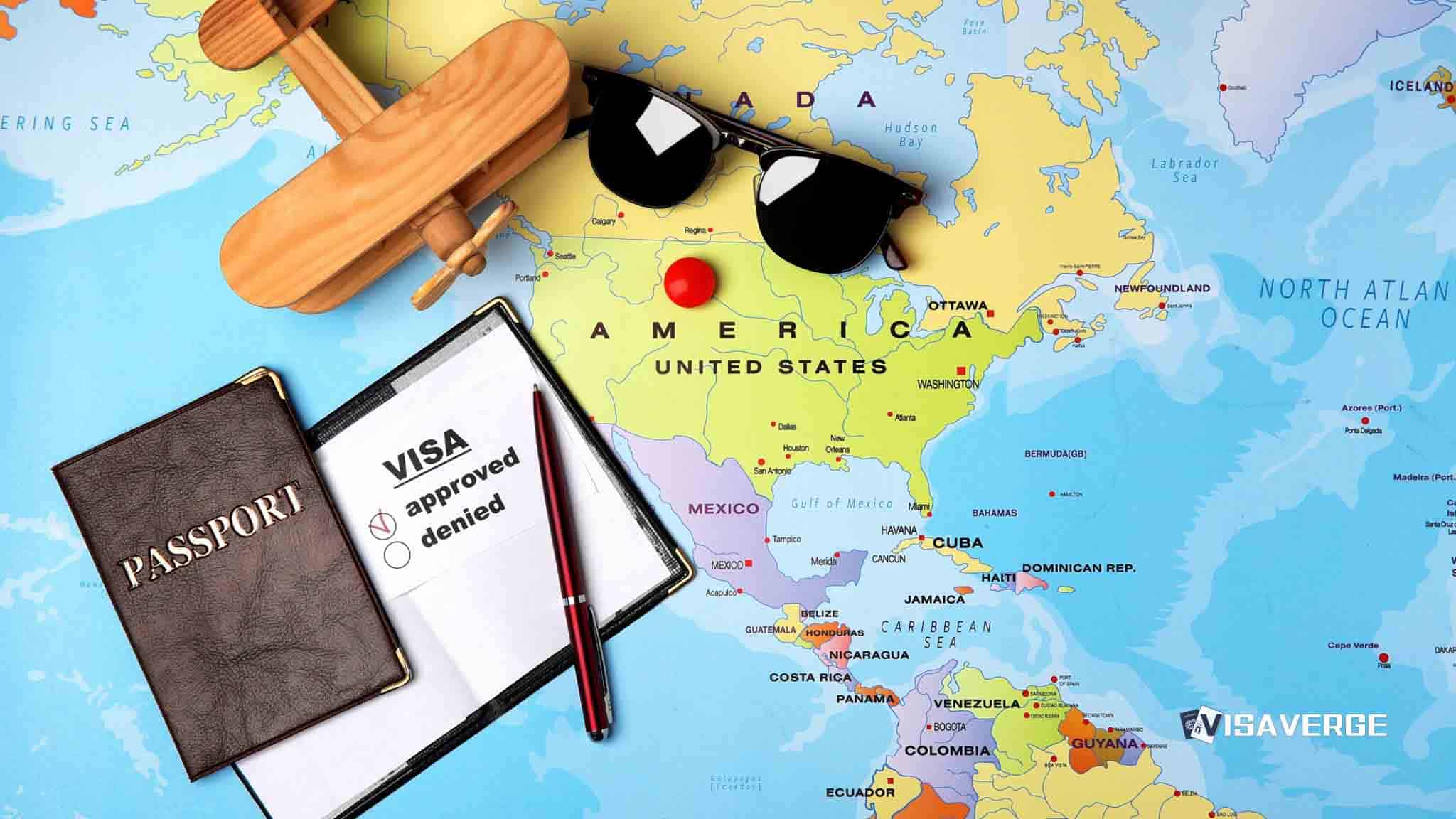
(UNITED STATES) The United States has ordered a full visa issuance suspension for nationals of Myanmar, Chad, Eritrea, and Libya starting June 9, 2025, cutting off access to both immigrant and nonimmigrant visas for most people from these countries. The move, set out in a new Presidential Proclamation, blocks almost all new visas and bars entry to affected nationals who do not already hold a qualifying, unexpired visa issued on or after that date.
Scope of the Proclamation and affected countries

The suspension does not target these four countries alone. The Proclamation lists Afghanistan, Burma (Myanmar), Chad, Republic of the Congo, Equatorial Guinea, Eritrea, Haiti, Iran, Libya, Somalia, Sudan, and Yemen as subject to the same sweeping restrictions.
For people from these nations who are outside the United States on or after June 9, 2025, and who do not already have a valid visa issued on or after that date, the door to new visa applications is effectively shut.
Free toolI-94 Expiration Calculator OnlineWhat visa types are included
The ban covers the full range of U.S. visa categories. That means:
- No tourist or business visitor visas (e.g., B-1/B-2)
- No student or exchange visas (e.g., F-1)
- No work visas
- No immigrant visas for family or employment
In practical terms, a national of Myanmar trying to apply for a simple B-1/B-2 visitor visa, an F-1 student visa, or an immigrant visa through a U.S. consulate will now face an automatic denial based on nationality alone once the date threshold applies.
Reasons cited by officials
Officials behind the policy point to several reasons for the decision, mostly tied to security and cooperation problems.
- The listed countries are linked to high visa overstay rates.
- Many have weak or missing passport and civil document systems.
- Several provide poor cooperation in accepting back their own citizens when the United States tries to deport them.
Specific notes in the Proclamation:
- Myanmar: flagged for a high rate of visa overstays and failure to cooperate with removals.
- Eritrea: said to lack a “competent authority” for issuing passports and to refuse to accept removable nationals.
- Libya: characterized by a historic terrorist presence and no reliable, cooperative central authority for passport issuance, raising concerns about document trustworthiness.
Effective date and timing details
Under the text of the Proclamation, the effective date is June 9, 2025, at 12:01 a.m. Eastern Daylight Time. That precise timing matters because it draws a clear line between people who already hold visas and those who do not.
- Nationals who already have valid visas issued before that moment are generally allowed to continue to travel, so long as those visas remain valid and are not revoked for other reasons.
- Those without a current visa in hand will not be allowed to apply for a new one, regardless of ties to the United States.
Geographic reach and consular practice
The Proclamation applies to nationals of the listed countries wherever they live.
- A citizen of Myanmar living in Thailand or Malaysia who tries to apply for a U.S. visa at a consulate there will face the same bar as someone applying at the U.S. Embassy in Yangon.
- Consular officers must deny new applications from affected nationals unless the applicant clearly falls into one of the narrow exemptions written into the policy.
Exemptions — who is still allowed
The Proclamation contains limited, tightly defined exemptions:
- Lawful permanent residents (green card holders) — remain free to travel using their existing status.
- Dual nationals traveling on a passport from a non-listed country — e.g., an individual with Eritrean and French citizenship entering on a French passport.
- People already granted asylum or refugee status.
- Holders of diplomatic and international organization visas.
- A narrow category of athletes participating in major global events, including the 2026 World Cup and 2028 Olympics, who may still receive visas under strict conditions.
Practical effects on individuals and families
Even with exceptions, the impact on ordinary people is stark.
- Nationals living in the U.S. on temporary visas may be allowed to stay and extend their status if current rules permit, but they face serious travel risks.
- Example: a Burmese student on an F-1 visa who leaves the U.S. and later needs a new visa to return (for instance, after changing schools) will not be able to obtain that new visa once the effective date has passed.
- Families: a U.S. citizen who filed an immigrant visa petition for a spouse or child in Myanmar or Eritrea will see that process blocked at consular issuance. People expecting reunification in 2025 may face indefinite separation unless the policy changes or they qualify for an exception.
Effects on employers, universities, and organizations
The reach of the ban will also be felt by institutions in the United States:
- Employers that recruited workers from countries like Iran or Yemen will find those options cut off.
- Universities that enrolled students from Myanmar or Libya must plan for new students from those countries being unable to receive visas, irrespective of academic merit or funding.
- Community and civic groups that rely on international travel will need to review staff and membership lists to identify who may be blocked from leaving and returning.
According to analysis by VisaVerge.com, organizations that rely on regular international travel will have to assess personnel and program impacts carefully.
Official guidance and legal basis
The State Department’s general description of visa categories remains technically accurate on its official page: U.S. Department of State – Visas, but for nationals of the listed countries those categories are now closed in practice.
From a legal perspective:
- The policy is rooted in the President’s authority to restrict entry when national interests are cited.
- The government’s rationale centers on national security, document reliability, and cooperation on deportations.
- The argument: when a country does not provide trustworthy passports or refuses to accept its citizens back after a U.S. removal order, it becomes too risky to continue issuing visas at normal levels; a full visa issuance suspension is the chosen tool.
Human and legal consequences
For affected individuals, the policy will likely feel less like a technical security measure and more like a sudden closure of life plans.
- People who saved for study, medical visits, or family reunions now face an almost total block based solely on the country in their passport.
- Lawyers expect a wave of urgent questions from clients about:
- Whether existing visas will still work
- Whether they should cancel travel
- Whether they can change nationality to escape the ban
The Proclamation allows some people in the United States to remain and extend their status if eligible, but it also makes clear that new visa applications from nationals of the listed countries will be denied except in narrow situations.
Summary and next steps
- For nationals of Myanmar, Chad, Eritrea, Libya, and the other listed countries, June 9, 2025 marks when the U.S. visa system effectively closed its doors for most new applicants.
- Thousands of families, students, and workers must now reassess plans and consider legal advice to determine whether they fall into any exemption.
- Institutions and individuals should monitor official guidance from consulates and the Department of State for implementation details and possible future changes.
A Presidential Proclamation imposes a global suspension on issuing most visas to nationals of Myanmar, Chad, Eritrea, Libya and other listed countries, effective June 9, 2025 at 12:01 a.m. EDT. The ban closes immigrant and nonimmigrant categories, citing security risks, weak document systems, and poor cooperation on removals. Narrow exemptions include green card holders, dual nationals using other passports, refugees, diplomats and select athletes. Individuals, families, universities and employers must reassess plans and seek legal guidance.