- Organizers held over 3,100 ‘No Kings’ events across all 50 states on March 28, 2026.
- Protesters condemned U.S. immigration enforcement actions and the ongoing U.S.–Iran war during nationwide rallies.
- Projected turnout could surpass nine million people, marking the largest mobilization for the movement to date.
Organizers held more than 3,100 registered “No Kings” events across all 50 states on Saturday, March 28, in a third nationwide wave aimed at U.S. immigration enforcement and the U.S.–Iran war, with projected turnout that they said could surpass earlier rounds of demonstrations.
Minnesota hosted the flagship rally, where Bruce Springsteen appeared and the program also highlighted Joan Baez and Jane Fonda. Photo coverage published over the weekend showed large crowds in multiple cities and solidarity events overseas.
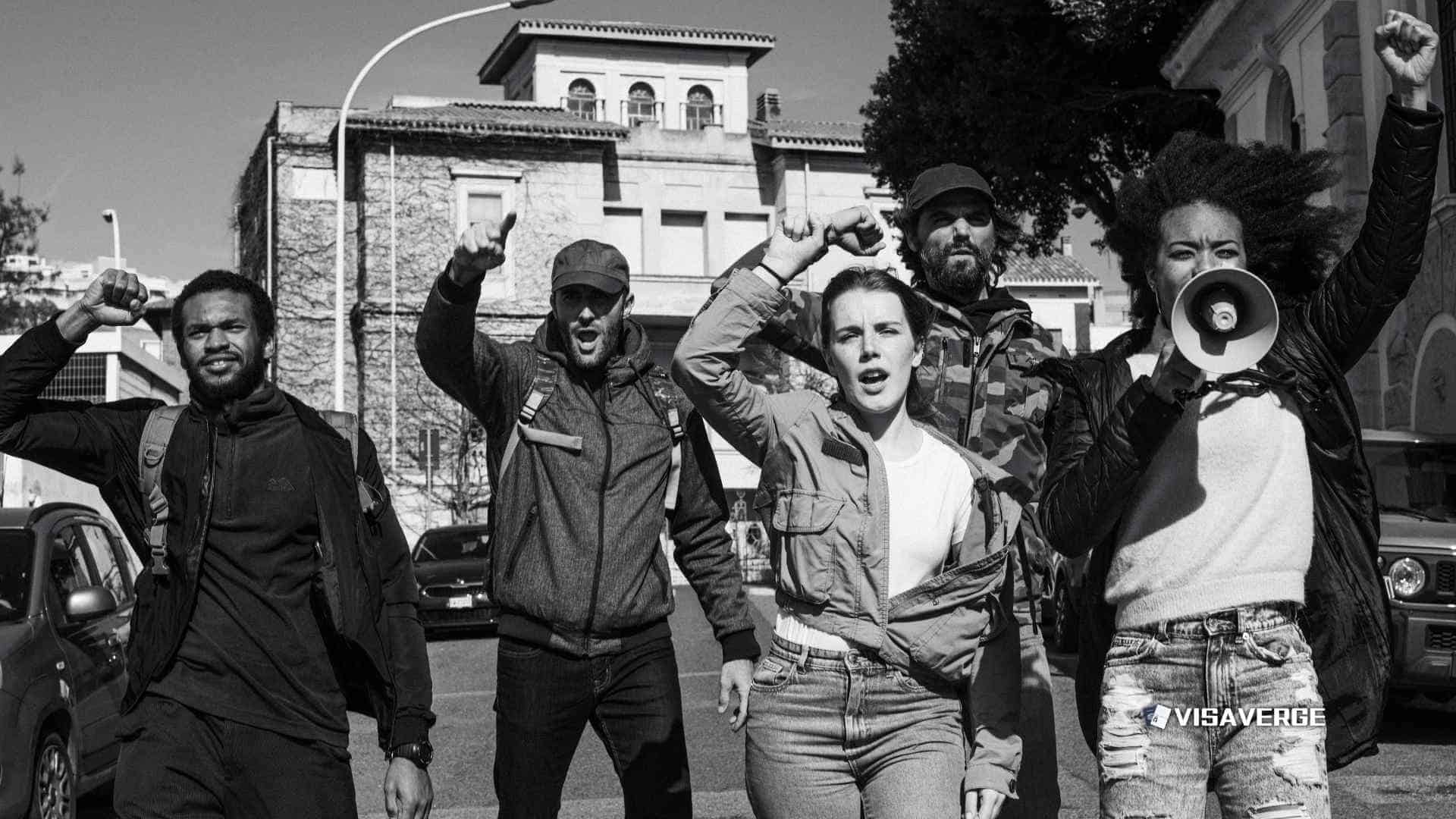
The latest day of action widened a protest campaign that organizers began in 2025. Indivisible, the 50501 Movement, MoveOn Civic Action, SEIU and AFL-CIO locals, and other coalitions framed Saturday’s rallies as opposition to “corruption, senseless war, and division,” while condemning ICE’s “deadly actions” and urging nonviolent action.
Organizers compared the latest mobilization with two earlier waves that they said drew millions. They estimated June 2025 drew 5+ million attendees at more than 2,100 events, and October 2025 drew roughly 7 million at more than 2,700 events.
For March 28, 2026, organizers anticipated more than nine million people could turn out at 3,100+ events. Hard counts from Saturday were still being updated by newsrooms.
The protests reflected two overlapping flashpoints in national politics: anger over federal immigration enforcement and opposition to the U.S.–Iran war that began on February 28, 2026. Both themes appeared prominently in event messaging, speeches and crowd signs.
Minnesota and the Immigration Flashpoint
In Minnesota, organizers and local activists repeatedly pointed to two January incidents involving federal agents in Minneapolis. Human Rights Watch said U.S. immigration agents shot and killed Renee Good, 37, on January 7, 2026, and Border Patrol agents shot and killed Alex Pretti, 37, on January 24, 2026.
Human Rights Watch characterized both killings as unjustified and linked them to a surge of federal agents deployed in Minnesota. The deaths also fed a rise in “ICE watchers,” volunteer observers monitoring enforcement activity, while the Justice Department brought criminal charges against some protesters.
That local anger merged with a broader anti-war mood after the United States and Israel launched large-scale strikes on Iran on February 28. By this weekend, more than 300 U.S. service members had been wounded, including two dozen injured this week by an attack on a Saudi base.
The war has continued alongside ceasefire diplomacy. A 15-point U.S. proposal, Iran’s rejection and counter-plan, and continuing strikes all helped push the conflict to the center of Saturday’s demonstrations.
Administration, Congress, and Homeland Security
White House Press Secretary Karoline Leavitt has described the war effort as nearing its “core objectives,” while also warning that more strikes could occur without progress. On March 10, she said the administration believed long-term gas prices would fall as a result of the war effort and that ground troops are “not part of the plan … at this time.”
Defense Secretary Pete Hegseth said on March 4 that the United States had spared “no expense or capability” to defend forces and allies. He has also emphasized “no nation-building” or “democracy building” objectives, while declining to rule out future options.
Congress has so far left the administration broad room to act. On March 4, the U.S. Senate rejected a War Powers bill that would have halted attacks against Iran, preserving executive latitude in the conflict.
The administration’s handling of homeland security also drew attention in the run-up to the protests. With DHS appropriations stalled, the White House authorized payments to TSA employees on March 27, and ICE officers began assisting TSA at airports on March 22, prompting concern among critics about mission creep.
DHS Secretary Markwayne Mullin said Friday that TSA workers “should begin seeing paychecks as early as Monday.” The department’s use of ICE personnel at airports added another link between the protests’ immigration focus and wider concerns over federal power.
Some states have also moved to push back on enforcement tactics. New Jersey Governor Mikie Sherrill signed a state law on March 25 restricting face coverings for law enforcement, including federal ICE agents, during operations.
“We’re not going to tolerate masked roving militias pretending to be well-trained law enforcement agents,” Sherrill said.
Organizers cast Saturday’s gatherings as a direct response to those developments. Ezra Levin, co-executive director of Indivisible, and Katie Bethell of MoveOn Civic Action issued statements on the protests’ scale and purpose as coalition groups urged participants to reject violence and maintain discipline at rallies across the country.
National Reach and Event Logistics
The movement’s geographic spread was one of its defining features. Events stretched from large Democratic-led cities to smaller conservative towns, reinforcing organizers’ claim that No Kings had become a national protest brand rather than a regional campaign.
Massachusetts alone had more than 160 rallies planned. In Seattle, organizers projected tens of thousands of participants.
Minnesota’s flagship event was sited at the Saint Paul Capitol grounds, where organizers also provided accessibility guidance, including on-site wheelchair-accessible toilets, and advised attendees to leave pets at home. That level of logistical planning appeared across many local events as the coalition prepared for one of its largest mobilizations yet.
Immigration Policy Changes in the Background
The protests also unfolded against a shifting U.S. immigration policy backdrop. A DHS proposal announced on February 20, 2026, would sharply alter employment authorization for some asylum applicants.
Under the proposal, DHS would significantly restrict or pause initial EADs for asylum applicants in category 274a.12(c)(8) when affirmative asylum processing times exceed 180 days. The proposal would also make work authorization more discretionary.
For now, current 150-day/180-day clocks remain in effect while the rule remains in public comment. That pending change became part of the wider protest argument that U.S. immigration policy is tightening through both enforcement and regulation.
A separate change took effect on March 1, 2026, when a federal register rule adjusted USCIS premium processing fees. Filings postmarked on or after March 1 must include the revised fee or risk rejection.
The Justice Department’s immigration court system also changed appellate procedures this month. DOJ and EOIR announced 2026 updates, and legal guidance circulated in immigrant communities flagged a new $1,030 BIA appeal filing fee and revised deadlines for decisions entered on or after March 9, 2026.
An EOIR policy memo, OOD PM 26-02, dated March 13, 2026, reiterated the current deadline rules. Those revisions gave protesters another concrete policy issue to point to as they criticized the cost and complexity of the immigration system.
Federal action at the border has continued as well. On February 17, 2026, DHS waived laws and regulations to speed barrier and road construction at the Texas border, adding to the sense among activists that the administration was pairing expanded enforcement with reduced procedural protections.
Civil society groups have kept pressure on those issues. Amnesty International USA and Human Rights Watch published detailed accounts of the January killings in Minneapolis and called for an end to militarized immigration enforcement.
Saturday’s demonstrations echoed that language. Organizers tied the deaths in Minnesota to a wider critique of what they described as increasingly militarized federal action, both in U.S. immigration enforcement and in the U.S.–Iran war.
Scale, Risks, and International Solidarity
The No Kings campaign also drew power from its record. Earlier waves were largely peaceful, though they were not free of violence: a fatal shooting occurred in Salt Lake City during June 2025, and authorities made two arrests in a Riverside, California, hit-and-run. Organizers have repeatedly responded by stressing nonviolence, while the ACLU circulated “know your rights” guidance.
That message remained central as the movement expanded. Even with the latest counts still being compiled, the campaign’s own benchmarks suggested fast growth, from 2,100+ events in June 2025 to 2,700+ events in October 2025 and 3,100+ events on March 28, 2026.
International solidarity events added to the weekend’s visual reach. Parallel gatherings were reported in Europe, Canada, Australia and Mexico, giving the protests a broader frame even as their immediate demands centered on U.S. immigration and the U.S.–Iran war.
The White House and Pentagon have insisted they are pursuing limited aims abroad and necessary security measures at home. Protest organizers answered that those policies amount to the same concentration of power their movement was built to resist.
By Sunday, the clearest measure of that clash was the scale of the crowds themselves: a third wave of No Kings protests, spread across all 50 states, carrying anti-war signs beside immigration demands and turning March 28 into the movement’s biggest test yet.