- Federal authorities have increased manpower by 120 percent to accelerate nationwide immigration enforcement operations and personnel hiring.
- Philadelphia advocates report stepped-up courthouse arrests with over 90 individuals detained at Center City facilities during 2025.
- Local officials and state legislators are proposing 1,000-foot buffer zones to restrict federal civil immigration arrests near state facilities.
(PHILADELPHIA) — A new wave of ICE activity in Philadelphia has immigration advocates on high alert amid a nationwide staffing surge and contentious public framing from DHS and ICE officials.
Reports of stepped-up arrests, courthouse activity, and enforcement operations have grown from late 2025 into January 2026, as the second Trump administration presses what it calls a “mass deportation” mandate.
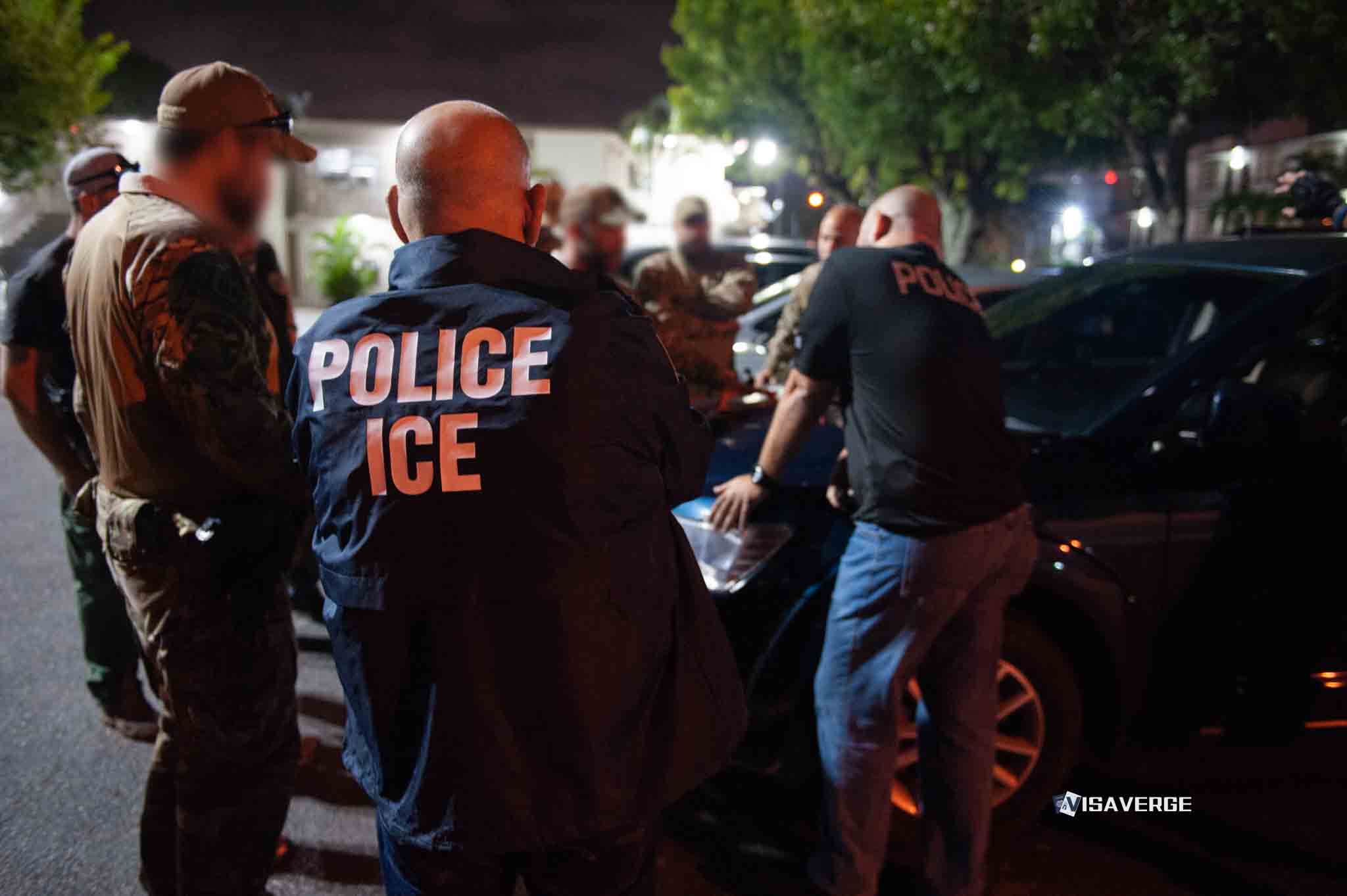
In Philadelphia, that national push is colliding with sanctuary-city politics and sharp warnings from local and federal officials.
Patterns of Local Enforcement and Community Reaction
Residents and advocates describe a “surge” as more frequent ICE presence in predictable places, including court buildings, and what they view as broader targeting.
Enforcement operations typically include arrests based on immigration status, custody transfers after criminal cases, and targeted operations tied to criminal records or removal orders.
National priorities can translate quickly into local action through staffing, coordination, and increased operational tempo.
That linkage is a major reason community groups in Philadelphia say they are watching day-to-day shifts closely.
Federal Framing and Official Statements
DHS and ICE have framed the increased activity as a public-safety effort. Those statements have shaped how local officials and residents interpret what is happening, and what they expect may happen next.
On January 20, 2026, DHS Assistant Secretary Tricia McLaughlin defended federal authority in response to criticism in Philadelphia, citing the Supremacy clause and calling enforcement “a clear federal responsibility.”
In that statement, McLaughlin argued that opponents should seek policy changes rather than “demonizing” ICE personnel.
A DHS spokesperson on January 6, 2026, tied operational tempo to staffing increases, saying the administration “built a larger, stronger ICE” to “make America safe again.”
Another McLaughlin statement on January 2, 2026, described holiday operations as focused on removing serious offenders.
⚠️ Note: Official statements frame enforcement as public-safety oriented; readers should differentiate between operational claims and outcomes for individuals.
Public messaging can signal priorities, including focus on specific criminal offenses and where ICE expects to find people during predictable routines.
Yet broad claims about safety do not determine any one person’s legal posture, which in many cases depends on records, past orders, and court history.
Manpower Surge and Operational Scale
A major driver of visibility is sheer capacity. On January 3, 2026, ICE announced a historic 120% increase in manpower, saying it hired over 12,000 new officers and employees in less than a year.
More staffing can expand coverage, make multi-site actions easier, and increase follow-up work after an initial arrest. It can also increase detention processing and transportation needs, which can be felt locally through more frequent sightings near courthouses and other recurring public touchpoints.
Staffing announcements, however, do not automatically mean a specific outcome for any individual. Removability, custody decisions, and timelines may vary widely based on the facts of a case and available legal options.
Key reported figures and context from public announcements and local estimates include the following facts: ICE reported a 120% manpower increase and claimed hiring of 12,000+ officers and employees (announcement dated January 3, 2026), while local groups estimated more than 90 people detained at the Center City courthouse in 2025 (Juntos estimate, cited January 2026).
In addition, a DHS release dated January 2, 2026 highlighted the arrest of Marvin McGregor, described as a Jamaican national in Philadelphia County convicted of third-degree murder and firearms possession.
Enforcement Around Courthouses and Sensitive Locations
ICE arrests are often described publicly through a criminal-history lens, with agencies listing convictions, jurisdictions, and custody details to support a public-safety rationale.
Advocates argue that the broader pattern can reach beyond high-profile cases, especially when operations occur in places where many people must appear for unrelated matters.
Community groups have also reported arrests near sensitive locations, a term that generally refers to settings like schools, hospitals, and places of worship. Proximity matters because it can deter people from seeking services, attending school, or showing up to proceedings, even when they have legal obligations.
Courthouse enforcement has become a central flashpoint in Philadelphia, where scheduled appearances make attendance predictable and where collateral effects can extend to family members, witnesses, and others who are not targets.
The advocacy group Juntos has estimated that over 90 individuals were detained at the Center City courthouse in 2025 alone.
Legal Tensions, Local Officials, and Protests
Legal tensions are rising alongside operational pressure. Philadelphia District Attorney Larry Krasner has said he would prosecute federal agents who “commit crimes” in the city, a stance that spotlights local prosecutorial discretion even as immigration enforcement remains federal.
DHS officials have pushed back, arguing that local arrests of federal agents for carrying out enforcement would be “blatantly unlawful” and warning of possible obstruction allegations.
The dispute has sharpened questions about the limits of local authority, the scope of federal power, and how confrontations on the street or in buildings could be handled.
Rochelle Bilal, head of the Philadelphia Sheriff’s Office, has also clashed publicly with federal partners. Bilal recently referred to ICE as “fake, wannabe law enforcement,” adding to a strained relationship in a city already defined by sanctuary-city debates.
Protests have added pressure to an already tense environment. In January 2026, an ICE officer in Minnesota shot protester Renee Good, an incident cited by organizers as a catalyst for demonstrations elsewhere, including a “Day of Action” in Center City on January 19-20, 2026.
Community Impacts and Legal Concerns
In affected communities, the impacts extend beyond the people directly arrested. Advocates and residents report families keeping children home from school, workers skipping shifts, and people avoiding services they would otherwise use, driven by fear of encountering ICE.
Courthouse activity can also increase missed court dates and appointments if people decide that appearing is too risky. Those tradeoffs can carry legal consequences unrelated to immigration, which is one reason local legal groups have urged careful, case-specific guidance from licensed counsel.
Policy Responses and Oversight Demands
Policy proposals have emerged in response to that reported disruption. Pennsylvania State Senator Amanda Cappelletti introduced legislation on January 12, 2026, that would prohibit civil immigration arrests within 1,000 feet of state-owned or -leased facilities, a buffer-zone approach aimed at limiting enforcement near key public spaces.
Such proposals can raise implementation questions, including what qualifies as a civil immigration arrest, how distance would be measured, and how state limits would interact with federal operations. Any effect would depend on the bill’s final language and whether it becomes enforceable law.
Custody concerns have also become a focal point for oversight demands. Advocates have cited deaths in custody, including Chaofeng Ge and Parady La, who died while in Pennsylvania-based ICE custody since 2025, as they push for stronger documentation, transparency, and accountability processes.
Information Reliability and Where to Check
Fast-changing enforcement news can produce rumors that spread faster than verified information. Official sources can help confirm announcements, enforcement priorities, and agency statements, while attorneys can advise on individual risks and options.
Federal updates are typically distributed through Department of Homeland Security and U.S. Immigration and Customs Enforcement newsroom statements, while USCIS News can clarify process changes that affect immigration benefits and case processing.
For readers pulled into detention or court-related issues, documentation and timing often matter, so checking primary releases may help separate confirmed actions from circulating claims.
✅ If you or a family member is affected, verify updates through DHS/ICE/USCIS official channels and seek local legal counsel.
This article discusses immigration enforcement and legal issues; content should be presented with qualified language and caution against providing legal advice.
Readers should consult official sources or licensed attorneys for individual cases.