- Travelers and airport workers maintain the right to remain silent and refuse consent to searches.
- Operation Metro Surge involves ICE agents conducting document checks near jet bridges and employee areas.
- U.S. citizens and residents should carry original identification documents to mitigate potential delays or questioning.
(MINNEAPOLIS, MINNESOTA) — If you are approached by immigration officers at Minneapolis–Saint Paul International Airport during “Operation Metro Surge,” you generally have the right to remain silent and the right to speak with a lawyer—and you also have the right to refuse consent to a search in many situations. Those rights apply to U.S. citizens and noncitizens alike, though the practical risks and the way officers may proceed can differ depending on your immigration status and where the encounter happens.
This guide explains, in plain language, what travelers and airport workers have reported seeing at MSP, what ICE’s authority typically looks like at a domestic airport, and how to protect yourself without escalating the situation. It also flags common ways people accidentally waive rights during fast-moving encounters on jet bridges or in employee-only areas.
1) Overview of Operation Metro Surge at MSP
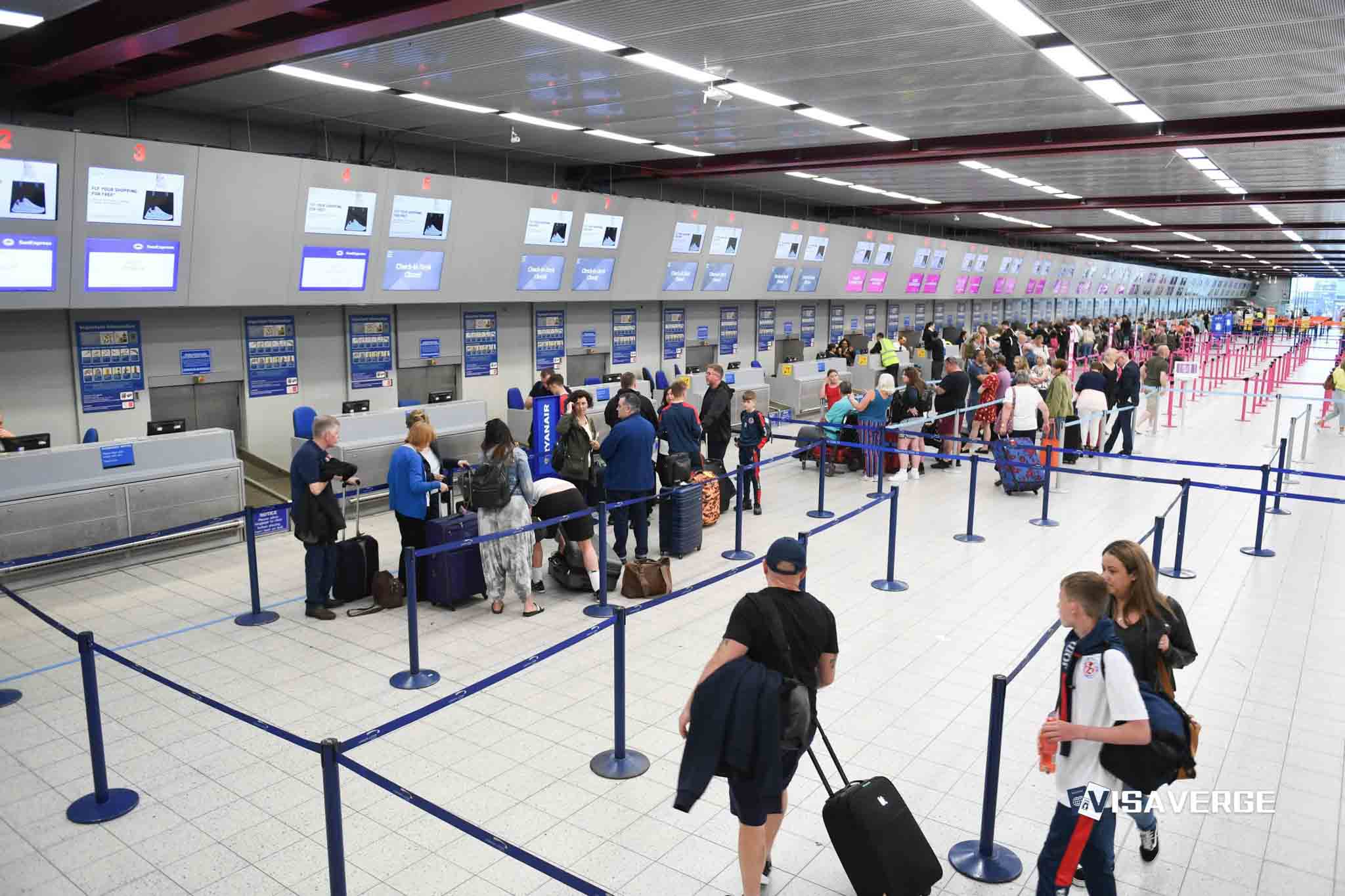
“Operation Metro Surge” has been described by federal officials as a major, regional intensification of immigration enforcement activity in Minnesota, with Minneapolis-Saint Paul International Airport emerging as a visible site. Reports describe ICE agents conducting document checks and patrolling near jet bridges and in secured airport areas, including some employee-only zones.
What matters legally is not the label of the operation, but the setting and agency roles. Airports include public-facing spaces, TSA checkpoints, and restricted areas controlled through badges and access rules. A person’s rights can depend on whether an interaction is a consensual conversation, a brief investigative stop, or an arrest.
This article does not claim to have seen internal orders or to confirm flight-by-flight deployment plans. DHS has indicated it does not typically confirm specific schedules for security reasons. What is clear is that public statements and on-the-ground accounts describe heightened enforcement activity at MSP for a defined period.
Because airport enforcement can change quickly, readers should track updates through official postings and records, including DHS and ICE news pages and court filings when lawsuits are filed.
2) Timeline and Key Dates
Public reporting and official statements describe an operation that started in late 2025, then expanded in early January 2026 with a substantial federal presence in the Twin Cities. Federal officials later provided a total arrest figure tied to the operation. DHS also described a multi-week window of planned activity at MSP focused on verifying documents for certain travelers and employees.
Dates matter for practical reasons. If you traveled through MSP during the period of heightened checks, your memory of where you were stopped—ticketing, a jet bridge, or an employee corridor—can affect any later complaint or legal defense. Dates also help correlate public statements with lawsuits, internal airport communications, and body-camera or surveillance retention periods.
Operations can shift with little notice. If you are traveling soon, check official sources close to your departure date, and save any relevant documentation of what occurred during your trip.
3) Tactics and Operational Details: What People Report at a Domestic Airport
Jet bridges and “secondary” checks
The most unusual feature in recent reports is ICE presence on or near jet bridges—the enclosed walkway connecting the terminal to the aircraft. Travelers have described being questioned while boarding or deplaning, sometimes with requests for identity documents.
Legally, this can be confusing. A jet bridge is typically not a “border.” It is part of a domestic facility, even when it serves international flights at other times. ICE may still question people, but the constitutional limits associated with the Fourth and Fifth Amendments remain central.
TSA vs ICE/HSI roles
TSA’s primary mission is transportation security. TSA screens for prohibited items and enforces security procedures. ICE and its investigative arm, Homeland Security Investigations (HSI), enforce federal immigration and certain criminal laws.
Reports indicate TSA has facilitated ICE access to areas both before and after the checkpoint, including some employee-only zones. That cooperation does not automatically expand ICE’s legal powers, but it can change the practical reality of where an encounter occurs and how difficult it is for a traveler or worker to disengage.
“Secured areas” and employee-only zones
“Secured areas” generally means spaces controlled by access badges, doors, and airport rules. Airport employees may be subject to employer policies, badge conditions, and security rules that do not apply to regular passengers. Those policies are not the same as a waiver of constitutional rights, but they can create pressure to comply quickly.
Reported investigative angle
HSI activity has reportedly included investigations tied to alleged fraud involving federal nutrition and pandemic aid programs. Allegations are not proof. People contacted as witnesses, subjects, or defendants still have due process rights.
Many individuals are approached simply because of an address book entry, a workplace link, or a shared location.
Warning: If an officer mentions “fraud,” “identity,” or “documents,” treat it as potentially criminal exposure. Ask for a lawyer and do not guess or fill gaps. Even small inaccuracies can be used against you.
4) Official Statements and Government Context
Federal officials have publicly characterized Operation Metro Surge in sweeping terms, including describing it as the agency’s largest operation and emphasizing public safety themes. DHS also publicly stated an arrest total since the operation’s start and confirmed a time-limited MSP effort to verify documents of customers and employees.
Minnesota state leadership has publicly criticized the operation and described it as overreach. A lawsuit filed by state officials has been reported as raising constitutional federalism issues, including references to the Tenth Amendment. Those claims will be assessed through litigation, briefing, and court rulings, and public statements from either side may be contested.
For readers, the key takeaway is this: public messaging is not the same as legal authority. Whether an airport encounter is lawful often turns on facts like consent, the scope of questioning, whether you were free to leave, and whether officers had individualized suspicion.
5) Impact, Controversies, and Public Safety Implications
Enforcement in a transit hub can affect people differently. U.S. citizens may still be stopped, questioned, or asked for ID. Citizens generally cannot be removed, but they can be detained briefly in some circumstances and can face arrest for unrelated reasons.
Lawful permanent residents (LPRs) typically have strong constitutional protections, but travel can raise issues if there is a prior removal order, certain criminal history, or alleged abandonment of residence. Visa holders and other nonimmigrants may face immigration consequences if officers suspect a status violation.
Undocumented individuals face the highest risk of detention and removal proceedings. Civil liberties concerns often raised in transit enforcement include racial profiling, pressure to answer questions in crowded or intimidating settings, and the chilling effect on work and travel.
These concerns intensify when stops occur near jet bridges or in employee corridors, where it may feel impossible to walk away. A reported fatal incident during an enforcement action in Minneapolis has also heightened scrutiny.
When such incidents occur, the legal analysis often focuses on investigations, use-of-force policies, and whether civil rights violations occurred. The facts may be disputed until investigations and any court proceedings progress.
If you feel targeted because of race, religion, language, or ethnicity: write down details immediately. Note names, badge numbers, times, locations, witnesses, and what was said.
6) Targeted Focus and Community/Legal Context
Reports have described an HSI focus on alleged fraud in federal aid programs and have also described concerns from community advocates about concentrated enforcement affecting Somali-American and Latino residents. It is important to separate two issues that often get blurred in public debate.
- Fraud investigations can involve subpoenas, interviews, search warrants, and data reviews. Immigration status may come up because identity documents and benefit eligibility can be part of the allegations.
- Immigration enforcement can involve administrative arrests and removal proceedings under the Immigration and Nationality Act.
Even in high-profile operations, individuals retain due process protections. Removal proceedings are civil, but the consequences are severe. If an encounter has any criminal dimension, constitutional protections become even more central.
Worker-related reports—including arrests during shifts—raise separate workplace concerns. Employees may wish to coordinate with HR, their union, and counsel about badge access, shifts, and how to respond if officers appear at a worksite.
7) Practical Guidance for Travelers and Airport Personnel
A. The core rights at an airport encounter
- Right to remain silent (Fifth Amendment). You may say: “I am going to remain silent.” Then stop talking.
- Right to counsel (Sixth Amendment in criminal cases; counsel is still critical in immigration matters). In immigration proceedings, the right is generally to counsel at no government expense. See INA § 292; 8 U.S.C. § 1362. If detained, ask to call a lawyer.
- Right to refuse consent to searches (Fourth Amendment). You can say: “I do not consent to a search.” If officers search anyway, do not physically resist. Document it later.
- Limits on detention (Fourth Amendment). Officers may approach and ask questions. If you are not being detained, you may ask: “Am I free to go?” If yes, leave calmly.
B. Who has which rights?
U.S. citizens: Full constitutional protections. Carrying proof of citizenship is not legally required in daily life, but it may reduce delays during heightened activity.
LPRs: Strong protections. LPRs should carry proof of status. Many attorneys recommend carrying a green card, consistent with INA § 264(e), 8 U.S.C. § 1304(e), which requires certain noncitizens to carry registration documents.
Visa holders: Carry passport, I-94 record (often accessible online), and evidence of ongoing status (such as an I-797 approval notice, if applicable).
Undocumented individuals: You may remain silent and refuse consent. You should not present false documents or lie about citizenship. False claims to U.S. citizenship can trigger severe and often permanent consequences. See INA § 212(a)(6)(C)(ii).
Warning: Many people waive rights by trying to “explain” under stress. Short answers can become long narratives. A nervous guess can become a written statement.
C. What to carry for domestic travel during heightened checks
Domestic flights do not typically require proof of immigration status to board, but airlines and security rules require compliant identification. During periods of increased enforcement, having original documents may reduce delays if ICE asks questions at or near the jet bridge.
Practical options people often carry include a U.S. passport or passport card (citizens), green card (LPRs), valid foreign passport with visa and I-94 (nonimmigrants), employment authorization document if applicable, and copies stored securely plus an emergency contact card.
If your documents are not accessible, “verbal confirmation” may not resolve the stop. That can mean a longer interview, calls to databases, or referral to a back room. If this happens, remain calm and repeat that you want a lawyer.
D. Guidance for airport employees
If you work at MSP in a secured area, keep your airport badge and government ID on you, as required by employer and airport policy. Ask if you are being detained or if you can return to your post.
If questioned, state you want to speak to counsel before answering. Ask for a supervisor’s contact and notify HR or your union representative as soon as possible. Write down details immediately after the encounter.
E. How rights are commonly waived or lost
Common problems include consenting to a search of a phone or bag “to get it over with,” signing a document you do not understand, giving inconsistent answers about place of birth, status, or prior entries, and presenting false documents or falsely claiming U.S. citizenship.
Deadline alert: If you are arrested or detained, time-sensitive steps may apply quickly, including bond requests, notices to appear, and court deadlines. Get counsel fast.
F. If your rights are violated
- Get to a safe place.
- Write a detailed account while it is fresh.
- Preserve evidence: boarding pass, receipts, photos of locations, names of witnesses.
- Request records if appropriate, and consult counsel about complaint channels.
You may also consider filing a complaint with DHS’s Office for Civil Rights and Civil Liberties and ICE’s Office of Professional Responsibility. Use official government websites to locate current complaint portals and instructions.
Legal help and official resources
DHS News:
ICE Newsroom:
EOIR Immigration Court information: EOIR
USCIS (status and records): USCIS
AILA Lawyer Referral: AILA lawyer referral
⚖️ Legal Disclaimer: This article provides general information about immigration law and is not legal advice. Immigration cases are highly fact-specific, and laws vary by jurisdiction. Consult a qualified immigration attorney for advice about your specific situation.
Operation Metro Surge at MSP Airport has introduced heightened immigration enforcement, including document checks at domestic jet bridges and restricted zones. This guide details the rights of citizens and noncitizens to remain silent and refuse searches. It highlights the roles of ICE, HSI, and TSA, noting investigations into federal aid fraud. Travelers are advised to carry original documents and seek legal counsel if detained.