- Nevada ICE arrests surged by nearly 400% during the first half of 2025 compared to 2024.
- Increased enforcement relies heavily on detainer-based arrests and cooperation within local jail settings.
- Significant policy shifts include Nevada rejoining the 287(g) program and signing a federal cooperation agreement.
Section 1: Overview: ICE arrests surge in Nevada (2025–2026)
Nevada saw a sharp rise in ICE arrests in 2025, and the change was closely tied to ERO operations run through the Salt Lake City Field Office. That office covers Nevada, Utah, Idaho, and Montana, so Nevada figures often move with regional strategy and staffing decisions. The starkest comparison shows up in the first-half timeframe used in many federal updates: January 20, 2025, to June 10, 2025, measured against the same window in 2024.
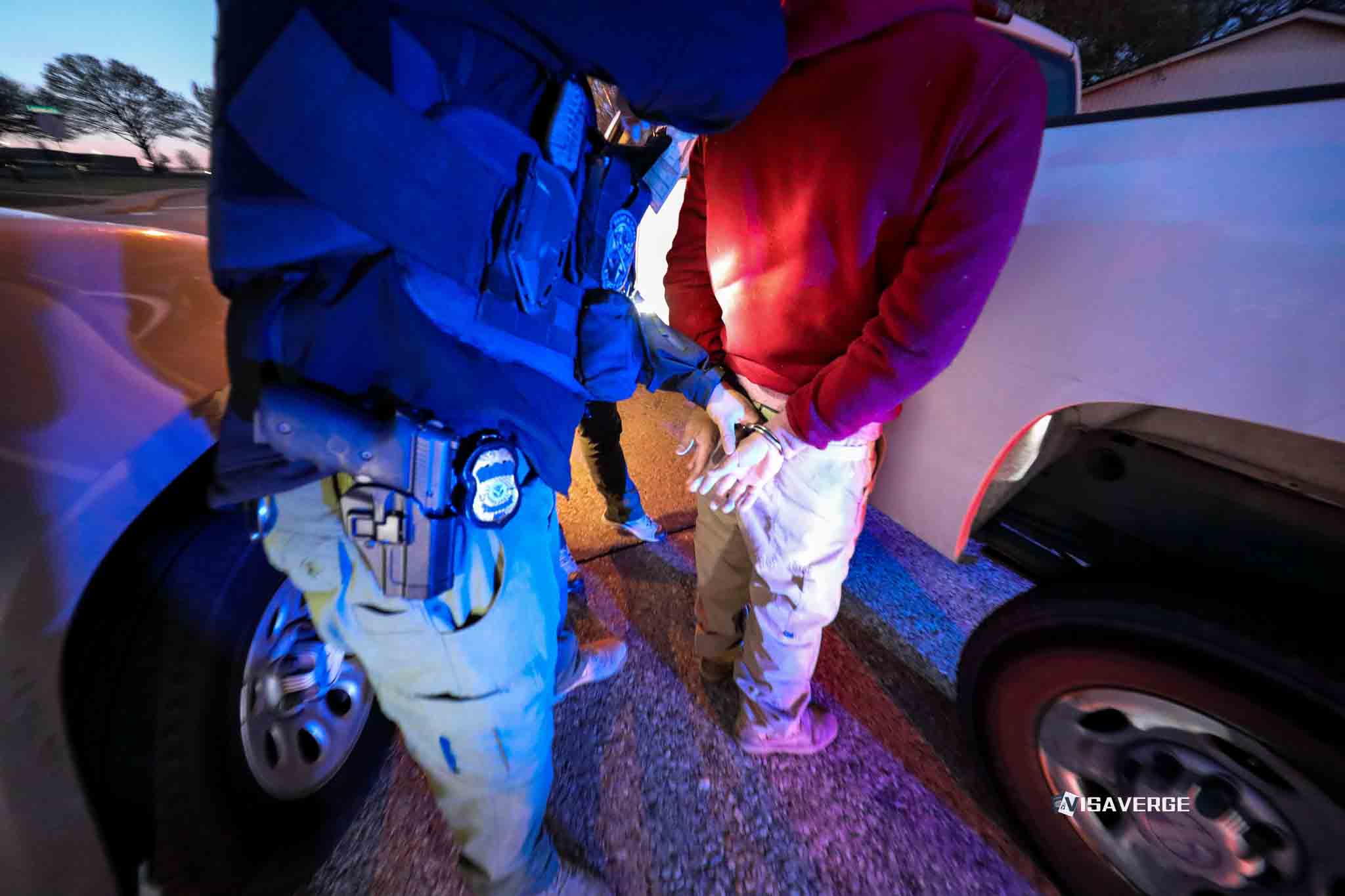
Two shifts stand out. First, the pace of arrests increased rapidly in 2025, with Nevada described as nearly four times higher year over year during that early-2025 window. Second, the Salt Lake City Field Office reported a nearly 300% increase in the first half of 2025 compared with 2024. Those changes matter because they can affect where enforcement occurs, who gets picked up, and how quickly people move into detention and court proceedings.
In ICE/ERO reporting, “arrests” generally means ERO took a person into custody for an immigration enforcement purpose. That can happen in the community. It can also happen inside a jail or prison after a detainer process. The label does not, by itself, tell you whether the person was later charged criminally, placed in removal proceedings, released on supervision, or removed.
Section 2: Key statistics and facts (2025–2026)
A lot of public debate turns on a single word: “arrests.” ERO arrests can be driven by jail screening and transfers just as much as street encounters. In Nevada, the 2025 surge was paired with a clear tilt toward detainer-based arrests inside detention settings, rather than community operations. Put plainly, more of the increase was produced through handoffs from local custody.
That context helps explain why a headline number can rise even when the public sees fewer visible operations. Detainers typically involve ICE asking a jail or prison to notify ICE before release, and in some cases to hold the person briefly for transfer, subject to local policy and legal constraints. When local cooperation expands, detainer arrests can jump quickly.
Readers also see frequent references to “no criminal record.” In ICE-style reporting, that phrase usually means no known criminal conviction record in the datasets used for the release. It does not mean “no violation.” A person can lack a criminal record and still face a civil immigration violation, such as overstaying a visa or entering without inspection. That distinction shapes both public messaging and legal posture.
Nevada figures are often placed next to national activity, such as large-scale operations and removals. That comparison can be useful, but it can also confuse the issue. National totals include multiple mission sets and regions, while Nevada totals reflect how one field office deploys staff and uses detention pathways.
| Timeframe | Region/Office | Arrests (approx.) | Context of arrests |
|---|---|---|---|
| January 20, 2025 – June 10, 2025 | Nevada | 940 arrests | Reported nearly four-fold rise vs. same 2024 window; large share tied to detainers and custodial transfers |
| First half of 2025 vs. first half of 2024 | Salt Lake City Field Office (Nevada, Utah, Idaho, Montana) | Up nearly 300% | Regional increase tied to ERO operational tempo and detention-based arrest pathways |
| First nine months of 2025 vs. 2024 | Salt Lake City Field Office region | Up over 150% | Sustained year-over-year growth, not limited to one short operation period |
| 2025 snapshot | Nevada | Share reported at 73% | Majority of arrests reported inside prisons or local jails through detainer-related processes |
Section 3: Official statements and quotes
Federal officials framed the 2025 approach around public safety themes and a stated focus on serious offenders. Kristi Noem spoke publicly on July 22, 2025, tying enforcement goals to funding and a “criminal” emphasis. Messaging like that sets priorities, but it does not guarantee how any single case will be handled.
By December 30, 2025, a Department of Homeland Security (DHS) spokesperson emphasized “worst of the worst” language and signaled continued pressure into 2026. That kind of phrasing often appears during periods when agencies want measurable outputs. Arrest totals are one output. Removal totals are another. Neither one alone proves who was prioritized in every arrest.
Inside the region, Bryan Wilcox, Acting Field Office Director for ERO (Enforcement and Removal Operations) Salt Lake City Field Office, made statements on August 14, 2025, describing operations as aimed at preventing future harm, including abuse-related conduct. Such statements can reflect real targeting decisions, yet they can also reflect how agencies justify a broader enforcement push to the public.
At the intergovernmental level, Pamela Bondi spoke on September 26, 2025, in connection with Nevada cooperation themes and compliance expectations. Official remarks like these help explain why arrest location and method can change quickly, especially when state-federal coordination expands.
Section 4: Policy details and significant developments
One major development was the Nevada Department of Justice (DOJ) agreement with the federal government. A memorandum of understanding (MOU) is typically a written cooperation framework. It is not always a new statute. Still, it can reshape day-to-day coordination, data sharing, and referral practices.
On September 26, 2025, DOJ messaging connected the MOU to Nevada being “removed from sanctuary list.” Procedurally, that kind of change usually signals that federal officials view state practices as meeting certain cooperation benchmarks. In practical terms, it can reduce friction points that slow detainer pickups or information flow.
Another driver was the renewed use of 287(g) partnerships. A 287(g) agreement is a formal arrangement that allows trained local officers to perform certain immigration enforcement functions under ICE supervision. The scope varies by model and contract language. When a large agency joins, the change can be felt quickly in jail screening and referral patterns.
In Nevada, Las Vegas Metropolitan Police (Metro) was described as rejoining during the 2025 period. That matters because jail intake, fingerprint workflows, and custodial handoffs can all influence how many “arrests” show up in ERO statistics, even without more street encounters.
Funding also affects operational tempo. The Big Beautiful Bill included $75 billion for ICE, and large appropriations can translate into hiring, transport capacity, and more available bed space. Capacity constraints do not vanish overnight, though. When arrests rise faster than space expands, transfers and longer-distance placements can become more common.
Section 5: Impact on individuals
Reports in late 2025 raised alarms about enforcement occurring near immigration processes. People often conflate USCIS and ICE, but they are different agencies with different roles. USCIS handles benefits such as green cards and naturalization. ICE enforces immigration law, including arrests and detention.
In practice, an “administrative arrest” can occur when a person appears for an immigration appointment and ICE takes the person into custody based on civil immigration authority. Such arrests can be shaped by many factors, including prior removal orders, identity questions, or agency priorities. No public statement can guarantee safety at a specific appointment.
Detention realities also changed as Nevada arrests climbed. People arrested in Nevada may be held locally, including at the Nevada Southern Detention Center, and may later be transferred within the broader ICE detention network. Capacity can drive those moves. In April 2025, reported crowding figures highlighted pressure on a facility built for a 250-person capacity, with a reported count of 462 at one point.
DHS also promoted voluntary exit concepts. One publicized approach offered incentives through a phone-based process and set an end-of-year deadline, including December 30, 2025, messaging and a cutoff tied to December 31, 2025. People considering “self-departure” typically need to confirm eligibility rules, deadlines, and how departure affects future reentry options. Those details can vary by immigration history.
Section 6: Official government sources and where to verify
Verification starts with separating press messaging from data products. The ICE Newsroom and DHS press releases usually publish announcements of operations, leadership quotes, and milestone totals. Those statements can change as new operations occur. Keep the post date in view, especially around July 22, 2025, August 14, 2025, and December 30, 2025, when major messaging circulated.
For numbers, the ICE ERO Statistics Dashboard is designed for trend checks across time and location. Dashboards can have limits. Definitions may be narrow, and categories can change. Look for how “arrests” are defined, whether a state’s totals include jail-based pickups, and whether “criminality” is measured by convictions, charges, or database flags.
For Nevada cooperation claims, the DOJ Office of Public Affairs is the cleanest way to confirm MOU announcements and official framing. Use the announcement date September 26, 2025, then match it against the named parties, including the Nevada Department of Justice (DOJ).
When you verify, save the proof. Capture screenshots, copy the date stamp, and keep the link in a dated note. That makes later comparisons easier, including checks near December 2, 2025, and other high-attention dates.
Callout 1 (action): Check official sources (ICE Newsroom, DHS News, ICE ERO Statistics Dashboard) for updated figures and statements; verify any timelines and numbers with primary sources.
This article summarizes official government data and statements. YMYL-compliant language and disclaimers should accompany any legal conclusions or actionable guidance.