- Individuals maintain the right to remain silent and refuse consent for searches during federal immigration investigations.
- The DOJ issued federal grand jury subpoenas to Minnesota leaders regarding alleged immigration enforcement obstruction.
- A subpoena is a tool to collect information and does not constitute a finding of criminal wrongdoing.
(MINNESOTA) — If you are in the United States—whether you are a U.S. citizen, lawful permanent resident (LPR), visa holder, or undocumented—you generally have the right to remain silent and to decline consent to a search when federal agents ask questions, and you also have rights if you or your workplace receives a federal subpoena.
This rights guide explains what those protections look like in practice amid a Minnesota-focused federal investigation involving grand jury subpoenas, including one reportedly served on Governor Tim Walz, tied to allegations of immigration enforcement obstruction during a major enforcement surge in the Twin Cities.
It also explains how subpoenas work, what they can demand, and how immigrants and institutions can respond without accidentally waiving important rights.
1) Overview of the investigation and scope
Federal prosecutors can open investigations into alleged interference with federal officers and operations, including immigration enforcement activity carried out by DHS components such as ICE.
In Minnesota, the reported DOJ inquiry centers on whether certain state or local actions or directives amounted to obstruction of federal immigration enforcement activity in and around Minneapolis–St. Paul.
A federal grand jury subpoena is a compulsory legal demand for documents, other records, or testimony. Grand juries are used during investigations to gather evidence and evaluate whether criminal charges should be brought.
A subpoena is not a finding that someone broke the law. It is a tool to collect information.
In this context, “obstruction” is a broad label that can describe several theories. Prosecutors may look at whether people agreed to impede federal duties, encouraged interference, or adopted policies that obstructed access to information or facilities.
The legal theory matters. So do the facts and the jurisdiction.
Because immigration enforcement often occurs in public-facing places, the practical impact can spread beyond any one investigation. People may encounter agents at homes, workplaces, and public locations. Institutions may receive records demands. Community members may be asked to provide statements or turn over video.
Do not ignore a subpoena. Missing a deadline can trigger court enforcement, contempt findings, or penalties. Get legal counsel immediately.
2) Key actors and subpoenaed parties
According to public reporting, DOJ served grand jury subpoenas on several high-level Minnesota leaders.
- Governor Tim Walz
- Minnesota Attorney General Keith Ellison
- Minneapolis Mayor Jacob Frey
- St. Paul Mayor Kaohly Her
- Hennepin County Attorney Mary Moriarty
- Additional officials connected to Hennepin and Ramsey County functions
Subpoenas to senior state and local leaders are procedurally significant because they often seek evidence about policymaking and intent, not just street-level events.
In an obstruction inquiry, prosecutors commonly seek:
- Emails, texts, and messaging app communications
- Draft directives, memos, talking points, and policy guidance
- Meeting notes and calendars
- Training materials about detainers, facility access, or information sharing
- Incident reports or coordination logs tied to enforcement activity
It is also important to separate being subpoenaed from being charged. A subpoena typically means investigators believe the person or agency has relevant information.
Charges, if they ever come, would follow a different step: a criminal complaint or an indictment.
For immigrants and community groups, the key takeaway is practical: when government entities and large institutions receive subpoenas, the resulting record-gathering can also sweep in third-party data about students, patients, employees, tenants, and clients.
3) Key facts, statistics, and policy details
Public reports describe an enforcement surge in the Twin Cities region and elevated community tension. While exact operational figures have been publicly circulated, the legal questions usually turn less on raw numbers and more on what actions were taken, who directed them, and whether there was an agreement to impede federal duties.
The statute often cited: 18 U.S.C. § 372 (in plain English)
One reported focus is 18 U.S.C. § 372, a federal criminal statute that targets conspiracies to prevent someone from accepting or holding federal office, or to injure a federal officer, or to impede a federal officer in performing official duties.
In practice, conspiracy-style statutes generally require proof of an agreement and an unlawful objective, plus evidence connecting defendants to that plan. The exact elements and defenses depend on the charge and the court.
Where local policy friction often arises
Immigration enforcement surges can collide with local policies in predictable places, including:
- Detainers. ICE detainers are requests to local law enforcement to hold someone for transfer. Some jurisdictions limit compliance absent a judicial warrant.
- Jail access. Policies may restrict physical access to booking areas or require set processes.
- Information sharing. Jurisdictions may limit what staff can disclose or when they can communicate with federal agents.
- Facility entry. Public institutions may require agents to follow visitor rules or present warrants for non-public areas.
What subpoenas may request in these cases
If prosecutors are exploring possible obstruction, subpoenas frequently seek documentary evidence of what was said and done, such as:
- Written policies and their revision history
- Internal legal advice routing and implementation guidance
- Staff training slides and FAQs
- Incident timelines tying protests, enforcement activity, and leadership communications
Do not “clean up” files after learning about a subpoena. Record destruction can create serious legal exposure separate from the underlying investigation.
4) Official statements and inflammatory rhetoric
DOJ and DHS messaging in high-profile investigations often aims to justify federal action and shape public understanding. Minnesota officials’ statements often emphasize local autonomy, safety concerns, and disagreement with federal tactics.
Based on reported accounts, DOJ has publicly framed Minnesota’s legal challenges to enforcement activity as lacking merit, and DHS has emphasized public-safety rationales and cooperation with detainer requests. Minnesota leaders have publicly criticized the investigation as political and defended their positions as lawful governance.
Readers should be cautious about relying on rhetoric from any side as proof of what happened. Public statements can be selective. Subpoenas, returns, and court filings—where available—tend to show what evidence is actually being demanded and what legal theories are being tested.
For verified updates, consult official agency pages:
- DOJ news releases: https://www.justice.gov/news
5) Context and significance for immigration enforcement conflicts
This Minnesota episode fits a long-running federal–state friction point: how far local governments can go in limiting cooperation with federal immigration enforcement, and how aggressively the federal government can respond.
“Sanctuary” is not a single legal status. It usually describes a spectrum of non-cooperation policies. Common examples include restricting compliance with detainers without warrants, limiting staff questioning about immigration status, or requiring legal review before releasing records.
Subpoenas can signal escalation even before any charges. They can:
- Increase pressure on agencies to disclose records quickly
- Test the boundaries between policy choices and alleged obstruction
- Expand scrutiny to contractors, nonprofits, universities, or health systems that hold relevant records
For immigrants, the practical concern is not only what happens to officials. It is how intensified enforcement attention can change day-to-day risk, and how information flows from institutions to investigators.
6) Impact on individuals and institutions (and how to exercise your rights)
Below are practical points for individuals and institutions. These sections explain core rights and typical institutional responses.
A. Individuals: your core rights during ICE encounters
Regardless of status, people in the U.S. typically have important constitutional protections.
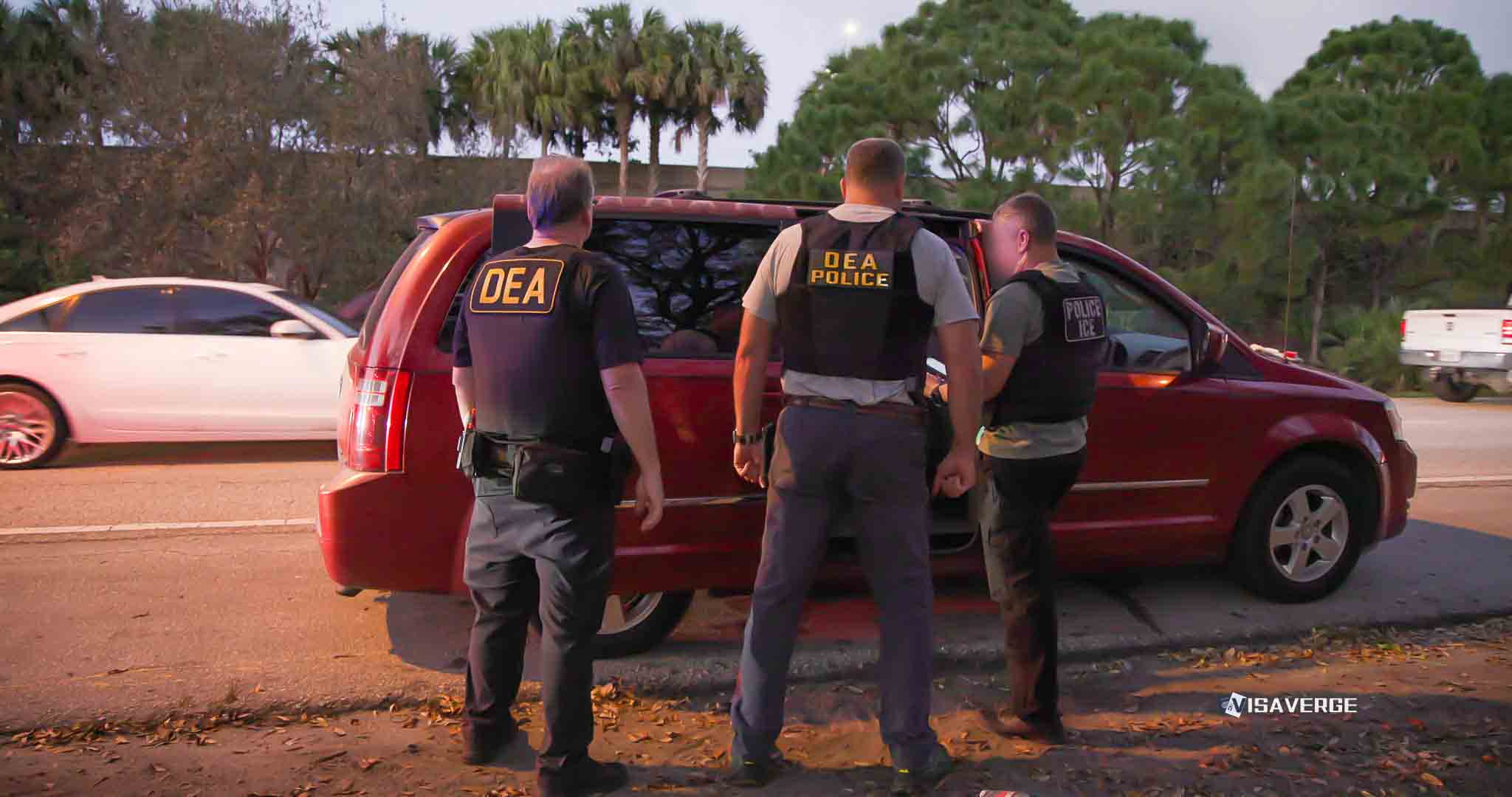
Right to remain silent (Fifth Amendment). You can refuse to answer questions about where you were born or your immigration status. You can say, “I am going to remain silent.”
Right to refuse consent to a search (Fourth Amendment). You can refuse consent to search your home, car, phone, or belongings. You can say, “I do not consent to a search.”
Limits: Immigration enforcement has exceptions and complex doctrines. Border contexts, probation terms, and certain administrative warrants can change the analysis. If agents claim they have a warrant, you can ask to see it.
How to do it in practice (simple script):
- “Am I free to leave?”
- “I will remain silent.”
- “I want to speak to a lawyer.”
- “I do not consent to a search.”
Do not lie or present false documents. That can create separate criminal exposure.
If you are arrested and placed in removal proceedings, missing an Immigration Court hearing can lead to an in absentia removal order. Keep your address updated with EOIR and consult counsel promptly.
Immigration-court address duty: If you are in EOIR proceedings, you generally must keep your address current under 8 C.F.R. § 1003.15(d) and related rules. Hearing notice disputes are fact-heavy and deadline-driven.
B. If agents come to your home
Ask who they are and why they are there. Ask to see a warrant through the door.
A judicial warrant is usually signed by a judge and names the place to be searched. An administrative ICE warrant is different and may not authorize entry into a home without consent or exigent circumstances.
Even when you assert rights, stay calm and do not physically block officers.
C. If you are asked to sign something
In many immigration scenarios, people sign paperwork that affects rights, including the right to see a judge. Do not sign forms you do not understand. Ask for an interpreter and a lawyer.
D. Institutions: schools, hospitals, employers, local agencies
When enforcement activity increases, institutions often respond with access rules and training. That can be lawful, but it must be implemented carefully.
Common steps institutions take include:
- Establish a single point of contact for agent requests
- Require agents to wait in public areas unless presented with appropriate legal process
- Train staff on how to handle requests for records
- Preserve records when a subpoena arrives, then produce through counsel
Subpoena response basics for institutions:
- Verify the subpoena’s issuing authority and scope.
- Calendar deadlines immediately.
- Implement a litigation hold to prevent deletions.
- Review for privileges and confidentiality laws.
- Produce only what is required, in the required format.
If an employer is served with an I-9 audit notice or other DHS paperwork, different rules apply than a grand jury subpoena. Employers should consult counsel and follow DHS/ICE procedures.
E. Common ways rights are waived or lost
Rights are often lost through small decisions made under stress. Common pitfalls include:
- Consenting to a search “to get it over with”
- Answering questions casually, then having statements used later
- Handing over a phone or giving passcodes voluntarily
- Ignoring subpoenas or altering records
- Missing Immigration Court dates or failing to update addresses
F. What to do if rights are violated
If you believe agents searched without proper authority, used coercion, or took property improperly:
- Write down names, badge numbers, agencies, and time/location.
- Preserve video safely and lawfully.
- Get medical attention if needed and document injuries.
- Contact an attorney quickly to evaluate suppression issues and civil-rights options.
In removal proceedings, suppression arguments are limited and fact-specific, but they can matter. Courts look closely at the circumstances.
7) Timeline of key dates (Jan. 7–Jan. 23, 2026)
Jan. 7, 2026: A fatal shooting involving an ICE officer and a local resident is reported as the triggering incident for widespread protests and official responses.
Week of Jan. 12, 2026: Federal officials publicly defend enforcement operations and criticize local resistance. Minnesota leaders respond with public objections.
Jan. 20, 2026: DOJ reportedly serves grand jury subpoenas on Minnesota state and local leaders, including Governor Tim Walz, as part of an immigration enforcement obstruction investigation. DHS also issues public messaging urging cooperation with enforcement and detainer requests.
Jan. 21, 2026: DOJ reportedly files a memorandum in federal court responding to Minnesota litigation aimed at limiting the surge and arguing against state-level interference.
Jan. 22, 2026: Reports continue regarding the enforcement surge’s scale and its effects on the region, including public-facing enforcement locations and institutional adjustments.
Jan. 23, 2026: Activists reportedly plan a protest action framed as an economic blackout.
Where to get reliable information and legal help
For official updates, start with:
- DOJ: https://www.justice.gov/news
- EOIR Immigration Court information: https://www.justice.gov/eoir
If you receive a subpoena, are contacted by federal agents, or fear arrest or immigration detention, speak with a qualified immigration attorney. If criminal exposure is possible, consult criminal defense counsel too.
Parallel investigations can move quickly, and small missteps can have large consequences.
⚖️ Legal Disclaimer: This article provides general information about immigration law and is not legal advice. Immigration cases are highly fact-specific, and laws vary by jurisdiction. Consult a qualified immigration attorney for advice about your specific situation.
Resources: