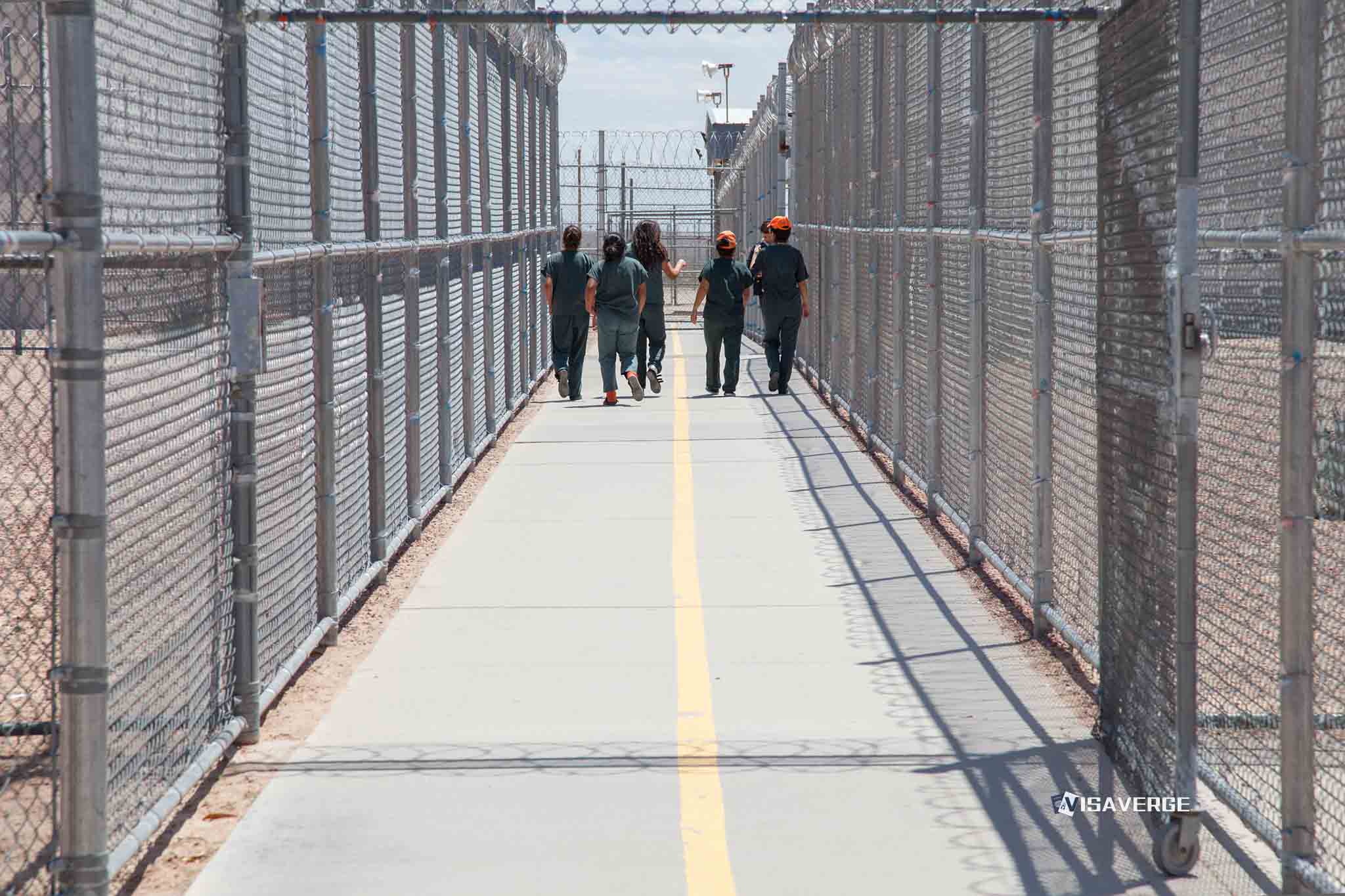
- Florida state arrests can become federal immigration convictions through formal plea-and-penalty dispositions.
- Legislative packages SB 2-C and 1380 target banking, employment, and education access for immigrants.
- Statewide 287(g) agreements enable local police to screen and transfer individuals to ICE custody.
(FLORIDA) — A key immigration-law lesson for Florida’s expanding state enforcement regime is that a state arrest or charge does not automatically translate into a “conviction” for federal immigration purposes, but a formal plea-and-penalty disposition often will—an outcome the Board of Immigration Appeals (BIA) has repeatedly treated as dispositive when immigration consequences turn on criminal case posture.
In Matter of Eslamizar, 23 I&N Dec. 684 (BIA 2004), the BIA held that a “conviction” for immigration purposes requires a judgment entered in a genuine criminal proceeding, not a civil infraction process lacking core criminal safeguards.

Practically, that holding matters now because Florida’s newer “illegal entry into Florida” pathways and related prosecutions may create immigration-triggering dispositions even for people who never go to immigration court—especially where defendants accept quick pleas to secure release or avoid jail time.
Florida’s policy direction—often described by proponents as inducing “mass self-deportation”—raises a second, equally practical point: federal immigration law governs removability and relief, but state actions can increase contact points that feed federal screening, detention, and charging decisions.
1) Overview and context: what is changing in Florida, and why it matters now
Florida has positioned itself as a state-level enforcement leader through statutes, funding, and coordination with federal partners. The legal and real-world consequence is not only more arrests; it is also more “paper trails” that can follow a person into federal databases.
“Illegal immigration” in public debate often blends several different legal categories. Immigration law distinguishes between unlawful presence, inadmissibility, removability, and criminal exposure.
Those differences matter when a person seeks bond, asylum, cancellation, or a family-based case. When officials frame policy as “mass self-deportation”, the operational meaning is usually increased friction in daily life.
That can include traffic-stop referrals, jail screening, worksite investigations, and higher scrutiny in benefit filings.
- Undocumented residents and those with prior removal orders
- Mixed-status families, including U.S.-citizen children
- Employers reliant on agriculture, construction, hospitality, and caregiving
- Students impacted by tuition and enrollment shocks
- Immigrants with pending benefits before USCIS, including asylum and family petitions
Community impacts have been widely reported, including heightened fear in Hispanic communities.
2) Official statements and government position: separating rhetoric from binding change
Early-2026 federal messaging has emphasized aggressive enforcement and state-federal coordination. Public statements can influence field posture even when the underlying statutes and regulations remain the same.
That can show up in charging choices, referrals for prosecution, and scrutiny of applications. USCIS, for example, is a benefits agency, but it can refer cases for investigation when it identifies possible fraud, false statements, or unlawful voting issues.
Readers should view press releases as signals, not substitutes for binding authority. Binding rules typically come from statutes, regulations, agency policy memoranda, and court orders.
A critical distinction is civil vs. criminal. Many immigration violations are civil. Yet immigration-related fact patterns can create criminal exposure.
Examples include document fraud (INA § 274C) and certain false claims to U.S. citizenship (INA § 212(a)(6)(C)(ii)). USCIS and DHS releases in early January 2026 emphasized enforcement activity tied to false statements and unlawful voting. Those are not “only civil” issues.
Warning: Do not assume a minor state case is “immigration-safe.” A plea that avoids jail can still be a removable “conviction” under INA § 101(a)(48)(A).
3) 2025 crackdown: SB 2-C and SB 4-C—exposure points and immigration consequences
Florida’s 2025 package created multiple pressure points.
New state criminal provisions. Florida’s “illegal entry into Florida” crime raises predictable federal preemption questions. Immigration regulation is primarily federal, and the Supreme Court’s preemption framework in Arizona v. United States often frames these disputes.
Litigation risk does not prevent arrests in the meantime, and it can take years to resolve.
Repeat-offender framing. Even when a state offense is not an immigration “ground,” the underlying conduct and record can affect ICE custody decisions, prosecutorial discretion in NTA filing, and discretionary relief before an immigration judge.
Education impact. The in-state tuition repeal effective mid-2025 has created an affordability cliff. That can disrupt enrollment, work authorization planning, and long-term licensure paths.
Enforcement buildout. Expanded funding and specialized officers typically means more investigations and referrals, which often increases collateral arrests.
A recurring legal issue is whether a state disposition becomes a federal “conviction.” Under INA § 101(a)(48)(A), a conviction exists where there is a formal judgment of guilt, or where a guilty plea or admission is followed by “some form of punishment, penalty, or restraint.”
That is where Matter of Eslamizar becomes practical. If Florida channels cases through streamlined, lower-procedure processes, practitioners will examine whether the proceeding was truly “criminal” in the sense required by the INA and BIA precedent.
If it was a typical criminal prosecution with a plea and sentence, the conviction definition is usually satisfied.
Tip-worthy deadline: In criminal cases, the “deadline” is often the plea date. Consult immigration counsel before any plea, diversion, or agreed disposition.
4) 2026 legislative package: SB 1380 / HB 1307—banking, workers’ comp, CDLs, and employer sanctions
Proposals introduced in early 2026 extend enforcement from policing to financial and workplace systems. Even before final passage, proposals can change employer behavior and family risk tolerance.
Banking access restrictions. If state-chartered institutions tighten ID rules, families may rely more on cash, third-party accounts, or informal payment methods. That can complicate rent, medical billing, and proof of residence, and reduce documentation useful in immigration cases.
Workers’ compensation changes. If undocumented workers are excluded or reclassified, workplace injuries can become financially catastrophic and may reduce injury reporting and increase exploitation.
CDL English-only testing and instruction. Transportation work is a core pathway for many families. If language accommodations shrink, applicants may lose access to testing routes they relied on.
Employer penalties and licensing. Aggressive “knowingly hire” penalties increase I-9 and E-Verify pressure and may prompt employers to terminate workers to reduce exposure, even when a worker has pending authorization.
Warning: Employers should avoid “document abuse.” Over-documenting or selectively re-verifying can trigger liability under INA § 274B.
5) Context and significance: joint operations, 287(g), and statewide scale
Large joint operations usually combine several pipelines: traffic enforcement, jail screening after arrest, targeted warrant operations, and workplace referrals. These models predict collateral impacts, including arrests of non-targets encountered during operations.
Florida’s statewide participation in 287(g) agreements is consequential. Under 287(g), local agencies may take on certain federal immigration screening functions after arrest, which can increase detainer use and speed transfers to ICE custody.
The practical result is fewer “safe” counties within the state. Recent public reporting describes Florida arrest totals in the five figures since a major 2025 operation began. The statewide scale matters as much as the raw count.
It can shift employer recruitment, school attendance, and health care usage patterns.
Tip-worthy practical point: If you or a family member is arrested, ask criminal counsel whether ICE holds are possible in that county. Then involve immigration counsel immediately.
6) Impact on affected individuals: health care, work, school, and stability
Health care is where enforcement ripple effects become hardest to measure, but easiest to feel. Heightened enforcement may cause people to delay care, skip follow-ups, or avoid clinics.
That can worsen chronic conditions and increase emergency room use. It can also deter reporting of domestic violence and wage theft, when survivors fear contact with law enforcement.
For mixed-status households, financial strain often follows job loss or reduced hours. Families may move, crowd into shared housing, or pull children from activities, which can affect immigration cases by disrupting school records, medical documentation, and proof of continuous residence.
Students face a distinct set of planning problems after tuition changes. A sudden tuition increase can force a stop-out and derail credential pipelines, including health care training programs.
7) Official government sources and references: how to verify and monitor changes
For readers trying to separate rumor from enforceable policy, primary sources matter. Start with federal agency newsrooms and enforcement explanations.
When verifying, capture publication date and whether the item is a press release or binding guidance. Also capture the PDF bill text and the version number, the effective date section and any implementation contingencies, and whether litigation has enjoined enforcement.
A practical routine is weekly checks during the legislative session and adding agency newsroom alerts for major federal shifts.
Practical takeaways for immigrants, families, and employers
- Do not plead “fast” in state court without immigration screening. Under INA § 101(a)(48)(A), pleas plus penalties commonly create convictions.
- Assume information-sharing will increase where counties participate in 287(g). Post-arrest screening can accelerate ICE custody.
- Keep documentation steady. Banking barriers and job disruption can reduce paper records, which often matter in relief cases.
- Employers should tighten compliance lawfully. Use consistent I-9 practices, avoid discriminatory re-verification, and train supervisors.
- Health care decisions are legally sensitive. Avoid delaying urgent care. Seek help from trusted clinics and ask about privacy practices.
Because Florida’s approach touches criminal law, immigration law, and administrative procedure at once, individualized legal analysis is essential. A qualified immigration attorney can coordinate with criminal counsel, assess preemption and constitutional arguments, and plan for relief options like asylum (INA § 208), withholding (INA § 241(b)(3)), CAT protection, or cancellation (INA § 240A) where available.
Resources:
⚖️ Legal Disclaimer: This article provides general information about immigration law and is not legal advice. Immigration cases are highly fact-specific, and laws vary by jurisdiction. Consult a qualified immigration attorney for advice about your specific situation.