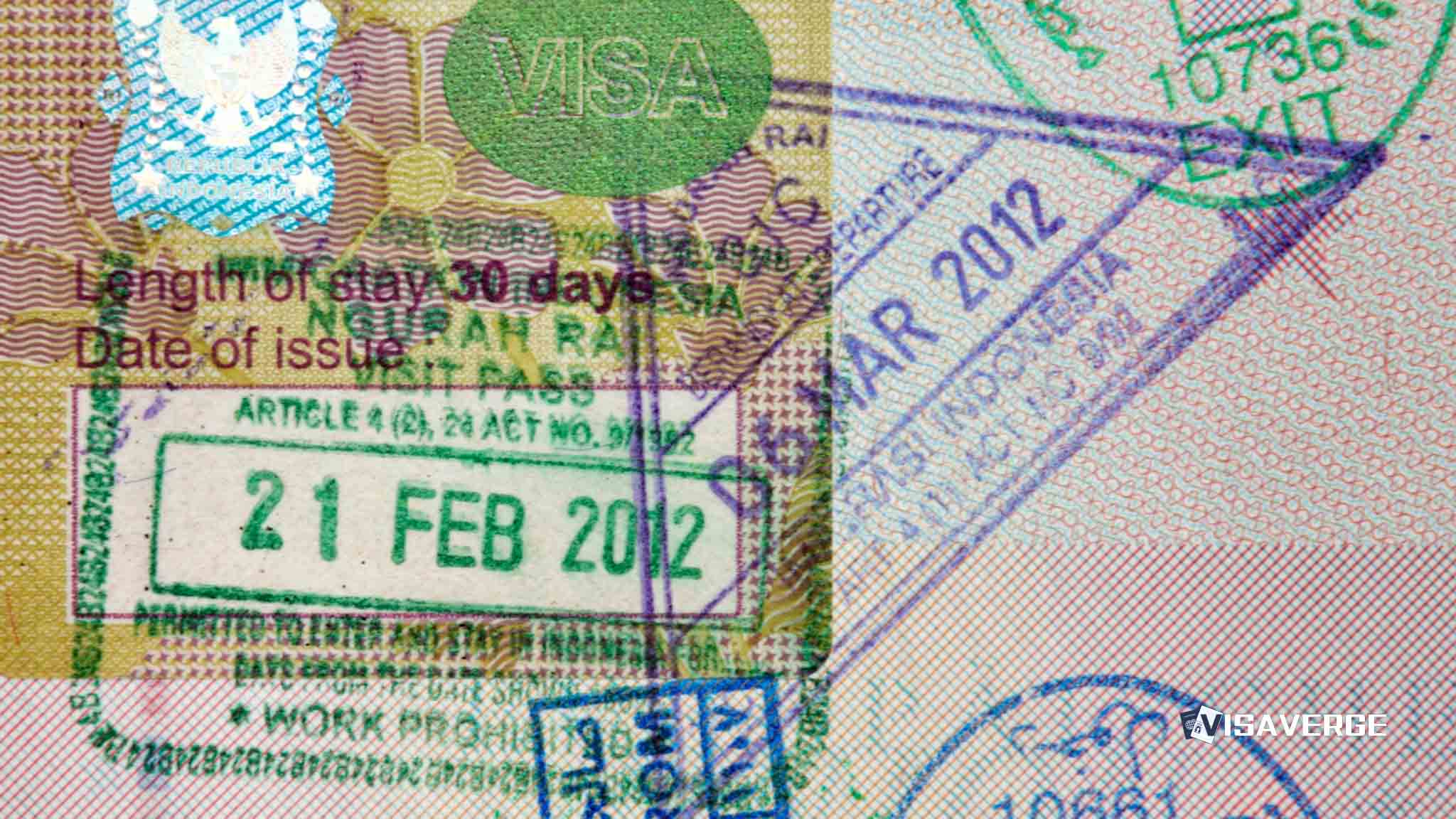
(AUSTRALIA) failed visa holders are increasingly at the center of Australia’s immigration debate because removals are harder to carry out even as overall departures rise. If your visa has been refused or cancelled, or you’re supporting someone who is out of status, the next steps now involve tighter supervision, fewer easy pathways, and more enforcement attention from the Department of Home Affairs.
Failed visa holders: what the term means in practice

In australian policy debate, “failed visa holders” usually means unlawful non-citizens who have no current visa after a refusal or cancellation, including people who stayed after their visa ended. The label is blunt, but it matters because it drives how officials talk about compliance, detention, and removals.
A visa refusal means the government did not grant a visa application. A visa cancellation means an existing visa was taken away, often due to character, compliance, or other grounds. Unlawful status means you are in Australia without a valid visa. Removal or deportation means the government enforces your departure, often after detention or supervised release.
This guide is for temporary visa holders, international students, workers, visitors, sponsors and employers, and families trying to plan around a refusal or cancellation. It is not aimed at Australian citizens or permanent residents, because the enforcement tools discussed here apply to non-citizens.
The High Court’s NZYQ ruling and why it changed day-to-day enforcement
The turning point was NZYQ v. Minister for Immigration, decided by the High Court in late 2023. In plain terms, the court found that indefinite immigration detention is unlawful when there is no “real prospect” of removal in the reasonably foreseeable future.
Operationally, the decision pushed the government to release many people who could not be removed soon, rather than hold them in long-term detention. It also raised litigation risk for detention decisions, because the government must now show removal is reasonably practicable within a foreseeable timeframe.
After NZYQ, over 220 individuals were released into the community on Bridging Visa R (BVR). A bridging visa is a temporary visa that lets a person stay lawfully while their status is sorted out, often with strict conditions. BVR became more prominent because it offered a legal status option when detention was no longer available as a default holding pattern.
Ministerial powers still matter, including cancellation powers and conditions that can be placed on release, but court rulings set the outer limits. Parliament can also respond with new laws, and that is part of what is now playing out.
Departures versus enforced removals: why the numbers move differently
Officials track two different exits. A departure often means someone leaves on their own, such as students finishing study or working holiday makers going home. An enforced removal means the government compels the person to leave, after compliance action and often after detention or supervised release.
Australia saw departures jump 13% to 263,000 in the 2024–25 financial year, driven mostly by students and working holiday makers. That rise does not mean enforcement got easier. It often means more people left without the government needing to do anything.
Enforced removals can slow even while total outflows rise, because removals rely on logistics and diplomacy. Common friction points include identity, flights, and destination acceptance, which can all delay or block removal.
- Identity and travel documents, especially when a person lacks a passport or their country will not confirm nationality.
- Airline routing and escorts, including limits on available flights and security arrangements.
- Destination acceptance, where a country refuses return or delays paperwork.
- Third-country arrangements, where Australia tries to place someone in another country when return home is blocked.
For failed visa holders, the practical result is often more time living in the community on conditions, or longer periods of uncertainty while negotiations continue.
2025–2026 measures: third-country options, payments, and “no remaining rights”
The government introduced the Migration Amendment (Removal and Other Measures) Bill to expand removal tools and deal with the post-NZYQ enforcement gap. A major feature is the ability to pay third countries to accept non-citizens who have no right to remain in Australia, with places like Nauru or PNG cited in public debate.
Third-country acceptance proposals typically depend on a negotiated agreement, funding, eligibility rules, and political limits in the receiving country. Even when the law permits a transfer, it still needs an actual pathway that works in practice.
Non-refoulement is another hard boundary. Non-refoulement is the rule that a country must not send a person to a place where they face certain serious harms. It shapes removals because it blocks return to some home countries. Governments then look for lawful alternatives, including third-country arrangements, but those bring questions about safety, legal status, and long-term rights.
Officials also use the phrase “no remaining rights” to signal that a person has exhausted review options. In practice, that points to the end of merits review or court pathways, and it raises concerns about procedural fairness when fast timelines collide with complex cases.
Minister for Home Affairs Tony Burke has framed the approach around safety and enforcement power. On November 7, 2024, later reaffirmed in late 2025, he said: “This government’s first priority is community safety. our first priority is: we don’t want them in Australia at all. The legislation introduced is required to have all the full powers we want to be able to have in relation to removals.”
Refusals, tighter screening, and how people fall out of status
A growing share of people become “at risk” because refusal rates rise while processing and review take time. If a person’s current visa expires while they wait for a decision, or while they pursue review, they may rely on a bridging visa with strict conditions.
In 2025, refusal rates for the Temporary Skill Shortage (subclass 482) visa surged by 41%. That shift hit employers and applicants alike. Employers face more evidence demands, and applicants face higher stakes if a refusal cuts off work rights or triggers rapid status problems.
The government also shifted toward the Skills in Demand (SID) visa, alongside stricter integrity settings. For applicants, “integrity” translates into closer checks on job genuineness, pay, skills match, and sponsor compliance. For sponsors, it means better records, cleaner payroll evidence, and fewer shortcuts.
Student applicants have also faced stricter Genuine Student tests. In simple terms, decision-makers look for a coherent study plan, credible finances, and a clear story that fits a person’s academic path. Weak or recycled documents, unclear course choices, or shaky funding often lead to refusal.
VisaVerge.com reports that when refusal rates rise quickly, the system often sees more review activity and more bridging visa reliance, which then feeds public pressure for stronger compliance tools.
NOM, labour demand, and why integrity tightening continues anyway
Treasury forecasts for 2025–26 put net overseas migration (NOM) at 260,000, down from a post-pandemic peak of over 500,000. That drop matters in politics because NOM is tied to housing pressure, services, and public confidence.
At the same time, industries still report worker shortages, including aged care and construction. That creates a policy squeeze. Governments respond by tightening “integrity measures” rather than using simple caps, because targeted enforcement looks tougher while still allowing entry for people who meet strict rules.
For applicants and sponsors, this period brings higher scrutiny and more compliance monitoring. Expect closer checks on identity, work history, course attendance for students, and whether sponsors meet wage and role requirements.
What enforcement feels like: conditions, monitoring, debt triggers, and third-country risk
For people released after detention, conditions are no longer light-touch. New 2025 regulations allow tougher controls, including ankle bracelets and curfews, where the Minister is “satisfied they pose a substantial risk.” Reporting rules can also include scheduled check-ins and limits on where a person can live or travel.
Late 2025 policy settings also made unpaid debts to public authorities a formal trigger in visa decisions. That can include debts like taxes, fines, or university fees. It does not mean every debt leads to cancellation, but it raises the risk level when a person already has a fragile status history.
For people covered by non-refoulement obligations, third-country resettlement discussions bring a different kind of fear. The policy aim is to solve the “cannot remove” problem. The lived reality is uncertainty about suitability, rights in the receiving country, and how fast decisions can be made.
Family separation, work limits, and mental health strain often follow. These cases also get pulled into community safety narratives, which can harden public attitudes and make compassionate discretion harder to win.
If you are a failed visa holder, or supporting one, focus on four actions that reduce avoidable harm:
- Stay lawful where possible, including meeting bridging visa conditions.
- Keep documents current, especially identity and travel paperwork.
- Treat compliance as urgent, including reporting and address updates.
- Deal with government debts early, and keep written proof of payments or plans.
Official information: where to read policy, data, and court decisions
For primary updates, start with the Department of Home Affairs website, including its newsroom and guidance pages, because that is where policy statements, operational changes, and ministerial announcements are posted. The Department of Home Affairs also administers visas, cancellations, detention, and removals, so its public material sets the baseline for what officers will apply.
For migration and population data, the Australian Bureau of Statistics publishes regular updates and explanatory notes that help place enforcement debates in a wider context, including NOM trends.
For NZYQ and other cases, read the High Court judgment and reputable legal summaries, because headlines often miss the legal test about “reasonably foreseeable” removal.
International references can help with context, but rules differ sharply. In the United States 🇺🇸, agencies also talk about “integrity measures.” In its late 2025 “Year in Review,” the U.S. Department of Homeland Security said: “USCIS is restoring integrity to our nation’s immigration policies. ensuring that only individuals who align with our culture and share our values are welcomed. We continue to coordinate with international partners to ensure those who violate immigration laws are held accountable.”
Useful starting points:
- Department of Home Affairs newsroom and updates
- Australian Bureau of Statistics migration and population statistics
- USCIS policy memoranda (United States 🇺🇸 context)
- U.S. Department of Homeland Security news
The Australian government is intensifying its focus on failed visa holders through the Migration Amendment Bill. This involves stricter community supervision, potential third-country removals to places like Nauru, and increased screening for student and skilled visas. Despite rising voluntary departures, enforced removals remain complex due to diplomatic and logistical issues, leading to a higher reliance on restrictive bridging visas and electronic monitoring for public safety.